
Dog Owners Don’t Know Enough About Their Dogs – One Reddit Post Sparks A Debate

Some dog treats are harmless, and some can turn into a real problem fast. That is exactly what happened when one Reddit user heard about a family member feeding a dog grapes.
OP was visiting their dad and his wife when the topic came up, and the reaction was immediate. Grapes are toxic to dogs, but not everyone seems to know that, which is what made the moment so surprising.
The post quickly turned into a bigger conversation about how much people really know about dog care, and the comments had plenty to say.
OP asks:

OP was talking to their dad and his wife about dog treats, and he heard that his stepmother's daughter feeds her dog grapes. That shocked them.

OP told them about how toxic grapes are, especially for small dogs. Thankfully, they both believed them.

Understanding the dietary needs of dogs is not just about avoiding harmful foods; it reflects a deeper issue of responsibility and care in pet ownership. This lack of knowledge can stem from generational differences in pet care practices, as older generations may have relied on outdated information about what constitutes safe food for dogs. As new studies emerge, it becomes essential for pet owners to stay informed and adapt their practices to ensure their pets' well-being.
Moreover, this phenomenon also relates to the psychological principle of cognitive dissonance, where individuals experience discomfort when their beliefs do not align with new information. When pet owners learn that certain foods, once thought safe, are now known to be harmful, they may feel compelled to justify their past choices, potentially leading to resistance against adopting new practices. To combat this, educational initiatives aimed at pet owners can be beneficial in bridging the knowledge gap and promoting healthier lifestyles for pets.
The conversation sparked by the Reddit post about unhealthy dog treats underscores the need for greater awareness and education among pet owners. It's essential to recognize that misinformation can spread rapidly, especially in the age of social media, where anecdotal evidence often overshadows scientific research.
In light of this, pet owners should be encouraged to critically evaluate the sources of information they encounter. Engaging with reputable organizations and scientific literature can equip owners with the knowledge needed to make informed decisions about their pets' diets. This critical approach not only protects the health of their pets but also fosters a more knowledgeable and responsible pet-owning community.
OP's dad was surprised by this information and asked them how they know so much. Well, Google is a neat tool.

Redditors shed some light on this information about grapes.
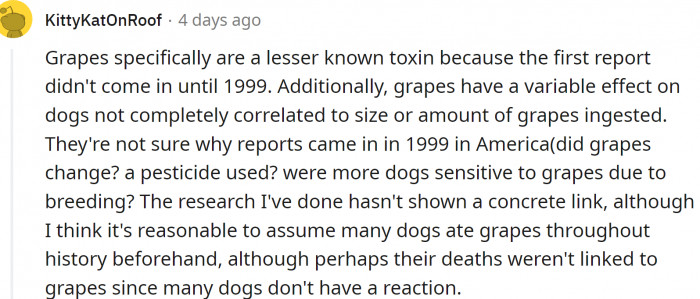
Even though there is no conclusive information on the correlation between types of grapes and dog breeds and sizes, it is best to avoid them.

The debate surrounding the suitability of certain dog treats, like grapes, highlights an important psychological concept known as the 'availability heuristic.' This cognitive bias leads people to rely on immediate examples that come to mind when evaluating a specific topic. For instance, if a dog owner hears about a dog getting sick from grapes, that information may overshadow other, less sensational advice.
This can create a cycle of misinformation, as pet owners may become overly cautious or even paranoid about feeding their pets. To mitigate this, it's crucial for dog owners to seek out comprehensive, evidence-based resources that provide a well-rounded understanding of dog nutrition rather than relying solely on anecdotal evidence from friends or social media.
Some people remember their parents giving puppies grapes as treats.
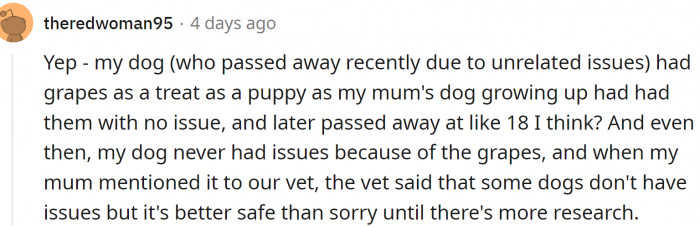
And peeled, refrigerated grapes were even considered a good way to keep your dog cool during heat waves.

It was a common practice:
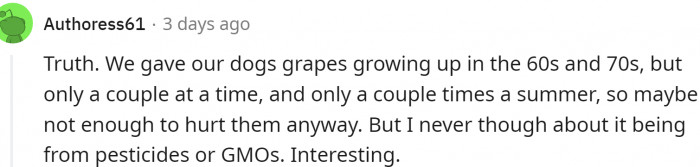
Generational differences in pet care can significantly influence how dog owners perceive and respond to new information about their pets' health. A study conducted by researchers at the University of Michigan found that older adults often have more traditional views regarding animal care, which can conflict with modern, evidence-based practices. For instance, many older pet owners may have grown up with the belief that certain human foods were safe for dogs, which can lead to resistance when new research suggests otherwise.
This phenomenon can be understood through the lens of social learning theory, which posits that behaviors and beliefs are often learned through observing and imitating others. As such, older generations may inadvertently pass down outdated knowledge, perpetuating harmful practices. To address this issue, community outreach programs and workshops that educate pet owners about current research can help bridge the generational knowledge gap, fostering healthier pet care practices across all age groups.
It’s the same kind of snack danger health specialists warn about, like frequently given treats that can cause trouble.
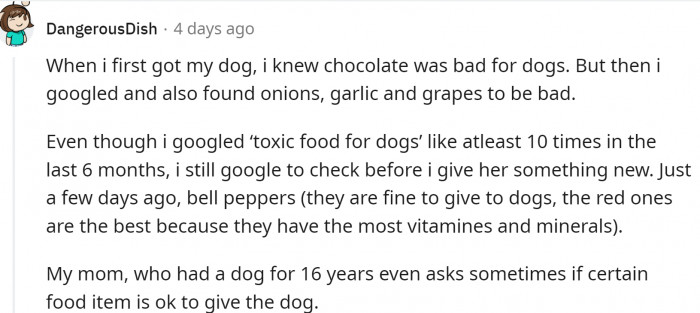
Some people Google everything now:

Things change.
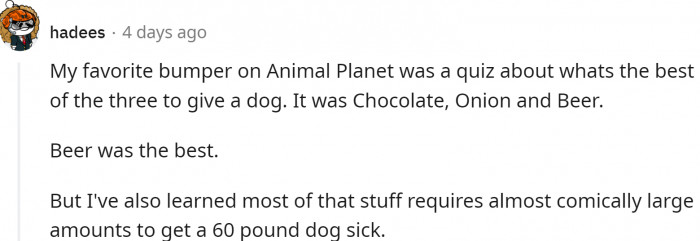
Beer is good, even for dogs:
The emotional bond between humans and their pets plays a significant role in how owners respond to information about their dogs' health. The attachment that pet owners feel toward their dogs can lead to heightened anxiety when faced with the possibility of harm. This emotional investment can amplify their reactions to new dietary information, whether it's about grapes or other potentially harmful foods.
Understanding this emotional connection is crucial for veterinarians and pet care educators, as it can inform their approach when providing guidance to pet owners. For instance, reassuring pet owners through empathetic communication can help alleviate anxiety and encourage them to adopt safer practices. Recognizing the strong emotional ties that people have with their pets can create a more supportive environment for discussing challenging topics like pet nutrition.
Avoid xylitol at any cost, and keep an eye out for other names.

OP said:

Times have changed, and we have a lot more information now.

This could include workshops, online courses, and community events where pet owners can learn about the latest findings in animal nutrition and health.
Furthermore, encouraging dog owners to engage with veterinarians regularly can help them stay informed about dietary guidelines and avoid common pitfalls. Regular reinforcement and follow-up can significantly improve compliance with safe feeding practices. By creating a culture of continuous learning and open dialogue, we can promote a safer environment for dogs and ultimately enhance their quality of life.
Look up stuff, people...

A dog requires a lot of care and attention. Cooking for your dog is a good way to ensure it eats healthily.
However, you have to choose the ingredients carefully. Are traditionally grown grapes less harmful?
Are some types of grapes more harmful than others? Are some dog breeds more susceptible to harmful effects?
These questions will, unfortunately, remain unanswered for now. Well, at least until some new research emerges.
In the meantime, the best thing is to avoid grapes altogether. That goes even if your dog had grapes before and had no reaction.
The debate sparked by the Reddit post highlights a critical shift in our understanding of dog care.
That grape shock is exactly why this Redditor explains how grapes and raisins can trigger kidney failure. Read the full breakdown.
Share this article:





