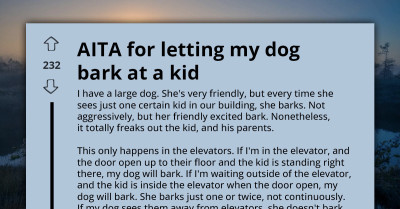
Dog Walker Supposed to Stay Overnight at Client's Home, Wants to Take the Dog to His Home

A dog walker tried to do a simple job, then immediately hit a trust wall with his client. The plan was straightforward: stay overnight at the client’s home to watch their dog. Instead, OP wanted to take the dog to his own place, which turned a routine arrangement into a full-blown boundary showdown.
Here’s what made it messy. The clients felt like their home and their dog were being treated like they were negotiable, not agreed upon. OP, meanwhile, probably thought the request was harmless, until the clients started pushing back and the whole thing spiraled into an awkward conversation about motives, control, and what “reasonable” even means in pet care.
And that’s where Reddit weighed in.
Here's OP's story.
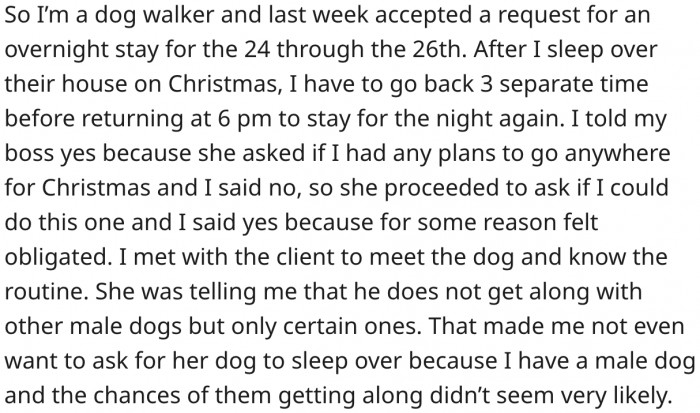
The clients don't respect his boundaries.

Is it wrong to ask? Here's what Reddit thinks.
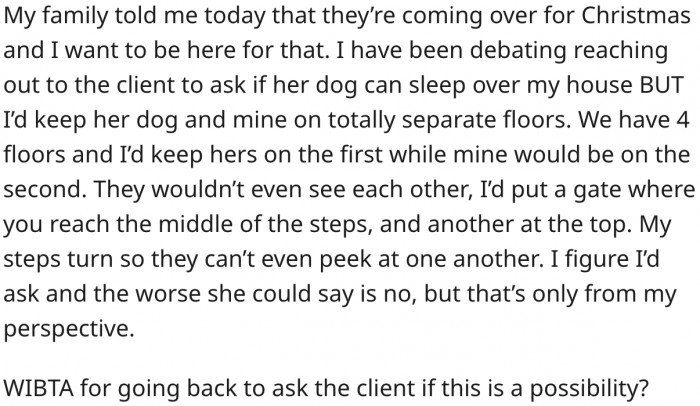
When OP asked to move the dog from the clients’ home to his own overnight, everyone zeroed in on the trust issue fast.
Trust is a critical component in any client-service provider relationship, particularly in pet care, where the emotional well-being of both the pet and owner is at stake. When a dog walker proposes a change in location, it can trigger feelings of uncertainty in the pet owner, who may question the motives behind this suggestion. The implications of such trust issues can lead to anxiety for the pet owner, potentially harming their relationship with the pet care provider.
1. The client should be flexible since it's Christmas.

2. He needs to start lying to his boss about his availability.

3. He should inform the client that he will watch the dog only on his own terms.
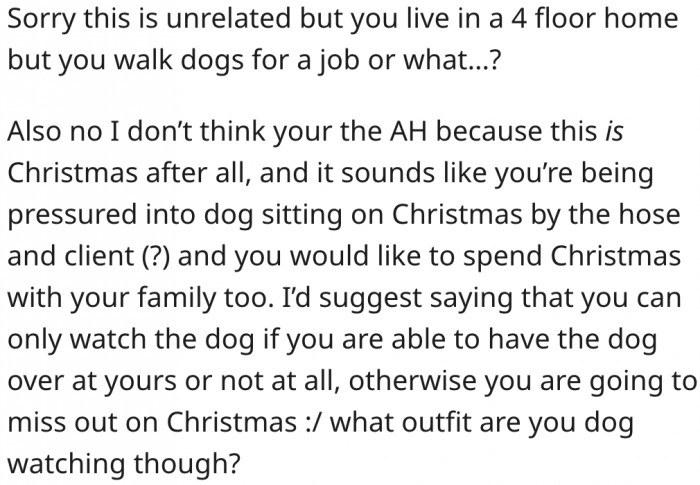
The Christmas timing made it even more tense, because the clients weren’t in the mood for last-minute rule changes.
From a behavioral perspective, changing environments can be stressful for pets.
4. His client may be sympathetic if he explains the situation clearly.

5. He should consider setting up a meeting between both dogs before the overnight stay.

6. He needs to practice the act of setting boundaries and saying no.

Once OP’s boundaries and availability started getting discussed, the comment section split between “just explain it” and “why would you even ask?”
This Reddit debate echoes the coworker who backed out of dogsitting last minute, and OP refused to cover.
In this situation, the dog walker faces a pivotal moment that underscores the importance of effective communication in service agreements. The desire to take the dog home instead of staying overnight at the client's residence raises significant concerns about trust and expectations. It is essential for pet care providers to clearly explain their reasoning behind any changes to the agreed-upon arrangements. Such transparency not only helps in maintaining the client's trust but also invites them to express their concerns and preferences. This collaborative approach is vital in ensuring that both parties feel comfortable and understood, ultimately strengthening the relationship between the dog walker and the pet owner.
7. Some dogs are not comfortable in other people's homes.

8. He should be prepared to accept being turned down when he asks to change the arrangements.

9. He will be putting both dogs' lives at risk.
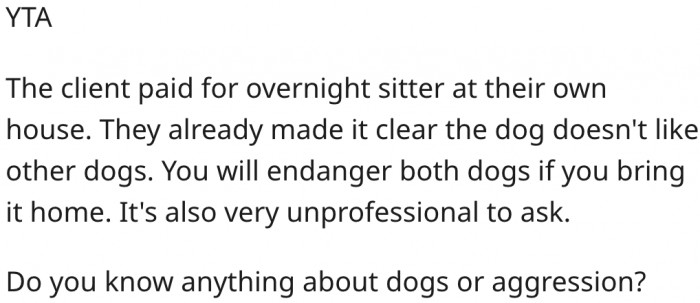
By the time people talked about some dogs not handling other homes well, OP was basically boxed into either backing down or risking a hard no.
Understanding the emotional attachment that owners have to their pets is critical.
10. He should stand up to his boss.

What do you think?
Setting boundaries is essential for maintaining one's mental and emotional well-being.
Practical Solutions for Pet Care Providers
One practical recommendation for dog walkers considering a change in location is to offer a trial period.
In this scenario, the interplay of trust and communication takes center stage in the relationship between the dog walker and the client. The dog walker, who accepted an overnight stay for the dog on Christmas, reflects a commitment to responsibility that is often expected in the pet care industry. However, his desire to take the dog to his home raises critical questions about boundaries and expectations in such arrangements. The emotional attachment pet owners have to their animals cannot be understated, and any perceived breach of trust can lead to significant fallout. Understanding these dynamics is vital for fostering positive relationships, ensuring that both the needs of the pet and the expectations of the owner are met effectively.
Now OP has to wonder if the real problem is his request, not the clients.
For another pet-related boundary clash, see how a host turned away guests with dogs.
Share this article: