
Meet The Enigmatic Gaboon Viper - Master Of Camouflage

Some snakes are built to fight, and some snakes are built to disappear. The Gaboon viper is the second kind, a giant from Central and West Africa that can look like part of the forest floor until it decides you are the next meal.
It is not just the size, either, it is the whole setup. This viper can grow over 6 feet, weigh more than 20 pounds, and then ambush prey with camouflage so detailed it feels unfair. Add in those freakishly long fangs, up to 2 inches, plus the ability to latch on after biting to inject more venom, and suddenly “mystery snake” turns into a very real problem.
And that is before you factor in habitat loss and illegal wildlife trade, which is making this master of disguise even harder to protect.
The Gaboon Viper is Africa's largest and most lethal viper.
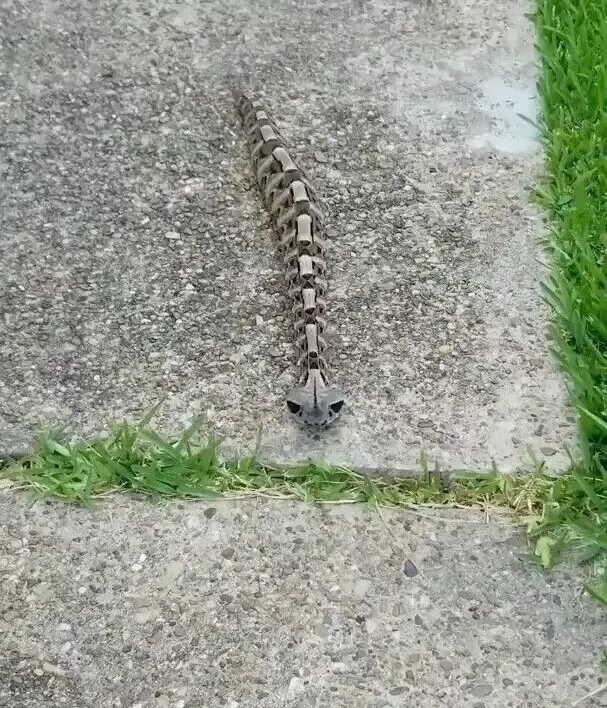
This tricky snake, found in Central and West Africa, is famous for its detailed and colorful camouflage, making it a true master of disguise.

This snake has the longest fangs of any venomous snake, reaching up to an impressive 2 inches.

That camouflage is the whole reason this viper can sit there like a painted rock while prey walks right past it.
Camouflage and Survival
The Gaboon Viper's remarkable ability to blend into its rainforest environment is a significant survival strategy. Chris Packham, a noted naturalist, explains that this camouflage not only protects the snake from predators but also enhances its hunting capabilities. The viper's intricate patterns mimic the forest floor, allowing it to ambush unsuspecting prey effectively.
Packham highlights that understanding such adaptations can deepen our appreciation for biodiversity and the delicate balance of ecosystems. Educational programs that emphasize the importance of camouflage in wildlife can inspire future conservation efforts.
Then comes the scary part, those long fangs and the latch-and-hold bite that keeps venom flowing into the bloodstream.
Conservation Challenges
Conservationists urge that the Gaboon Viper faces threats from habitat destruction and illegal wildlife trade. To combat these challenges, local communities can engage in sustainable practices that protect habitats while also supporting economic development. Initiatives that involve the community often yield better conservation outcomes, as they align with the needs of local populations while preserving biodiversity.
That “fantasy or horror” moment is similar to the enormous python that emerged from a Chinese highway car.
These serpents are only outdone in size by the largest King Cobras. They can grow over 6 feet long and weigh more than 20 pounds.

The Gaboon Viper has an impressive skill: it can latch onto its prey after biting, allowing it to inject more venom into the bloodstream.

Some Americans are drawn to keeping them as pets due to their status as the largest viper in the world and their striking appearance.

Even the venom research angle gets darker when you realize the toxins can cause tissue necrosis, not just a nasty sting.
In the realm of venom research, the Gaboon Viper stands out due to its potent cocktail of toxins. The Gaboon Viper’s venom contains enzymes that can lead to tissue necrosis, making it a subject of interest for studies on pain management and wound healing.
Researchers are exploring how such venom could lead to advancements in medicine, particularly in developing new therapies. Understanding these processes not only aids in medical science but also emphasizes the importance of preserving such unique species.
In 2021, a viral video showed a Gaboon Viper camouflaged on the street, fascinating viewers with its seamless blending into the surroundings and caterpillar-like movement.
And while some Americans get drawn to keeping them as pets, the real drama is that habitat destruction and illegal wildlife trade are shrinking their safe spaces.
The story of the Gaboon Viper shows us how our world is balanced. It's both fascinating and a bit scary, but understanding it is important. Respecting creatures like the Gaboon Viper helps us learn many amazing things.
At first, we might feel scared when we see a Gaboon Viper. But if we take the time to observe and understand it, we discover how incredible it is. Its patterns and hunting methods are truly interesting.
By treating animals with care, we get to witness their amazing behaviors. When we do this, we help protect them and learn a lot about the world around us.
The Gaboon Viper exemplifies the marvels of evolution and highlights the critical role of biodiversity in our ecosystems.
The Gaboon viper does not just blend in, it makes you miss the moment you should have been paying attention.
Want a bigger surprise? See how a diver stumbled on a massive 23-foot anaconda in a Brazilian river.
Share this article:





