
Scientists Believe This Creature Could Take Over The Earth After Humans Go Extinct

Tim Coulson has a theory that sounds like science fiction until you realize it’s rooted in real biology. If humans vanish, the next “rulers” might not be primates, because Coulson thinks their similarities to us are exactly what makes them fragile.
Here’s the messy part, though: the world doesn’t just empty out and stay still. If a catastrophic event wipes out people, the survivors would have to handle everything, from collapsing habitats to shifting food webs, and Coulson’s pick for the job is an animal that refuses to play by the usual rules.
So when you hear “octopus,” think less “sea creature” and more “potential posthuman mastermind.”
Meet Tim Coulson, the zoologist with a bold theory about life after humans.

Coulson’s whole problem with primates starts with the idea that their intelligence and social lives would leave them exposed the same way humans are.
So, why octopuses?
While primates seem like the obvious choice to inherit the Earth, Coulson believes their similarities to humans are their downfall. Sharing our intelligence, social behaviors, and habitats makes them just as vulnerable to extinction as we are.
If a catastrophic event wipes us out, chances are they’ll go down with us. With primates ruled out, Coulson shifts his focus to a species that couldn’t be more different: octopuses.
Octopuses can solve complex puzzles, communicate through flashes of color, and even manipulate objects with a dexterity that would make any magician jealous.
They also have decentralized nervous systems, advanced neural structures, and unparalleled camouflage skills—all traits that could help them thrive in a posthuman world.
Coulson argues that octopuses' intelligence and resourcefulness could allow them to evolve into a civilization-building species—assuming the environmental conditions are right.
While their squishy bodies may not scream “future rulers,” their advanced problem-solving abilities might just tip the scales in their favor.
The notion of insects rising to dominance in a post-human world is both fascinating and chilling. As the article suggests, these creatures are not merely survivors but have thrived across diverse environments for over 400 million years. Their remarkable adaptability, whether in arid deserts or frigid tundras, positions them as formidable contenders for controlling the Earth once humanity disappears.
Moreover, the rapid reproduction and swift evolutionary processes of insects underscore their potential to flourish in the absence of humans. This resilience hints at a dramatic ecological transformation, where insects could reshape global biodiversity. Imagine a world where the buzzing of bees and the scuttling of beetles reign supreme, potentially leading to a new ecological narrative far removed from human influence. The implications of such a shift are profound, raising questions about the future of ecosystems and the intricate web of life on our planet.
The future of Earth might just rest in these eight arms
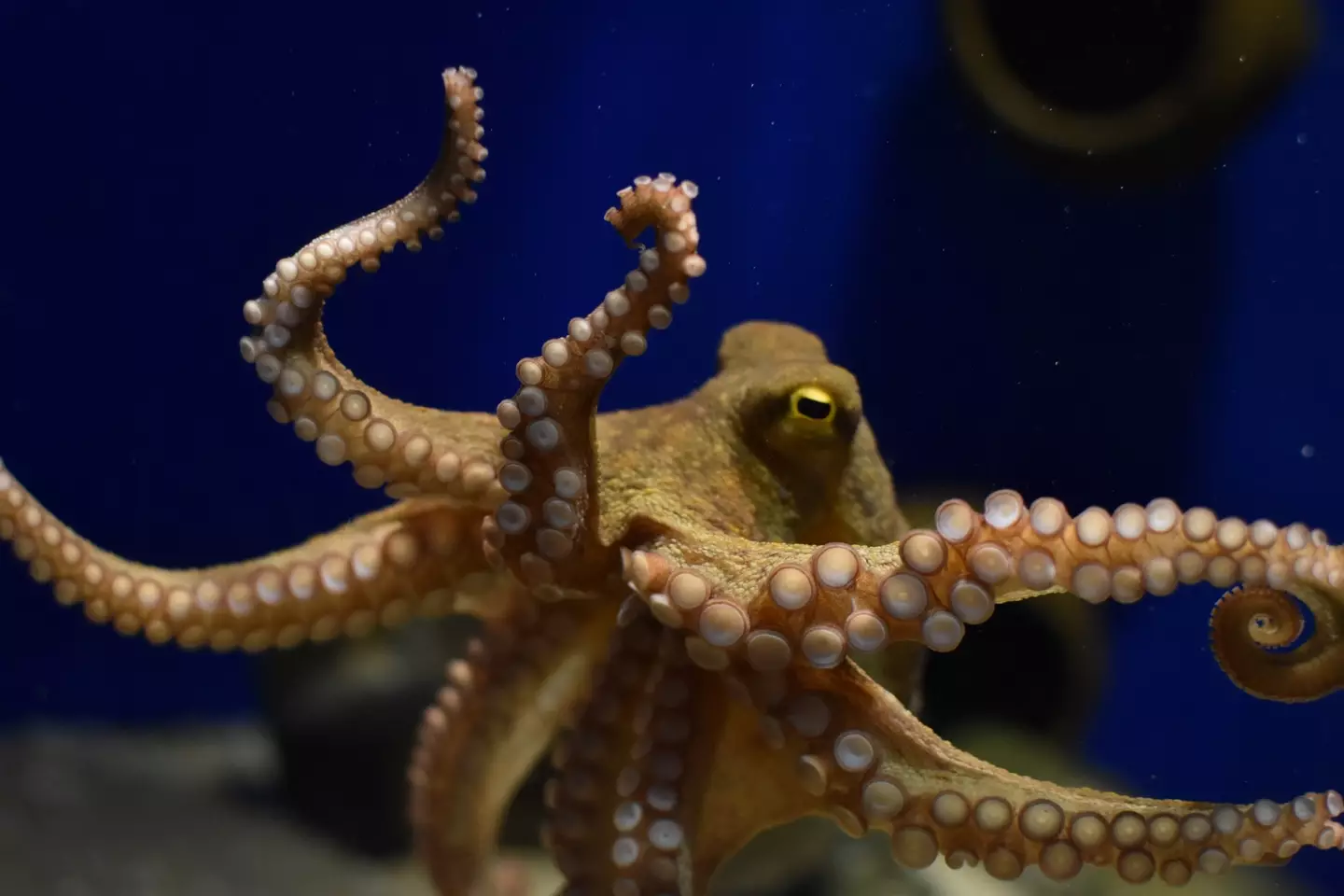
That’s why the article pivots from “smart mammals” to octopuses, flexing their puzzle-solving, color flashes, and object manipulation like it’s a resume.
It’s like what Dr. Calhoun saw in Universe 25, when “the beautiful ones” quit social contact.
And just as you’re settling into octopus dominance, the piece swings to insects, pointing out how they’ve already survived 400 million years of nonstop climate chaos.
But don’t pack your bags for an underwater dystopia just yet.
Coulson also notes that it’s a long game. Humans, for all our flaws, are expected to stick around for a few million more years. If octopuses do rise to power, it won’t happen overnight—it’s more of a billion-year plan.
For now, though, octopuses remain the brains of the sea, quietly outsmarting crabs and solving escape room puzzles in aquariums. But if humanity ever bows out of the picture, we might just pass the torch to these marine geniuses.
With the planet’s future hanging on which group can adapt faster, the only thing scarier than a human-less Earth is a world where octopuses and insects both seem ready to move in.
Biologist the future of Earth's ecosystems relies heavily on how we treat our environment today. In her view, the extinction of humanity could allow for a resurgence of numerous species, including primates and other mammals, which have faced habitat destruction due to human activities.
Goodall advocates for conservation efforts that focus on preserving habitats and promoting biodiversity. Implementing sustainable practices now can help mitigate the loss of species, ensuring a healthier planet for future generations and possibly allowing other intelligent life forms to flourish.
As we consider the potential successors to humanity, the article emphasizes the fragile nature of ecological balance. The fate of Earth's biodiversity is intricately linked to our actions in the present. Should we continue to disregard environmental conservation, we risk paving the way for a planet dominated by simpler life forms, as suggested in the exploration of the future landscape without humans.
This analysis serves as a call to action, highlighting the importance of understanding these ecological dynamics. By prioritizing sustainability and making conscious choices today, we can work towards a future where both human and non-human life not only coexist but thrive together on our planet.
If humans disappear, the ocean and the ground might team up to rewrite the rules.
Next, meet the only animal that might survive the end of civilization.
Share this article:





