A Groom Yelled At His Sister For Missing His Wedding Because Her Cat Of 19 Years Died The Same Day

One wedding day turned into a family blowup after a groom learned his sister would not be there. She had spent years being his biggest supporter, and she had also helped plan the ceremony.
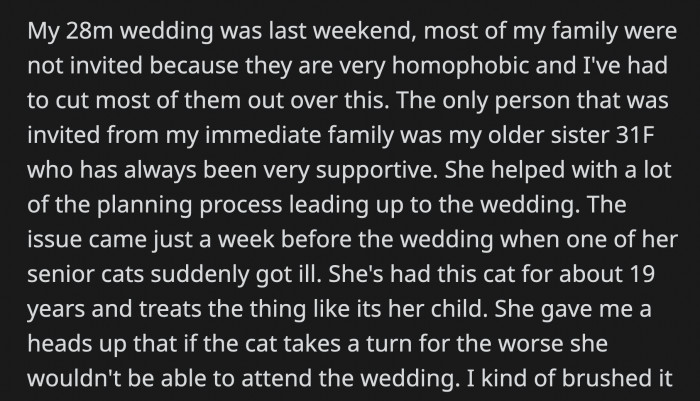
Then, just before the wedding, her 19-year-old cat took a turn for the worse and had to be put down. The sister warned him ahead of time that she might miss the event, but he did not take it seriously.
When the call came on the wedding day, things got ugly fast, and the fallout was immediate.
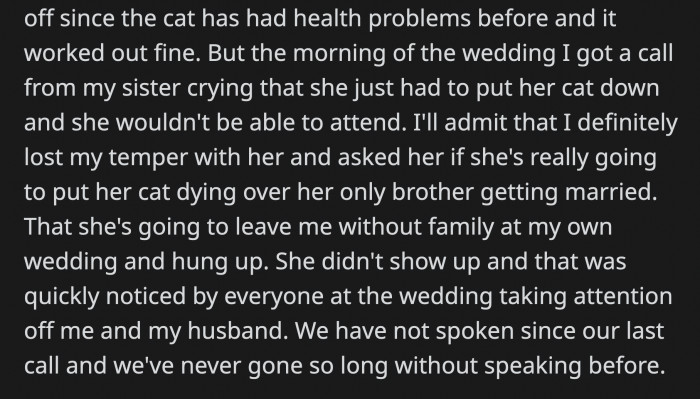
On the day of his wedding, OP got a tearful call from his sister. She informed him that she had to put down her cat, so she won't be able to attend the wedding.

OP flipped out and asked her if she was "going to put her cat dying over her only brother getting married."
He asked if she was really going to leave him without a family at his own wedding then proceeded to hang up. She didn't attend the wedding and they haven't spoken since.
The groom's outburst at his sister for not attending his wedding following the death of her beloved cat reveals the complexities of family relationships during times of emotional upheaval. Grief, as illustrated in this situation, is not a one-size-fits-all experience. The sister's profound loss after 19 years of companionship with her cat is a significant event that understandably took precedence over a wedding celebration.
This incident highlights the often unspoken societal pressures surrounding grief and the expectations placed on individuals during pivotal life moments. When the groom prioritized his wedding day over his sister's loss, it underscores a disconnect that can occur in family dynamics, particularly when one person’s grief is not recognized or validated by others. Such misunderstandings can lead to conflict, as seen in this scenario, where emotional support should ideally flow both ways.
The groom's reaction to his sister missing the wedding due to the death of her cat reveals deeper issues of family loyalty and grief.
Research in family psychology indicates that grief can significantly alter interpersonal relationships, often leading to misunderstandings and conflicts.
In this case, the groom may feel abandoned or unsupported during a significant life event, while the sister is grappling with her own grief.
Redditors did not shy away from calling out OP's dismissal of his sister's grief

Having a childhood pet grow up with you for 19 years is nothing to brush over...
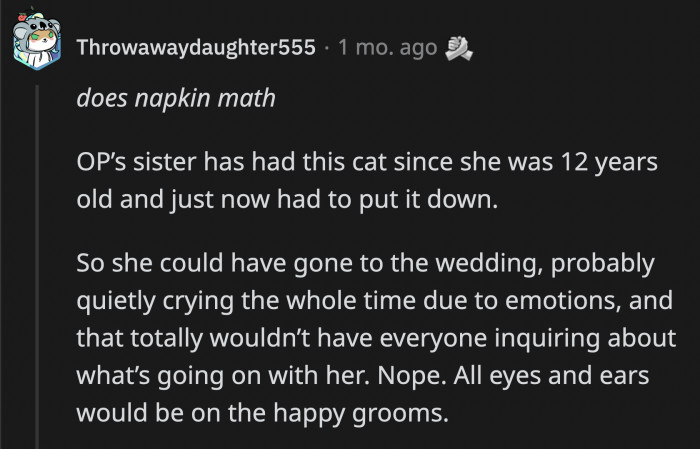
... sure OP's sister could have attended the wedding but that wouldn't accomplish OP's wish to have everyone's attention on their ceremony
Furthermore, the situation underscores the significance of emotional intelligence in navigating family relationships.
Attachment theory suggests that the bonds we form with pets can be as deep as those with family members.
When a pet dies, individuals may experience profound grief that mirrors the loss of a human relationship.
Studies show that this grief can lead to feelings of isolation and misunderstanding from others who may not recognize the significance of that bond.
OP did call his sister's cat "that thing" which can clue you in what OP thinks about his sister's pet

Did OP realize how awfully he reacted when he read these concise points?

Putting down an elderly and/or sickly pet is a kindness but that does not make it easy nor does it do anything for comfort

In the wake of a significant personal loss, the groom's reaction to his sister's absence at his wedding underscores the complexities of family dynamics during emotionally charged moments. Grief is inherently subjective, and while weddings are often viewed as joyous occasions, they can also become sources of tension when personal tragedies intersect with celebrations. The groom's insistence on his sister's presence, despite her heart-wrenching loss of a beloved cat, reflects a lack of emotional empathy that can fracture family bonds. Acknowledging and validating each other's feelings is essential in these scenarios, as it fosters a supportive environment rather than one steeped in conflict. The importance of emotional intelligence cannot be overstated, as it plays a critical role in navigating the delicate balance between individual grief and communal celebration.
This is similar to siblings who got accused of lying about skipping their brother’s 19-year cat funeral.
Grieving the loss of a pet is a complex process that can strain relationships, particularly when expectations clash.
In this scenario, both siblings could benefit from openly discussing their feelings to foster mutual understanding.
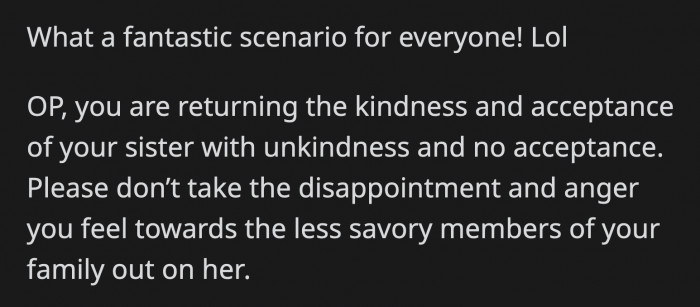
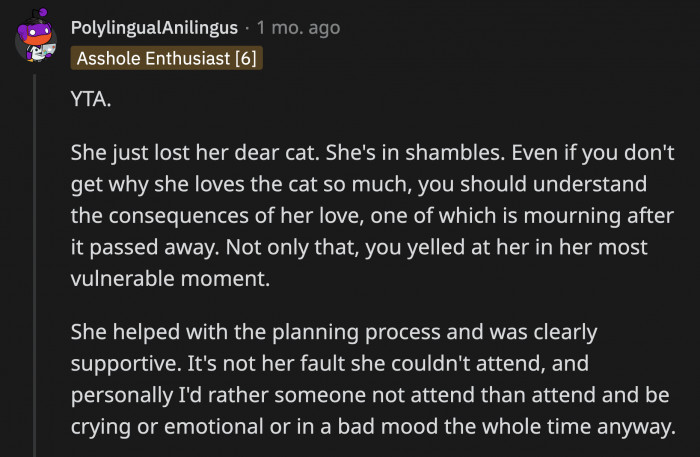
It's understandable that emotions were running high that day but OP could have handled things more maturely instead, he yelled at his sister while she was grieving the passing of a friend
OP's sister warned him about this scenario happening but he dismissed that...
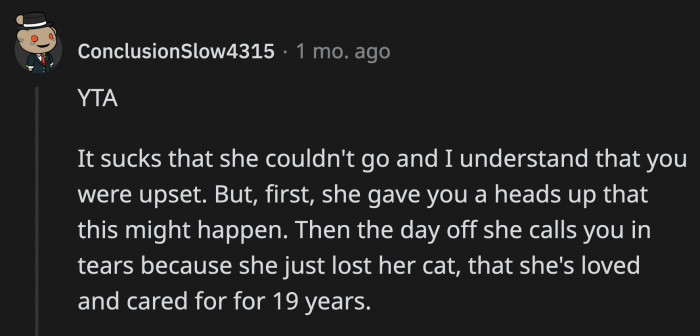
... when what she feared happened, he attacked her. That's not how you treat the people you love.

Establishing open communication about grief can help bridge the gap between differing emotional experiences.
This can enhance emotional support and strengthen familial bonds during difficult times.
OP's sister probably felt doubly bad that day; she couldn't attend her only brother's wedding that she helped to plan and she lost a beloved pet. That was not an easy day and OP could have been kinder.
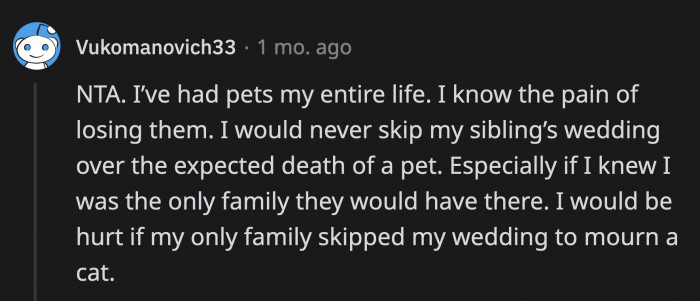
A commenter sided with OP and said that while they will be devastated by the death of a pet, they wouldn't miss their only sibling's wedding because of it
This very reasonable question was posted in response

Empathy plays a crucial role in navigating conflicts that arise from grief.
A lone commenter said that everyone handled the situation poorly and all of them were at fault for how things played out
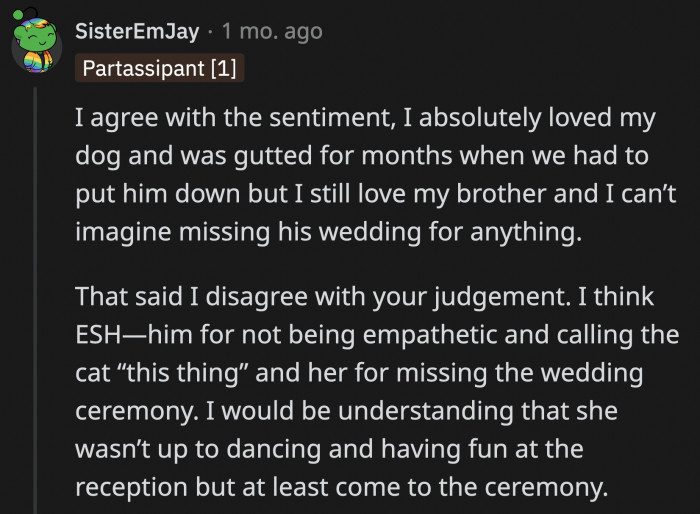
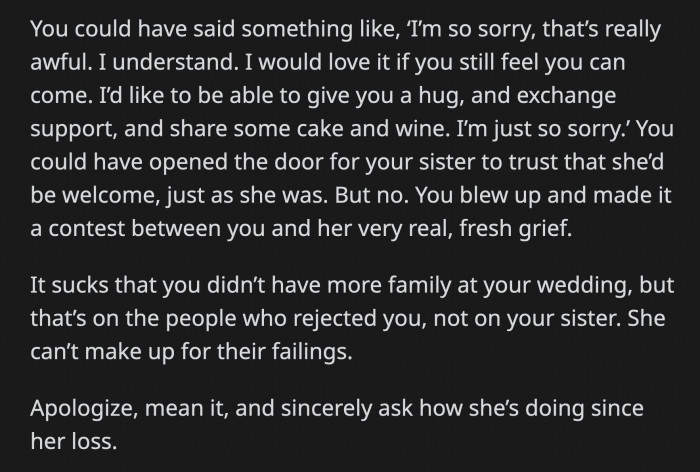
If OP apologizes to his sister sincerely, they may be able to repair their damaged relationship
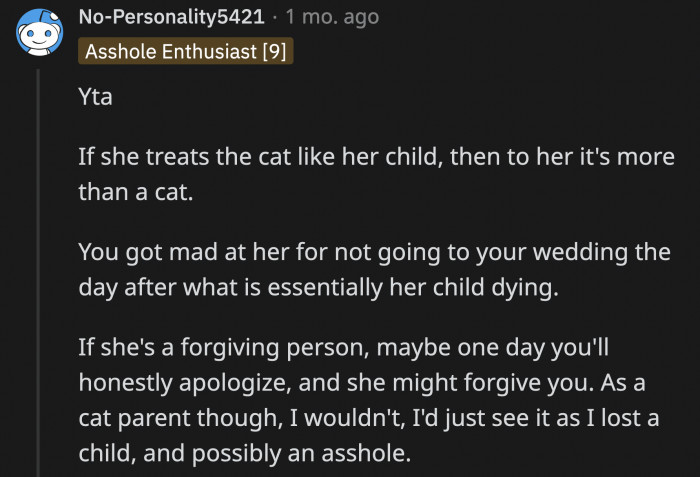
In the end, the replies telling OP that he was an a**hole outnumbered the ones that didn't

Encouraging family members to support one another through grief can foster a stronger sense of connection.
If you were OP's sister, would you have missed your only brother's wedding because of your grief, knowing that you were his only family in attendance? If you were in OP's position, how would you have handled your sister's tearful call informing you she wouldn't make it to your wedding because her cat died?
We understand why OP was hurt over his sister missing the wedding, but we also understand how deep his sister's grief was. One thing we know for sure: OP shouldn't cut ties with his sister just yet; their relationship can still be salvaged if they communicate.
Building a family culture that values emotional expression can help families navigate loss more effectively.
Encouraging family members to share their feelings can create a more compassionate and supportive home environment.
The recent incident where a groom yelled at his sister for missing his wedding due to the death of her beloved cat underscores the complexities of family dynamics during significant life events. This situation illuminates how grief can reshape relationships, especially when expectations clash with emotional realities.
Empathy and communication are vital in navigating such conflicts. The groom's reaction reveals a lack of understanding of his sister's profound loss, which speaks to a broader issue in familial relationships: the need for emotional support and compassion. When one family member experiences grief, it is essential for others to recognize and validate those feelings rather than prioritize their own milestones.
Encouraging an environment where family members can openly express their sorrow can pave the way for healing and reconnection. In this case, the sister's loss should have been an opportunity for the family to come together, rather than a reason for division. The potential for empathy can transform painful moments into opportunities for deeper understanding and support.
The recent incident involving a groom who reacted with anger towards his sister for missing his wedding due to the death of her beloved cat highlights the complexities of familial relationships during moments of grief. The sister's profound loss of a pet she had for 19 years deserves recognition and understanding, rather than condemnation.
This situation underscores the need for empathy and open communication within families. Celebrating milestones is important, yet acknowledging personal grief is equally significant. By fostering a culture of understanding, families can better navigate the emotional landscapes that accompany both joyous and sorrowful events.
For another wedding blowup, see the groom who banned his sister’s unruly dog.
Share this article: