
How Cats And Dogs Can Tell When Their Owners Are Sad

Some pets seem to know the second their person is having a rough day, and that tiny bit of timing can feel almost spooky. A sad face, a quieter voice, or a change in routine may be enough for a dog or cat to start hovering nearby, nudging for attention, or simply staying close.
That is the question behind this Reddit thread, where one user asked how cats and dogs can tell when their owners are sad, and why they often try to comfort them. The replies lean into body language, emotional cues, and the long history of domestication that shaped these bonds.
Here’s the full story.
How indeed

A lot of folks suggest maybe it boils down to their powerful senses

"They can notice physiological changes"

Pets, particularly dogs and cats, exhibit behaviors that suggest they can sense human emotions. Research conducted by animal behaviorists indicates that both species possess an innate ability to read human body language and emotional cues. For instance, dogs have shown a capacity to interpret human facial expressions, responding differently to happy versus sad faces, which suggests a level of emotional awareness that is quite advanced. This ability is thought to be a product of domestication, where animals who could better understand and respond to human emotions were favored for companionship.
These findings are consistent with the concept of emotional contagion, where one individual's emotional state can directly influence another's. A study published in the journal *Animal Cognition* found that dogs often mirror the emotions of their owners, indicating a shared emotional experience that can foster a deeper bond. This connection is not just beneficial for the pet owner but can also enhance the well-being of the pet, as studies have shown that animals who engage in emotionally supportive behaviors tend to experience lower stress levels themselves.
Research has shown that dogs possess a remarkable ability to sense human emotions, a trait that has evolved over thousands of years of domestication. This ability allows dogs to detect emotional cues from human facial expressions and vocal tones, enabling them to respond appropriately to their owners' feelings. This empathic connection not only strengthens the bond between dogs and humans but also enriches the emotional landscape of our lives.
That it could be evolutionarily benefical to pick up on slight changes in behavior

Or that it essentially boils down to body language

Animals are likely even better at noticing changes in body language

The phenomenon of pets comforting their owners during times of distress can be understood through the lens of attachment theory. This theory posits that strong emotional bonds facilitate a sense of security and safety. When pets sense their owners are sad, they may instinctively offer comfort, fulfilling this attachment need. A recent study from the University of Michigan found that pet owners reported feeling significantly less lonely and more emotionally supported when their pets were present during times of sadness. This suggests that the bond between humans and their pets can serve as a significant source of emotional support, allowing owners to process their feelings more effectively.
Furthermore, dogs can exhibit behaviors that suggest they understand their owners' emotional states, such as providing comfort during times of distress. Research from the University of Portsmouth indicates that dogs are more likely to approach and engage with their owners when they are displaying negative emotions, showcasing their innate desire to support.
This emotional responsiveness can lead to significant psychological benefits for owners, such as reduced feelings of loneliness and increased emotional resilience.
All animals, humans included, pick up on body language cues

Or a mix of both

Communication is a lot more than just talking

Animals, especially dogs, have been shown to possess a keen sensitivity to human emotional states, a trait that has evolved alongside their domestication. This ability aligns with the concept of social cognition, which refers to how individuals understand and navigate social interactions based on emotional cues. The research underscores that this empathetic behavior is not mere coincidence; rather, it is a learned response that has been reinforced over generations through their close relationship with humans.
Such findings support the notion that emotional intelligence is not exclusive to humans and that understanding emotional nuances is vital for social bonding in many species. This further indicates that pets may play a crucial role in their owners' emotional regulation, helping them cope with stress and sadness through non-verbal communication and companionship.
Understanding the psychological mechanisms at play in canine behavior can provide invaluable insights into the human-animal bond. Behavioral studies have shown that dogs are capable of reading human body language and adjusting their actions accordingly, which is a fundamental aspect of their social intelligence.
This social awareness allows dogs to engage with humans in ways that promote companionship and emotional support.
And because they care when they notice a change

Or that it is part of how selective breeding played out during domestication

The more friendly and responsive an animal was, the more likely they were used for breeding

The implications of having pets during emotionally challenging times extend beyond mere comfort; they can also serve as catalysts for emotional healing. Research indicates that pet ownership can lead to increased levels of oxytocin, often referred to as the 'love hormone,' which is involved in bonding and emotional connection. A study by the University of Tokyo found that interactions with pets can elevate oxytocin levels, thereby reducing feelings of loneliness and depression. This biochemical response illustrates how our pets not only provide emotional support but also contribute to our physiological well-being.
For those struggling with emotional distress, fostering a deeper bond with a pet can be an actionable recommendation. Engaging in activities such as playtime, training, or simply spending quiet moments together can enhance the emotional connection and improve overall mental health.
This social cognition is not only limited to understanding emotions but also extends to anticipating human needs.
The domestication of cats also plays into this theory

While domestication of cats helped, early socialization also plays a big role for cats

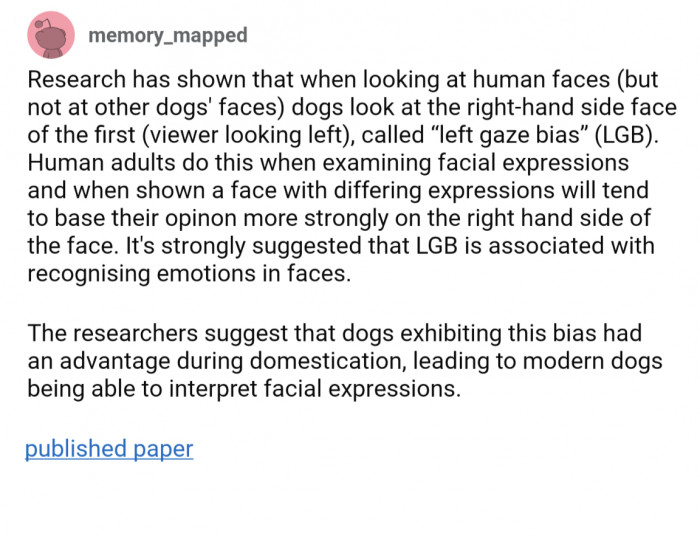
Maybe domestication led to dogs evolving "left gaze bias"
While the phenomenon of pets sensing human emotions is widely accepted, it's important to consider the role of confirmation bias in interpreting these behaviors. Confirmation bias refers to the tendency to favor information that confirms one's preexisting beliefs. A study published in the *Journal of Applied Animal Welfare Science* suggests that pet owners might attribute empathic behaviors to their pets more readily during times of personal distress, reinforcing their belief in the emotional intelligence of their companions. This can create a feedback loop where the owner perceives their pet's actions as comforting, thereby heightening their own emotional response and sense of connection.
Understanding this bias can help pet owners maintain a balanced perspective on their relationship with their animals. It can be beneficial to approach these interactions with a sense of curiosity, rather than strictly through the lens of emotional interpretation, fostering both personal and relational growth.
It’s similar to the 10 dog owners who shared how their pets grieved after losing their canine companion.
The emotional bond between dogs and their owners can indeed be illuminated by attachment theory.
Social emotional cues were benefical to everyone

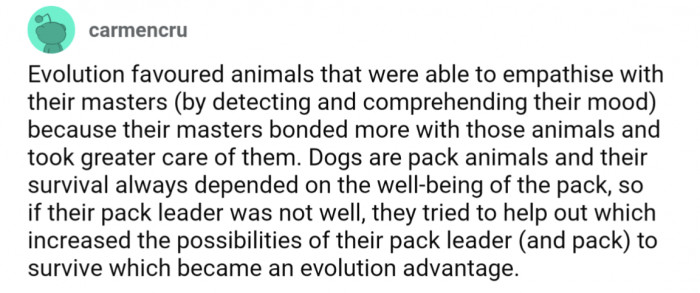
Another vote for evolutionary benefits
And others suggest more science-based reasons

Considering the emotional landscape of pet ownership, the practice of mindfulness can greatly enhance the bond between pets and their owners. Mindfulness, or being present in the moment, allows individuals to engage more fully with their pets, enhancing emotional attunement. When pet owners are mindful, they are better able to recognize their own emotions and those of their pets, leading to deeper connections.
Incorporating mindfulness exercises into daily routines, such as taking intentional walks with pets or engaging in focused play, can be a practical recommendation for enhancing this bond and improving overall mental health. This approach not only benefits the owner but also enriches the pet's experience, fostering a mutually supportive relationship.
For instance, a secure attachment to a dog can promote feelings of safety and trust, which are essential for emotional well-being. Understanding this attachment can help owners foster deeper connections with their pets, resulting in mutual benefits for both parties.
Owners should strive to create environments that support positive interactions, reinforcing the bond through shared experiences and understanding their dogs' needs.
Dr. Tal Ben-Shahar states, "Dogs have an incredible ability to sense human emotions, including sadness." This insight is supported by research on animal behavior and emotional intelligence. Additionally, Dr. Esther Perel emphasizes that "the bond between humans and their pets can provide comfort and understanding during difficult times," highlighting the emotional connection that pets share with their owners.

Perhaps it's about the phenomenon of "emotional contagion"

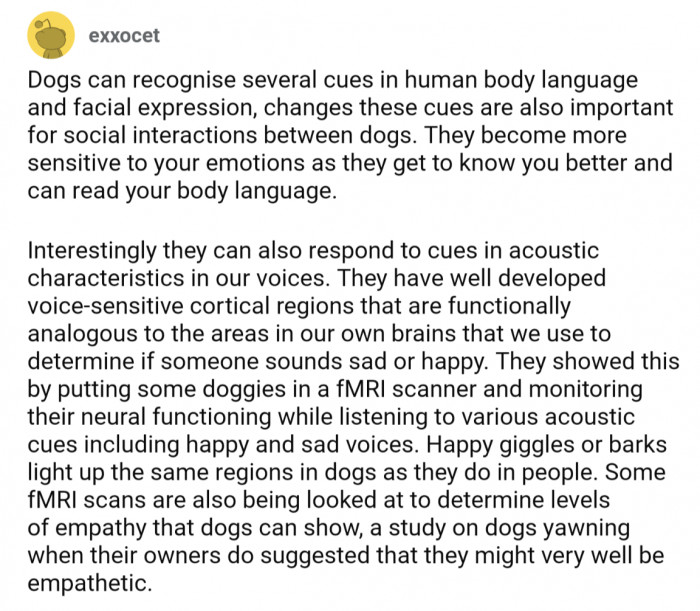
exxocet shares the science behind body language and vocal cues
Emotional regulation is a critical skill that can be enhanced through the companionship of pets.
Owning a dog has been associated with numerous psychological benefits, including decreased feelings of anxiety and depression.
Or that it's simply a matter of receiving what you give

Our pets want to take care of us because they love us

Another fascinating aspect of the human-animal bond is the way it can influence our perceptions of social support. This insight aligns with the social support theory, which posits that perceived support from others can buffer against stress and enhance resilience. A research article published in *Anthrozoös* emphasizes that the presence of pets can fill social voids, especially for those who may feel isolated or lack close human relationships.
For individuals experiencing sadness or loneliness, fostering a perception of pets as social supporters can be a valuable strategy. Engaging in community activities focused on animals, such as volunteering at shelters, can also expand one’s social network, further enriching emotional support systems.
Moreover, the routine and responsibility of caring for a dog can instill a sense of purpose and routine in an owner’s life. Engaging in regular walks and playtime not only benefits the dog's physical health but also contributes positively to the owner's mental well-being.
Establishing a daily routine can create a sense of normalcy, which is especially helpful during challenging times.
Humans are animals, too

Dogs: beacuse they care. Cats: because they care about your weaknesses

Simply put: empathy

Pets can also serve a therapeutic role, especially in the context of emotional distress. Animal-assisted therapy has gained recognition for its effectiveness in promoting mental health, and studies show that interactions with animals can lead to improvements in mood and reductions in anxiety. For example, research published in the *Journal of Emotional Disorders* demonstrates that therapy dogs can significantly alleviate symptoms of depression and anxiety in individuals undergoing treatment. This underscores the potential of animals to act as facilitators of healing, allowing individuals to express emotions more freely in a non-judgmental environment.
For those considering this route, it may be beneficial to explore therapy programs that incorporate animals, or even to consider training a pet as a therapy animal. The act of caring for a pet, alongside the emotional connection formed, can enhance overall therapeutic outcomes and promote mental wellness.
Creating a supportive environment for dogs is essential for promoting their well-being as well as that of their owners. Understanding a dog's emotional needs can lead to more meaningful interactions and a stronger bond.
Research suggests that providing mental stimulation, such as puzzle toys or training exercises, can enhance a dog's cognitive abilities and emotional health.
A General Theory of Love

Other commentors shared their own experiences with their animals showing empathy

This user accidentally taught his cat to be attentive when sneezing

Owners can take proactive steps to engage their dogs through various activities that promote mental and physical health.
Two commentors share experiences about dogs picking up on queues from people they don't personally know

Poppy the pug was very in-tune with her owner, and then her owners child

Have you experienced your pet attempting to comfort you when you were upset? What sort of pet was it, and what happened?
Tell us about your experience in the comments section below, and be sure to include your theory as to why or why not our beloved furry companions can tell when we’re sad or otherwise in need of comfort.
The article highlights how these loyal companions respond to human emotions, providing comfort in times of distress. This innate emotional intelligence not only strengthens the connection between pets and their owners but also facilitates a mutual understanding that can lead to greater emotional well-being for both. By recognizing and nurturing these dynamics, pet owners can deepen their relationships with their furry friends, creating a supportive environment that benefits everyone involved.
The article poignantly illustrates the remarkable emotional intelligence of our pets, particularly how dogs and cats can intuitively sense when their owners are feeling down. This connection goes beyond mere companionship; it highlights a profound bond that can significantly enhance our emotional well-being. The instances of pets attempting to comfort their owners during distress signal an instinctual understanding that can foster healing and provide essential support.
Moreover, the emphasis on cultivating a deeper connection with our pets through mindful interactions and shared activities underscores the importance of recognizing their roles in our lives. By acknowledging that these animals are not merely pets but integral parts of our emotional landscape, we can enrich our experiences and enhance our overall mental health. The research presented serves as a reminder of the invaluable contributions that our furry friends make to our emotional resilience and social support systems.
After reading about cats and dogs sensing your sadness, see how owners described dogs mourning other family pets, even visiting a buddy’s grave.
Share this article:





