
Online Community Criticizes Irresponsible Cyclist for Speeding Through Sidewalk and Almost Hitting Dog

When it comes to riding bikes in cities and on sidewalks, it's important to be mindful of safety and local regulations. Laws vary from city to city, so what's allowed in one place may be illegal in another.
Before deciding to bike on a sidewalk, take a moment to check your city's rules. Aside from legal considerations, biking on sidewalks can be risky for everyone involved—bikers, pedestrians, pets, and drivers alike.
Sidewalks generally have slower foot traffic, making it challenging for cyclists to maneuver safely. Pedestrians and drivers may not anticipate faster-moving bikers, leading to unexpected encounters and potential accidents.
Unfortunately, some people, like this Redditor, don't bother following the rules. They almost hit a dog while cycling on a sidewalk.
This Redditor's side of the story was shared on the "Am I The A**hole?" (AITA) subreddit. According to the original poster, they were riding their bike on the sidewalk at a moderate speed when they noticed two dogs on the grassy area near the curb.
As the dogs moved toward the sidewalk, the Redditor had to make a quick decision—come to a complete stop or try to ride past them. Feeling that there was enough room and time to safely pass, they opted to speed up slightly and maneuver around the dogs.
Thankfully, they managed to avoid hitting the dogs, but the situation was close enough to startle the dogs' owner, who reacted with frustration and disbelief, exclaiming, "REALLY? REALLY?"
A cyclist who rode their bike on the sidewalk asked this question:
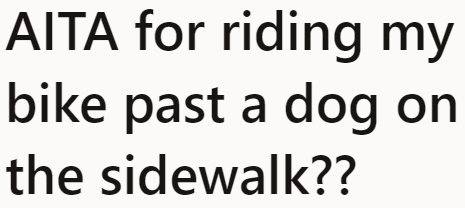
Instead of stopping, the OP took the risk by speeding up and riding past an owner with two dogs.

OP asked the internet for input, then immediately got roasted for speeding past a dog owner instead of slowing down on a pedestrian path.
The incident involving the cyclist speeding through a sidewalk, narrowly missing a dog, underscores the critical importance of risk perception in urban riding. Many cyclists, bolstered by a sense of confidence in their abilities, may underestimate the potential dangers their actions pose to pedestrians and animals alike. This overconfidence often leads to reckless behavior, as seen in this unfortunate scenario. The article highlights that local regulations vary significantly, which can further complicate a cyclist's understanding of safe practices. It is essential for riders to be acutely aware of their surroundings and the emotional responses of those around them. By fostering a greater awareness of these psychological factors, both cyclists and pedestrians can contribute to a safer, more considerate public space.
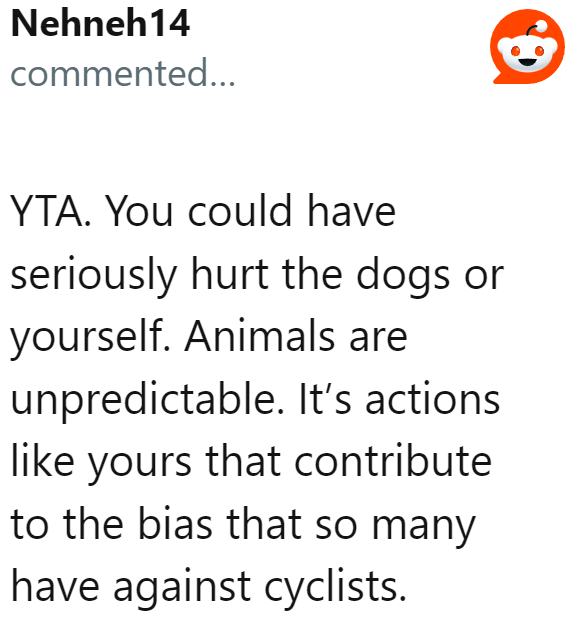
People heavily criticized the OP for their actions, especially since they did not prioritize pedestrian safety on a path designated for pedestrians.
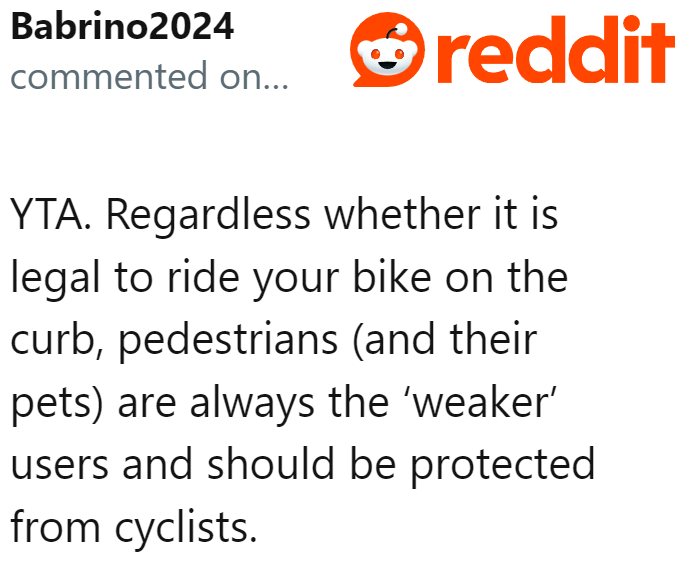
Adults should use the road for biking; kids are the only ones who can legally use the sidewalk for biking.
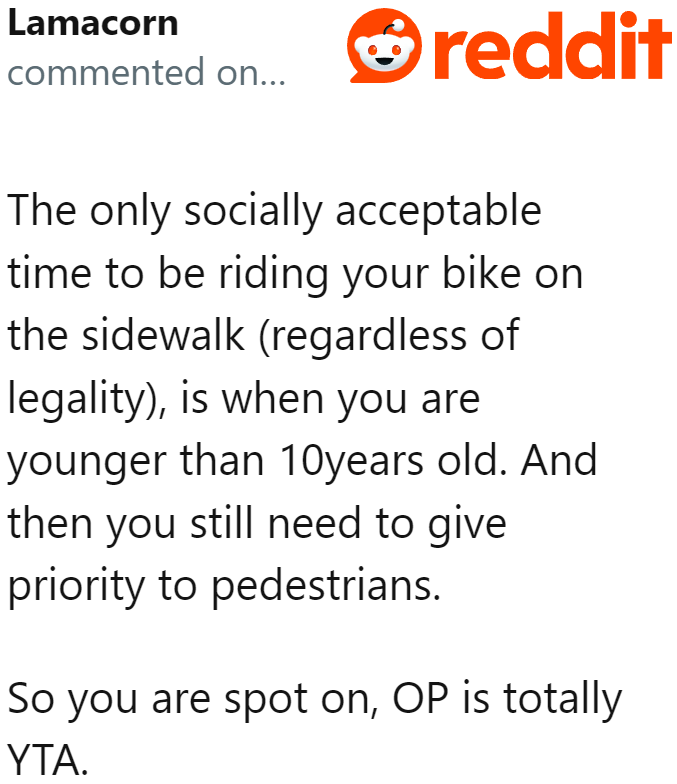
The owner with two dogs was basically the main character here, because the OP’s “just passing through” moment turned into a near collision.
The incident of the cyclist speeding through the sidewalk not only raises immediate safety concerns but also reflects a broader social context that can encourage such reckless behavior. Observing others flouting safety norms can create a sense of acceptance around risky practices, making individuals more likely to engage in them themselves. This normalization of irresponsibility can lead to a dangerous cycle where the lack of accountability fosters an environment where safety takes a backseat to thrill-seeking. In communities where such behaviors go unchecked, the potential for harm increases, both for pedestrians and cyclists alike.
It echoes the driver who failed to see a dog in pitch-black darkness.
The OP doesn't realize that they not only risked themselves but also the dogs and their owner.
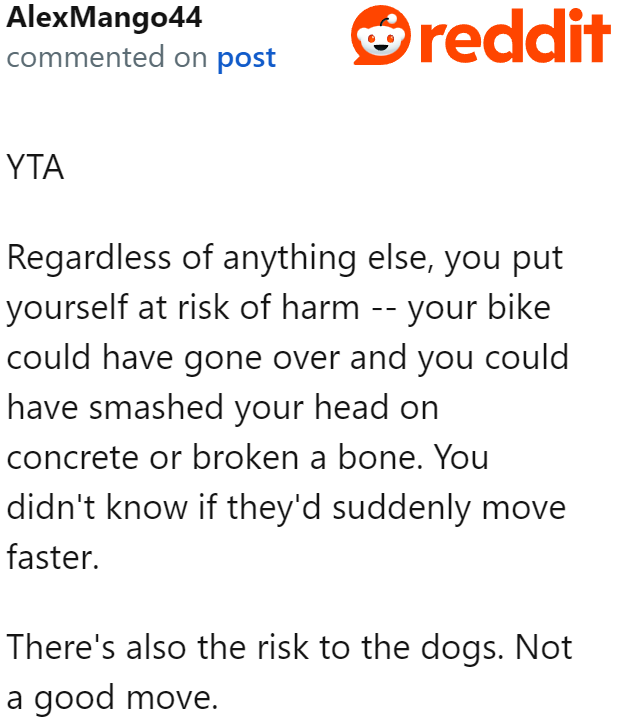
One thing the OP could have done.

People kept pointing out that “confidence” does not matter when you’re barreling through a sidewalk that is not meant for adult cyclists.
Promoting Safe Cycling Practices: Practical Strategies
To mitigate risky behaviors, education on safe cycling practices is essential.
Dogs do not know the rules of the road.
On the other hand, the OP is the one expected to follow the law. The OP should be the one adjusting to this situation.
It's called a sidewalk for a reason.
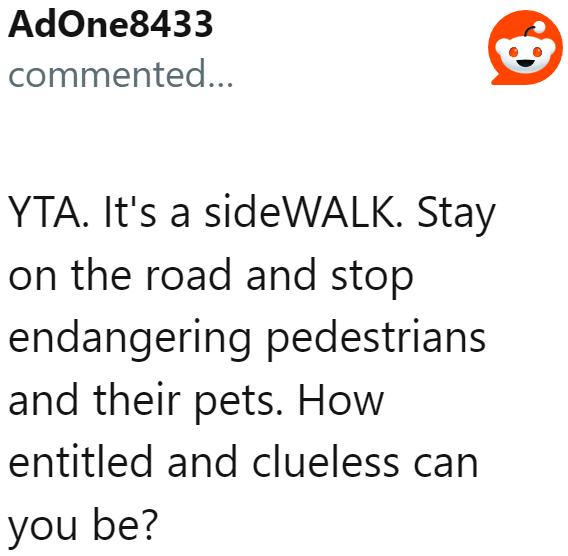
By the time the thread circled back to the OP’s choices, commenters weren’t just mad about the risk to pedestrians, they were mad about the risk to the dogs too.
Maybe the OP thought that biking on the sidewalk was safer. But in reality, it's much riskier for both the cyclist and the pedestrians.
In a study conducted in California a couple of decades ago, it was discovered that cyclists on sidewalks were 1.8 times more likely to be involved in accidents than those on the street. Specifically, sidewalk cyclists traveling against the flow of traffic faced a collision risk 5.3 times higher than those biking with traffic.
Additional research has consistently indicated that sidewalk biking increases the likelihood of bicycle collisions. In other words, even if the dogs weren't there, the OP was wrong from the very beginning.
Next time, they should just take the road and be more responsible cyclists.
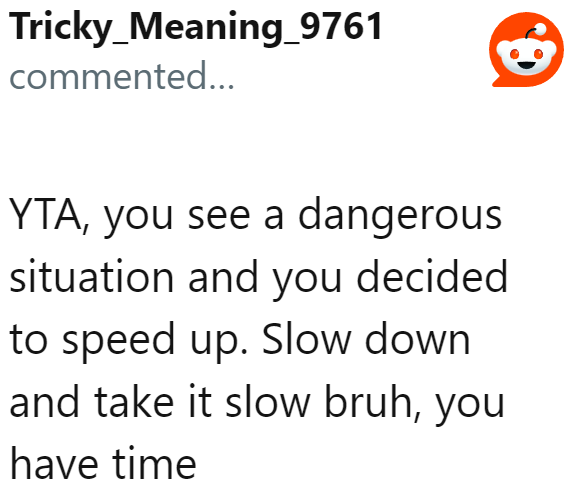
What's the point of speeding up? The OP has plenty of time, anyway.
The article highlights the varying regulations regarding cycling on sidewalks, underscoring the importance of awareness and adherence to local laws. Promoting a culture of safety and respect among cyclists and pedestrians alike is essential for preventing accidents and ensuring that public spaces remain safe for everyone. As communities grapple with these issues, it is vital to cultivate a collective sense of responsibility that prioritizes the well-being of all who use these shared environments.
Nobody in that thread cared that the OP felt in control, because the dogs were the ones paying for the attitude.
For another off-leash dog fiasco, see the biker who crashed and blamed a Labrador.
Share this article:





