
Brave Photographer Waits 117 Hours in Freezing Temperatures to Capture First Photos of Polar Bear Cubs Leaving Their Dens for the First Time

Deep in Manitoba's Wapusk National Park, a rare wildlife moment unfolds each winter as polar bear mothers emerge from their maternity dens with newborn cubs in tow. For photographer Daisy Gilardini, capturing it meant days of waiting in brutal cold, with wind, snow, and near-total uncertainty shaping every hour in the field.
She spent 13 days there and logged 117 hours in subzero temperatures before getting the first photos of the cubs leaving their den. The payoff came after long stretches of patience, frozen gear, and a lot of luck.
When the bears finally appeared, the results were worth the wait.
Every year, from mid-February to mid-March, an interesting event takes place at Wapusk National Park in Manitoba, Canada
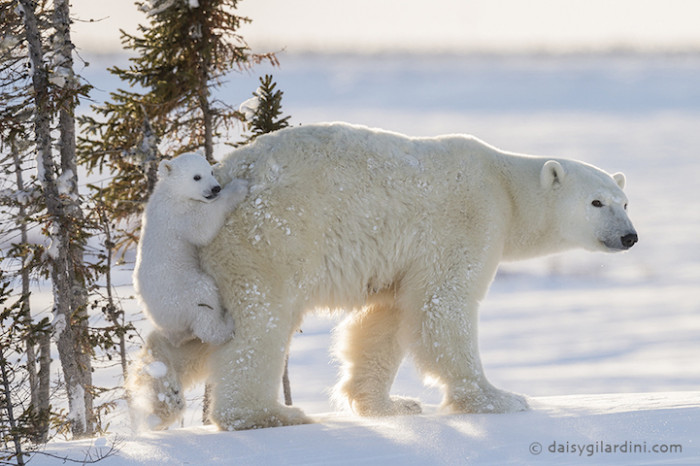
Polar bear mothers leave their maternity dens for the first time since November with their newborns.
Wildlife photographer Daisy Gilardini spent 13 days in the wild, waiting to capture that moment
Gilardini also avoids exposing her equipment to the weather by keeping her camera in her bag when the bears are in their den. Keeping warm is crucial, which means layering up to three times in those temperatures.
She continues, "I normally wear three to five layers, both bottom and top, with at least one or two made of down feathers." Three pairs of gloves, two pairs of heavy socks, insulated boots, a balaclava, and a neoprene face mask completed her ensemble.
Gilardini's patience was rewarded at the end of her time in the snow. With five different polar bear sightings, she had 12 hours of effective shooting.
In the field, the most memorable episode is when we encountered this mama bear resting with her two young cubs in a day den on the way to the pack ice. Day dens usually consist of wind-protected areas such as snowdrift refuges or tree shelters.
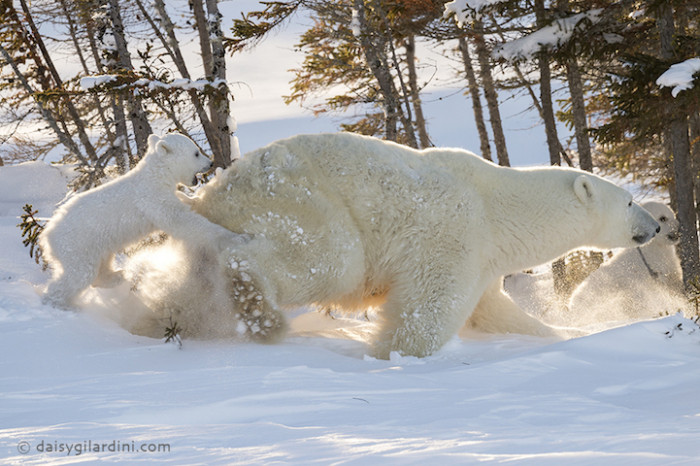
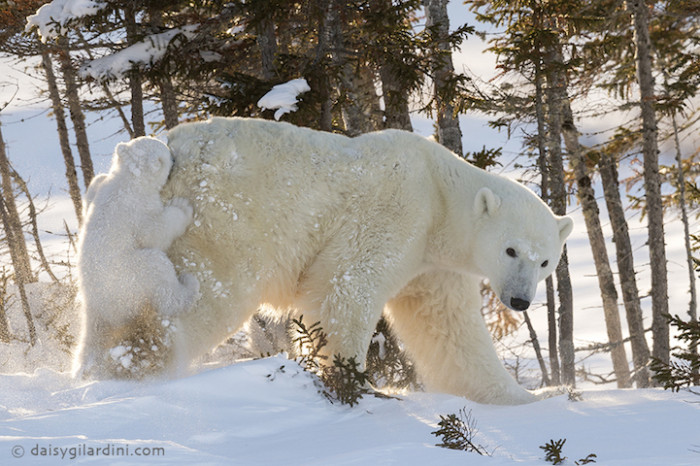
She was extremely calm when our vehicle reached the location, and we could photograph her and the cubs for a few hours before she suddenly decided it was time to leave. She rushed downhill in deep snow when one of the two cubs decided it was much more convenient to hitch a ride on mama's behind.
He jumped and reached out, holding on with a firm bite on mama's fur backside: an extremely funny and totally unexpected behavior. Wildlife photography is all about patience and perseverance, but despite the challenging conditions and the long hours of waiting, the...[truncated]
Gilardini’s polar bear moment is heartbreaking in the same way as the starving bear video that shows the impact of climate change.
That was the moment everything came together.
And she's done it
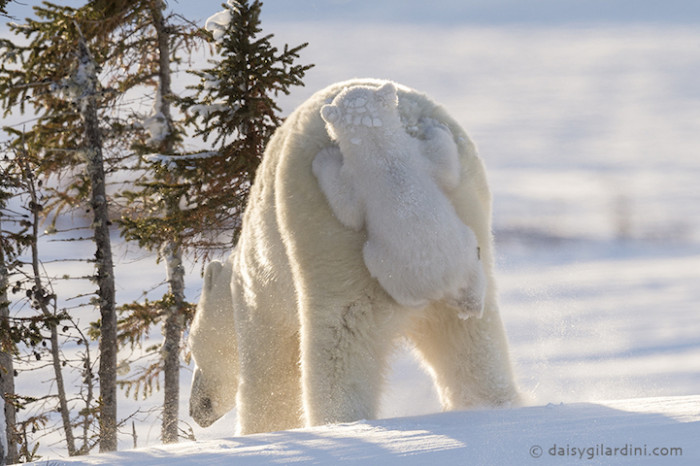
She endured wind gusts reaching 43 mph and freezing temperatures.
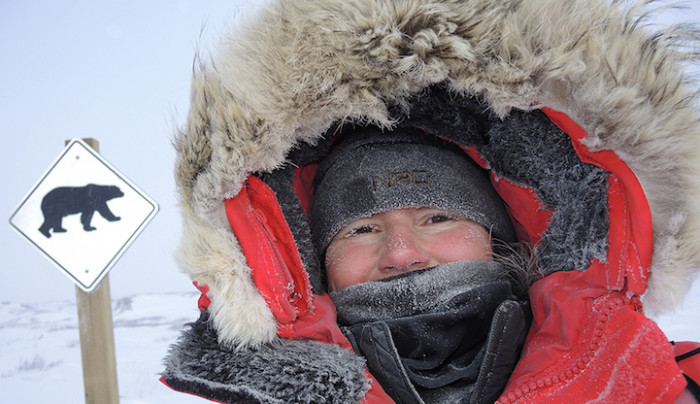
Gilardini hopes that her photographs and short video will prompt us to consider how our daily actions affect the environment.
"If humankind wants to survive and evolve with our planet, we have to act responsibly," she says, "by acknowledging with humility that Nature does not depend on us, but we depend on Nature."
"Science is the brain," Gilardini continues, "while photography is the heart, and we need to reach people's hearts and emotions in order to move them to action, for Nature and for us."
We couldn't agree more.
What a payoff after all that waiting.
See how Daisy Gilardini endured 117 hours of freezing cold to get her shots.
Share this article:





