
Craigslist Ad Poster Refuses To Shell Out More Than $300 For Purebred GSD, Gets Called Choosing Beggar By An Online Community

A Craigslist post for a purebred German Shepherd turned into a full-on online roast, and it all started with one number: $300. That’s the budget the poster said they’d pay for a purebred GSD, and Reddit users were not having it. The comments piled up fast, with people calling the poster a “choosing beggar” type, basically saying the offer was insulting and that the dog would be set up to suffer because responsible breeding and care cost real money.
By the time the thread was done, it wasn’t just about the price, it was about entitlement and how the community reacts when someone tries to score a deal that ignores what a purebred actually involves.
A Redditor shared a Craigslist ad of someone looking for a purebred German Shepherd Dog.

This person wants a purebred GSD for not more than $300.
The stated amount is way off the price range for such a dog breed. From the looks of it, you can already tell that this person will neglect the dog.

People like this should never own a German Shepherd or any breed of dog.
This person probably wouldn't take care of the dog properly.

The minute Reddit saw the “purebred German Shepherd, $300 max” line, people started side-eyeing the poster’s priorities.
The decision to cap spending at $300 for a purebred German Shepherd highlights a prevalent attitude often referred to as entitlement. This mindset can foster unrealistic expectations regarding what individuals feel they should receive in exchange for their money. In the context of pet ownership, particularly with a breed like the German Shepherd, which is known for its intelligence and loyalty, such an expectation overlooks the significant effort and resources breeders invest in producing quality dogs.
This refusal to acknowledge the true value of a purebred puppy can lead to strained interactions within the community. As seen in the online backlash, the poster's stance is not just about financial limits but also reflects a deeper disconnect from the realities of responsible pet ownership. This behavior risks alienating potential supporters and reinforces a cycle of dissatisfaction and resentment towards both breeders and the broader dog-loving community.
The situation surrounding the Craigslist ad for a purebred German Shepherd puppy highlights a troubling trend in consumer behavior, particularly the reluctance to pay what is deemed a fair price. This reluctance often stems from a misguided sense of entitlement, where individuals feel justified in seeking a deal that undermines the true value of the animal. The online community's reaction to the poster's unwillingness to pay more than $300 reveals a collective frustration with this mentality, which devalues the time, effort, and expertise that breeders invest in their dogs.
The case further illustrates how such entitlement can skew perceptions of worth, complicating negotiations and breeding discord among pet seekers and breeders alike. As the article notes, the cost of a German Shepherd can vary significantly, reflecting not only the breed's quality but also the dedication and resources that go into raising a healthy and well-socialized puppy. It raises an important question about how we value companionship and loyalty in our pets, as well as the responsibilities that come with bringing them into our lives.
The ad poster did mention that the dog won't be driven over, so it's likely that their property is unfenced.
Letting the dog outside unleashed will be a bad idea, though. It could attack others.

How the ad needs to be according to a couple of upset Redditors.
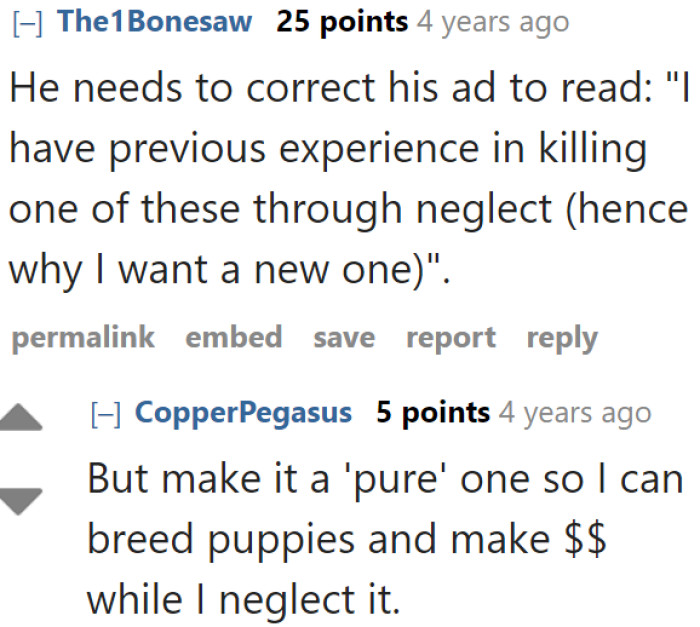
No one should give the ad poster what they want.

Then the comments went from “that’s not the going rate” to “this person will neglect the dog,” based on the vibe of the ad.
The dynamics of such interactions can also be understood through the lens of social exchange theory, which posits that human relationships are formed by the use of a subjective cost-benefit analysis.
This imbalance can perpetuate feelings of frustration and withdrawal from social support networks.
This feels like the people shocked by a $400 bike trade offer for a dog.
Additionally, financial constraints can significantly impact decision-making, leading to irrational bargaining behaviors. Individuals under financial stress may struggle to assess the true value of goods and services, which can result in unrealistic expectations in negotiations. Research indicates that when people are in a financial bind, their cognitive resources are often depleted, making it harder to think logically and make balanced decisions.
Understanding the psychological underpinnings of these behaviors can enhance awareness of how financial pressures influence negotiations.
People who let their pets roam free outdoors are irresponsible dog owners. They shouldn't own a dog.

The ad poster says they have experience, but clearly they don't know how to be a proper GSD owner.

Let's just hope nobody actually gives this person the dog.

As the thread kept going, the poster’s refusal to pay more got labeled as entitlement, not a simple budget.
In the context of the Craigslist ad for a German Shepherd puppy, the dynamics of value and fairness come into sharp focus. The poster's unwillingness to pay more than $300 for a purebred GSD highlights a common issue in pet ownership discussions: the disparity between perceived and actual value. While German Shepherds are celebrated for their intelligence and loyalty, the poster's low budget reflects a misunderstanding of the commitment and resources involved in acquiring a quality dog.
When potential pet owners fail to recognize the effort and costs associated with responsible breeding and care, it disrupts the balance of fair exchanges in the community. This situation not only leads to frustration among breeders and sellers but also diminishes the overall respect for the breed itself. Understanding the true value of these animals fosters a healthier relationship between buyers and sellers, enhancing the sense of community that is essential for responsible pet ownership.
Reciprocity plays a crucial role in negotiations, and fostering a culture of mutual respect can improve outcomes for all parties involved. When individuals recognize the importance of give-and-take, they are more likely to engage in fair negotiations. Research indicates that promoting reciprocity can lead to more successful outcomes, reducing the likelihood of conflict and resentment.
Encouraging practices that emphasize shared goals and collaborative problem-solving can foster a spirit of cooperation, ultimately leading to healthier exchanges.
Attacks from dogs like the GSD can be lethal. Hence the OP's expression.

At 300 bucks, nobody would probably give this person a purebred German Shepherd Dog. If this ad poster intends to let their dog run around freely on their property, then we hope nobody actually sells them one.
Because even if dogs are trained to only run within a property, there's a huge chance that they'll go beyond their owner's yard when triggered. And they'll just be contributing to the list of dogs that get put down for becoming a public safety concern, which is heartbreaking.
And once the community started linking that mindset to responsible pet ownership, the backlash hit a boiling point.
Furthermore, empathy is essential in navigating negotiations.
The recent Craigslist ad controversy surrounding the refusal to pay more than $300 for a purebred German Shepherd sheds light on the complexities of value perception in pet ownership. In this case, the poster's insistence on a low price reflects a lack of understanding of the inherent worth of a dog bred for specific traits, such as intelligence and loyalty, often seen in German Shepherds. This situation highlights the importance of recognizing the mutual respect expected in such negotiations. When individuals undervalue these qualities, it not only affects the seller's perspective but also diminishes the potential bond between the owner and the pet. Empathy in negotiations, especially regarding living beings, can lead to more satisfactory outcomes for all involved, fostering a deeper appreciation for the companionship that these dogs offer.
Engaging in gratitude exercises can foster a greater understanding of what others contribute, reducing feelings of entitlement.
When individuals acknowledge and appreciate each other's efforts, it can enhance social bonds and encourage reciprocal generosity.
Additionally, creating spaces for open communication about expectations can help mitigate misunderstandings.
The recent Craigslist saga surrounding a poster's refusal to pay more than $300 for a purebred German Shepherd highlights a troubling trend of entitlement in pet ownership. The poster's expectation to acquire a dog known for its intelligence and loyalty at a bargain price raises questions about the value placed on living beings versus monetary considerations. This situation reflects a broader societal issue where the desire for a high-quality companion conflicts with a reluctance to invest appropriately in its well-being. The online community's response as they labeled the poster a "choosing beggar" underscores a collective frustration with this mentality, suggesting that empathy and respect for breeders and the animals themselves are essential for fostering healthier relationships within the pet ownership landscape.
Nobody wants to pay $300 for a purebred German Shepherd and feel like the dog is the one getting shortchanged.
After that $300 “take it or leave it” demand, see how a free purebred poster set demands too.
Redditor Shares Screenshot Of Someone Asking To Get Purebred Dog For Free, Even Has List Of Demands On TopShare this article:





