Young Woman Is Angry At Her Parents For Making Her Take In Their Elderly Family Cat They Got Bored With

Some family favors come with a catch, and this one involves a 17-year-old cat named Macs. What started as a temporary arrangement quickly turned into a messy argument about responsibility, guilt, and who should actually be caring for an elderly pet.
OP grew up with Macs, who has lived with her parents for years and is used to being indoors and outdoors. Now her mom wants OP to take him in during a house renovation, even though OP lives in an apartment with no outdoor space. The problem got worse when OP realized her parents did not seem to want Macs back at all.
That is where the family drama really kicked in, and the Reddit comments did not hold back.
OP asks:

She and her siblings grew up with a family cat called Macs. They all moved out, and the cat remained in their family home with their parents.
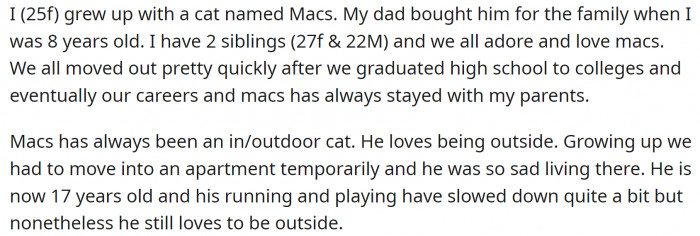
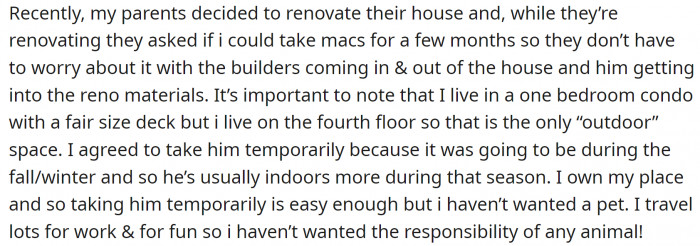
Her parents decided to renovate their house and asked OP to take Macs until the renovation is complete.
The situation described reflects complex family dynamics, often rooted in unbalanced expectations and responsibilities.
This situation highlights a common theme in family dynamics, particularly involving adult children and their parents. Feelings of resentment often arise when individuals feel burdened by responsibilities that they did not choose for themselves. This feeling can be exacerbated when the obligation involves caring for a pet, which many young adults may see as an infringement on their autonomy.
Research shows that the transition into adulthood often involves renegotiating boundaries with parents, and this can lead to conflict when expectations are not aligned.
OP agreed, but was surprised to find out that her parents didn't want the cat back.
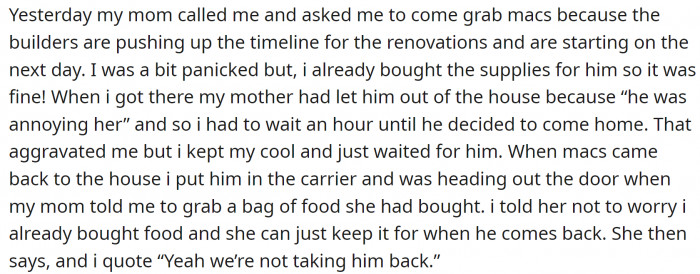
This made OP furious. They wanted to give away an elderly cat that's already set in its ways, and to a person who doesn't have the proper conditions to keep it.
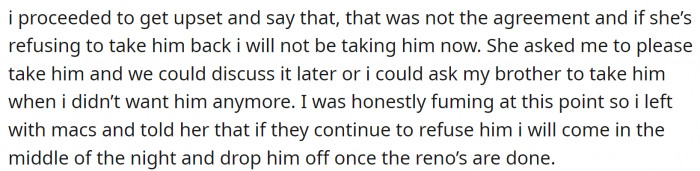
OP's siblings think she is being overdramatic about this (but none of them offered to take the cat in), but she has support from her boyfriend and an aunt. Is she right?

Psychologists emphasize the importance of setting boundaries in familial relationships.
This also echoes the older sister who had to put her foot down after her younger sisters bullied her into caring for an aggressive cat.
From a psychological perspective, the concept of 'emotional labor' is particularly relevant here. Emotional labor refers to the process of managing feelings and expressions to fulfill the emotional requirements of a job or relationship. In this case, the daughter may feel compelled to perform emotional labor in caring for the cat, which can lead to feelings of anger and frustration.
Studies suggest that when individuals perceive that they are obligated to take on emotional labor without consent, it can lead to feelings of burnout and resentment. It’s essential for family members to discuss their feelings openly to avoid misunderstandings and emotional overload.
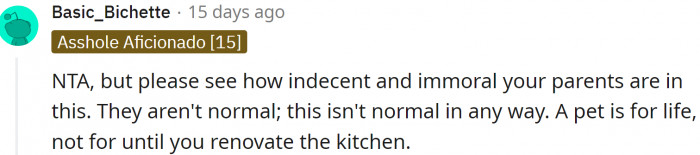
Redditors agree:
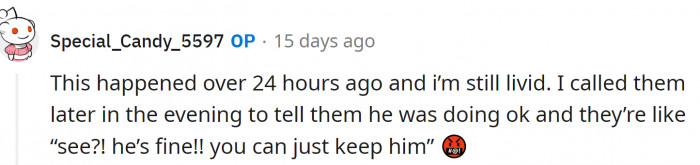
OP added:
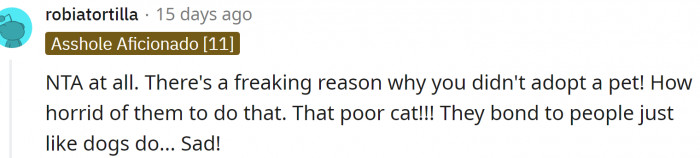
Cats bond with people. Fifteen years is enough to bond even with a rock, let alone a living being.
Emotional labor is another critical concept in this context. Emotional labor involves managing emotions to fulfill the emotional needs of others, often at the expense of one's own well-being. The young woman's feelings of anger may stem from the emotional burden placed on her by her parents' choices.
Recognizing this dynamic can be liberating, as it allows individuals to understand the extent of their emotional investment and the need for self-care. By identifying when they are performing emotional labor, individuals can take steps to prioritize their own mental health.
To navigate this complex situation, it's crucial to establish open lines of communication. Family therapy can provide a structured environment where each member can express their thoughts and feelings without judgment.
Additionally, setting boundaries about responsibilities can help alleviate feelings of resentment. Creating a shared agreement about who is responsible for the cat's care, as well as exploring alternative options like rehoming the pet, can lead to a more equitable solution for everyone involved.
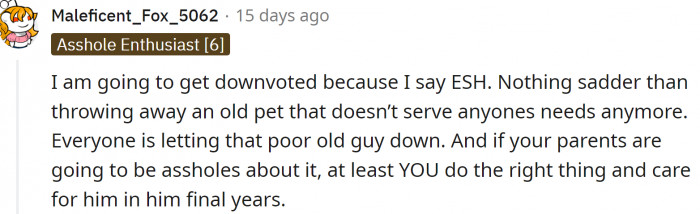
Redditors urge OP not to give up the cat.
OP clarifies that she is not going to abandon the cat - she is just mad about the whole situation.
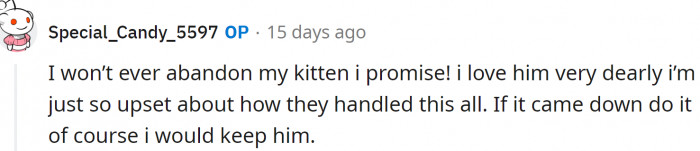
OP’s words sound really reassuring. She is not going to abandon the cat, and that’s the most important thing.
Luckily, this cat has someone to take care of it. It is sad to see, though, that a family that spent 15 years of their lives with that cat is willing to give it away so easily.
And none of the siblings is volunteering to take Macs in… So sad.
That poor cat. We wonder if it is aware of all that drama.
The young woman's anger toward her parents for shifting the responsibility of their elderly cat onto her underscores a common dilemma in family dynamics. When family members fail to communicate their expectations and responsibilities, it can lead to feelings of resentment and obligation. Addressing these emotions early on is vital to avoid deeper relational conflicts. Prioritizing discussions about pet care responsibilities not only helps in making informed decisions but also strengthens family bonds, allowing for a more supportive environment for both humans and their pets.
In this situation, the young woman’s frustration highlights a common struggle within family dynamics.
OP is not wrong for being upset, and Macs deserves better than a rushed handoff.
Her parents dumping the “temporary” cat care turned into a full-blown fight, like in the argument after a family forced child cat responsibilities she never wanted.
Share this article: