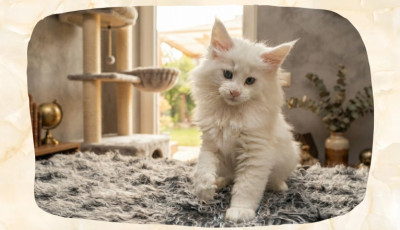
Online Community Roasts a Choosing Beggar Trying to Get a Free $1,000-Worth Cat from Strangers

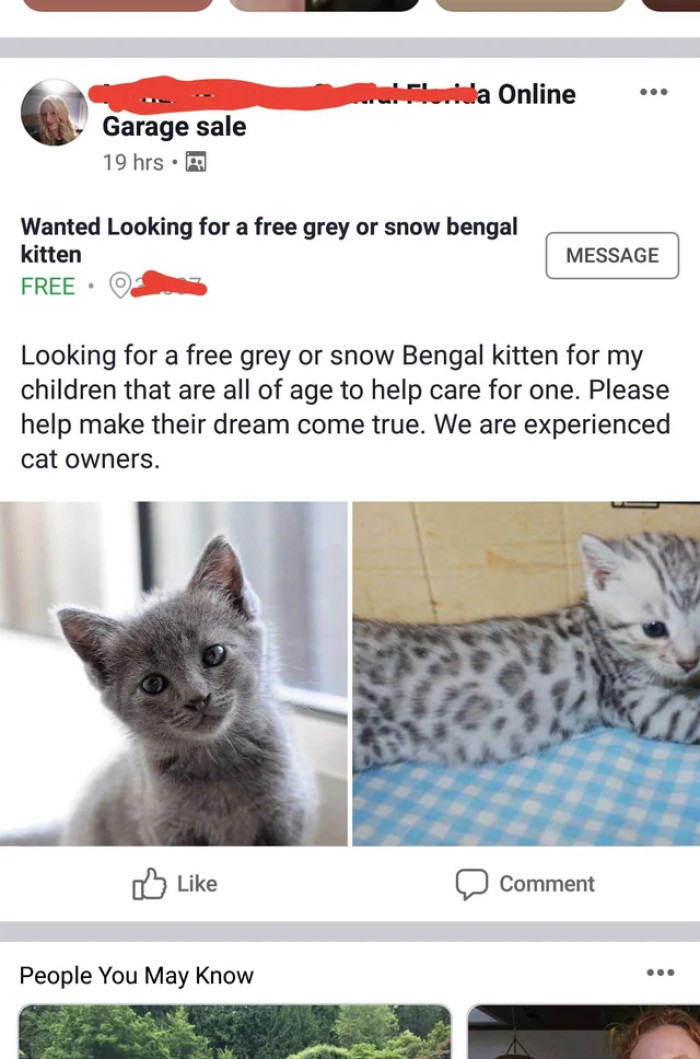
Some people don’t recognize a favor, they treat it like a vending machine. In this Reddit thread, a choosing beggar popped in with a very specific request: a free $1,000 cat, and it had to be grey. Not “any cat,” not “I’ll cover supplies,” just straight-up, give me the expensive one, on my terms.
What made it extra messy was the vibe shift from “could someone help?” to “here are the requirements.” Redditors immediately started roasting the logic, comparing it to asking for a fully loaded meal while insisting the cook also pay for your ingredients. And when they dug into what it actually means to own a Bengal, the replies got even sharper, because this isn’t a casual pet situation.
By the time the thread was done, the grey Bengal request looked less like kindness and more like entitlement with a litter box.
"I want a free $1,000 cat; also, make sure it's grey"
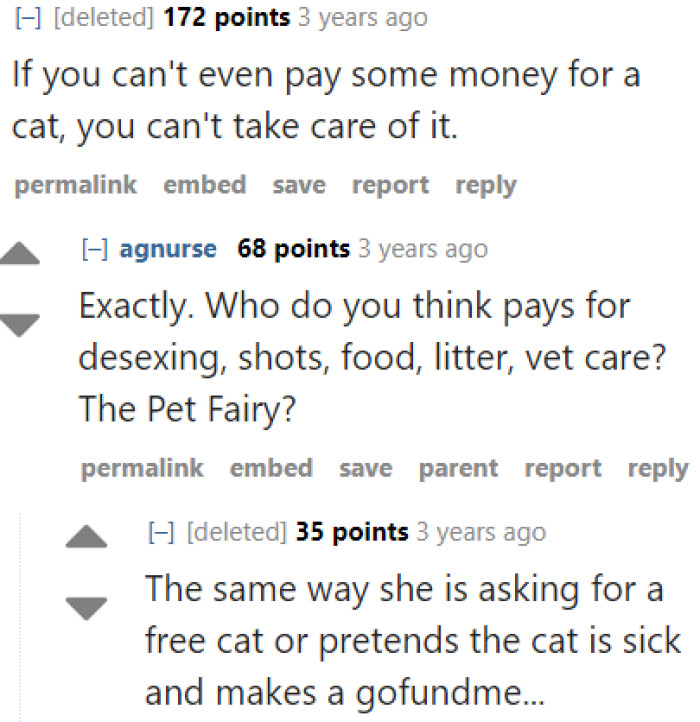
Redditors chimed in with sarcastic analogies in the thread.
A Bengal for free is simply too much to ask.

People who can't pay for a cat shouldn't be asking for one for free — even if they're experienced.
The thread kicked off with that exact line, “free $1,000 cat,” plus the cherry on top, “make sure it’s grey.”
Entitlement and Its Roots
Entitlement can be linked to various psychological factors, including personality traits and social learning.
Behavioral economics reveals how perceived value influences decision-making. The principle of 'loss aversion' suggests that people feel the pain of losing something more acutely than the pleasure of gaining something of equal value. This is relevant in the context of asking for free items, as individuals may not fully appreciate the hard work behind the value of the item.
Encouraging a mindset of value recognition can help individuals appreciate generosity, thereby fostering healthier attitudes. Programs teaching financial literacy can empower people to understand the value of goods and services.
The situation surrounding the choosing beggar seeking a free Bengal cat highlights a deeper social dynamic rooted in the perceived costs and benefits of relationships. In many cases, individuals may assess their potential gains without fully considering the implications for others involved. This particular instance demonstrates how the expectation of receiving a high-value pet, often priced between $1,500 and $5,000, can lead to a sense of entitlement. The beggar's desire for a $1,000 cat reflects a disregard for the significant investment that breeders and owners make, revealing a troubling imbalance in the perceived value of relationships within this exchange.
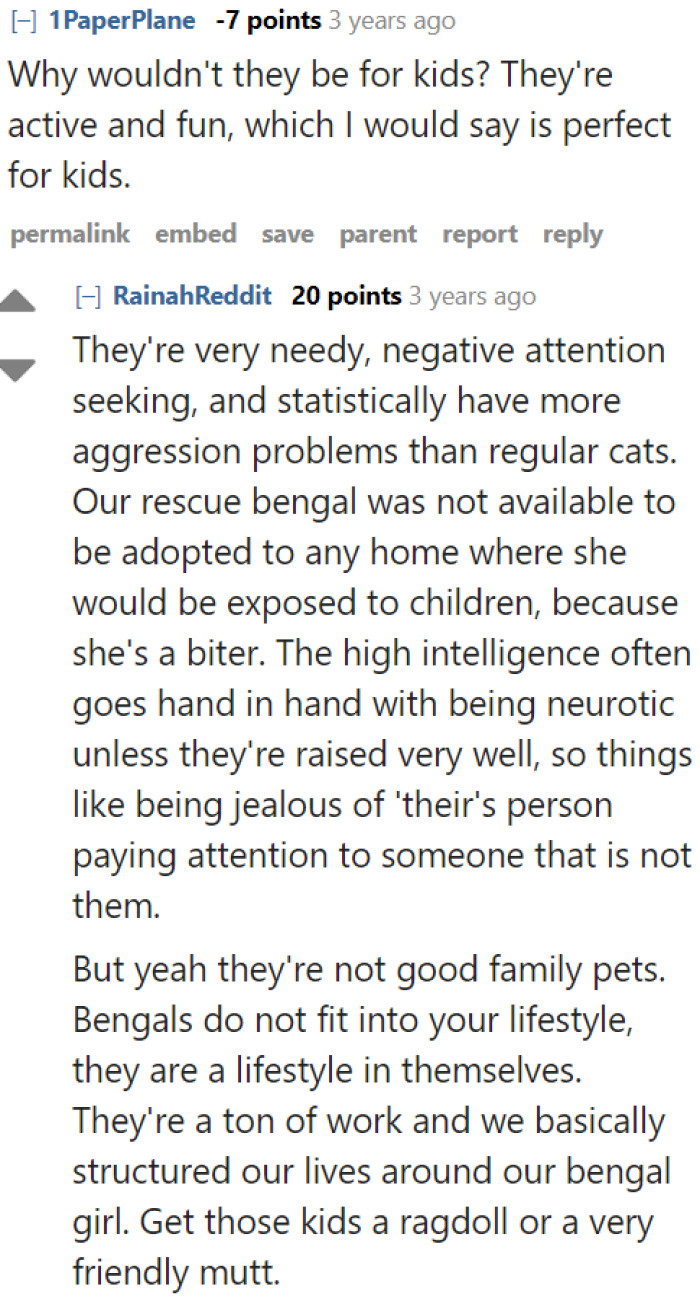
Bengals can be a lot of work, regardless of whether the potential owner is experienced.

Getting a Bengal for free might cause more problems than the Facebook user can imagine.
This user shares the reality of owning one, which involves the total commitment of three people.

Bengals aren't kid-friendly. They're not meant to be given to children.

Redditors compared the request to asking for a high-end thing for free while still acting like you’re the one doing the choosing.
The phenomenon of 'choosing beggars' reflects deeper psychological issues, including social comparison and perceived scarcity.
This is similar to the choosing beggar demanding an expensive cat for free, while Redditors pushed back.
This behavior can manifest in unrealistic demands or expectations from others.
Understanding these motivations is critical in addressing the behavior and fostering healthier interactions.
If the Facebook user is getting a rescue Bengal, chances are it has behavior problems that could put her kids at risk.
People can't just give these creatures away for free because they're worth thousands. They're a lot of work too.

Getting a purebred Bengal for kids is a bad idea.
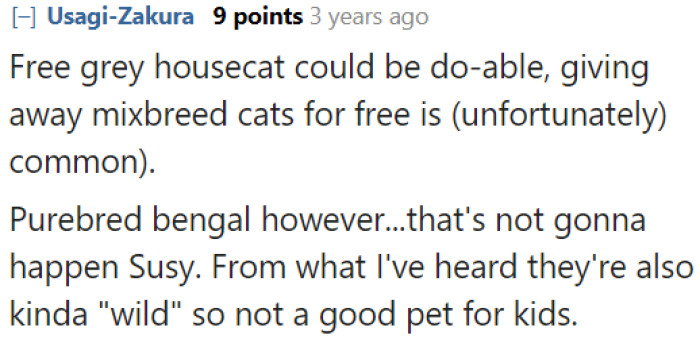
Then people started pointing out that a Bengal is a lot of work, and the “free” part doesn’t magically remove the commitment.
Social Media's Role
Social media platforms can exacerbate feelings of entitlement and unrealistic expectations. This dissatisfaction can manifest in unrealistic demands for free resources, as seen in choosing beggars.
Empathy is a crucial factor in fostering healthy relationships and interactions.
A Redditor who has taken care of a Bengal warns that owning one is not for the faint of heart.

By the time the Facebook user’s reality check hit, the whole request sounded less like a need and more like a demand.
If this choosing beggar is asking for a Bengal for free and intends to give the feline to her children, then she clearly hasn't researched enough. People looking for rare cat breeds need to be educated about how much commitment they require.
Bengals demand a lot of attention, care, and financial commitment, which can be quite different from owning a regular domestic cat. It's essential to ensure that both the cat and the family are well-prepared for this responsibility.
Instead, the Facebook user might want to consider adopting a lovely grey cat from a shelter. These cats can be incredibly affectionate and well-suited for families with children.
For example, individuals can communicate their limits regarding what they are willing to give or share, which helps establish a healthier dynamic.
Practicing assertive communication can empower individuals to express their needs while maintaining respect for others.
The recent incident involving a person seeking a free Bengal cat highlights a troubling sense of entitlement that can poison community dynamics. The online community's swift reaction to this "choosing beggar" serves as a reminder that the value of giving is often overshadowed by self-interest. Rather than fostering genuine connections, this behavior reflects a misunderstanding of reciprocal relationships, where appreciation and gratitude should thrive.
When individuals overlook the inherent worth of what they seek, in this case a cat valued at up to $5,000, it undermines the very spirit of community support. Promoting a culture of giving that acknowledges mutual benefit can lead to richer, more meaningful interactions among individuals, rather than one-sided expectations.
Moreover, offering opportunities for individuals to contribute in ways that feel meaningful can enhance their sense of agency.
The recent incident involving a choosing beggar seeking a $1,000 Bengal cat from strangers highlights the pervasive issue of entitlement in online communities. This scenario serves as a reminder that the motivations behind such demands often stem from a lack of understanding about value and reciprocity. Instead of fostering genuine connections, this individual's request only fueled frustration among those who recognize the true costs associated with Bengal cats, which typically range from $1,500 to $5,000.
To cultivate healthier interactions, it is crucial to emphasize the importance of mutual appreciation and respect.
The recent incident involving a choosing beggar attempting to secure a free Bengal cat, valued at up to $1,000, highlights a troubling sense of entitlement that can permeate online interactions. This scenario serves as a stark reminder of how social media can amplify unrealistic expectations, where individuals may feel justified in demanding luxury items without acknowledging their true value or the effort required to obtain them.
The uproar from the online community reflects a growing awareness of the importance of empathy and gratitude. Rather than fostering a culture of expectation, the response to this choosing beggar illustrates a collective call for appreciation of generosity. By encouraging dialogues around the true worth of such pets—typically priced between $1,500 and $3,000—this situation underscores the need for a more grounded understanding of value in our social exchanges.
Nobody wants to gamble on a Bengal, especially when the deal is “free, but perfect.”
Want more outrage like this “grey $1,000 cat for free” demand? See the retired husband’s companion plea after Redditors criticized a free purebred cat.
Share this article: