
Trespassing Dog Owner Insists on His Pet Pooping in Neighbor's Yard Because There Is No Park Around

A dog owner is learning, the hard way, that “my pet has to go somewhere” does not override “that’s my yard.” In this Reddit story, the OP is just trying to keep his property his property, but one persistent neighbor keeps letting his dog poop in the grass like the rules are optional.
Here’s what makes it messy: the OP has a yard that dog owners apparently treat like a public restroom, and he’s already dealing with the fact that his child plays outside there every day. After the problem kept happening, he put up a fence, not to be petty, but to keep his kid safely inside the lines. Still, the other guy shows up, acts entitled, and gets told off face-to-face.
And once the dog owner refuses to listen, the OP has to decide how far he’s willing to go to protect his kid from someone else’s dog.
The OP is simply asking a trespasser to leave, as any property owner should.
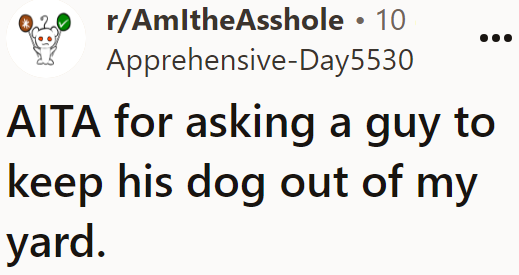
The OP has a grass yard, making it the favorite potty spot for dog owners.

Pet ownership comes with ethical responsibilities that extend to respecting neighbors' spaces.
The OP finally decided to put up a fence when he had a child.
He decided to put up a shorter fence as a way to keep his kids inside the property.

Since his little ones play in the yard every day, it's natural that dog poop is always a cause for concern.
The OP saw a pet owner letting his dog poop in the yard. When he confronted the guy face-to-face, he told him off.

The OP’s yard is basically a magnet for dog walkers, and the neighbor with the poop-and-pretend attitude does not help the situation at all.
A study published in the Journal of Animal Ethics emphasizes the importance of responsible pet ownership in maintaining community harmony. This research points to the necessity of pet owners being considerate of their neighbors' preferences and boundaries.
When pet owners neglect these responsibilities, it can lead to significant tension and conflict within the community.
This pet owner is annoyingly persistent.
He was already told that kids play in that yard, yet he wouldn't listen, acting as if he owned the property! Naturally, the owner stood his ground and made him leave.

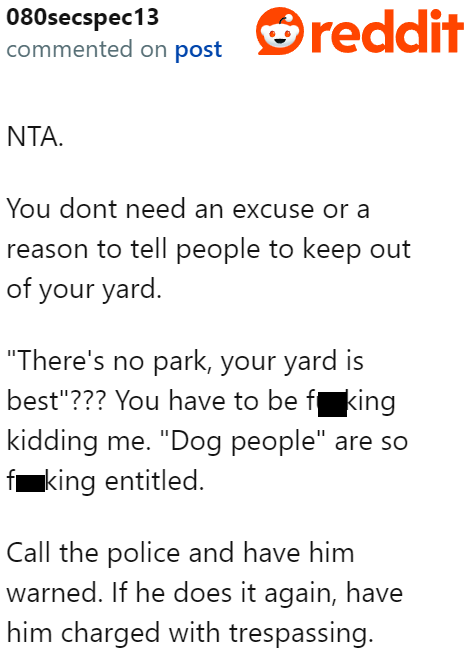
It's time for the OP to enforce the boundaries by putting up a "No Trespassing" sign.
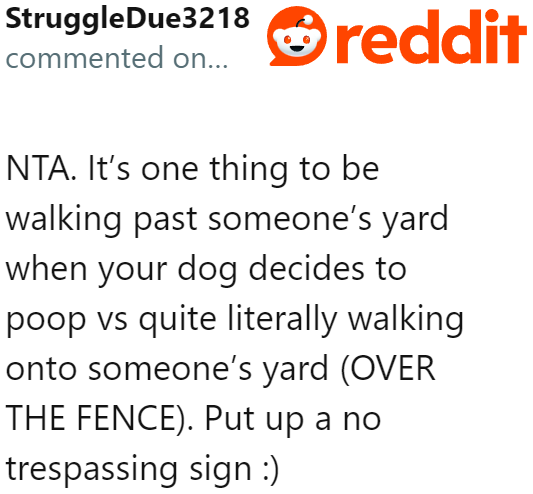
When the OP confronts him and points out that kids play there every day, the guy still acts like he owns the place.
This is like the entitled dog owner who let his dog poop on a high school sports field, leaving passerby outrage and residue behind.
The ongoing conflict between the dog owner and the neighbor vividly illustrates the importance of open communication in neighborhood dynamics. In situations like this, where one party feels entitled to use another's property for their pet's needs, a direct conversation could be pivotal. The dog owner’s insistence on allowing his pet to relieve itself in a space not designated for such activities shows a troubling disregard for boundaries.
By discussing concerns about pet ownership and property lines, both parties could potentially reach a mutual understanding that respects the neighbor's space while addressing the dog owner’s needs. If the dog owner took the initiative to engage in a dialogue, it might pave the way for a solution that accommodates both sides, rather than escalating tensions further.
The dog owner can let his dog poop outside the yard, but not within it.
Otherwise, he's breaking the law.
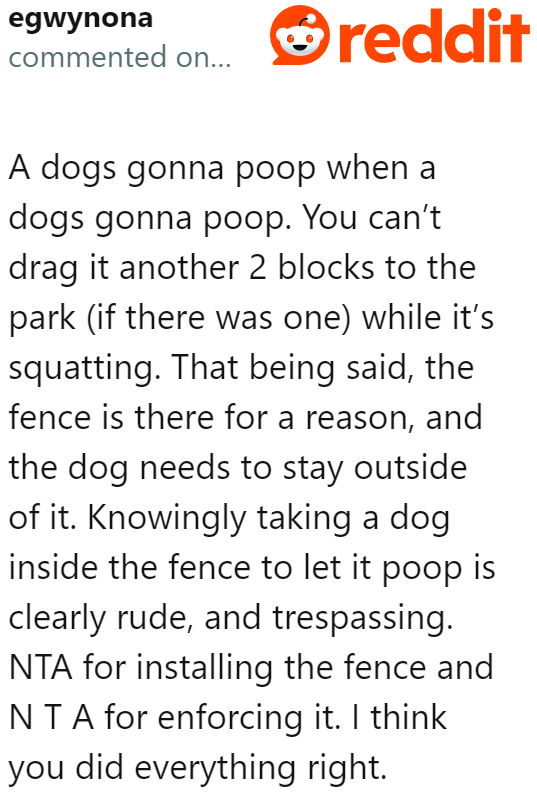
Some dog owners are so entitled that they cause major inconvenience and headaches for everyone around them.
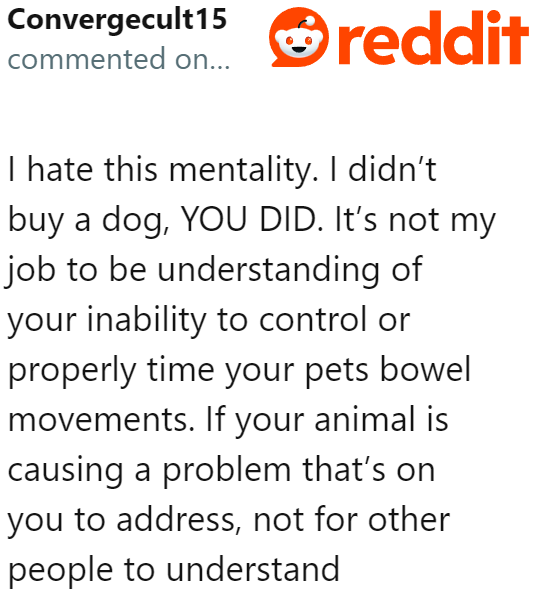
After the OP puts up a fence to keep his child from wandering out, the persistent dog owner keeps pushing back like boundaries are negotiable.
The OP only did his job of keeping his yard clean for his children. It's his property, so no dog owner is allowed to let their pet do its dirty business in the OP's yard.
This dog owner is so entitled that it's pretty obvious he won't listen to the OP. So the OP can try putting up a "No Trespassing" sign. If the guy continues to let himself and his dog in, then it's time to call the police.
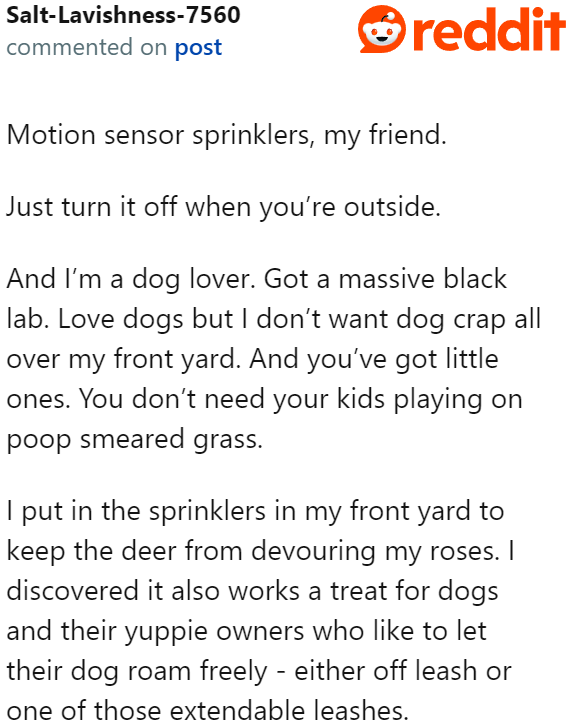
Sprinklers might help deal with this kind of annoyance too.
If the fences won't work, maybe motion sensor sprinklers will. They should keep the dog away.
If this guy cannot be stopped after being told off, it's time to get the police involved.
That’s when the OP starts talking about enforcing it harder, including a “No Trespassing” sign, because the yard isn’t a park.
In situations like this, where a neighbor's dog owner insists on using someone else's yard as a bathroom, effective conflict resolution is crucial. The article highlights the importance of mediation as a tool for neighbors to share their grievances and seek common ground. Engaging in dialogue can lead to a more pleasant living environment, rather than allowing entitlement to dictate behavior.
The recent incident involving a dog owner who allows his pet to relieve itself in a neighbor's yard highlights a significant breakdown in the basic tenets of pet ownership and community interaction. The belief that one can impose their pet's needs on another's property is a glaring example of entitlement that can easily lead to conflict.
Effective communication is crucial in neighborly relations, yet it seems this dog owner bypassed any attempt at dialogue, opting instead for an approach that disregards respect for personal boundaries. By failing to engage with neighbors about pet-related concerns, individuals risk not only their relationships but also the overall harmony of their community.
Frustration often weighs heavily on emotional well-being, especially when it comes to conflicts with neighbors. In this case, the dog owner's insistence on letting his pet relieve itself in someone else's yard exemplifies a blatant disregard for community norms. The homeowner's distress over this situation is not just a minor irritation; it can escalate into chronic stress and anxiety if left unresolved.
Addressing such boundary violations promptly is essential to prevent these feelings from festering. For the homeowner in this scenario, managing the frustration caused by the dog's behavior is key to maintaining both emotional health and a sense of harmony within the neighborhood.
Now he’s wondering if the only way to stop the dog poop is to make the rules impossible to ignore.
Want the same “my yard, my rules” energy? Read how a moment man confronted his neighbor about dog mess.
Share this article:





