Woman Quits Job To Watch Grandchild - Other Daughter Calls It Unfair Because She Won't Be Able To Watch Her Dogs

Some families treat help like a warm blanket, and others treat it like a contract nobody remembers signing. This Reddit story starts with OP stepping up for her older daughter, then somehow turns into a full-on sibling fight over who gets what kind of “free” support.
OP, 52, quits her job to watch her grandchild, which sounds sweet on paper. But her younger daughter is the one who’s been getting something too, because OP has been watching her dogs for three years. Once the grandbaby care kicks in, the younger daughter calls it unfair, basically saying, “Cool, so my animals lose the deal,” and OP is stuck defending her choice while the family tension spikes.
And just wait until the dog-care arrangement becomes the weapon everyone uses.
Original Post
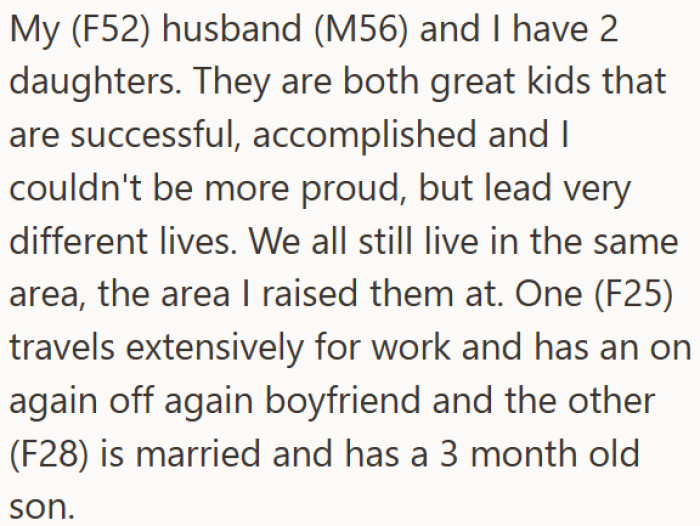
Original Post
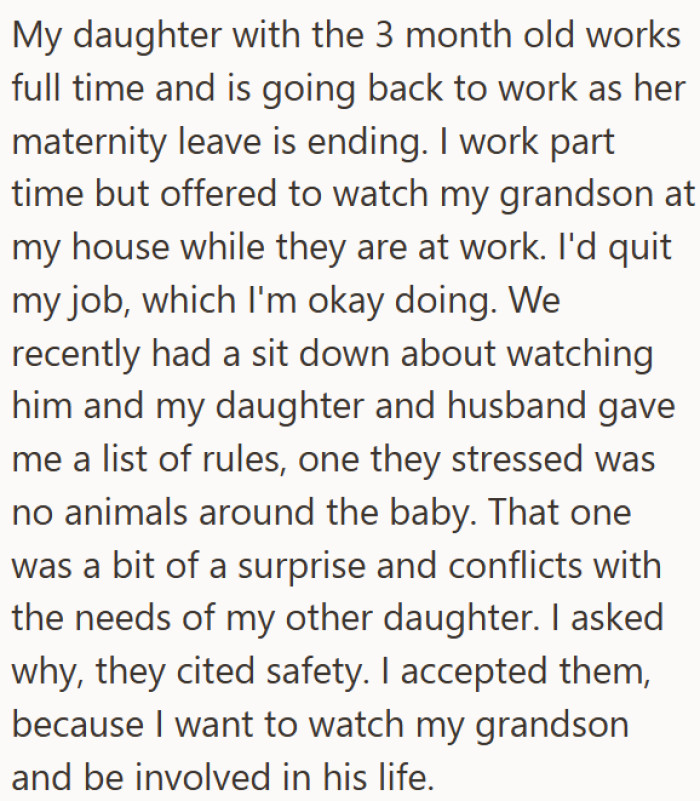
Original Post
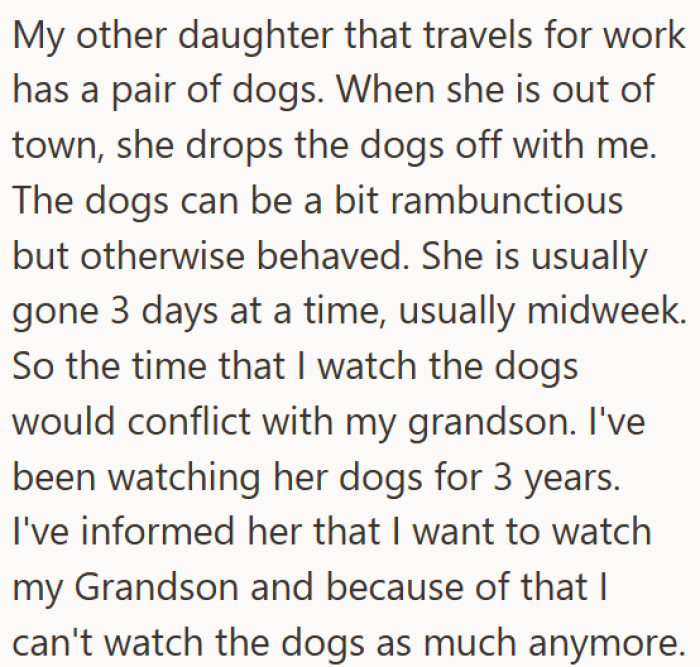
OP’s older daughter gets the grandchild childcare she wants, while the younger daughter realizes the dog routine she relied on is about to disappear.
The Ripple Effect of Family Decisions
This scenario showcases how one person's choice can create a domino effect within a family. OP's decision to quit her job to care for her grandchild highlights the often-unseen dynamics that come with caregiving roles. While her intention is noble, it inadvertently puts her younger daughter in a tight spot, leading to feelings of unfairness over losing free dog care. This shift in family responsibilities can stir resentment, especially when it seems like one sibling's needs are prioritized over another's.
It's a classic case of balancing love and obligation, and many readers can relate to feeling caught in the middle of family expectations and personal desires.
The Community's Divided Reaction
The community response to this story has been fascinatingly mixed. Some readers empathize deeply with OP, applauding her willingness to help her older daughter. Others sympathize with the younger daughter, feeling her frustration over losing her dog-care arrangement is valid. It’s a testament to how family dynamics can be interpreted differently based on personal experiences.
Original Post
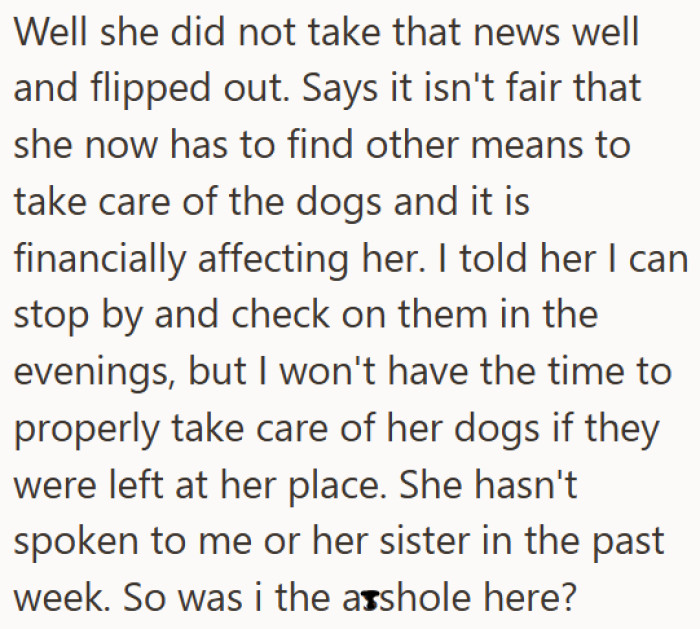
OP has offered the following explanation for why they think they might be the a-hole:
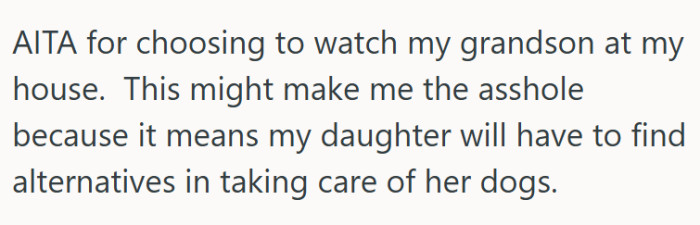
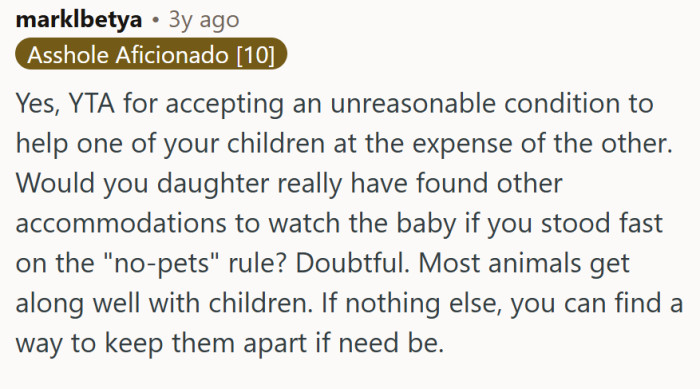
OP can find a way to keep them apart if needed.
When OP points out she has been watching the dogs for three years, the younger daughter hears “you should have planned better,” not “I’m doing my best.”
The Sibling Rivalry Unmasked
The tension between OP's daughters reveals a deeper sibling rivalry that often surfaces in family dynamics.
This is similar to the woman who refused to watch her ex’s dog so he could take their kid on vacation, then got trashed for her excuse.
OP shouldn't allow herself to be bullied by her daughter.
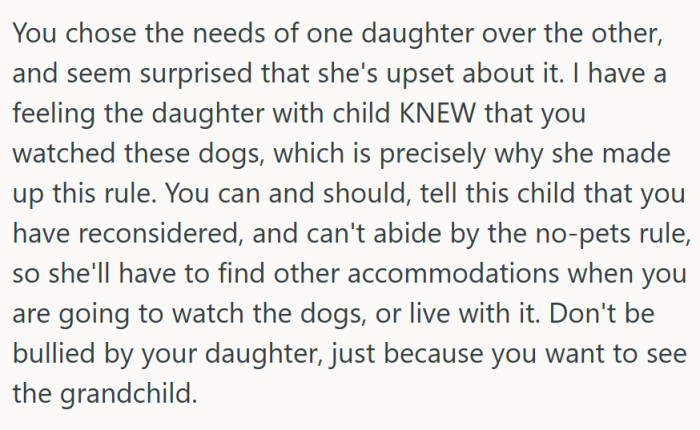
"They are NOT going to pay for expensive infant daycare when you are offering to watch their infant for free."
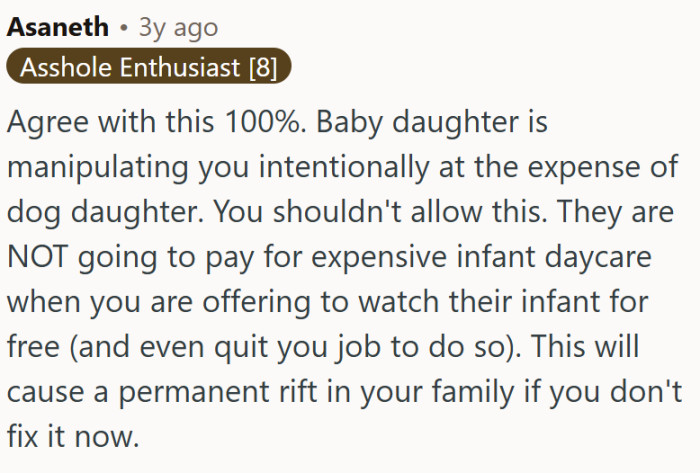
OP has been watching the dogs for three years.
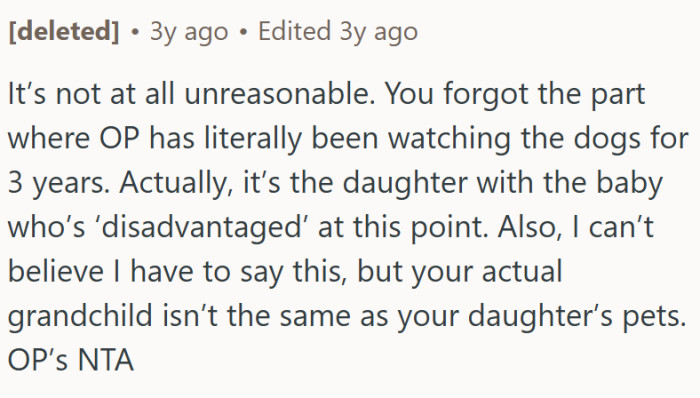
That’s when the argument shifts from babysitting to money, because the older daughter’s “expensive infant daycare” line makes the younger one feel like she’s being priced out.
This situation also taps into the broader theme of generational expectations. OP, at 52, likely grew up in a time when family loyalty meant sacrificing personal ambitions for the sake of others. Readers may ponder whether this mindset is outdated or if it still holds value in today’s world. The younger daughter’s frustration over losing dog care suggests a clash between traditional family roles and modern expectations of independence.
It poses the question: should grandmothers feel obligated to step in, and at what cost to their own lives and relationships?
OP added:

"It's not unreasonable not to want rambunctious dogs around a three-month-old."
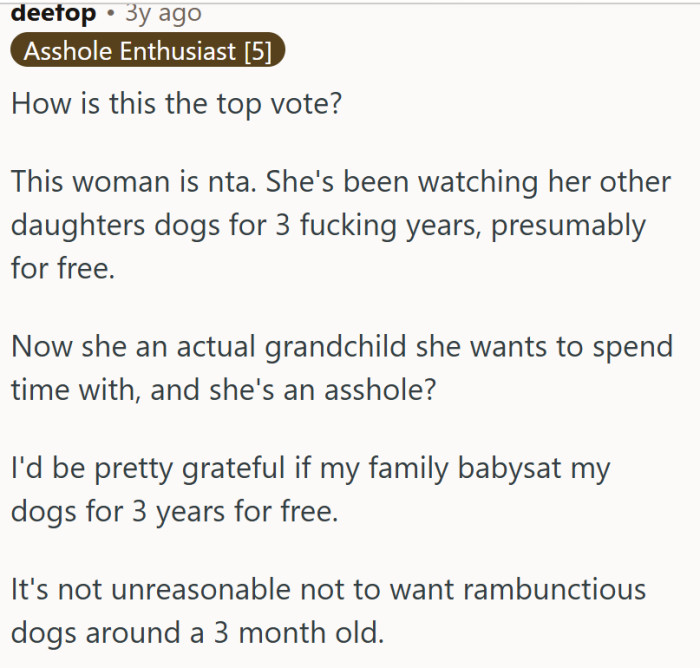
These dogs are not OP's responsibility.

By the time OP says she can find a way to keep the girls apart if needed, you can practically feel the sibling rivalry harden into something permanent.
A Financial Angle to Family Care
There's also an underlying financial aspect that shouldn't be overlooked. OP's decision to leave her job to provide childcare represents a significant economic sacrifice. This might resonate with readers who understand the financial dynamics of caregiving. The younger daughter’s concern over losing her free dog-sitting service might indicate how intertwined financial considerations are with familial support.
In a world where childcare can be incredibly expensive, who gets to decide where the lines are drawn? This aspect adds a layer of complexity to the emotional conflict.
The bottom line:
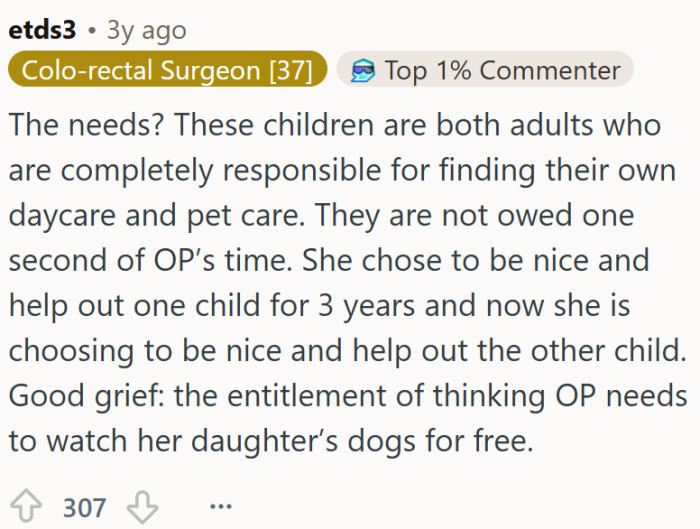
OP chose to prioritize childcare for a newborn, which required setting new limits on a long-standing but informal arrangement. Her younger daughter's frustration is understandable, as she lost a reliable, free service with little notice.
However, OP was never formally obligated to watch the dogs, and the no-animals rule was set by the baby's parents, not OP herself. Both sides have legitimate concerns, but the core issue is that an informal arrangement was treated as a permanent guarantee.
The Bigger Picture
This story underscores the complexities of familial obligations and the unforeseen consequences of seemingly selfless decisions. It raises an important question for readers: how do you balance your responsibilities to one family member without alienating another?
Nobody’s mad that OP is helping, but everyone’s mad they’re the one losing the free dog sitter.
For another family blow-up, see how the third dog at that shared vacation home sparked a fight.
Share this article: