23 Sculptures Where Wild Animals Seem to Escape From Persian Carpets

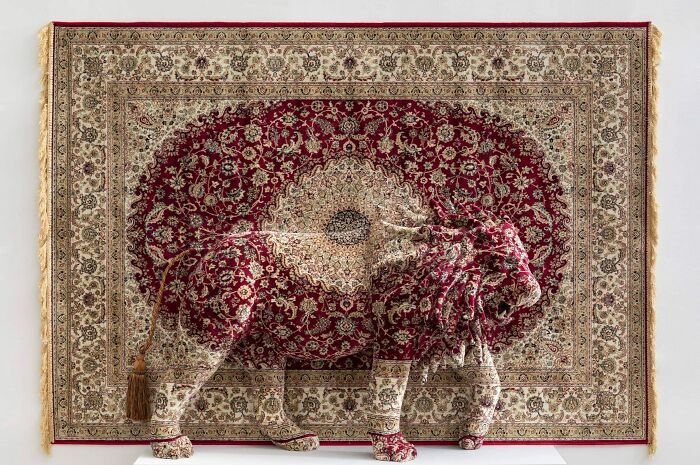
Debbie Lawson’s sculptures look like they should stay put, like a Persian carpet is just a carpet. Then you see the bear lunging, the fox mid-stride, the eagle breaking through, and suddenly the “floor” feels alive.
It started with her family’s Dundee fabric legacy, generations of hands that knew cloth like it was personal history. That background is what makes her work complicated, because these aren’t random animal fantasies. The creatures she chooses, foxes, bears, deer, are the ones that haunt the edge of everyday life, the wild that never fully stays outside.
And once the rugs stop being static, the question becomes whether you’re watching nature escape, or watching it get trapped in plain sight.
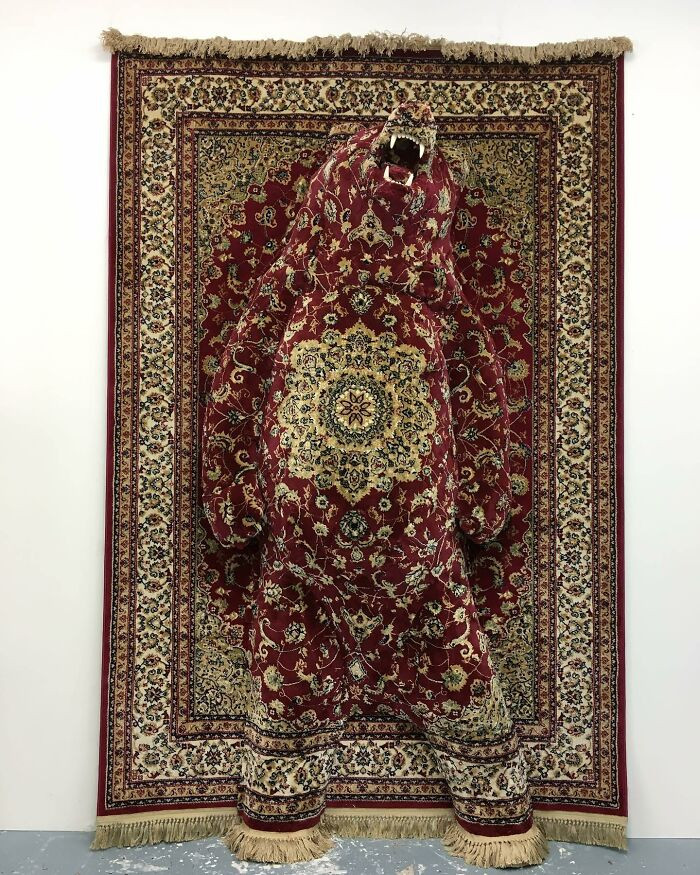
“Roaring Bear”
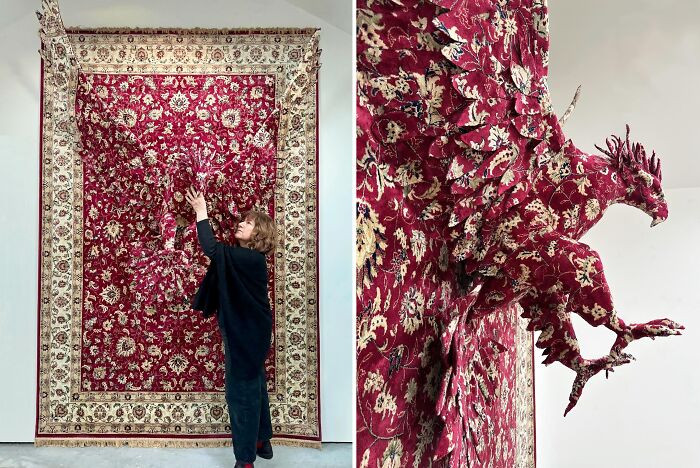
“Philippine Eagle”
Her connection to the textile world is not incidental. Her family spent generations working in Dundee's fabric industry, which means the materials she works with carry as much personal history as aesthetic intention.
That layer of biography gives the sculptures a weight that purely formal experimentation rarely achieves. These aren't just clever objects; they carry something inherited, something that understands cloth and craft from the inside out.
The animals she chooses—foxes, bears, deer—are not exotic. They are the creatures that exist just beyond the garden fence, the ones that remind us how thin the boundary between civilized space and wild nature actually runs.
By letting them emerge from the most domestic of surfaces, Lawson makes that boundary visible in a way that feels both playful and quietly philosophical.
Her work has circulated widely online, where audiences who have never set foot in a gallery have been genuinely startled by what they see. That reaction—the double-take, the leaning in—is the whole point.
“Gathering Of The Clans”
Art or Illusion?
Debbie Lawson’s sculptures challenge our perception of art and reality. By transforming ordinary Persian carpets into dynamic representations of wildlife, she prompts viewers to reconsider the boundaries between craftsmanship and artistic expression. The initial illusion of a static rug morphs into a vivid depiction of a fox mid-stride or a bear breaking free, which begs the question: are we witnessing art that celebrates nature or a commentary on its captivity?
This kind of transformation resonates with audiences who are increasingly aware of the environmental crises surrounding wildlife. Lawson’s choice of medium—a domestic item—juxtaposes the familiar comforts of home with the wildness of nature, creating a dissonance that’s hard to ignore.
“Ozymandias”
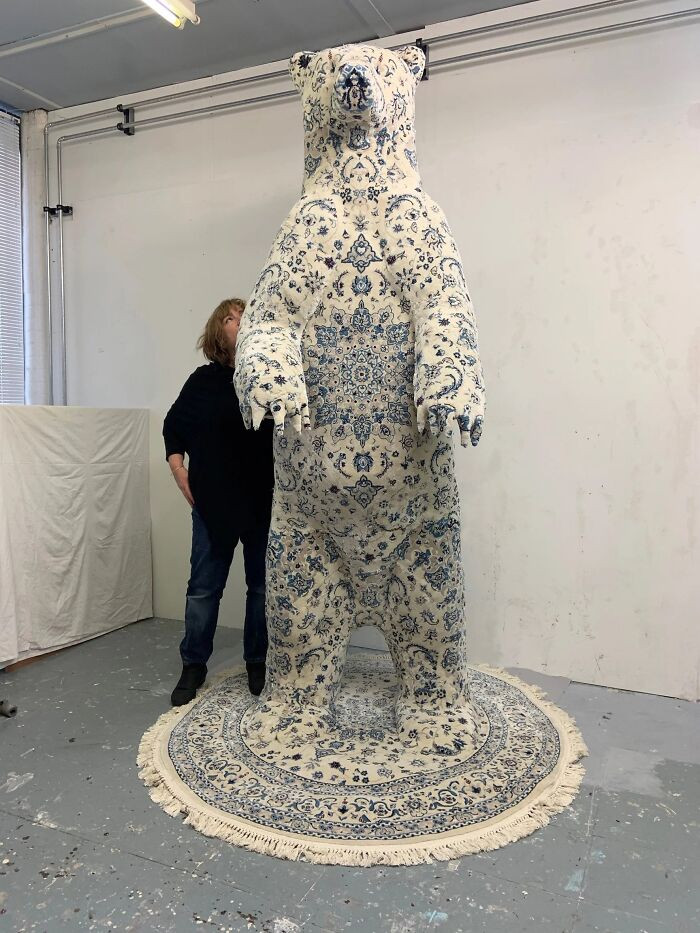
“Blue Leopard”
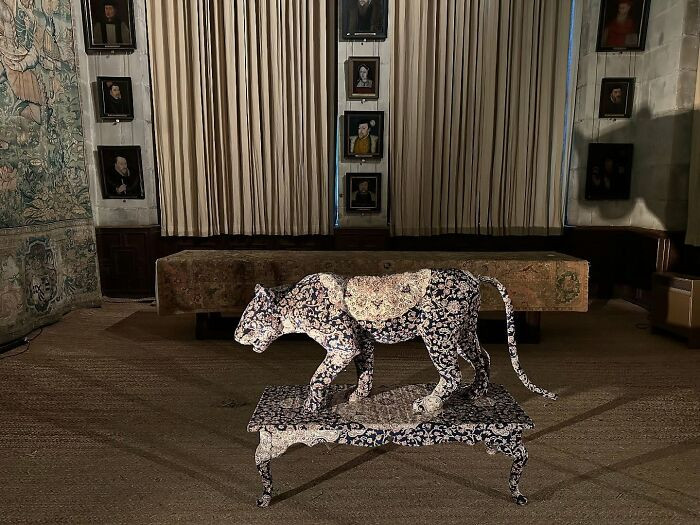
“Dancing Bear”
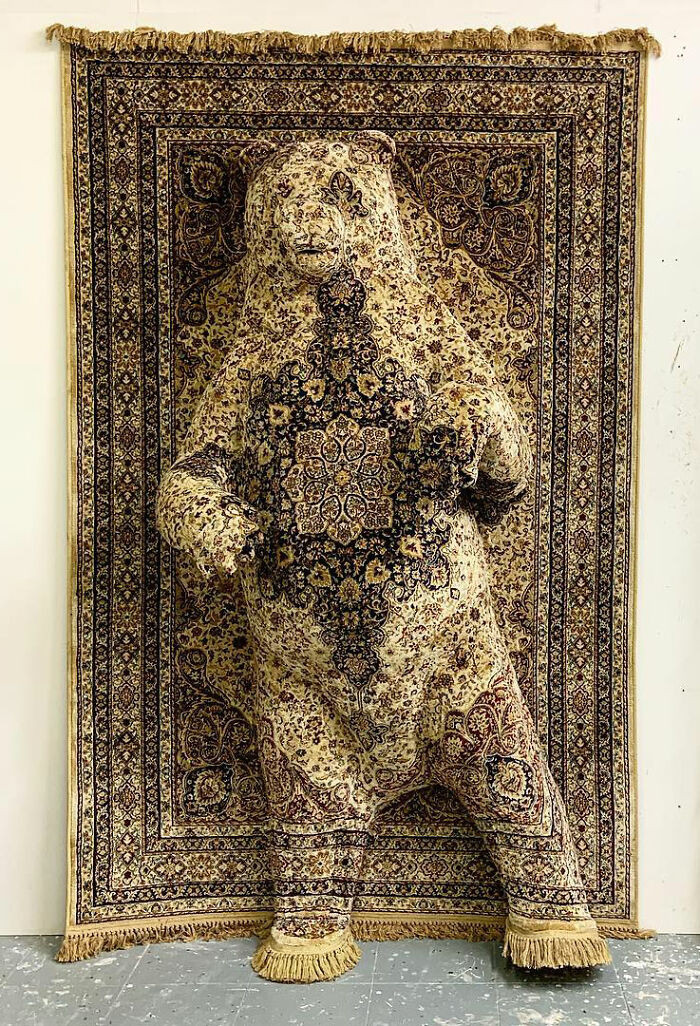
The moment “Roaring Bear” shows up, you realize this isn’t decoration, it’s a jailbreak with fringe.
Cultural Significance
Lawson's work also dives deep into the cultural significance of Persian carpets, which are often seen as symbols of luxury and heritage. By embedding wild animals into these textiles, she’s not just altering their aesthetic; she’s infusing them with new meaning. This raises an interesting point about ownership and representation in art.
Are these traditional carpets simply a backdrop for modern interpretations, or do they have a voice of their own in this new narrative? This tension between tradition and innovation plays a crucial role in how we perceive both the art and the cultural artifacts it utilizes.
“Red Eagle”
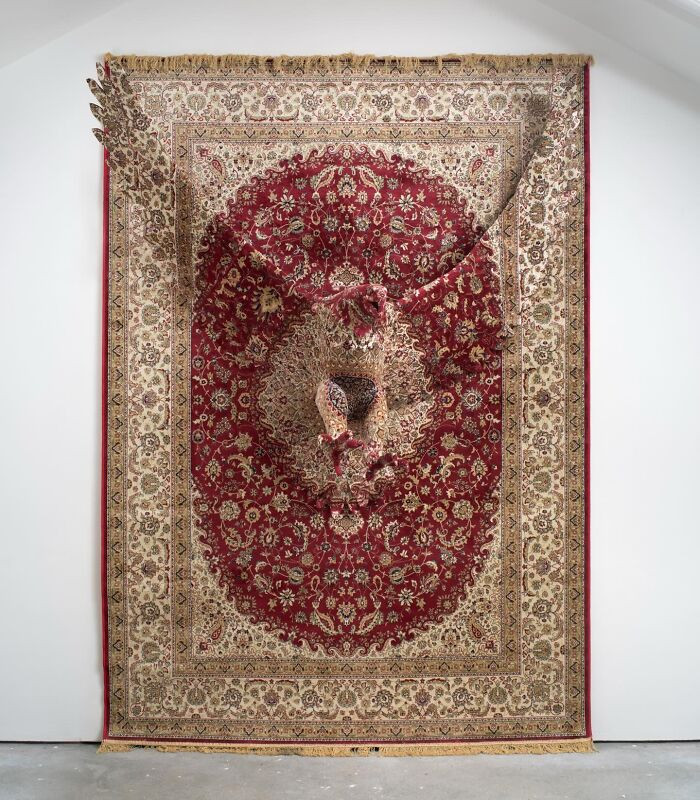
“Blue Lion”
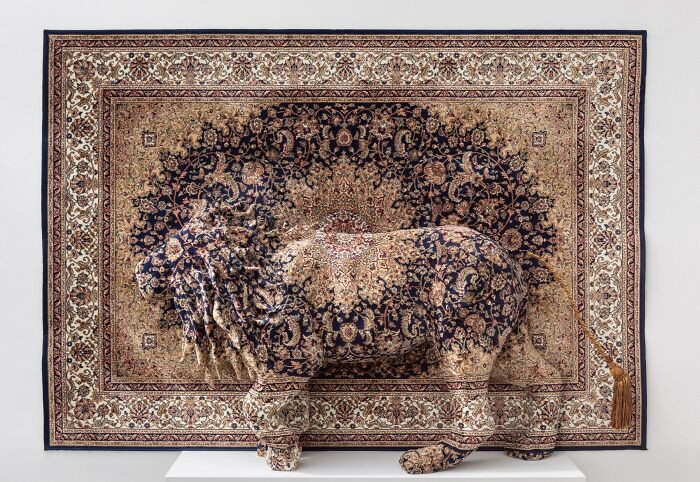
“Persian Kangaroo”
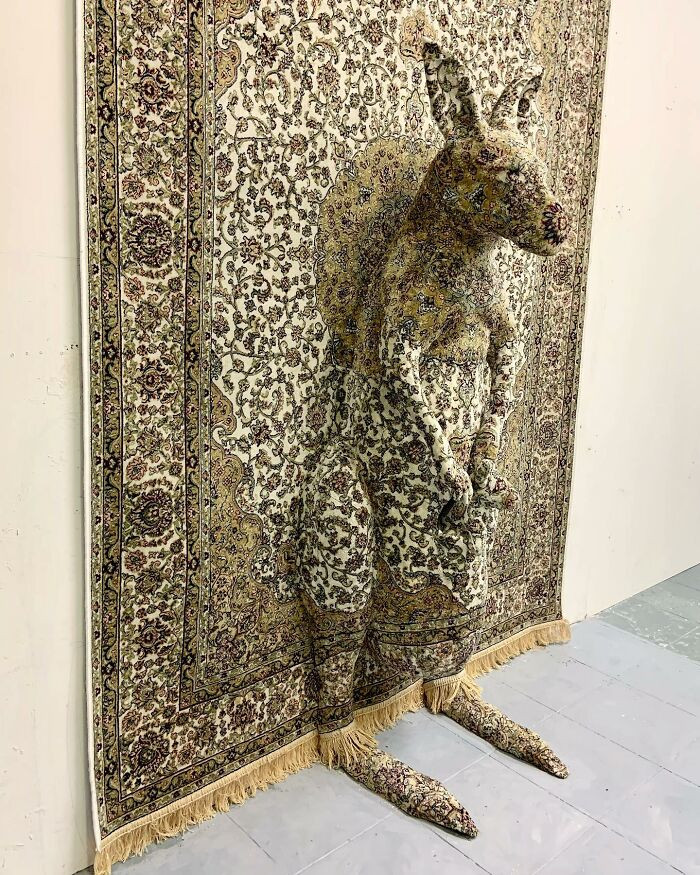
When “Gathering Of The Clans” turns the rug into motion, the whole “art or illusion” debate stops feeling academic.
Nature vs. Domesticity
The contrast between the wild animals Lawson depicts and the domestic nature of Persian carpets strikes at the heart of a deeper conflict: the struggle between nature and domesticity. In our increasingly urbanized lives, nature often feels distant, a concept we can admire from afar but rarely engage with directly.
By crafting these animals as if they're breaking free from the very fabric of our homes, Lawson forces us to confront our complicity in the separation from nature. It’s a powerful statement about what we lose when we prioritize comfort over wildness, a dilemma many can relate to as we navigate modern life.
“White Lion”
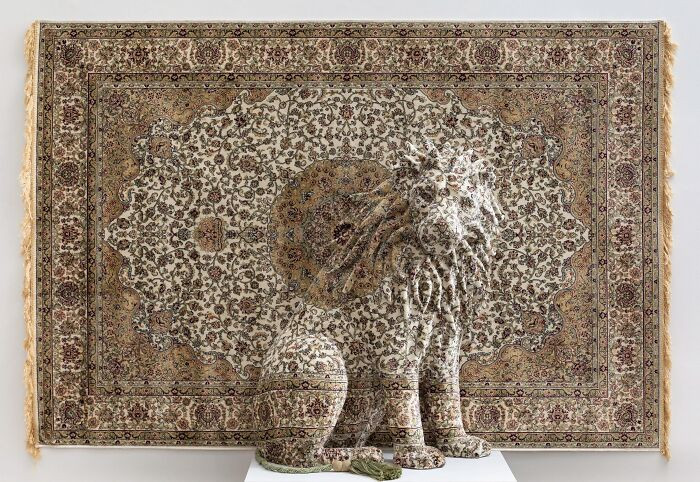
“Forests Of The Night”
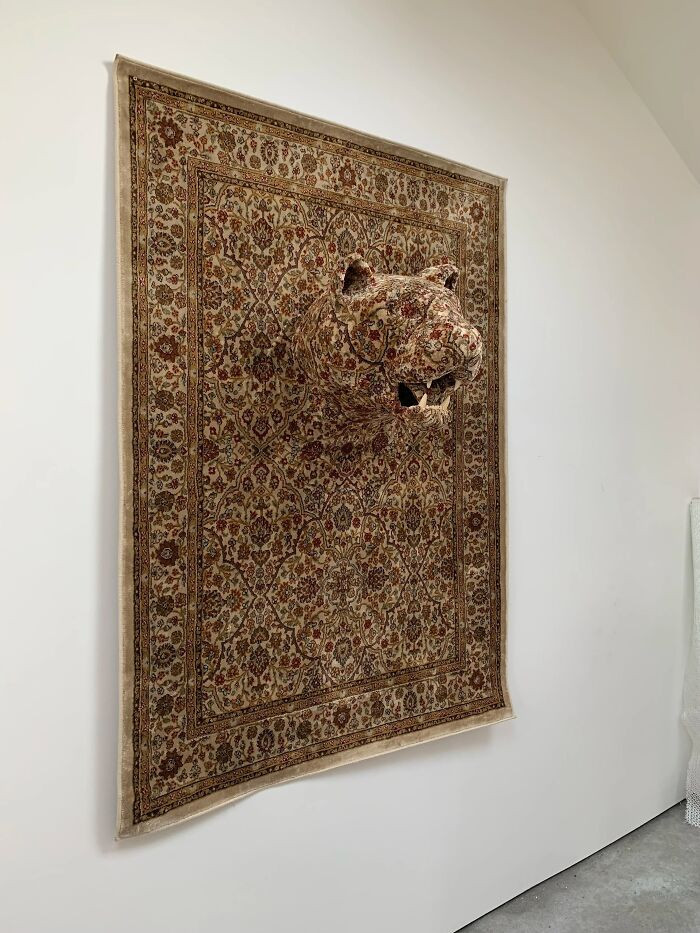
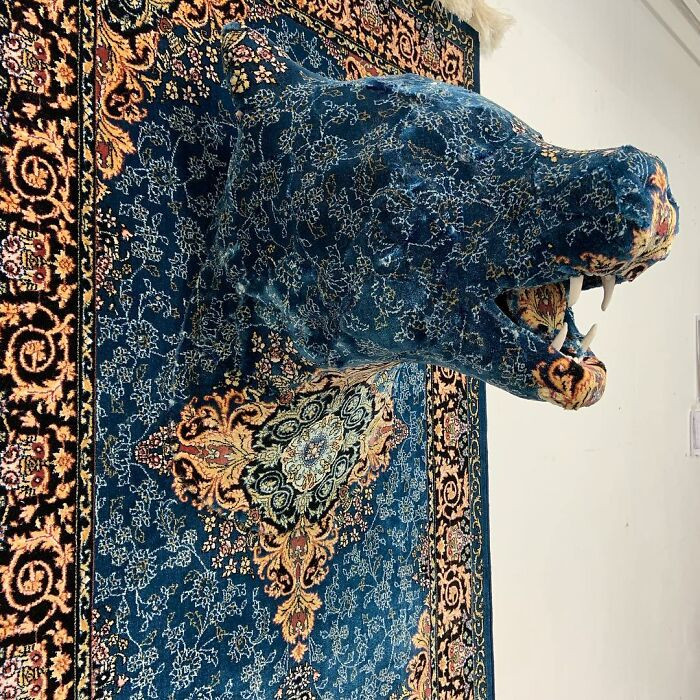
“Blue Bear Head”
Community Reactions
Lawson's work has sparked diverse reactions within the art community and beyond.
And for the same kind of “how did that happen?” energy, check out pets caught in positions so weird even their owners can’t explain.
“Brown Tiger”
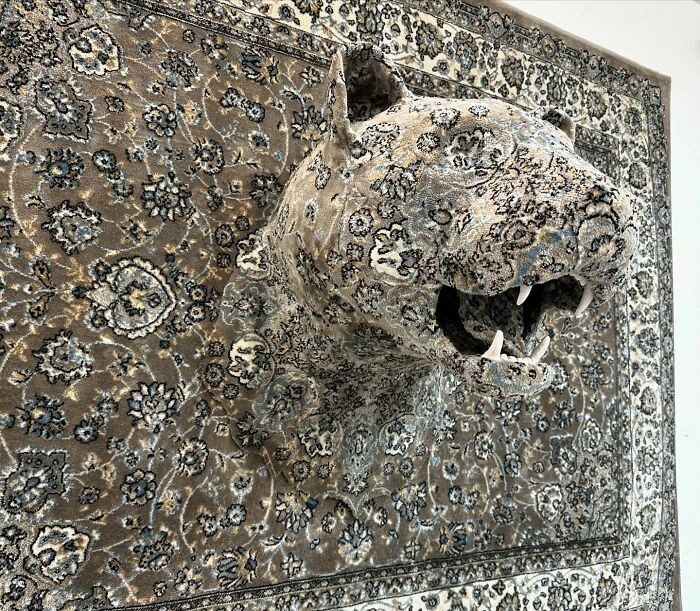
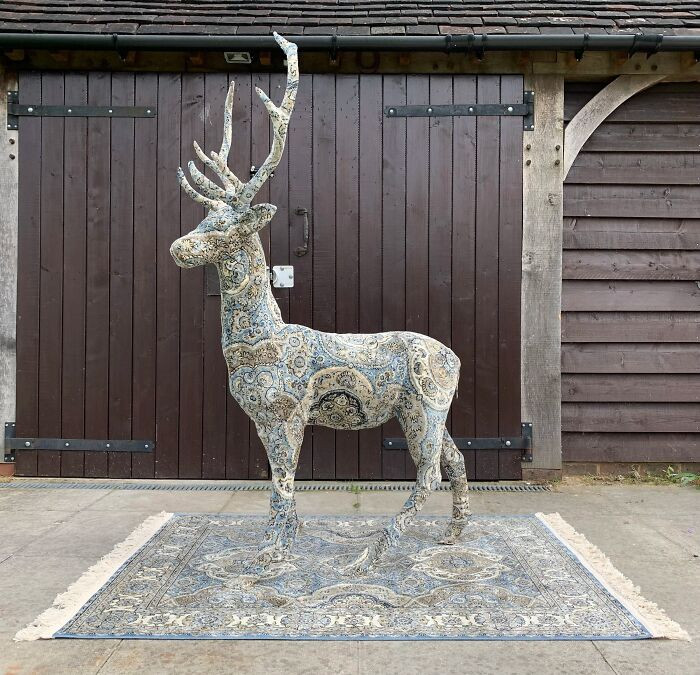
“Green Stag”
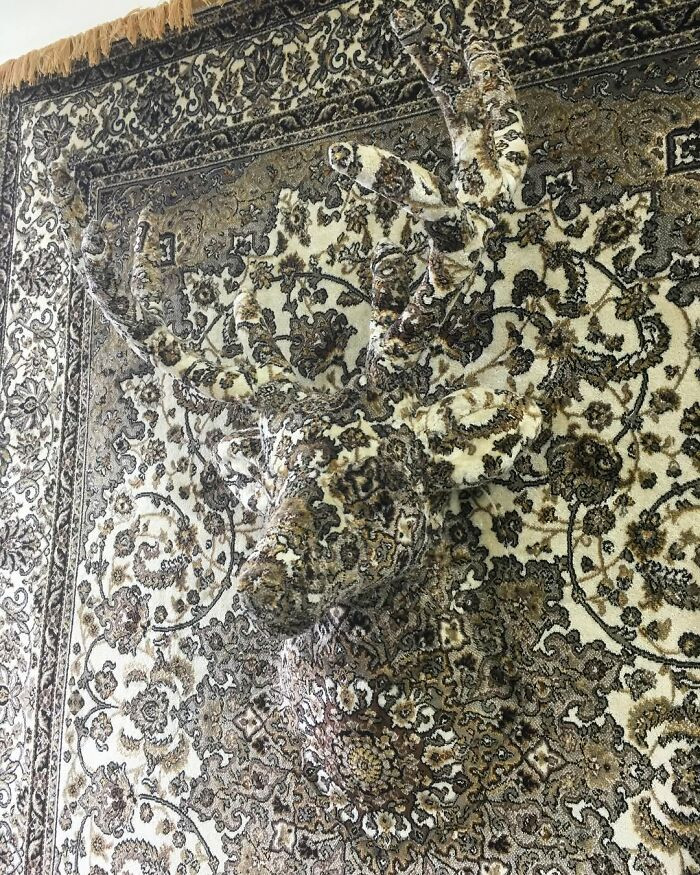
“Blue Monkey”
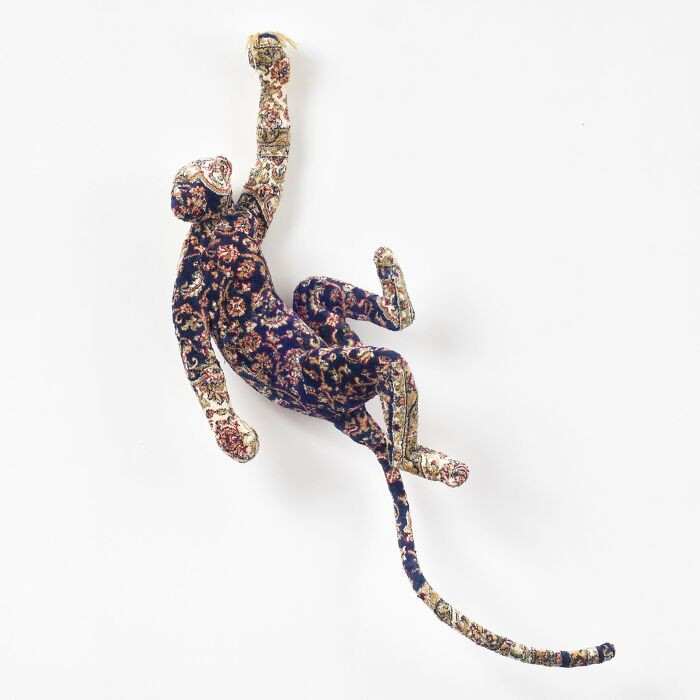
“Ozymandias” and “Blue Leopard” make the same point from different angles, the domestic surface can’t hold the wild for long.
The Illusion of Escape
There's a poignant irony in Lawson's work: the wild animals appear to be escaping the confines of the carpet, yet they're still very much confined within the gallery. This mirrors a broader societal issue—while we may feel a desire to reconnect with nature and wildlife, many of us remain trapped in our urban settings, detached from the wilderness.
Lawson's sculptures serve as a visual metaphor for this struggle. They question whether it's possible to truly experience freedom in a world where nature is often curated and commodified. It’s a thought-provoking commentary on our relationship with wildlife and the environments we create.
“Prospero”
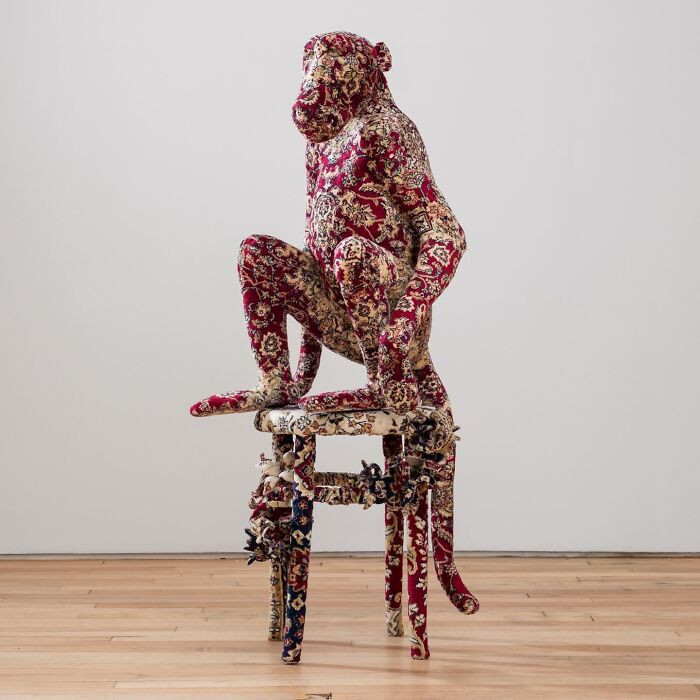
“Gathering Of The Clans 2”
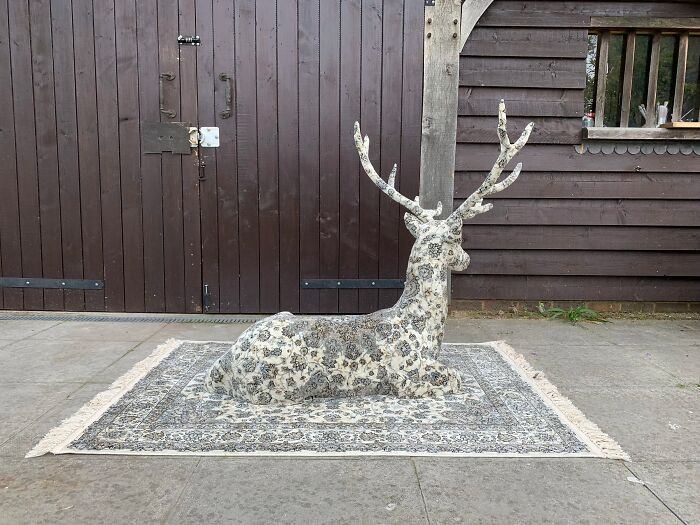
“Blue Bear”
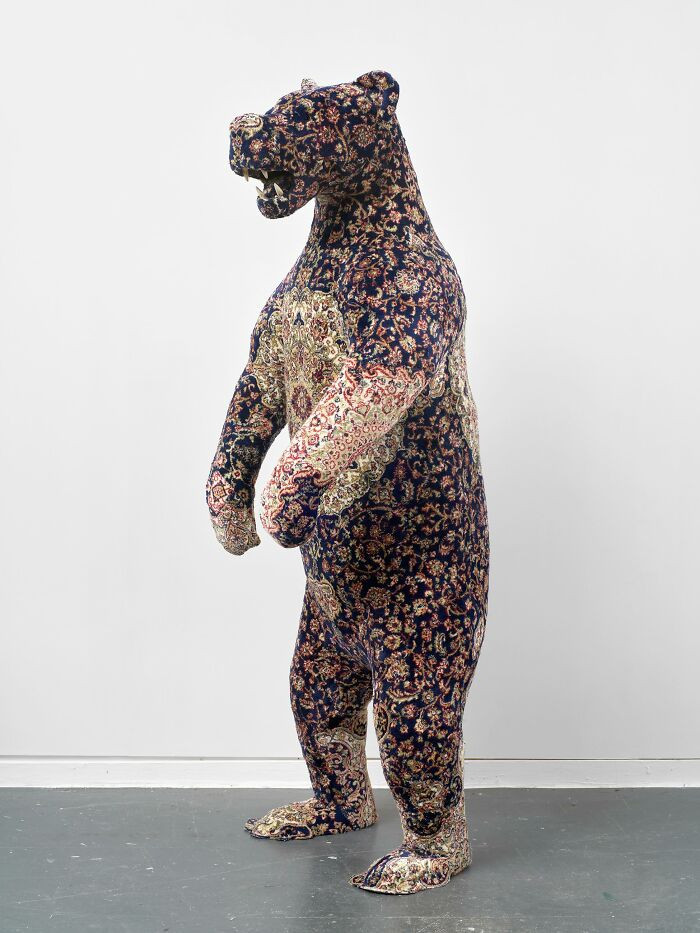
A Call to Action
Beyond their beauty, Lawson's sculptures carry an implicit call to action. They remind us of the fragility of wildlife and the importance of conservation. By presenting these animals in a way that feels almost alive, she invites viewers to consider their role in protecting these creatures and their habitats.
This connection to the natural world is especially relevant today, as many species face extinction due to habitat loss and climate change. Lawson’s work may inspire viewers to engage more deeply with environmental issues, turning aesthetic appreciation into a catalyst for change.
“Wild Dog Sundown”
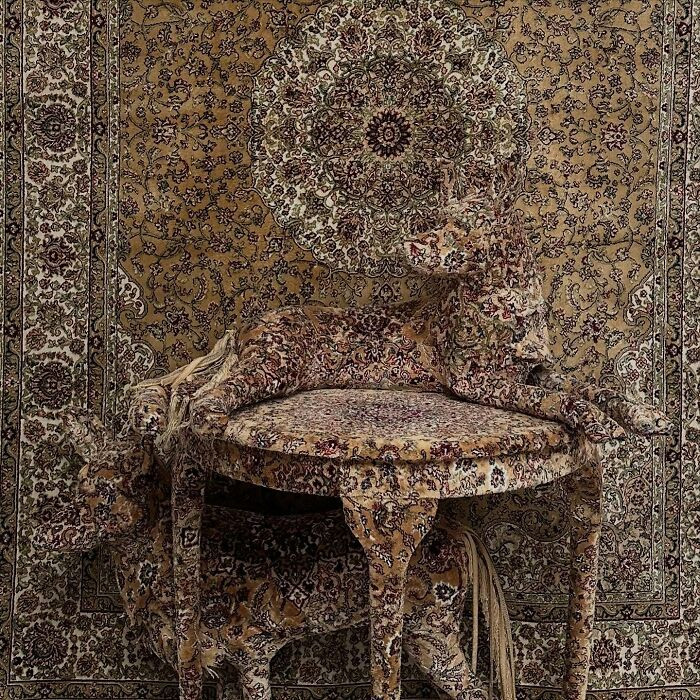
“Red Lion”
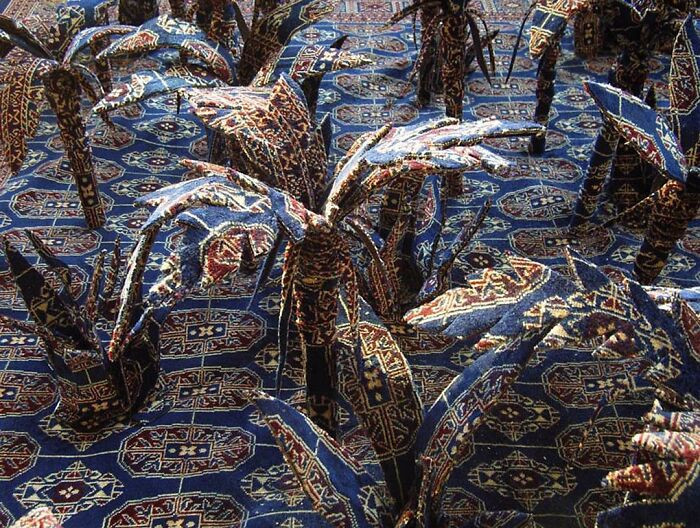
“Oasis”
By the time “Dancing Bear” closes the loop, you’re left staring at the border between home comfort and the garden fence again.
Debbie Lawson’s role as an artist extends beyond simply creating visually stunning pieces.
“Persian Gull”
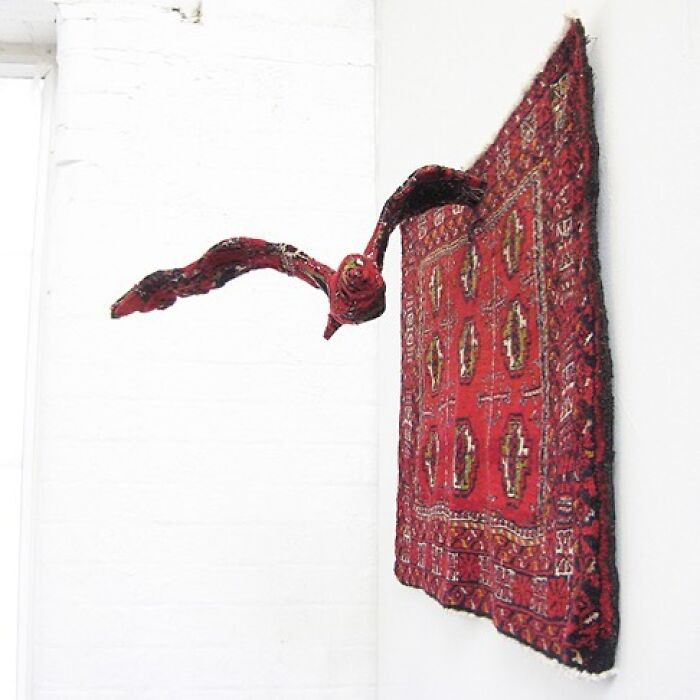
“Arabian Tahr”
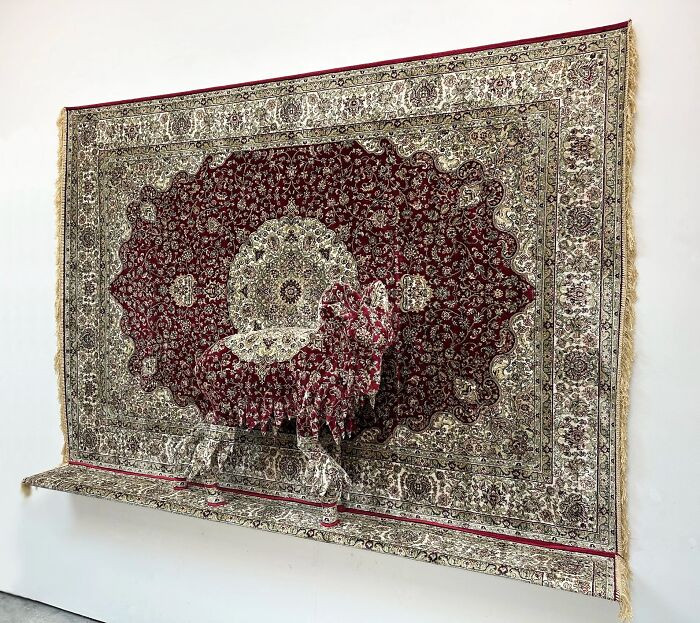
Debbie Lawson's rug-sculptures succeed because they operate on multiple levels simultaneously. On the surface, they are visually striking and technically accomplished. But beneath that surface—quite literally—they ask serious questions about where wildness ends and domesticity begins, about what we tame when we decorate our floors, and about whether nature was ever really contained at all.
In a moment when contemporary art often struggles to connect with audiences outside the gallery circuit, her work manages the rare feat of being both accessible and genuinely thought-provoking. The carpet, it turns out, was never just a carpet.
Debbie Lawson's sculptures do more than beautify a gallery; they engage with pressing issues of environmental awareness and cultural identity. By merging the worlds of domesticity and wildness, Lawson provokes a conversation that resonates deeply in today’s context of climate crisis and urban disconnect. As viewers, we’re left to ponder: how can art inspire us to reconnect with nature while highlighting our roles in its preservation? This interaction between art and activism is something more artists should strive for, making us question our own responsibilities in the face of ecological challenges.
You don’t just look at the carpet, you watch the wild slip out before you can blink.
Before you assume anything is staged, see wildlife photos that prove nature doesn’t move on a schedule.
Share this article: