
Cat Owner Tells Neighbor to Rehome Aggressive Cat; She Wants to Allow Her Cats to Roam Freely Outside Again

Some neighbor drama is petty, but this one comes with teeth marks and a $600 vet bill. A cat owner, OP, says their neighbor’s aggressive cat has been attacking her cats, and it escalates fast from “mean moments” to actual injuries.
Here’s the messy part, OP and her partner live next door, they’ve watched the attacks happen, and the cat even barges into their home. They already split the $600 treatment cost with the neighbor, and they tried to keep things calm, including agreeing the cat would not go outside. It lasted about a month.
Now OP is stuck watching the damage repeat, and the neighbor refuses to listen, so OP is pushing the unthinkable.
The OP asks:
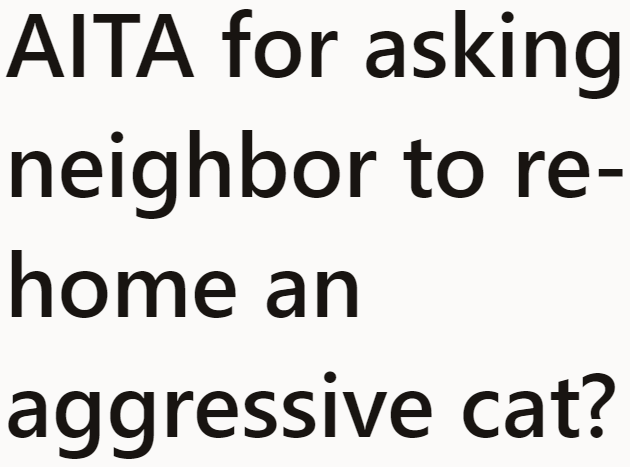
The OP explains her living situation.
She and her partner have witnessed the neighbor's cat attacking their cats.

The aggressive behavior exhibited by the neighbor's cat can often be rooted in fear or territorial instincts.
Veterinary behaviorists note that cats display aggression as a defense mechanism when they feel threatened.
Research from the University of California, Davis, emphasizes the importance of understanding feline body language to prevent aggressive encounters.
Recognizing signs of stress in animals can help owners manage their pets' behavior more effectively.
One time, their cat got injured, and they had to pay $600 for treatment. The OP and the neighbor agreed to split the bill.

The cat even enters the OP's home.

OP and her partner didn’t just complain, they paid for treatment when their cat got injured after the neighbor’s cat went after them.
Moreover, the implications of allowing cats to roam freely can contribute to aggressive encounters.
They settled with the neighbor not letting the cat out, but it only lasted a month.

Despite raising concerns with the property manager, the neighbor won't budge.
So the OP decided to suggest rehoming the cat.

The agreement to keep the cat indoors lasted one month, then the attacks started again like nothing happened.
Intervening in cases of aggression is crucial for the safety of both pets and their owners.
Encouraging the neighbor to consult with a professional animal behaviorist can provide insights into managing their cat's aggression more effectively.
This proactive approach can create a safer environment for both the aggressive cat and the other pets in the community.
This echoes the situation in how a cat lover refused to return a neglected cat she found wandering in below-freezing weather.
The OP no longer wants to deal with her pets getting injured by the aggressive cat.

When the neighbor refused to listen, the OP decided to give the neighbor an ultimatum.

Even after OP raised it with the property manager, the neighbor still won’t budge and the cat keeps entering OP’s home.
Additionally, discussing the need for rehoming the aggressive cat can be a sensitive topic.
Using 'I' statements when expressing concerns can help the neighbor understand the impact of their pet's behavior without feeling attacked.
Creating a collaborative environment can lead to more effective solutions for everyone involved.
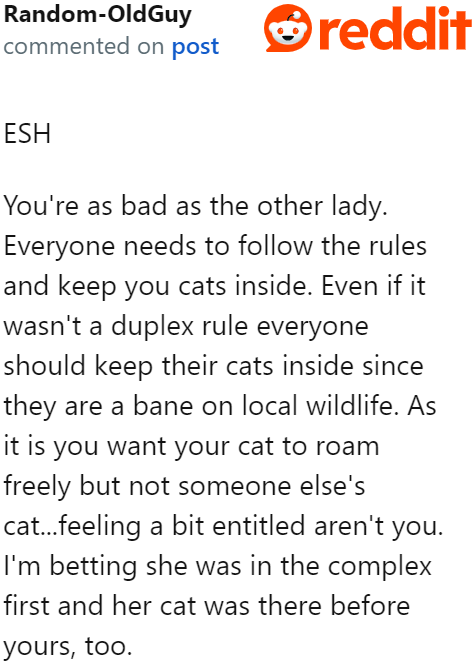
The OP is being unfair here.
She wants the neighbor to keep her cats indoors so that she can let her cats out? Redditors find this absurd.
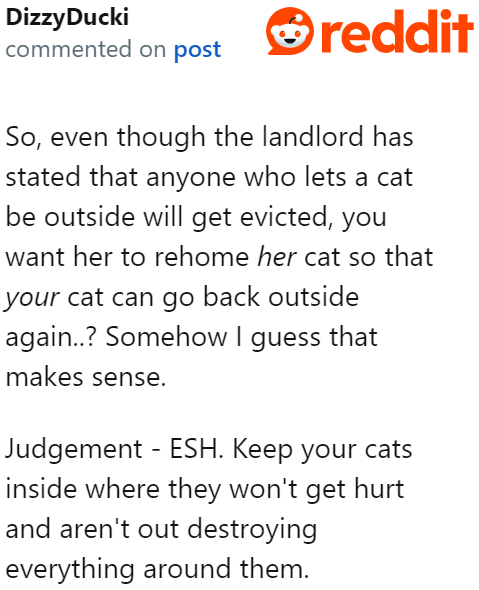
Everyone in this property needs to keep their cats indoors. This will solve the problem.
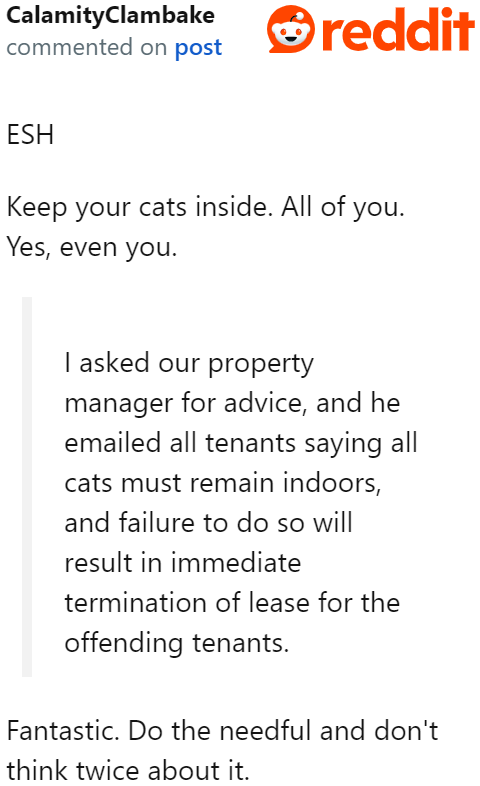
The OP's way of thinking is unfair. She just wants the cat gone so that she can let her cats outside again without worries.
She needs to consider the possibility that her own cats could become aggressive. What's even more concerning is that her cats could get injured or even die if they are allowed outside unsupervised.
More Redditors are telling the OP to stop letting her cats out.
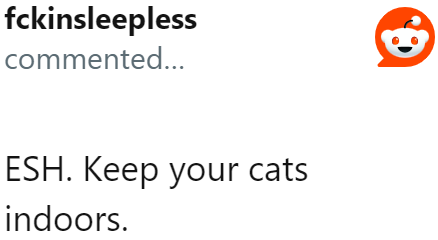
The OP is just as wrong as her neighbor.
That’s when OP decided an ultimatum was the only language the neighbor was hearing, including suggesting rehoming the aggressive cat.
Neighborhood disputes often arise from differing perceptions of pet ownership responsibilities.
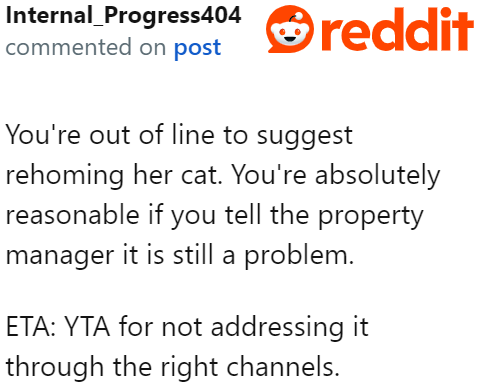
The OP went way out of bounds with her suggestion.
The ongoing dispute over the aggressive cat highlights the importance of addressing pet behavior for the safety of all animals in a neighborhood. The cat owner’s desire to allow her cats to roam freely outside again raises significant concerns, particularly given the risks associated with outdoor living for pets. Open communication between neighbors is essential to navigate these challenges and create a harmonious living environment.
By proactively discussing potential solutions, such as rehoming the aggressive cat or implementing measures to keep it contained, residents can work together to protect both their pets and the local wildlife. Understanding the motivations behind aggressive behavior in cats is key; it can foster healthier relationships between pet owners and their animals, ultimately leading to safer interactions within the community.
At this point, OP is basically asking if her cats should keep getting hurt so the neighbor can keep their outside cat.
Wait until you see how Redditors reacted when OP asked her roommate to keep her elderly, aggressive cat in her bedroom.
Share this article:





