21 Photos That Hilariously Prove That Cats Are Not-So-Secretly In Charge

Cats have a way of acting like every room belongs to them, and honestly, most of us just go along with it. From stolen seats to ignored cat beds, their tiny acts of rebellion are part of what makes living with them so entertaining.
This collection pulls together funny cat photos that show exactly how much control these furry little bosses think they have. The humans may pay the bills, but the cats are clearly making the rules.
Keep scrolling, because these photos get more ridiculous with every swipe.
If you don't nap with Sammy, you don't nap at all.
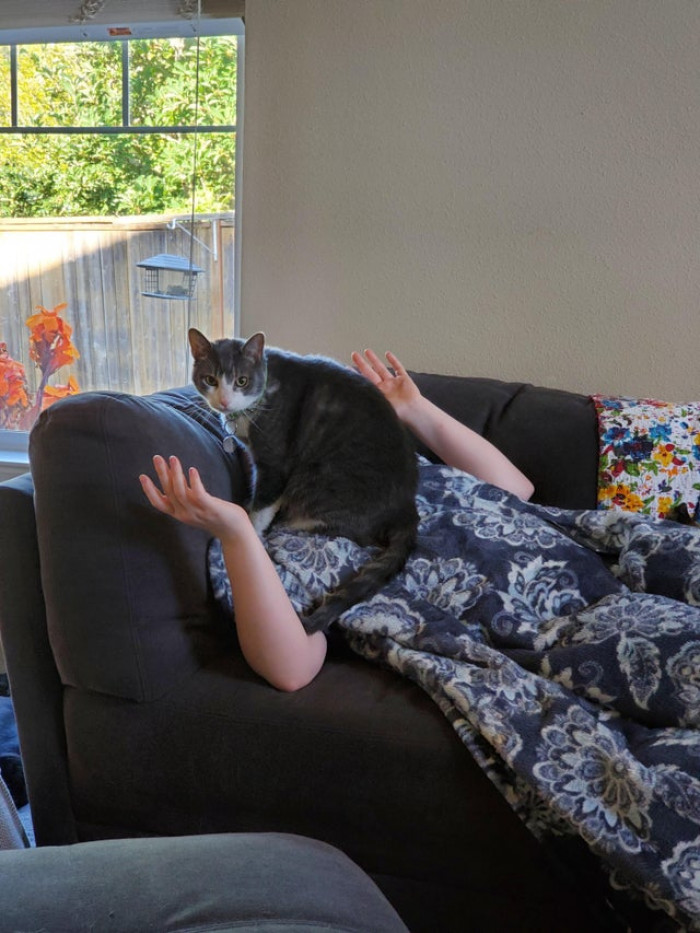
Wanted a photo with the kittens. This is what I got.
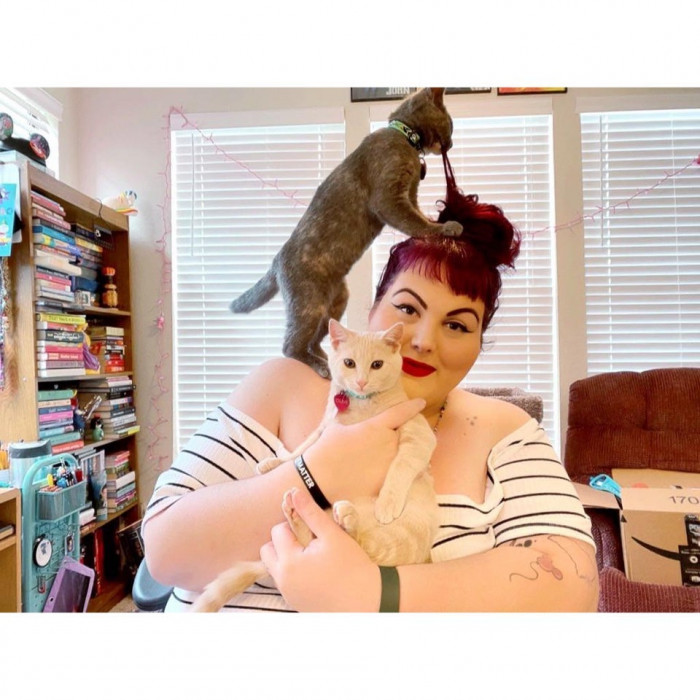
Someone's pretty needy today. He just won't let me play...
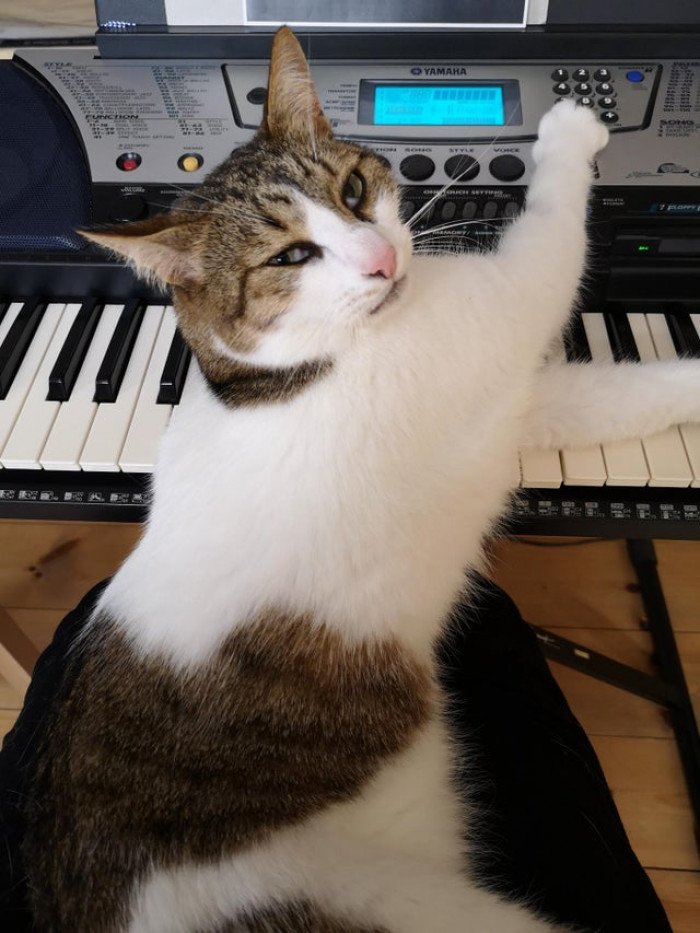
That cat is not interested in sharing the spotlight.
The independent nature of cats often reflects a broader psychological principle known as the 'illusion of control. This phenomenon can be observed in how cat owners interact with their pets; many believe they can influence their cat's behavior, despite the cat's strong sense of autonomy. This dynamic illustrates a classic case of misattributed control, where owners may feel powerless when their carefully laid plans for their cats are disregarded.
Understanding this can help owners develop more realistic expectations regarding their pets' behavior. By embracing the unpredictability that comes with feline companionship, owners can cultivate a more harmonious relationship with their cats, reducing frustration and enhancing mutual enjoyment.
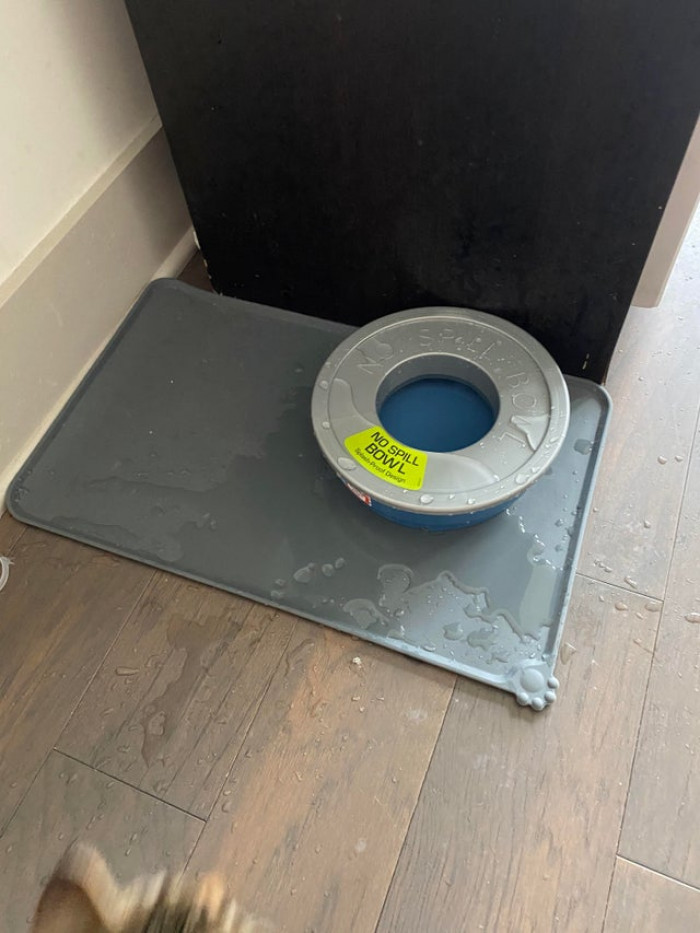
“No Spill Bowl” was apparently a challenge
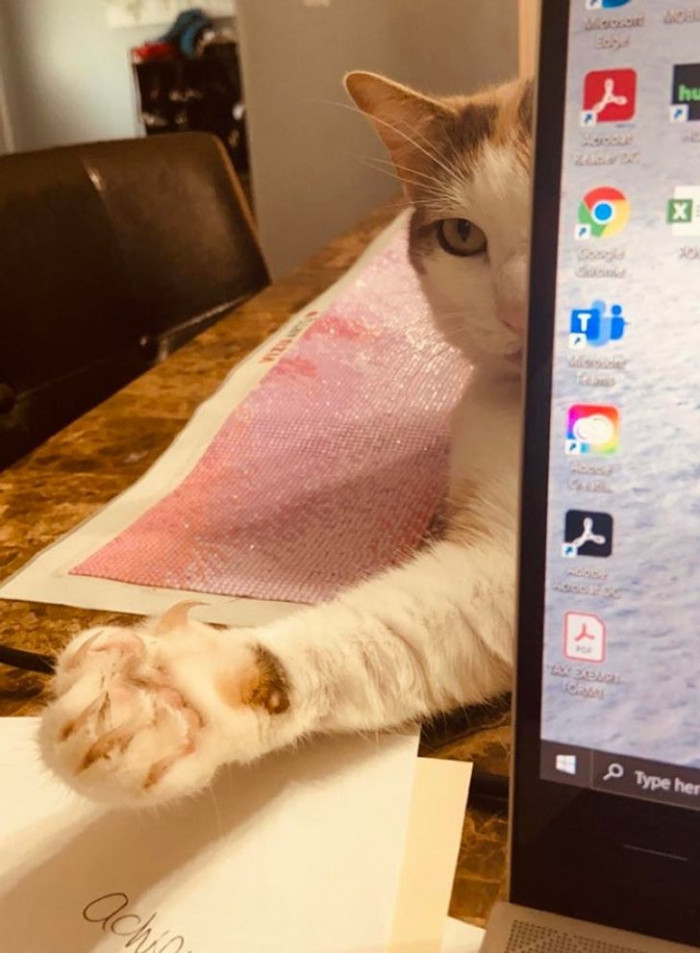
Pay. Attention. To. Me.
Because who needs personal space...or to breathe.
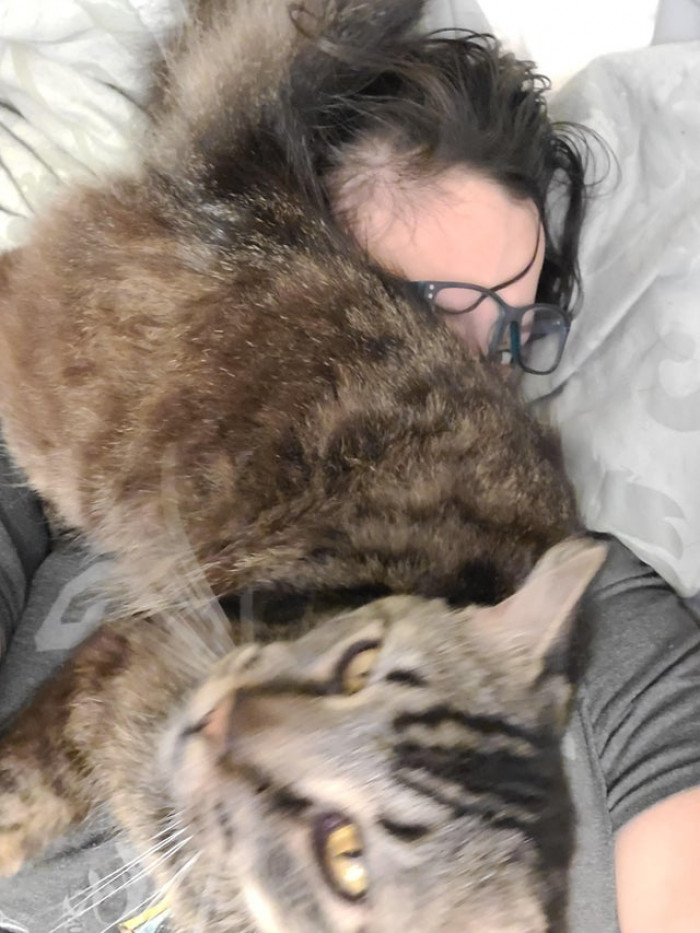
Here comes another cat that clearly missed the memo about boundaries.
Research indicates that the seemingly aloof demeanor of cats is often a reflection of their evolutionary history rather than a desire to dominate their owners. This perspective shifts the narrative from viewing cats as tyrannical overlords to recognizing them as creatures shaped by their natural instincts.
Understanding this can foster a deeper appreciation for cats' behaviors and needs, encouraging owners to create environments that cater to their instinctual desires, such as providing vertical spaces for climbing and hiding spots for retreating. Such adjustments can enhance the well-being of both the cat and the owner, promoting a richer companionship.
I accidentally woke him up by rearranging my legs
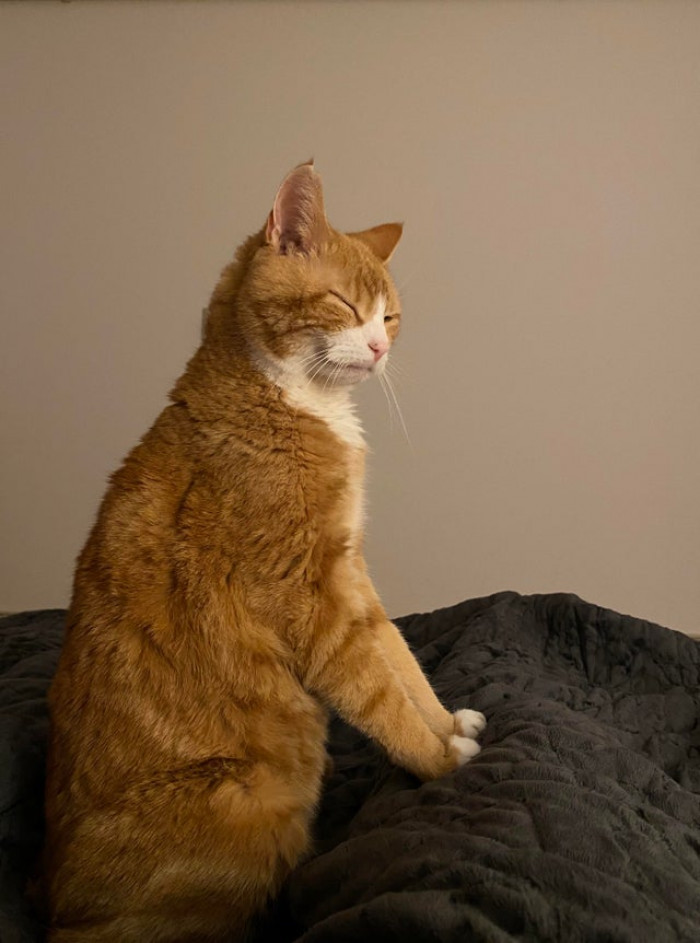
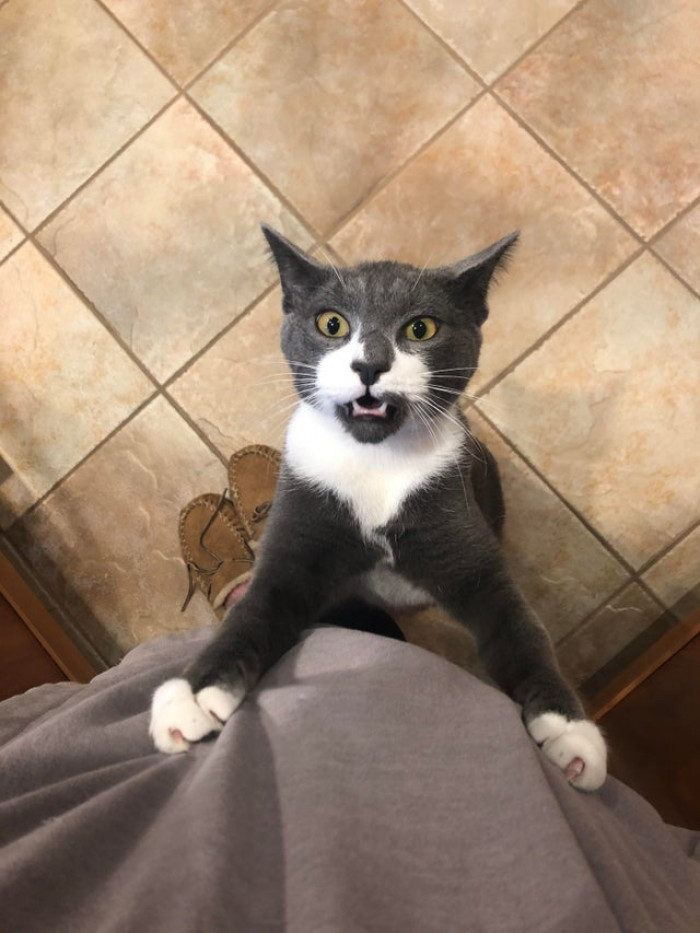
Demanding to be picked up
Sully’s puzzled
This is the kind of attention only a cat can demand without apology.
Research from the University of Cambridge highlights the concept of 'attachment theory' in the context of pets, illustrating that the bond between a cat and its owner can mirror that of a caregiver and child. Cats often form secure attachments to their owners, which can lead to behaviors that may appear controlling, such as following their humans around or demanding attention. This attachment is characterized by a sense of safety and trust, essential components in any healthy relationship.
For owners, recognizing this attachment can be empowering. It suggests that fostering a secure environment where cats feel safe can lead to more positive interactions. Owners might consider enriching their cats’ environments with toys and social playtime, which not only strengthens their bond but also satisfies the cats' natural instincts.
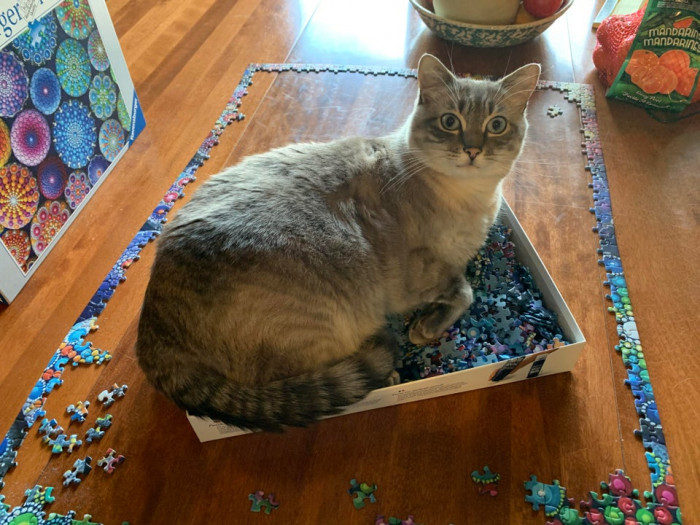
Yes, this is a good place to sit.
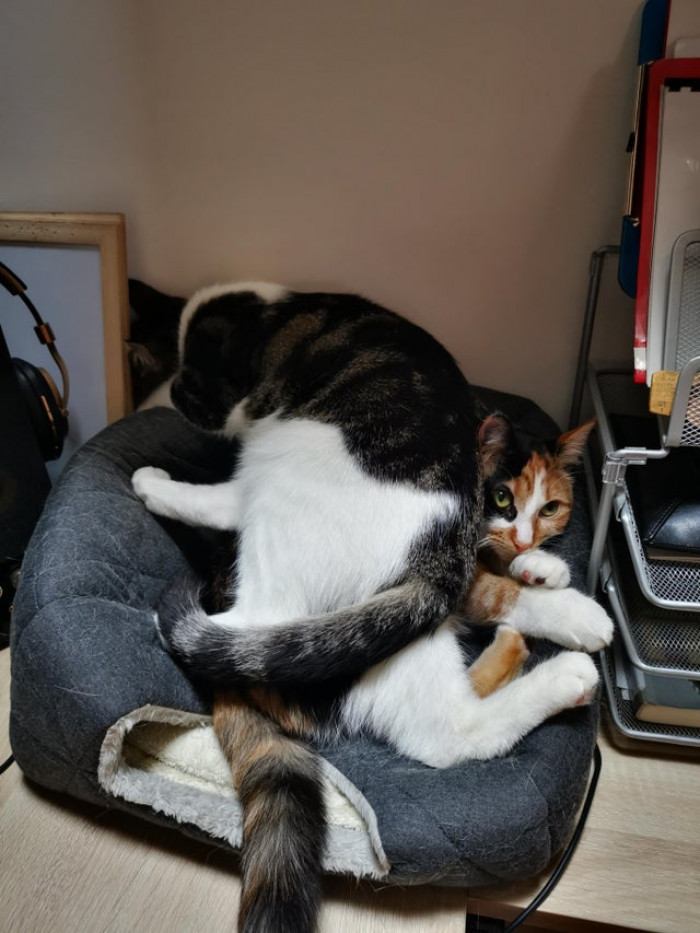
My B&W tabby sits on my calico until she gives up their fave spot on my desk
"What do you mean by 'what did you do'? The shower curtains were like this already!"
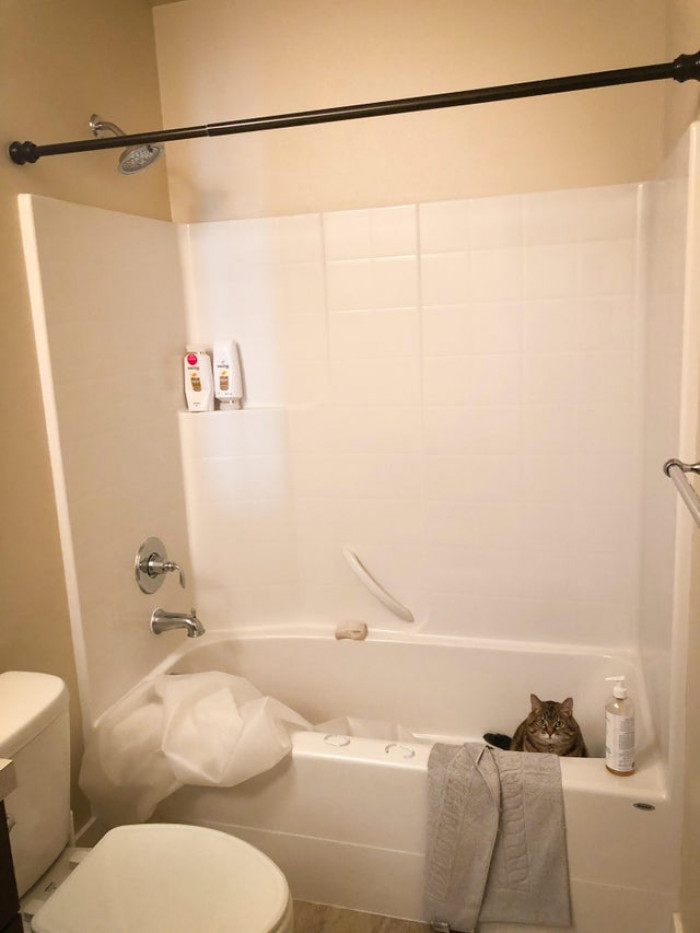
That curtain story feels very familiar to anyone with a cat.
This is like the 20-year-old who got termed AH for insisting his friend mattered more than their pet cat.
In a study published in *Applied Animal Behaviour Science*, researchers found that rewarding desired behaviors in pets leads to more successful outcomes than punishment or negative reinforcement. This principle applies to cats as well, who respond better to praise and treats than to scolding.
To leverage this knowledge, cat owners should focus on rewarding their cats for good behavior, such as using treats or affection when the cat uses its new bed or scratches the designated post. This approach not only encourages compliance but also enhances the overall relationship between the cat and its owner, creating a more harmonious living situation.
They were both sleeping 3 minutes ago
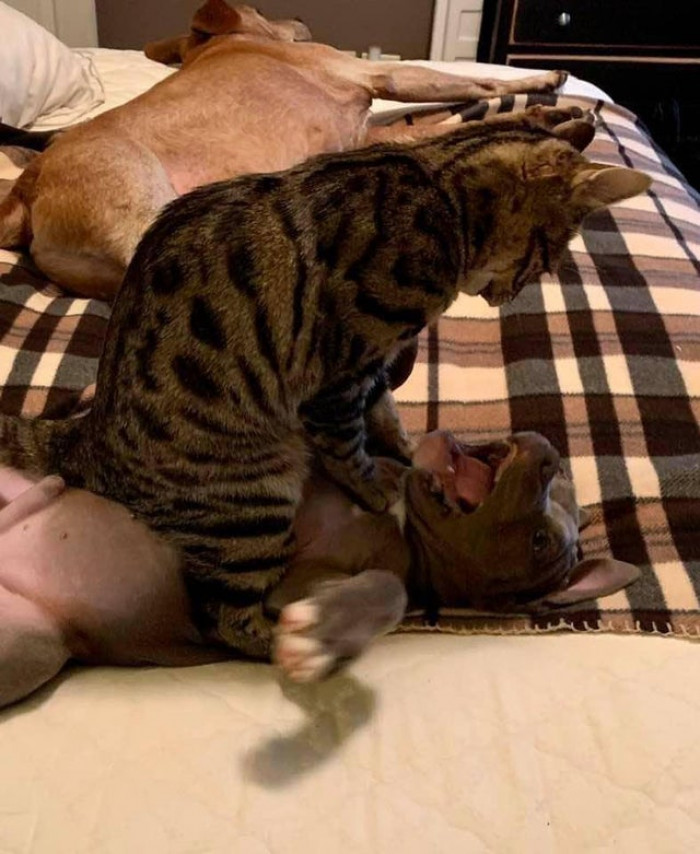
Countless places to nap outside in the shade, and this is where my cat chooses to get comfortable.
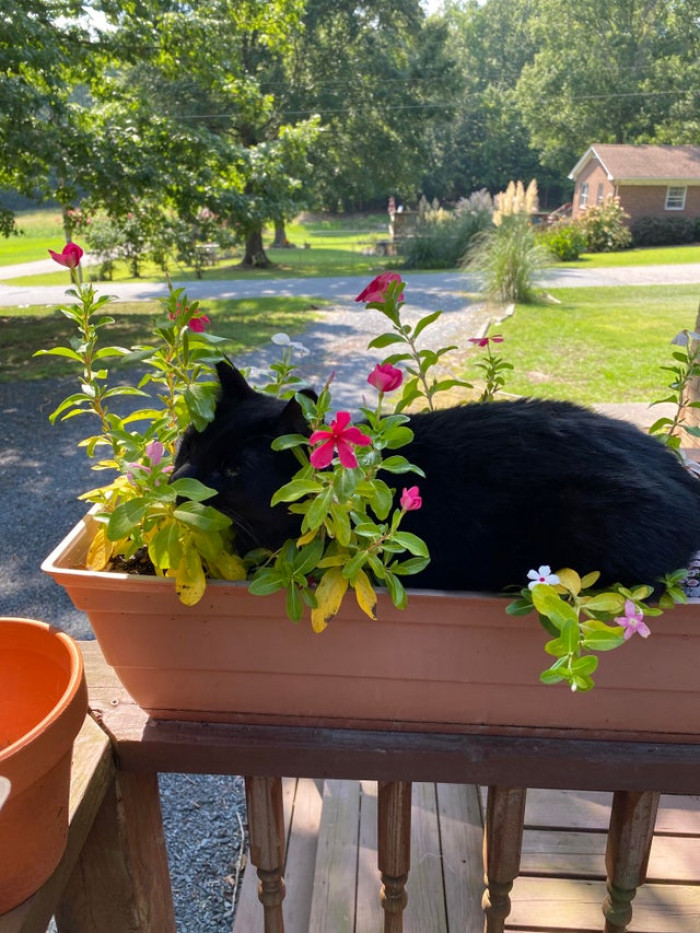
She judges from above
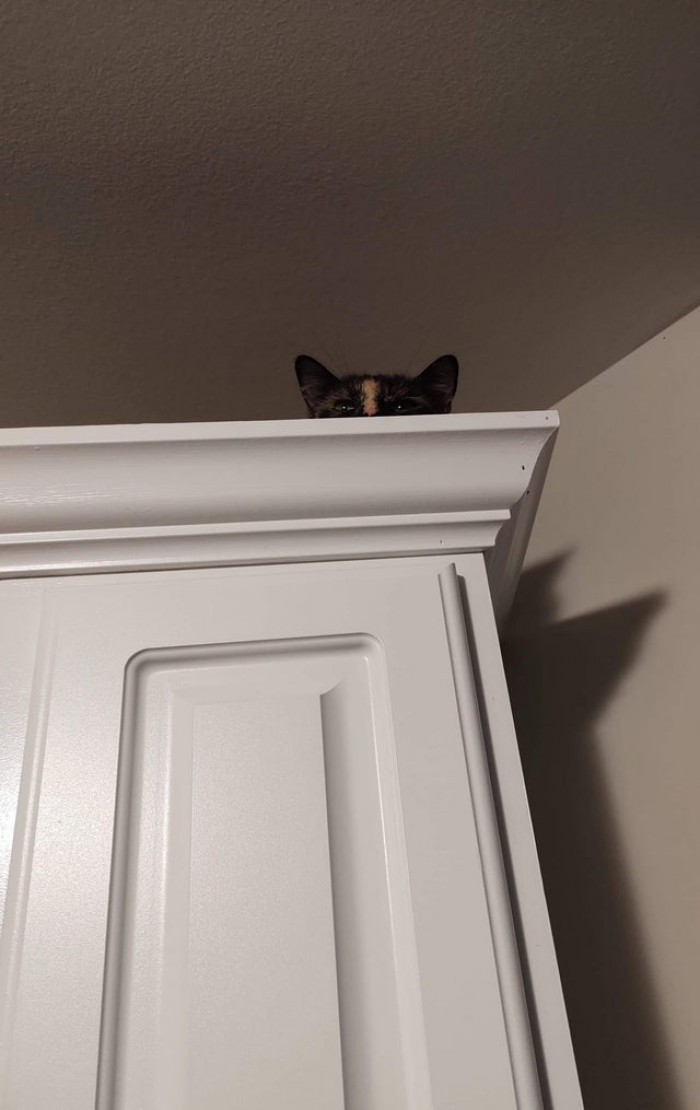
Some cats do not just enter a room, they supervise it.
Social psychologists have found that pet ownership can significantly influence emotional well-being, often serving as a source of comfort and companionship. A study published in the *Journal of Health Psychology* revealed that pet owners report lower levels of loneliness and enhanced emotional support, highlighting the psychological benefits of having a pet. This bond can be especially profound with cats, whose unique personalities often provide owners with both entertainment and companionship.
Recognizing the emotional benefits of pet ownership can encourage individuals to invest more time and effort into their relationships with their cats. Simple practices, such as designated playtime or quiet cuddle sessions, can boost both the owner's mood and the cat's sense of security, enhancing the overall quality of life for both parties.
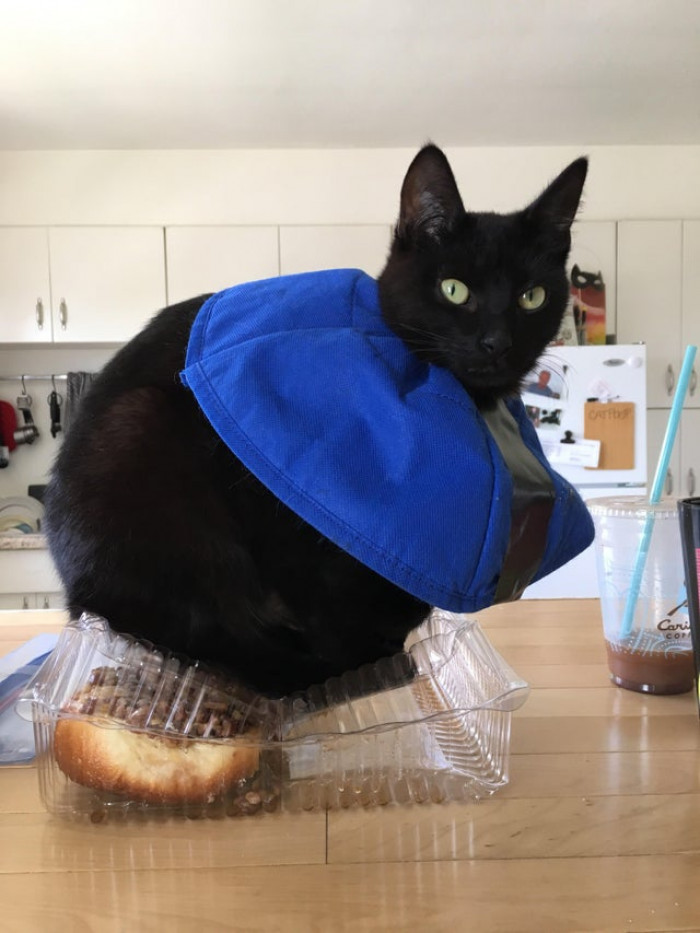
Thank you, human
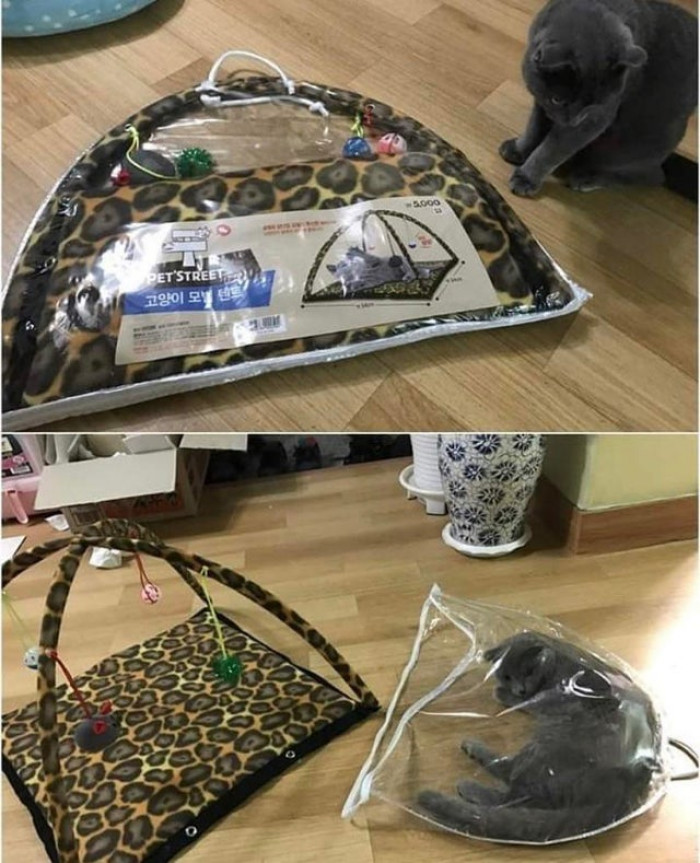
She is not familiar with boundaries and has exactly zero shame.
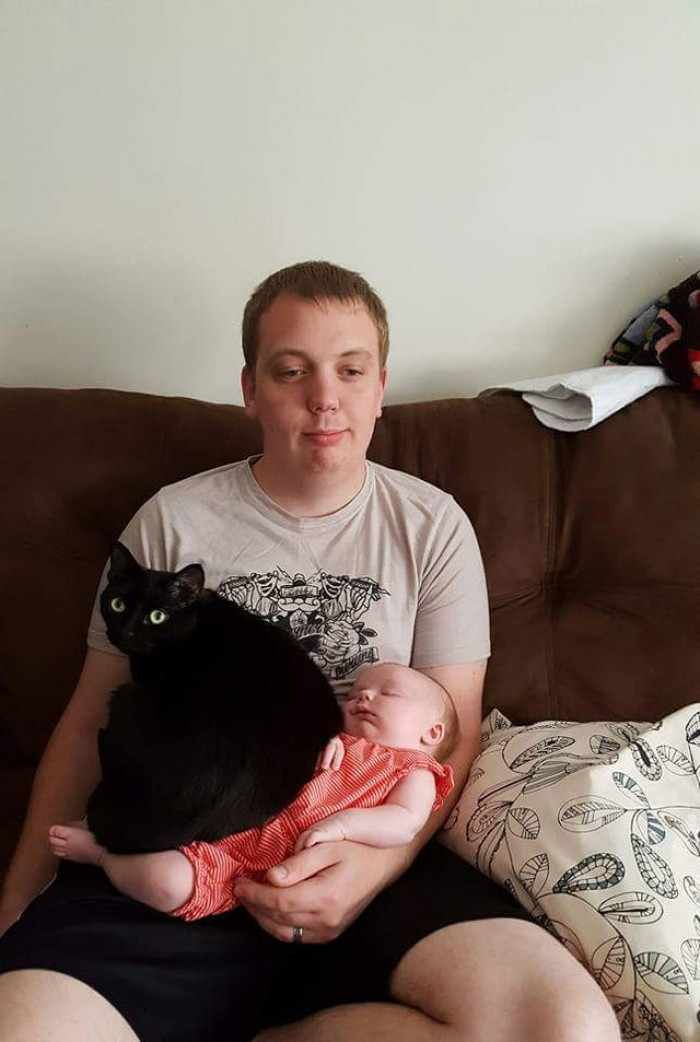
Saw this online and thought these cats fit right in here...
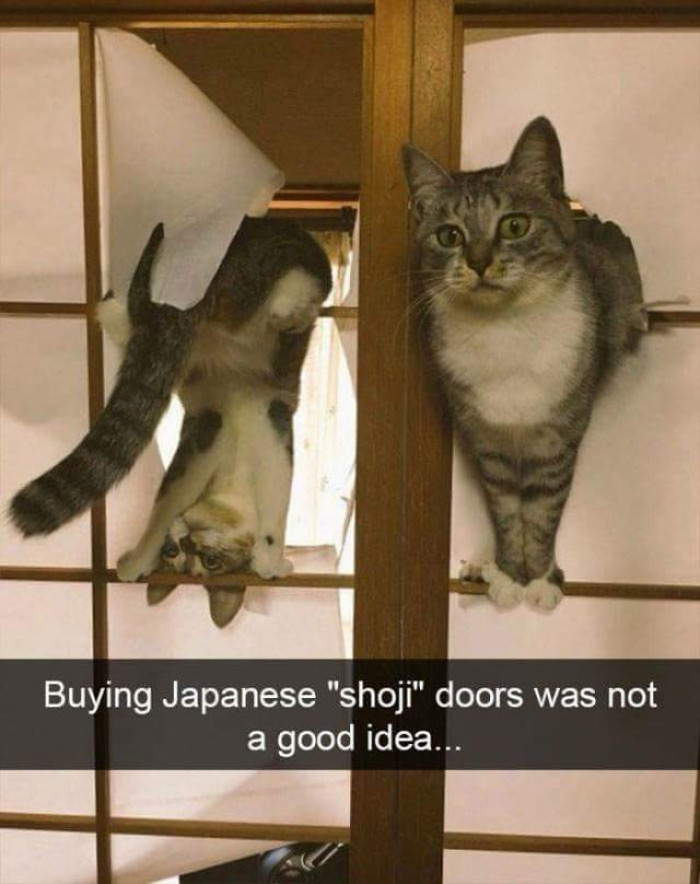
These cats are making a strong case for total household control.
Feline behaviorists explain that cats often exhibit territorial behaviors, which can manifest as dominance in their households.
Klaus recovering from being neutered is a whole mood.
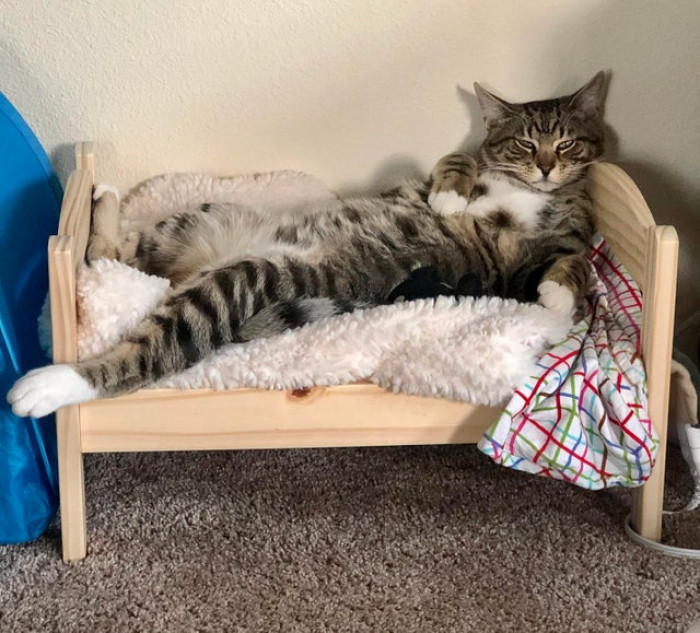
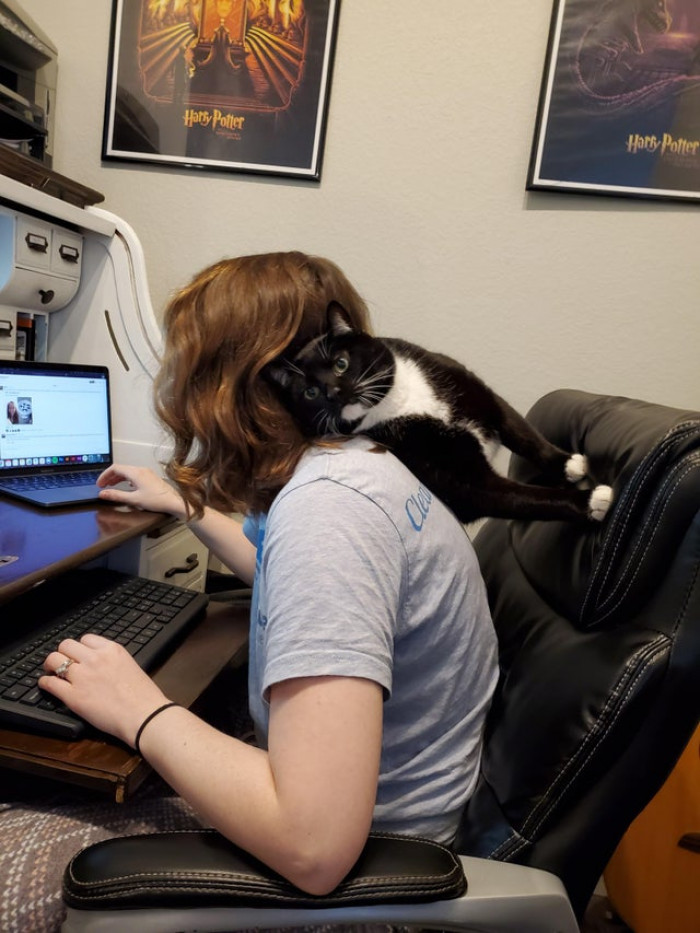
This is what happens when I tell him he can't sit on my lap while I'm trying to work.
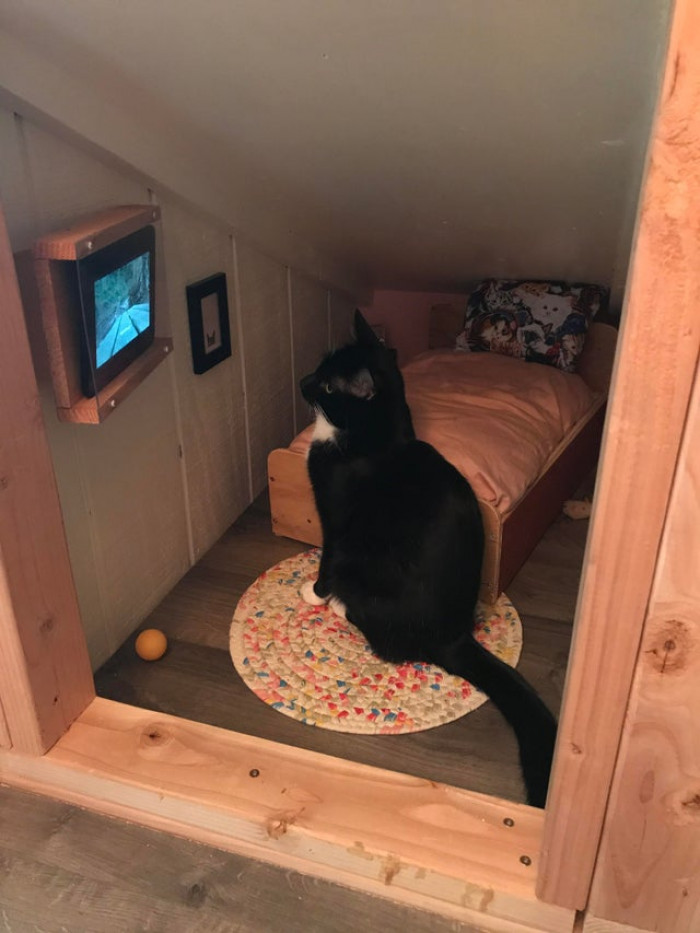
Finally got his own room!
Cats really do act like every space in the house comes with their name on it.
Developmental psychologists have noted that animals, including cats, exhibit a range of emotions similar to humans. This awareness underlines the importance of empathy in our interactions with pets. A study published in *Animal Cognition* reveals that cats can recognize and respond to human emotions, often mirroring the feelings of their owners. This emotional connection can lead to a deeper understanding of feline behavior and needs.
By cultivating empathy towards their cats, owners can learn to interpret their pets' behaviors as expressions of their emotional states. This could mean recognizing when a cat is anxious or stressed and responding with comforting measures, such as creating a quiet space or engaging in gentle play, ultimately leading to a more fulfilling companionship.
Do you have any cats or plans to adopt in the future? We want to know all about your kitty or your future dream kitty, so drop a comment about them in the comments section below.
We especially want to hear about how the cats in your home assert their authority and if they are more in charge than you initially thought.
The relationship between cats and their owners is undeniably complex, as evidenced by the lighthearted images that showcase the feline dominance in our homes. These photos not only capture the adorable antics of cats but also reflect their cocky and independent nature. The dynamic between our desire for companionship and their innate autonomy creates a unique bond that demands understanding. By acknowledging that cats believe they are the ones in charge, owners can adjust their expectations and behaviors, leading to a more rewarding relationship. Embracing a cat's independence and quirks not only benefits the feline but also enriches the owner's life, enhancing the joy and companionship that comes with sharing a home with these charming rulers.
And yes, the cats are still winning.
Want more “cats make the rules” chaos? Check out the online rules list for cats at home.
Share this article: