
Choosing Beggar Will Not Pay Over $50 For High-Maintenance Cat, Says Her Bills Are Tight

A Redditor posted a screenshot of a CB’s ad, and the audacity is almost impressive. The pitch was simple: “I’ll take an expensive cat, but I’m only paying $50.” That’s not a budget, that’s a dare.
Here’s the complicated part, OP is trying to make it work with tight bills on their side, while CB wants premium-level pet energy for bargain-basement money. Even the “getting the cat for free” part does not stop the spending, because cats come with food, vet visits, and the kind of maintenance that adds up fast when someone’s plan is basically “free cat, no responsibility.”
And once the math stops mathing, this story turns into a preview of the surrender pipeline.
The original poster (OP) shared a screenshot of a CB's post. She's only willing to pay $50 for an expensive cat.
Bills are tight, but CB wants an expensive cat for $50
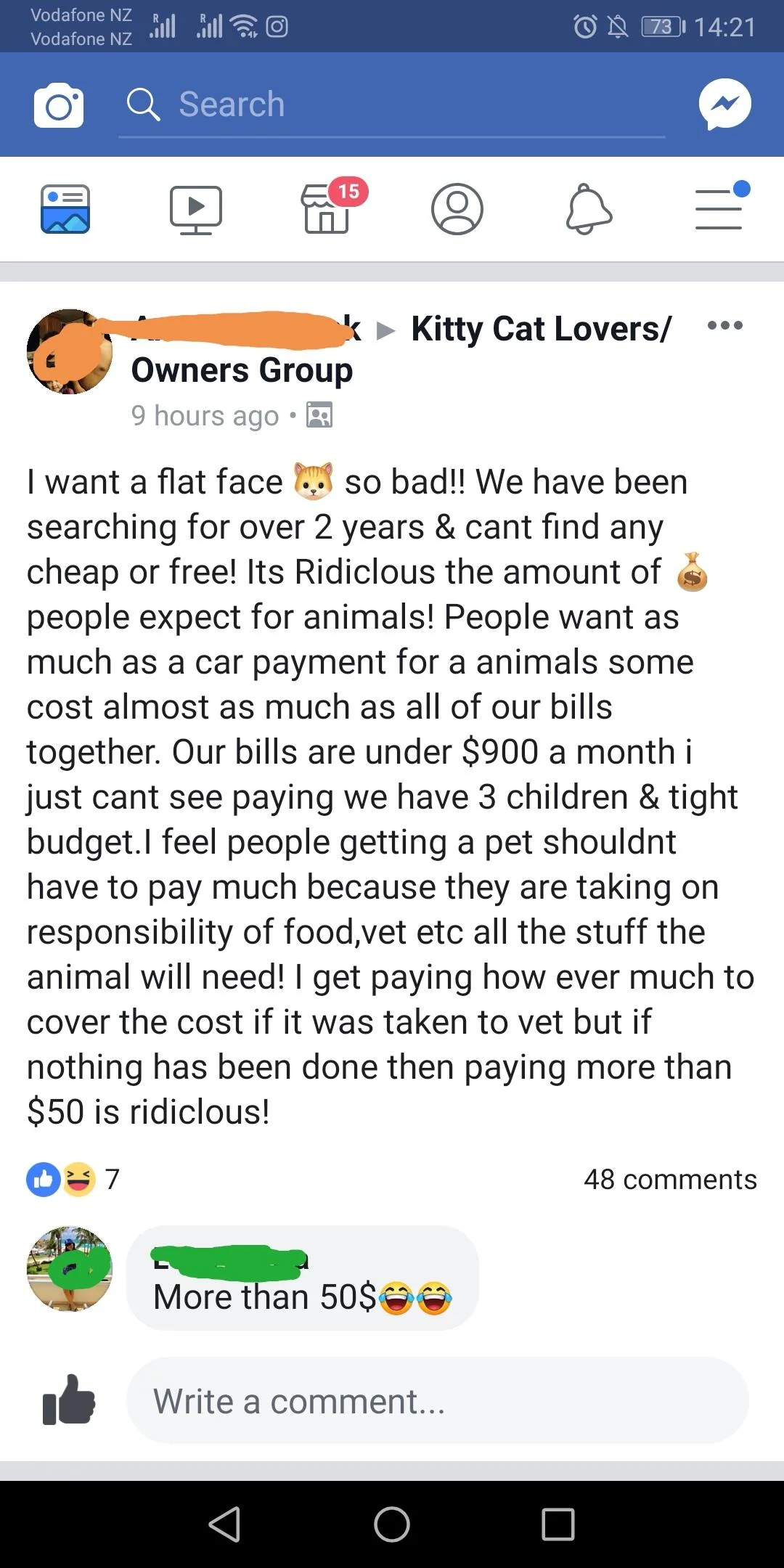
Getting the cat for free doesn't mean owners won't spend money.

OP’s screenshot makes it clear CB is treating an expensive cat like it comes with a built-in discount code.
The struggle over financial responsibilities in pet ownership is vividly illustrated in the case of the individual unwilling to pay more than $50 for a high-maintenance cat. This reflects a broader reality where differing financial expectations can create tension not just in pet care, but in relationships overall. When partners have contrasting views on spending, as seen in this scenario, it often leads to conflict and resentment. The choice to prioritize budget over the well-being of a beloved pet may indicate deeper issues in financial communication and compatibility. Recognizing these financial dynamics is key to fostering healthier relationships, especially when it comes to shared responsibilities like pet care.
In fact, owners like this Redditor end up spending thousands of dollars because of a cat.

You spend money on pets like how you would spend money on family members.

Studies in behavioral economics indicate that financial stress can negatively impact emotional well-being.
When individuals feel financially strained, they may exhibit increased anxiety and irritability.
This can create a vicious cycle that further complicates relationships.
This lady does not deserve a cat.

This lady will just end up surrendering the cat to an already overpopulated animal shelter.
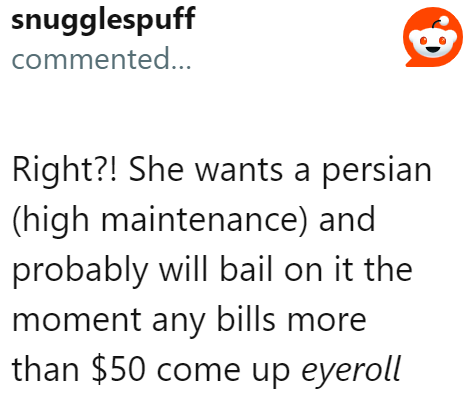
When OP points out that “free” doesn’t mean “free to own,” CB’s $50 cap starts sounding less like budgeting and more like neglect.
And it’s not just cat prices, check out the choosy beggar who wanted two weeks of cat-sitting for free housing.
Effective communication is key to navigating financial discussions in relationships.
Encouraging transparency can help mitigate misunderstandings and foster cooperation.
People can already see what's coming.
When CB neglects the cat, it can develop health conditions due to a lack of proper care. As a result, CB surrenders the cat, and the new owner ends up footing the bill to address health issues caused by the previous owner's negligence.

The CB's logic is faulty from the very beginning.

Then the comments land on the real fear, CB pays nothing upfront, the cat ends up sick, and the next owner gets stuck with the bill.
A high-maintenance cat is just not suitable for this choosing beggar. With an already tight budget, she will not have the means or money to care for an expensive breed.
She should reconsider her decision and opt for pets that are easier to take care of and won't be a burden on her budget. Otherwise, she'll just tap out of the responsibility and surrender the poor feline to animal shelters.
The reality is that even when we want a certain breed, we shouldn't get one if our time and money cannot afford it.
People like CB are infuriating cat lovers.
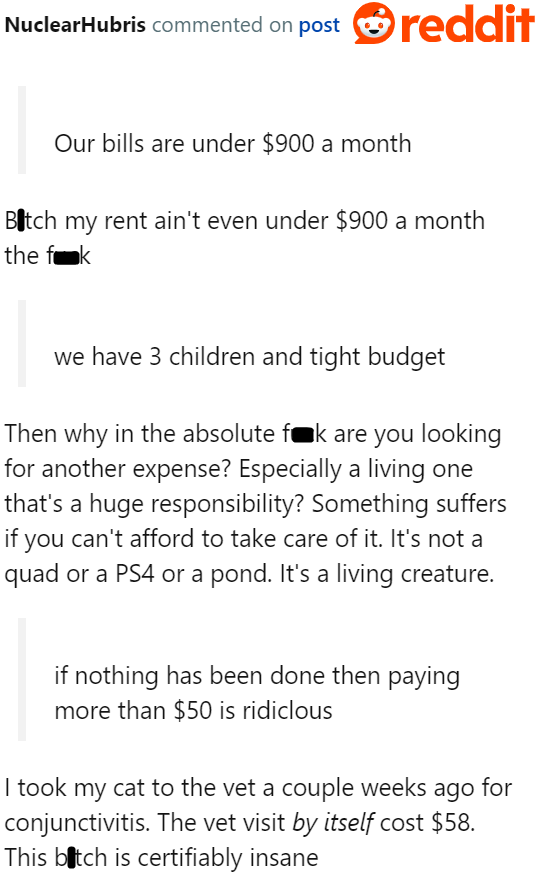
If the CB is already complaining about her tight budget, then why add insult to injury by getting a high-maintenance cat?
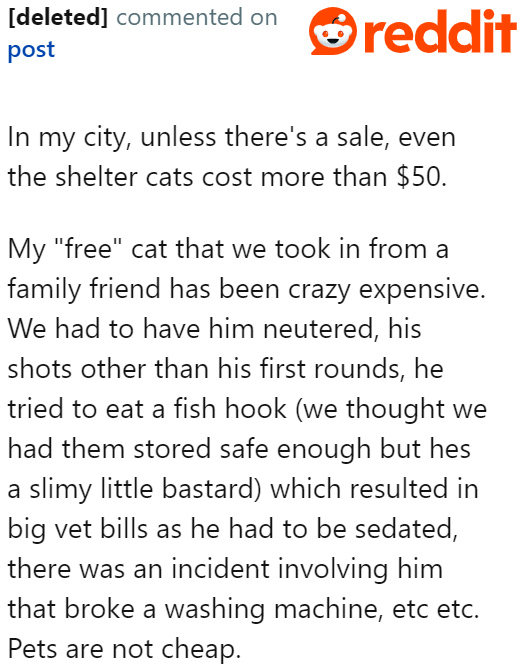
By the time CB’s logic collapses, everyone can practically see the surrender post loading up at the animal shelter.
Being proactive in discussing finances can help prevent conflicts and promote unity.
Additionally, seeking financial counseling can equip couples with tools to manage their finances collaboratively.
The article illustrates that while pets can bring immense joy, they also come with substantial costs that must be acknowledged upfront. This situation serves as a reminder that effective communication about expenses can prevent misunderstandings and conflicts. By fostering transparency regarding the financial responsibilities tied to pet care, potential pet owners can cultivate healthier relationships with both their furry companions and any partners involved in the decision-making process.
Nobody wants to watch a $50 promise turn into thousands in vet costs.
Want more cat bargain drama? See the woman demanding a Siamese cat for free after buying supplies.
Share this article:





