
Pregnant Woman Wants To Give Away Her Friend's Dog To A Loving Home Because The Original Owner Technically Abandoned It

A pregnant woman is trying to do the right thing, but it turns into a whole mess involving her friend, a very old Lab, and the kind of “technically” that makes everyone mad.
Here’s the setup: her friend couldn’t keep the dog because of housing rules, so the OP stepped in and took over. She’s been caring for the Lab for more than a year, paying the expenses, doing the daily grind, while her friend stays hands-off. Now the OP is pregnant, and she’s faced with a brutal decision, because rehoming a senior dog can feel like ripping away a piece of her life.
The real twist is that the community thinks the dog is no longer the friend’s, which changes everything about who gets to decide the Lab’s future.
The OP took in the dog's friend because she had to move to a home that doesn't allow dogs.
The OP has been taking care of the dog for more than a year, but her friend isn't contributing to the expenses for their pet.
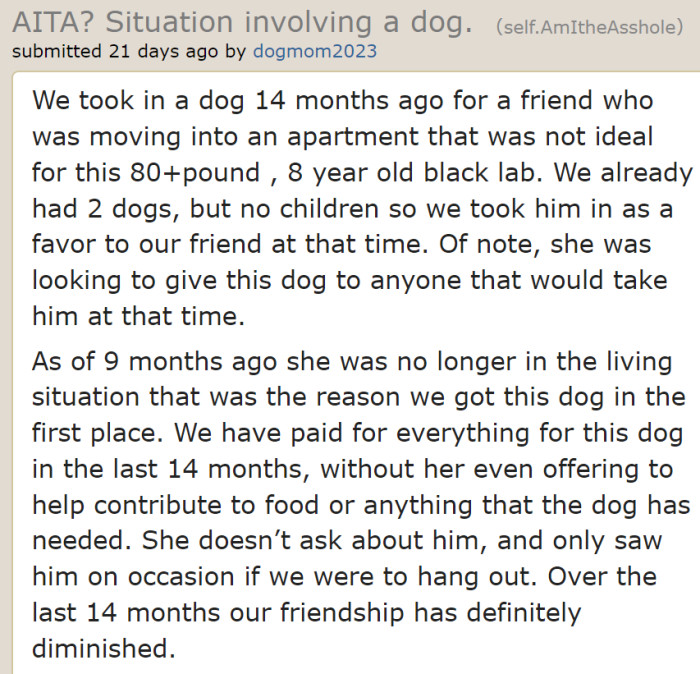
Since she's pregnant, the OP decided to give the dog up.
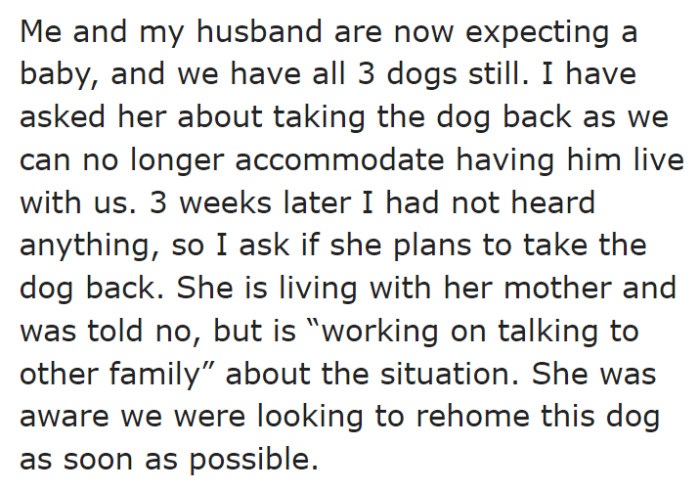
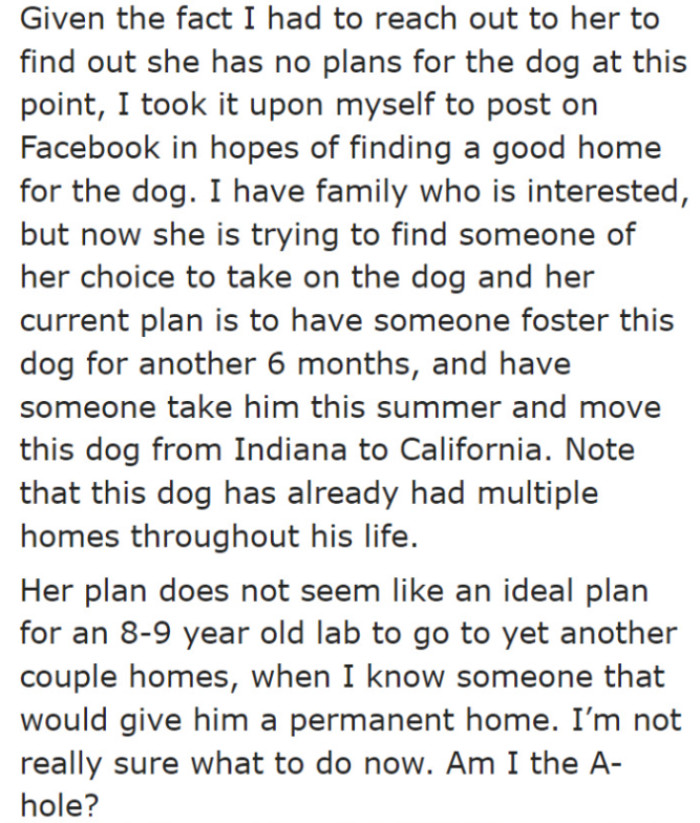
What the OP's friend plans to do will be stressful for the old Lab, so she decided to look for the ideal owner.
The act of considering giving away a pet can trigger feelings of abandonment and emotional conflict. Pets often develop strong emotional bonds with their owners, which can complicate the decision to rehome them.
The woman’s feelings toward the dog are valid, as they reflect a deep emotional attachment, compounded by the history of caring for the animal.
The Ethical Dilemma of Pet Ownership
Taking care of a pet often comes with emotional and ethical responsibilities that can complicate decisions about their care.
This situation exemplifies the emotional weight of such decisions, as the pregnant woman grapples with her ethical responsibilities toward the dog.
The community believes that the old Lab is no longer the friend's dog.
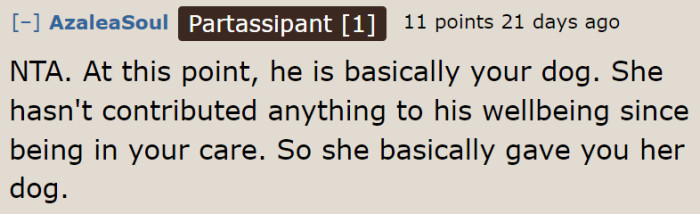
The friend no longer has rights to the dog since she technically gave it up by not contributing anything for the dog.
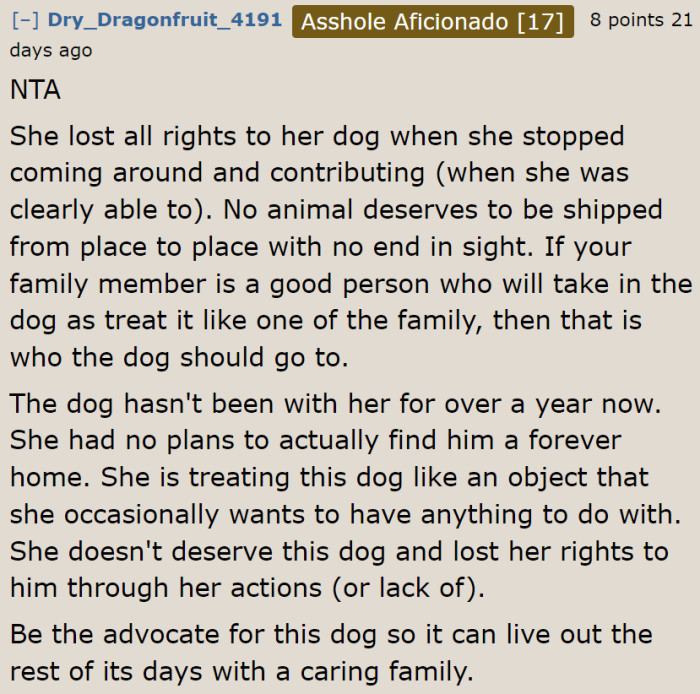
The OP can do whatever she wants with the dog at this point; the friend has no rights over this dog anymore.
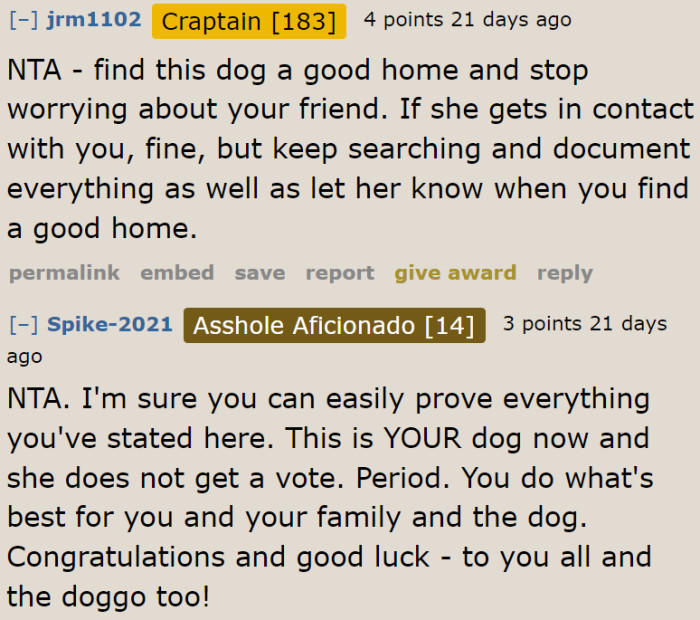
The friend’s move to a no-dog home was the reason the OP took over, but the “no contributions” part is what really set off the drama.
Studies in attachment theory show that the bonds formed with pets can mirror those we have with human relationships. The prospect of rehoming the dog may evoke feelings of failure or guilt, particularly if the woman perceives the act as abandoning a dependent creature.
Understanding these feelings is crucial in navigating the complexities of pet ownership and emotional health.
Studies indicate that the emotional attachment formed during caregiving can lead to feelings of guilt and anxiety when contemplating rehoming.
In this case, the woman's internal conflict over the dog's well-being reflects a larger struggle many pet owners face.
What the OP is doing is a responsible move, and it's definitely more responsible than what her friend plans to do with the dog.
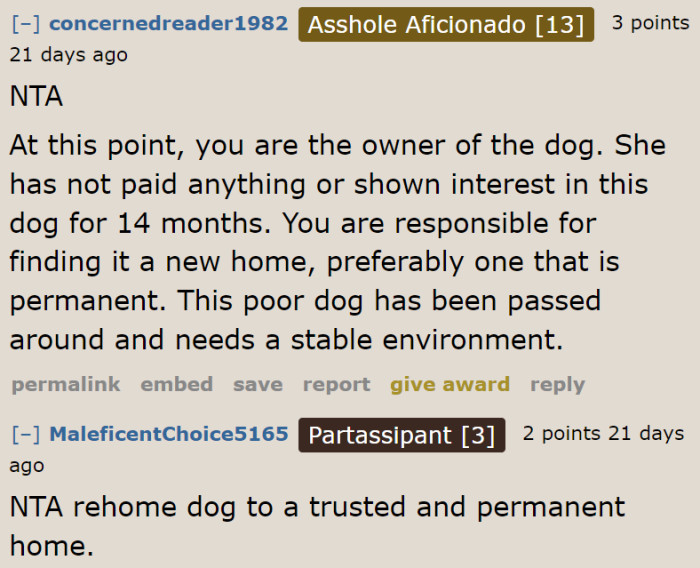
It's a lot better to rehome the dog than to return it to its owner.
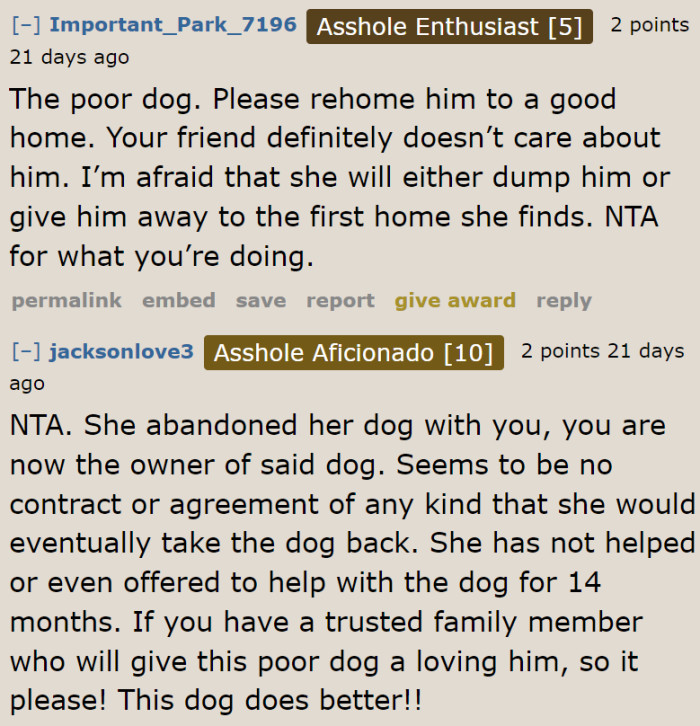
A Redditor suggests taking an active approach and taking the dog to the vet to secure ownership.
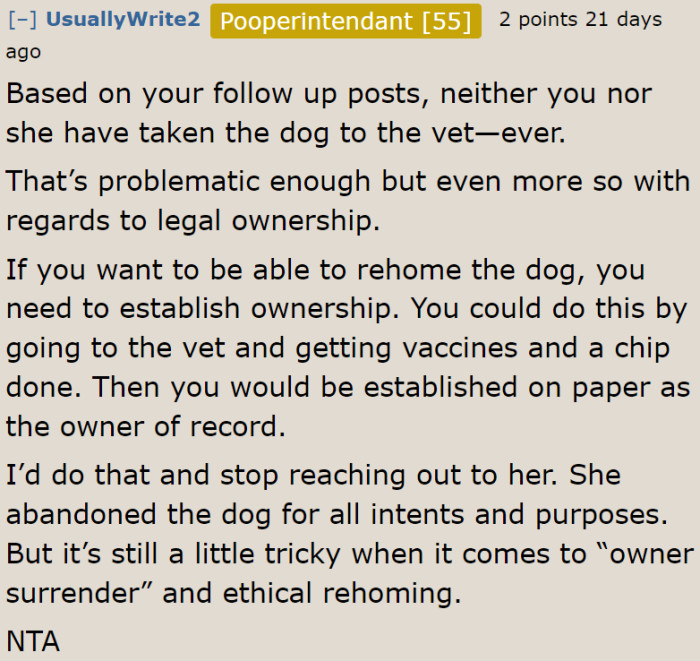
After more than a year of OP covering costs for the old Lab, her pregnancy forces the question nobody wants to answer, who actually owns the dog in real life?
Ethical considerations in pet ownership often revolve around the responsibilities we take on when adopting a pet.
Caregiver stress can significantly affect decision-making processes, leading to impulsive or regrettable choices.
In this scenario, the pressure from her living situation may cloud the woman’s ability to make the best choice for the dog.
It also echoes the woman who refused to return a dog after six months of training, feeding, and bonding.
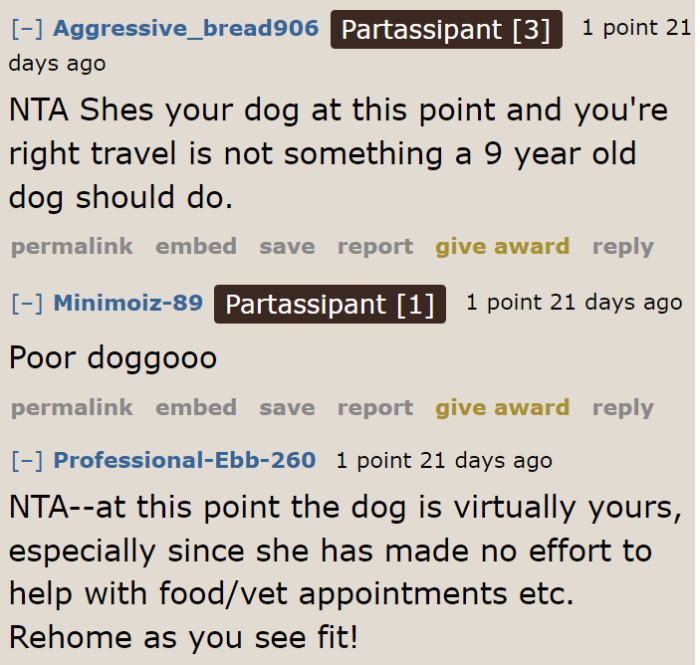
Her friend no longer owns the dog; the OP has been taking care of all its needs, after all.
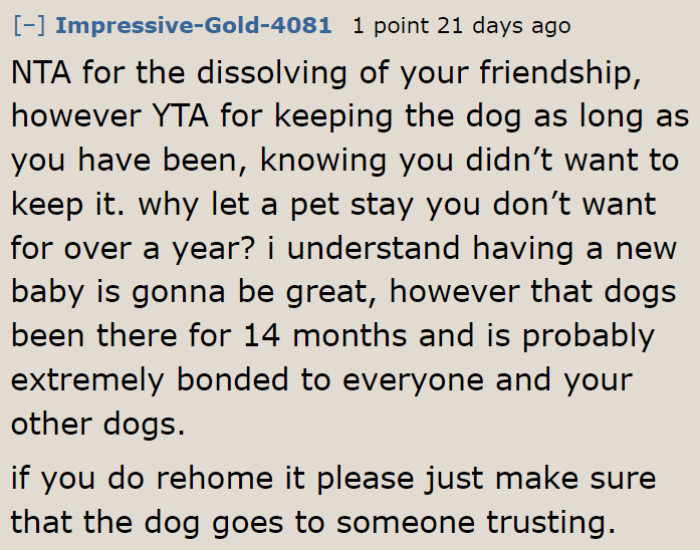
This Reddit user feels that the OP made a mistake by keeping this pet longer.
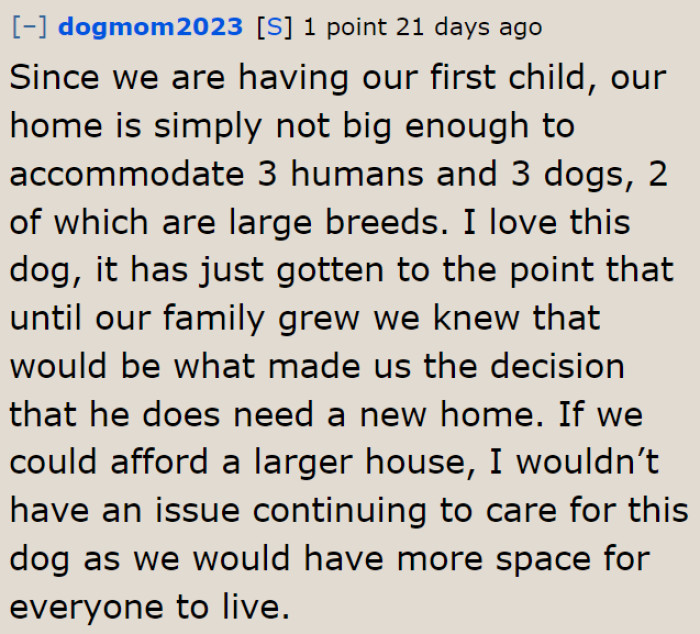
The OP explains that at this point, her child takes priority.
To mitigate these feelings, the woman could explore options for ensuring the dog goes to a loving home while maintaining some level of involvement. Finding a trusted friend or family member to adopt the pet can alleviate feelings of guilt and abandonment.
Maintaining connections with pets, even after rehoming, can ease emotional distress.
That’s when the friend’s plan to get the dog back or claim it collides with the fact that the OP has been the one living with the consequences.
To navigate these complex emotions, seeking support from friends or professionals can be an effective strategy.
Discussing feelings and options with trusted individuals can provide clarity and alleviate stress.
In this case, reaching out for guidance may help the woman make a more informed decision about the dog’s future.
According to the OP, the dog isn't registered.
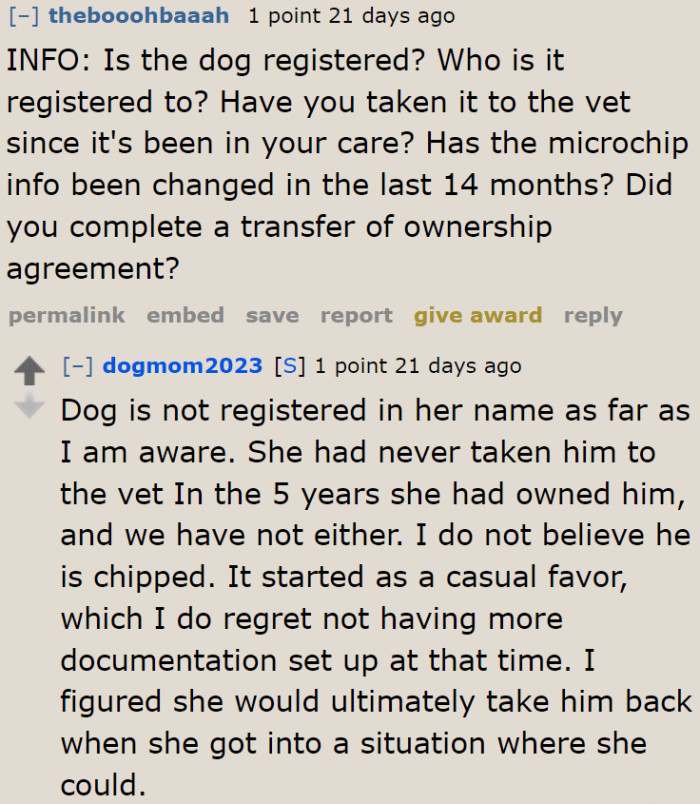
The OP needs to have the friend relinquish ownership first.
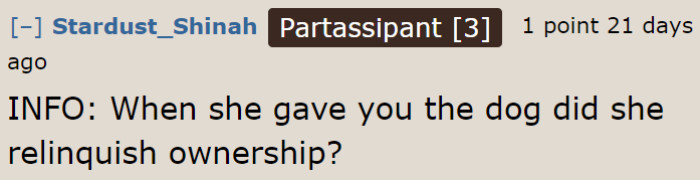
She might get into trouble with the law otherwise.
Community support can be vital in navigating difficult decisions regarding pet ownership.
Engaging with local pet organizations or community groups can provide resources and emotional support for the woman as she grapples with her decision.
Building a Supportive Network for Caregivers
Creating a support network can empower caregivers to make better decisions regarding their pets.
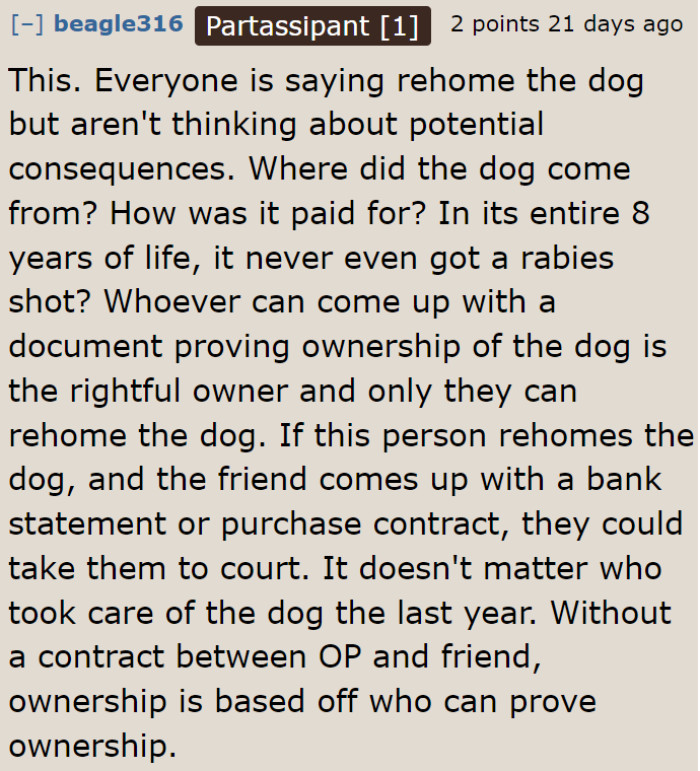
Even if she wants what's best for the dog, she can't rehome a dog that's not hers.
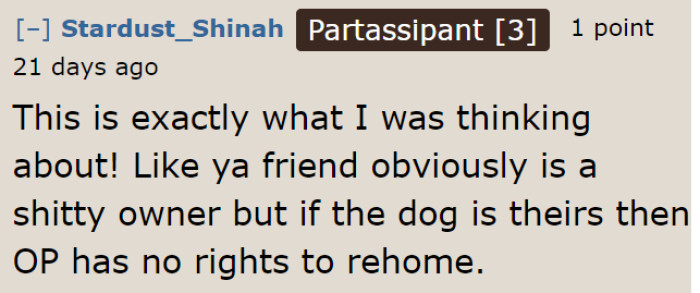
It's the real owner who can decide for the dog.
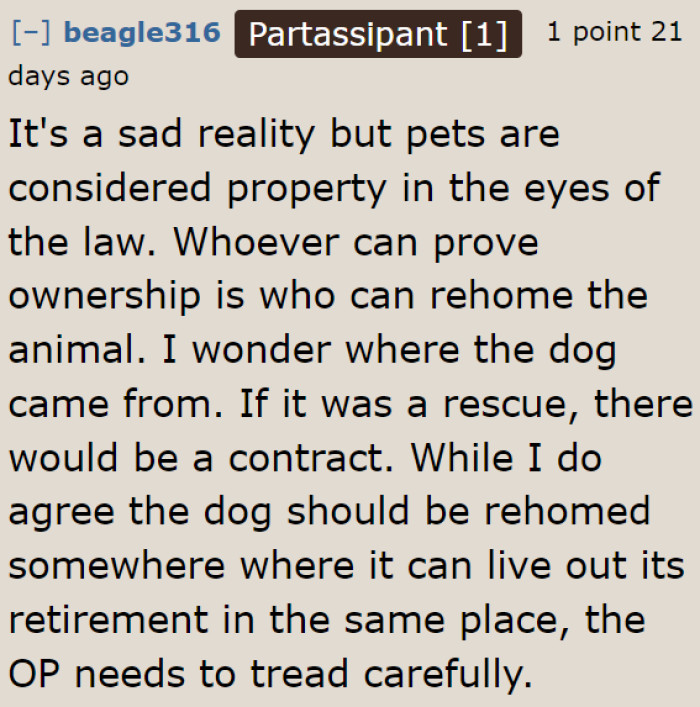
The OP really wants to help this dog, but she's taking a risk at the same time.
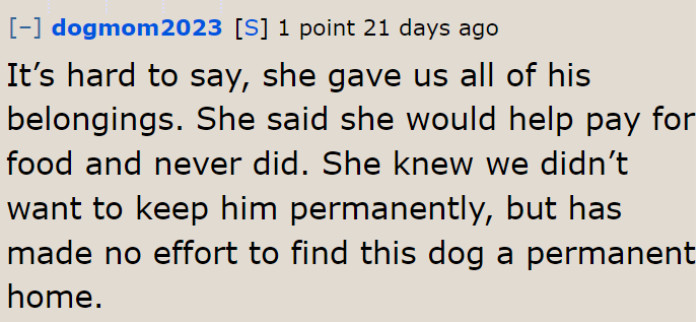
The OP can check dog ownership laws in her area.
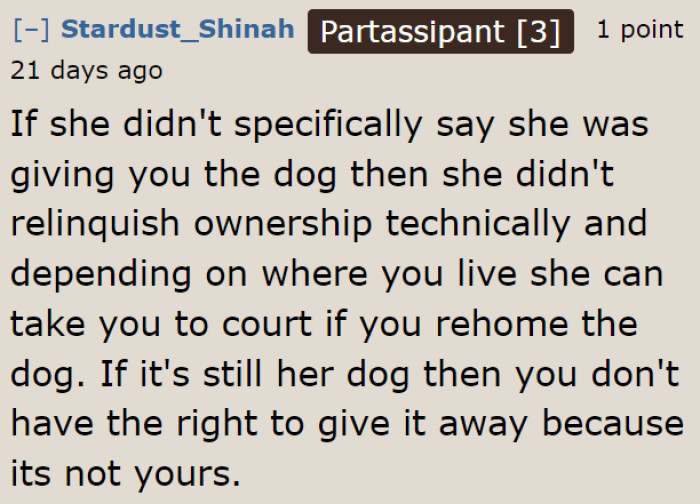
If it's the friend who has rights to the dog, she can no longer do anything about it.
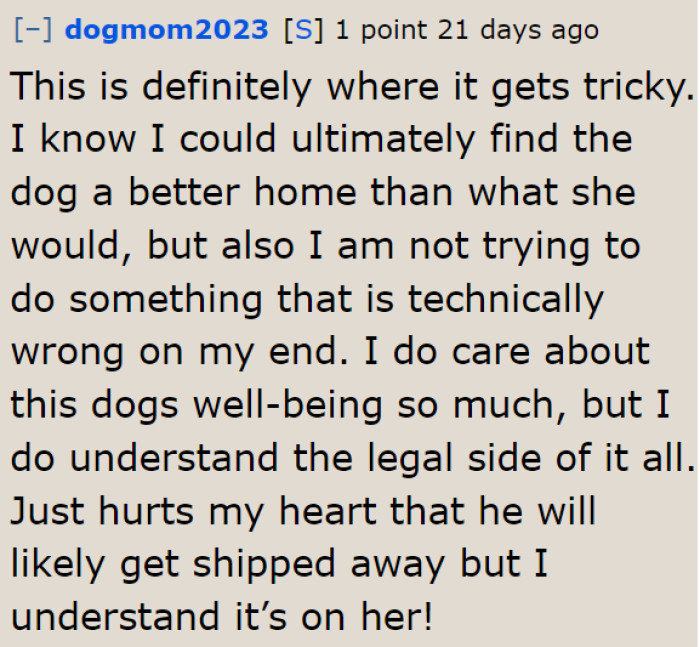
It's the dog papers that will determine who rightfully owns the dog.
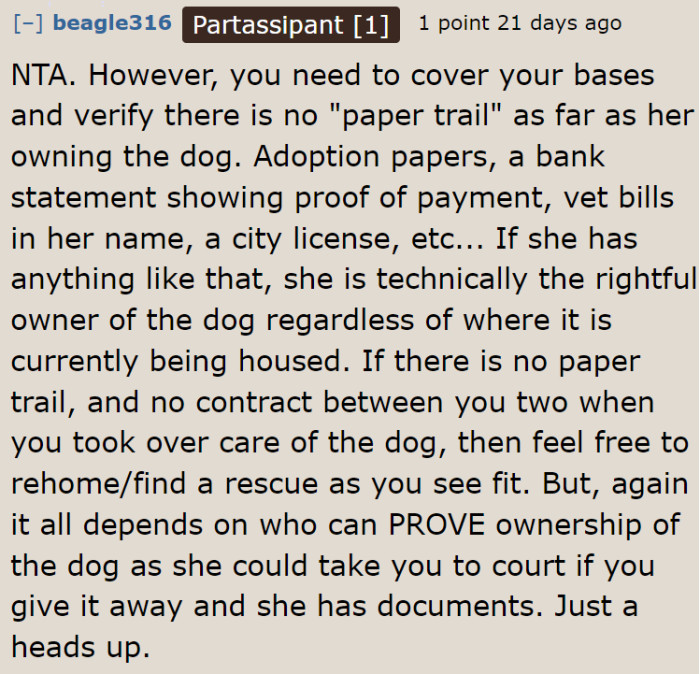
Even if she's taking a risk, giving the dog to someone with a permanent home is the right thing to do.
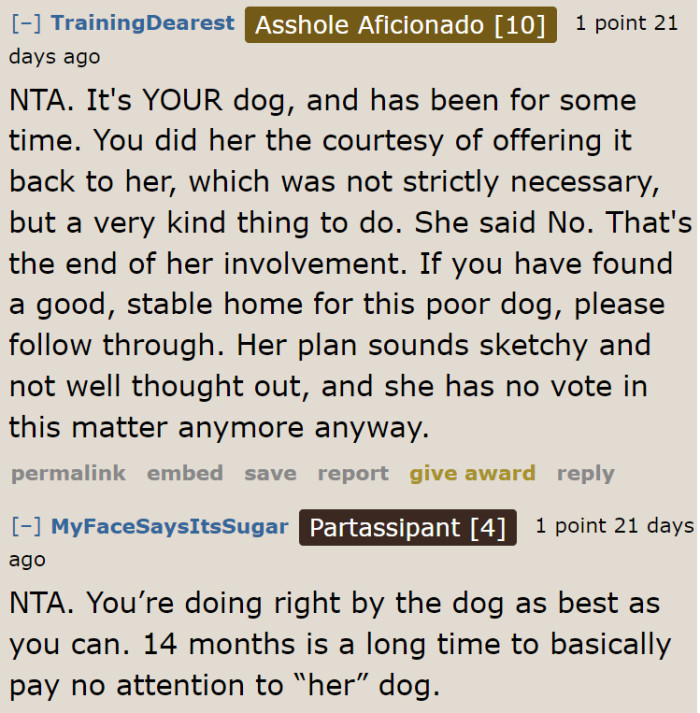
People start arguing that the friend gave up her rights by not paying anything, and the OP goes searching for an owner who will treat the Lab like family, not a temporary stop.</p>
Well, this was an interesting story. The first step that the OP needs to take is to ensure that she has rights over the dog.
If her friend has documents that prove ownership, then there's nothing she can do. If her state considers the dog abandoned, then that's the time she can decide what's best for the dog.
The dilemma surrounding the rehoming of the abandoned dog in this scenario is steeped in emotional and ethical challenges. The friend who took on the responsibility clearly feels a deep connection to the pet, having invested both time and resources into its care over the years. This situation raises poignant questions about ownership and responsibility, especially when the original owner has been absent for so long.
In navigating this complex decision, the importance of building a supportive network cannot be overstated. Seeking advice from fellow pet owners or animal welfare organizations can provide critical perspectives that help alleviate the burden of caregiver stress. Such conversations might illuminate the best path forward for both the dog and the caregiver.
Ultimately, a compassionate understanding of the dog's needs, alongside the caregiver's current circumstances, is essential. This approach not only honors the animal's well-being but also respects the emotional weight of the decision at hand, leading to more thoughtful and humane outcomes.
The situation surrounding the pregnant woman's decision to give away her friend's dog highlights the nuanced emotional landscape of pet ownership. The original owner’s lack of involvement in the dog’s care, after years of neglecting their responsibilities, raises significant ethical questions about abandonment and responsibility. By engaging with her community for support, the woman can explore options that not only address her feelings of frustration but also prioritize the well-being of the dog. This approach allows for a resolution that acknowledges the complexities of the bond between humans and animals, ensuring that the dog finds a loving home that meets its needs.
Nobody wants to be the person who “technically” abandoned a senior dog.
For another family standoff, see how the couple tried reclaiming the dog from the friend.
Share this article:





