Couple Seeks To Reclaim Dog Given To Friend A Year Ago, Current Keeper Declines Request

A year ago, a couple had to move and “gave up” their dog, and the OP ended up with the dog under her name. It sounded straightforward at the time, like a clean handoff between humans who were just trying to survive a bad housing situation.
Then the couple comes back to town. Suddenly, they want the dog back, even though the dog is registered to the OP, bonded with her, and is living the life that comes after a surrender. The complication is that the OP didn’t just take the dog, she took responsibility for the dog, and now she’s the one being asked to reverse a choice the couple already made.
And once a dog has formed a bond, “we changed our minds” hits a lot harder than anyone expects.
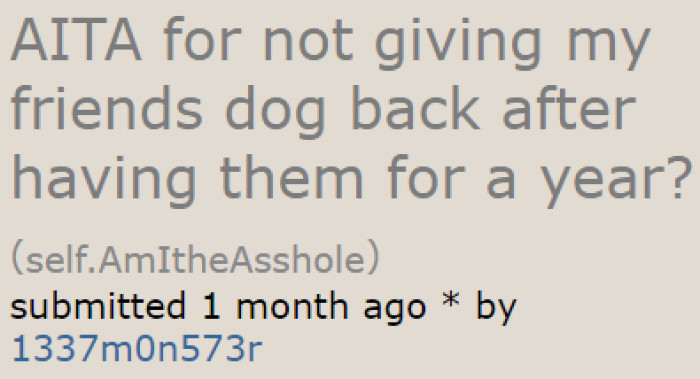
The OP asks:
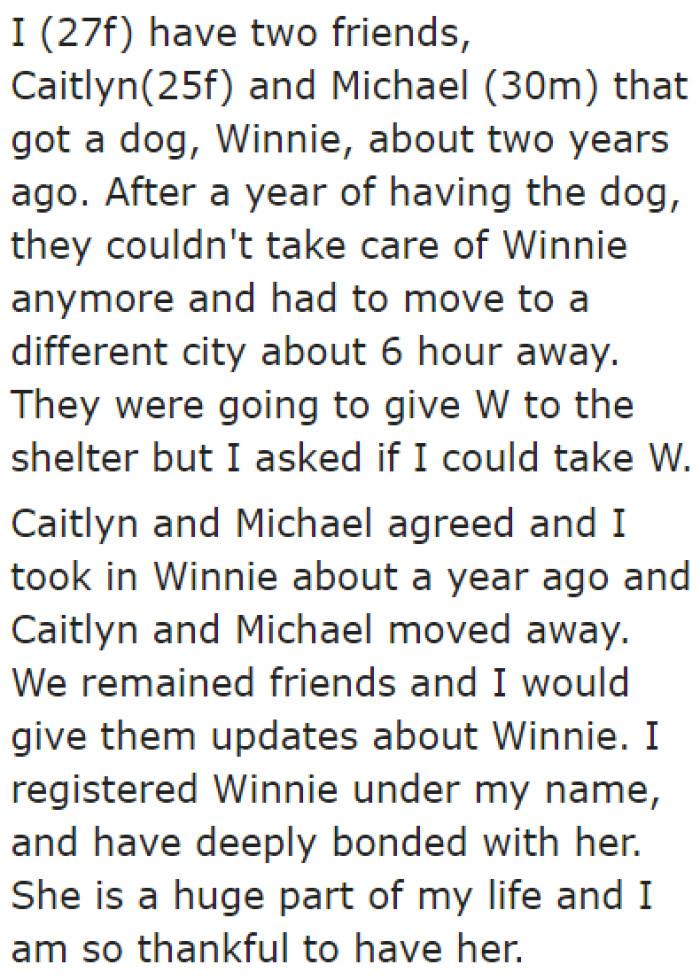
She tells the community about her friends' situation. They had to move out and give up the dog.
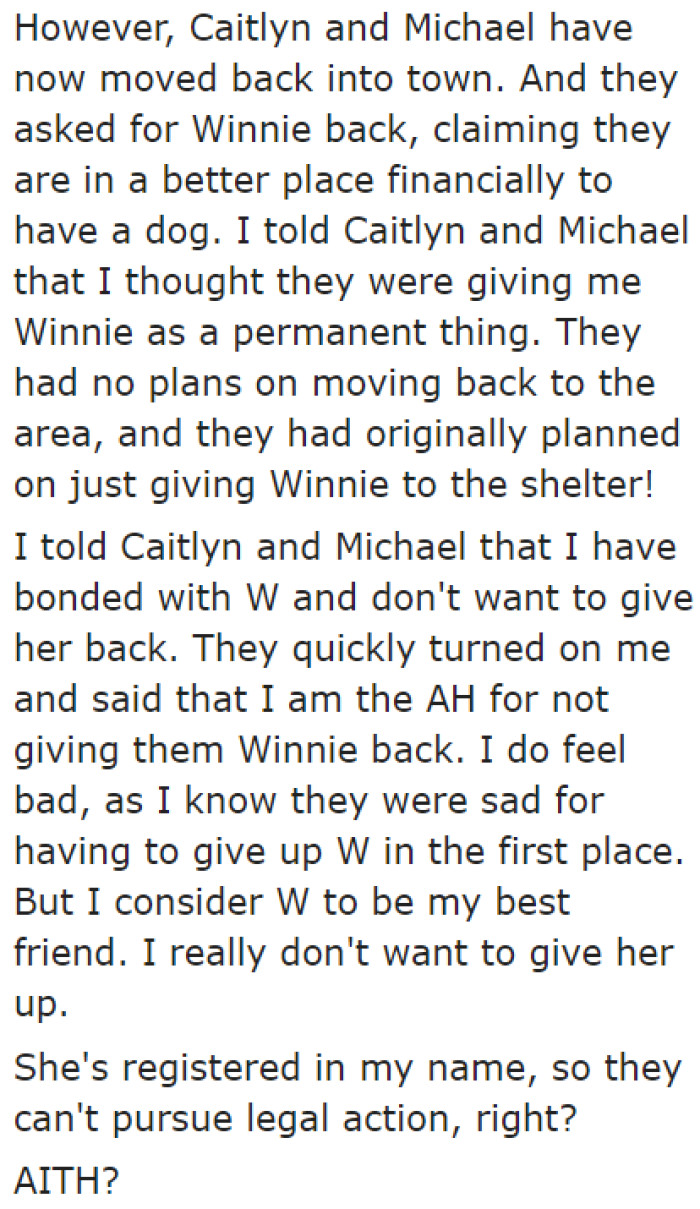
After a year, the friends came back to town.
Since the dog is already registered under the OP's name and has bonded with her, she doesn't want to return it.
The whole thing kicks off when the couple has to move out, hands the dog to the OP, and acts like it’s the end of the story.
The emotional stakes in the case of the couple seeking to reclaim their dog are strikingly high.
Why are they asking for the dog back when they originally planned to give it up to the shelter?
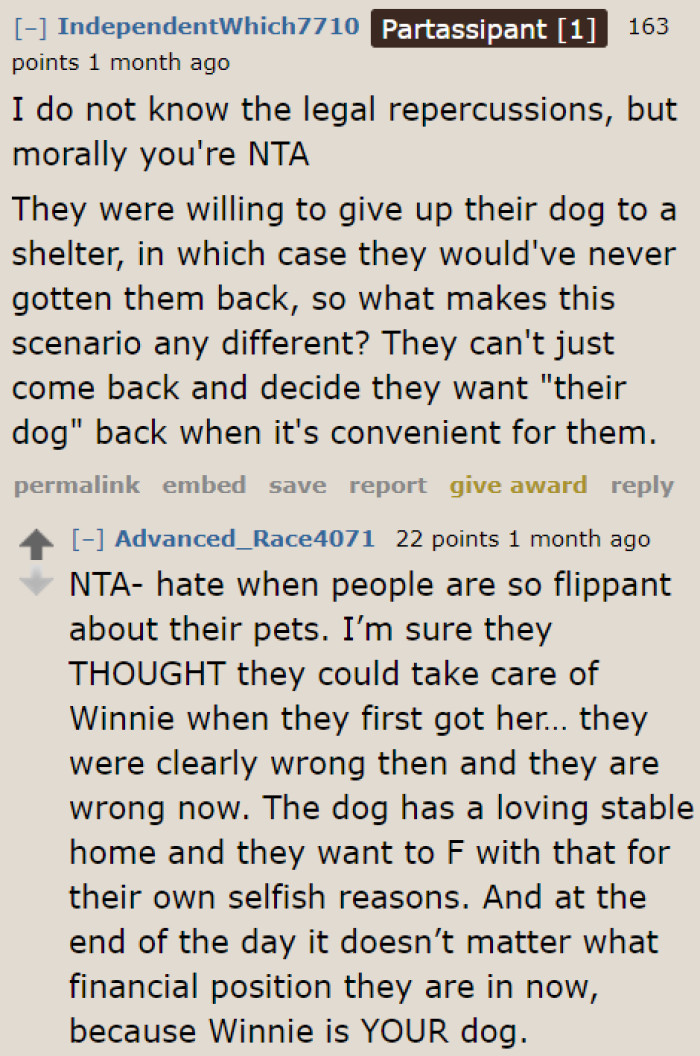
When they surrendered the dog to the OP, it was already equivalent to giving it up for adoption. They can't get the dog back at this point.
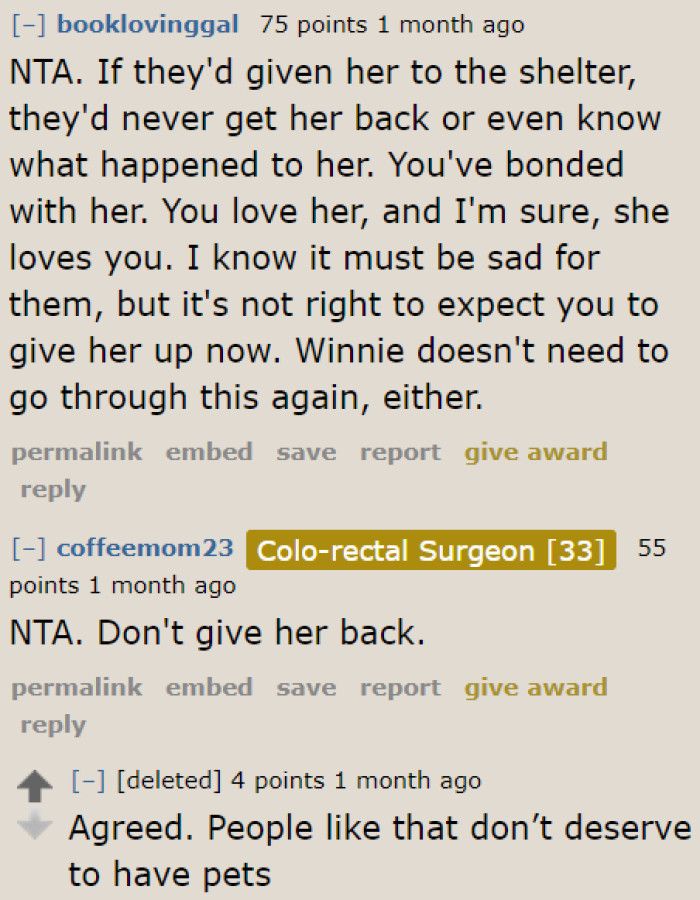
Even if they decided to take this to court, the friends probably won't win the case.
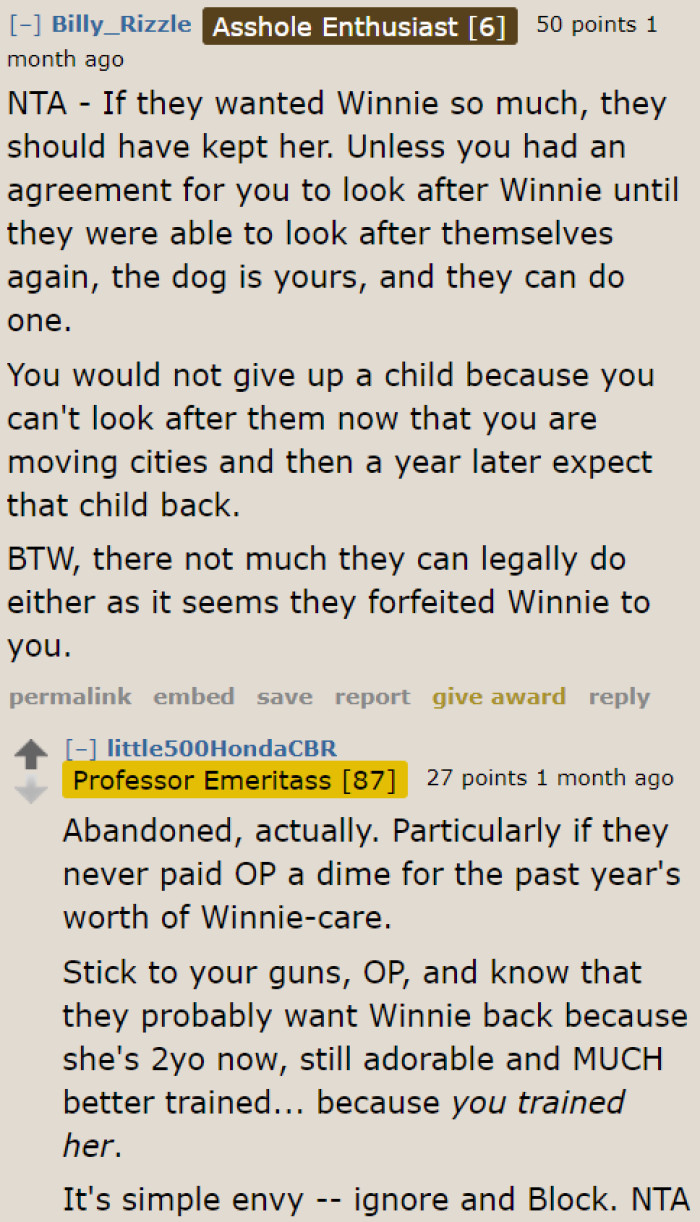
A year later, the couple returns to town and decides the dog they surrendered should somehow come back with them.
This echoes the AITA case where a dog found six years ago was still “theirs”.
Studies in pet ownership psychology reveal that the emotional investment people make in their pets can lead to intense feelings of attachment and ownership.
Understanding these emotional ties is essential for navigating conflicts surrounding pet ownership.
The dog is rightfully the OP's. She saved the dog from being placed in a shelter.
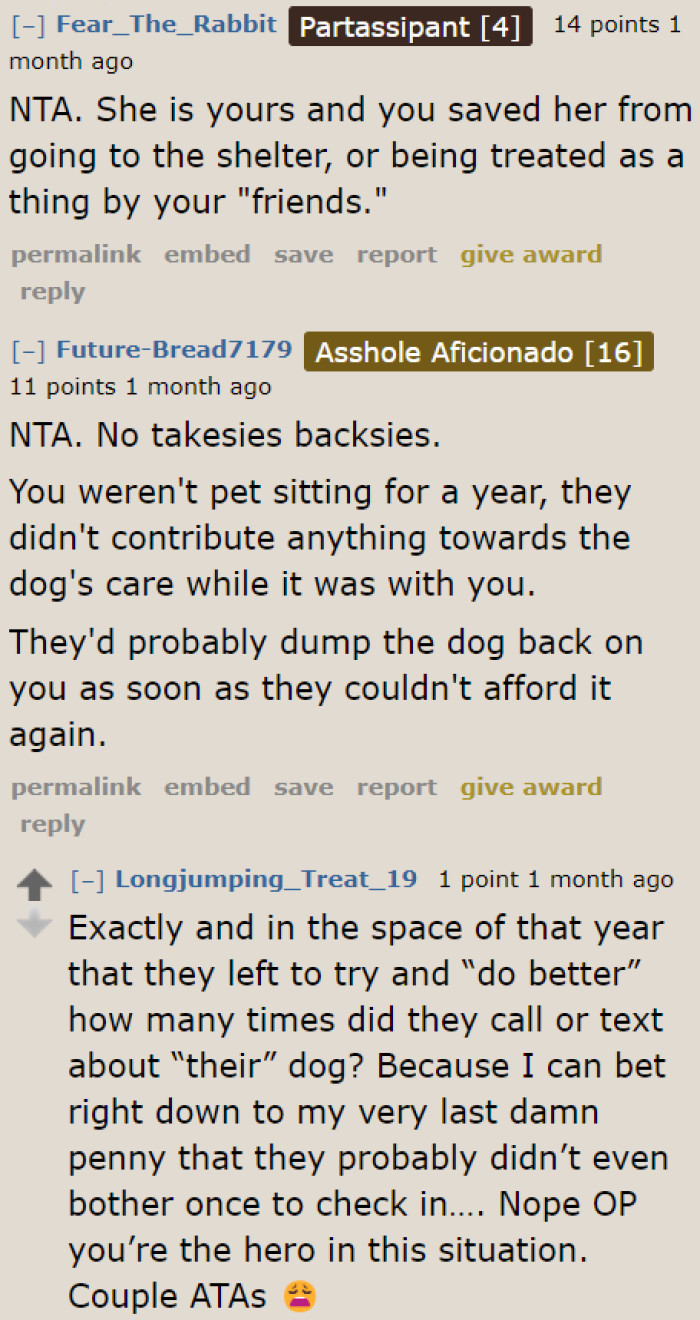
Not only did she register it under her name, but she has also been providing for its needs. These factors make her the rightful owner.
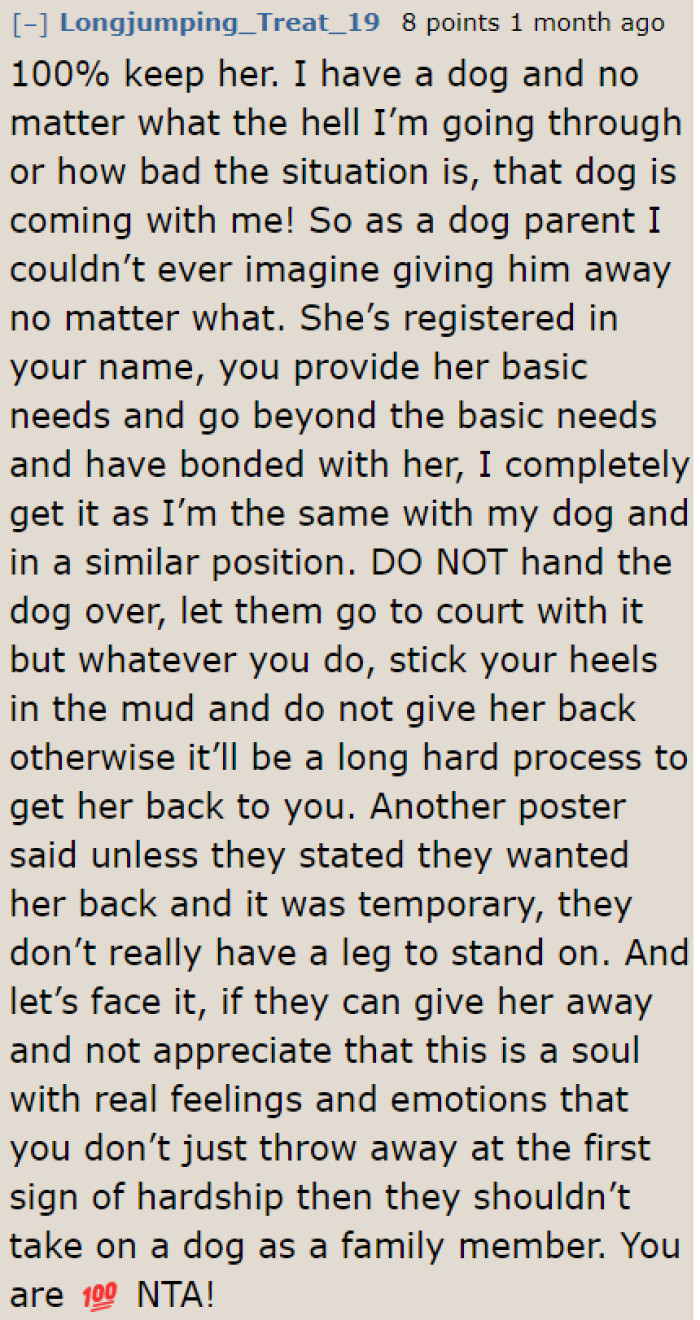
It's pretty clear from the beginning that they were willing to give the dog up.
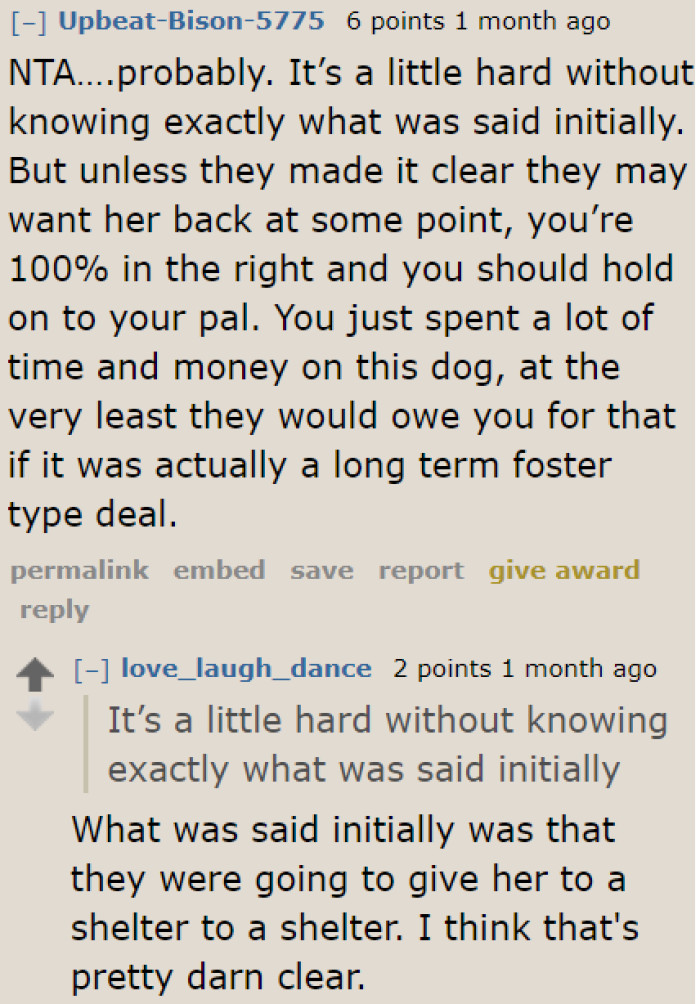
Meanwhile, the dog is already registered under the OP’s name, so the request stops feeling like a reunion and starts feeling like a takeover.
This approach can pave the way for compromise and clarity regarding the pet's future.
These friends should stop bothering her over a property they no longer own.
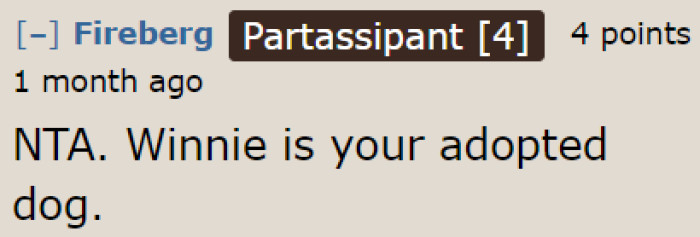
The OP stands her ground, pointing out that the couple couldn’t have “adopted” the dog back after choosing to give it up in the first place.
No matter what the friends say or do, the OP is the legal owner of the dog. They cannot get the dog back unless the OP allows it.
The OP should stand her ground and continue her ownership of the dog. Who knows what will happen in the future?
What if their situation changes and they need to give it up once more? It's not fair to the dog.
Practical strategies for addressing ownership disputes include mediation or family discussions where all parties can express their feelings and desires regarding the pet.
Encouraging empathy and understanding can help alleviate tensions and facilitate a more amicable resolution.
Creating a shared pet care plan can also help clarify responsibilities and expectations moving forward.
In the complex emotional landscape of pet ownership disputes, effective communication becomes crucial for all parties involved.
The couple might miss the dog, but the OP is the one who actually kept it.
Wait until you see the eight-year “temporary” placement dispute, and why she refused.
Share this article: