Frustrated Redditor Loses Patience With Their Messy Flatmate Who Doesn't Clean Up After Herself And The New Cat She Adopted

A messy flatmate can turn a normal house share into a daily headache, especially when pets are involved. In this Reddit story, one roommate says the problems started after Alissa brought home a cat and began treating the shared spaces like they were part of her own room.
OP and Sheila already keep their dogs under control, but Alissa lets her cat roam freely, leaves the litter box in the living room, and keeps forgetting to clean up after it. On top of that, she has started making demands about the bathroom door and the dogs, which has only made the tension worse.
Now OP is fed up, and the whole house is one awkward conversation away from blowing up.
The cat is allowed to go into any area of the house even when Alissa is not around.

She also keeps the cat's litter box in their living room despite frequently forgetting to clean it or empty the contents.
She has also asked them to keep the bathroom door closed at all times because her cat gets into the bin and drags trash back to her room.
The Redditor says the flatmate's new cat has made the house feel much harder to live in.
The challenges of cohabitation are vividly illustrated in the story of a frustrated Redditor grappling with a messy flatmate and her newly adopted cat. The stark contrast in cleanliness standards not only disrupts the household but also highlights the emotional toll of living in a cluttered environment. A chaotic space can amplify feelings of stress and frustration, especially when one roommate's lack of consideration affects the other's well-being.
This scenario underscores the importance of mutual expectations regarding cleanliness in shared living situations. The Redditor's plight serves as a reminder that maintaining order is not merely a personal preference; it is essential for fostering a peaceful and satisfying home environment. Without a shared commitment to cleanliness, the delicate balance of cohabitation can quickly unravel, leading to resentment and conflict.
She also asked OP and Sheila to keep their dogs strictly in their rooms to prevent any additional accidents after her cat scratched OP's dog unprovoked.
These changes annoyed OP, but she has learned to live with them. The real problem is that Alissa is also irresponsible in many other ways.
She has taken over their entire bathroom counter and doesn't clean it. She leaves her takeout containers and beer bottles scattered all over the house.
Alissa also doesn't pay enough attention to the cat she recently adopted and leaves the house almost immediately after she gets home. OP and Sheila are growing tired of Alissa's antics and are planning to talk to her once they figure out how to approach her properly.
OP is at the end of her wits and has asked other cat owners if it's acceptable to ask Alissa to do something to prevent the cat from getting into their rooms.
If the situation becomes dire enough, OP can inform their landlord about Alissa's mess, but until then, all they can really do is sit down and have a discussion.

That is where the real problem starts.
This situation also emphasizes the importance of boundaries in roommate relationships.
OP and Sheila need to be direct about the problems they have noticed. It is not too much to ask your roommate to clean up after their pet and to keep the common areas of the house clean for everyone.
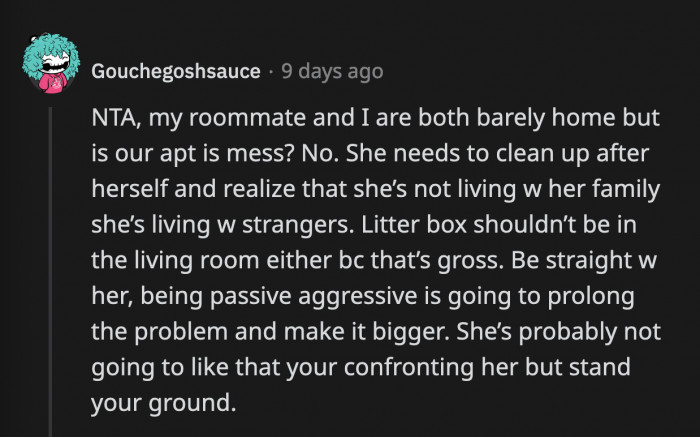
Alissa can be as messy as she wants inside her own bedroom, but if it triggers her asthma, then she is the one who needs to make adjustments. She can't spread her mess around the house simply because she can't keep her own room clean.

Since they can't just kick her out of the property, they really need to talk to her before the tension among the three of them escalates further.

The Impact of Pet Ownership on Mental Health
Emotional support animals, such as cats, can significantly impact the mental health of their owners. Pet ownership can reduce feelings of loneliness and increase feelings of companionship.
It’s hard not to think of the girl who threatened to take her roommate’s cats to a shelter after abandoning them for her boyfriend’s place, here.
Alissa is old enough to understand how much work it takes to keep a pet safe and healthy. Unfortunately, knowing is different from doing.
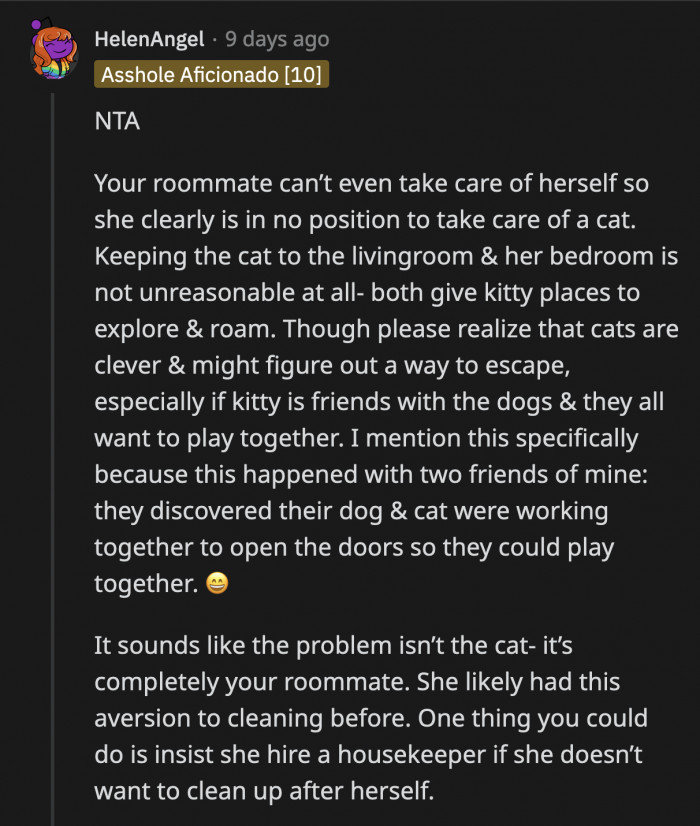
It's not the cat's fault that its owner is irresponsible despite the issues that have already been brought to her attention.
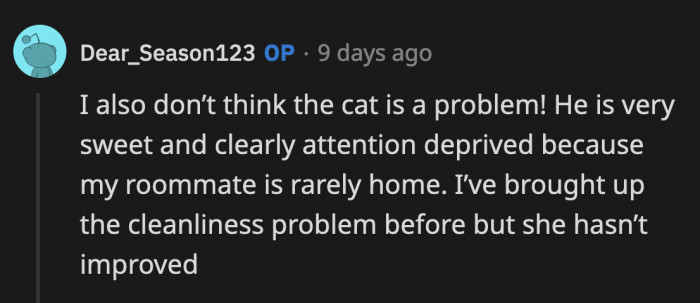
Let's hope that she's not too negligent to leave the cat behind when her lease ends.
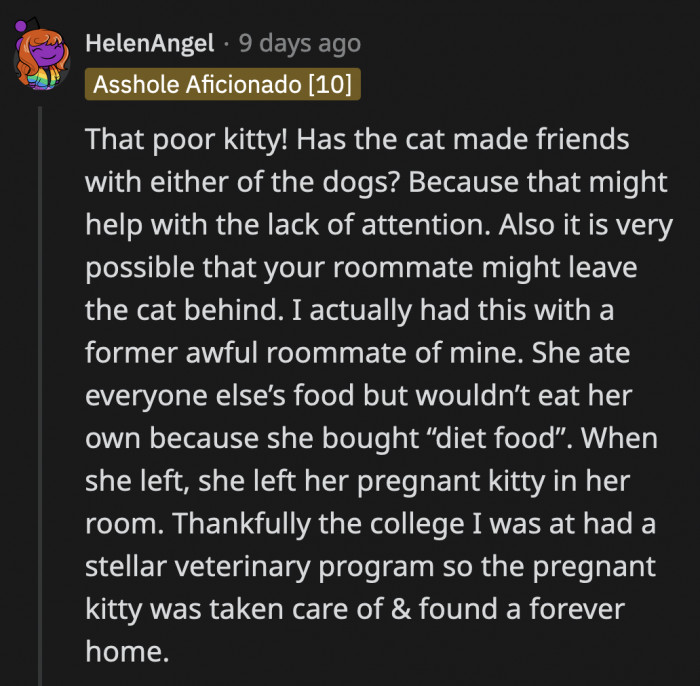
People in the comments were not exactly sympathetic to Alissa.
Moreover, the presence of pets in shared living spaces can alter social dynamics.
She obviously doesn't love the cat enough to ensure he's getting enough attention from her or to keep his litter box clean.

They really do need strict house rules, even if it's ultimately for Alissa's benefit. That way, she cannot skirt around her responsibilities and pawn them off onto her roommates.
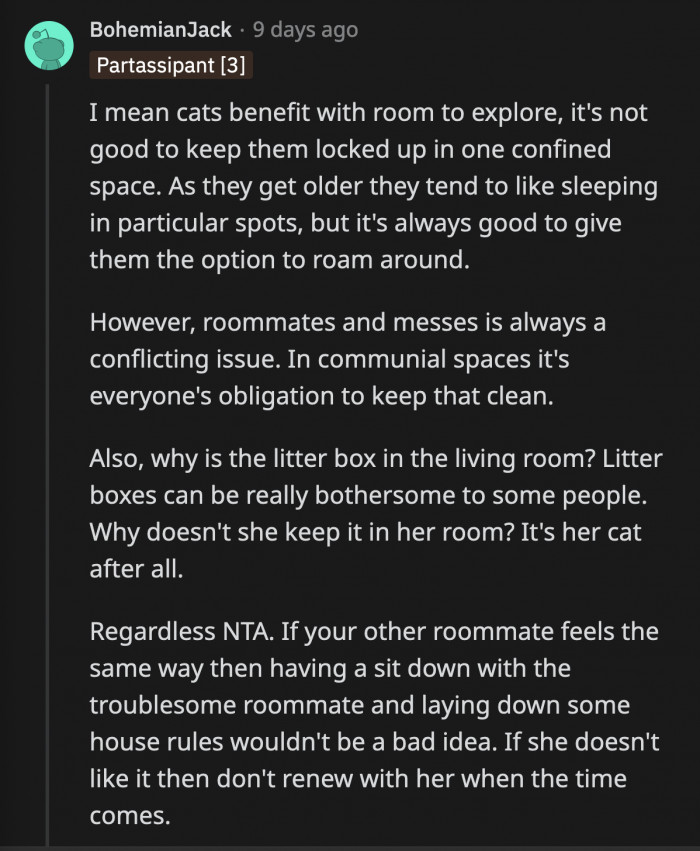
Why would you get a cat if you can't deal with the litter box? In a shared home, no less. If Alissa doesn't change, OP may have no choice but to inform their landlord.
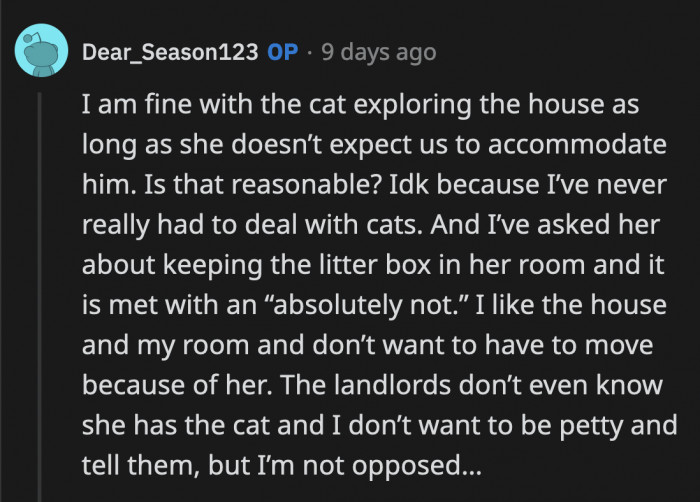
One commenter thought the issue was pretty simple.
Practical Solutions for Roommate Conflicts
Structured systems can reduce conflicts and enhance cooperation among roommates.
Sheila and OP need to remain composed, friendly, but stern when they discuss the problems with Alissa.
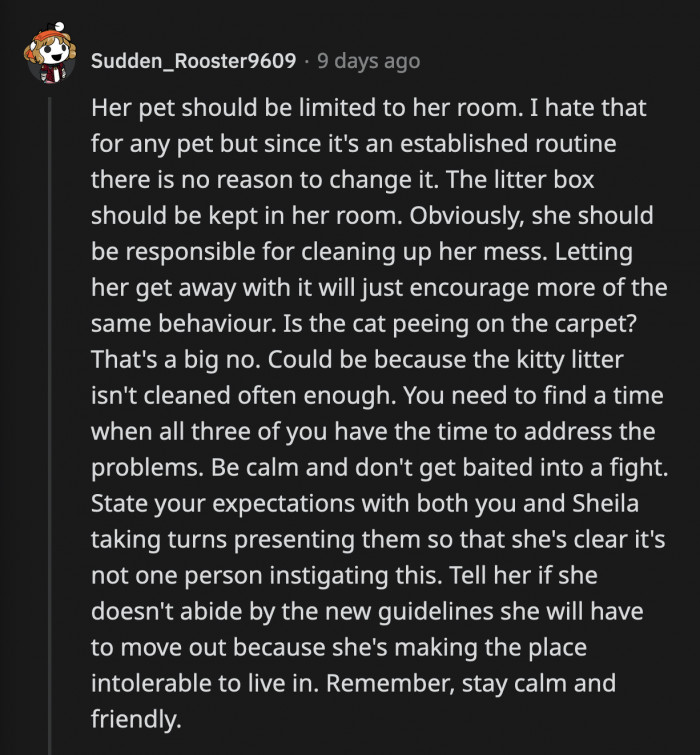
They can't let her get away with this because she is making their living arrangement unbearable. Her irresponsibility is affecting all of them, including all of their pets.
They shouldn't even have to remind another adult of her duties as a roommate and pet owner, but that's their situation. An adult discussion is needed, and if things don't change after that, it's time to reconsider their decision to live together.
The challenges of cohabitation are vividly illustrated in the frustrations expressed by the Redditor regarding their messy flatmate and the newly adopted cat. It is evident that the absence of communication and established boundaries has contributed to a deteriorating living environment. The article highlights the importance of these elements in maintaining harmony in shared spaces.
When roommates fail to engage in open dialogue about expectations, the quality of life can suffer significantly. In this case, the Redditor's growing impatience underscores how essential it is for all parties to take responsibility, not just for their own actions but also for the well-being of shared pets. A proactive approach in addressing cleaning duties and pet care could lead to a more enjoyable and cooperative atmosphere for everyone involved.
Want more roommate litter-box chaos, see why the ADHD woman refused to move it.
Share this article: