Recently Divorced Mom Tells Her Daughter She Can't Take The Dog With Her When She Moves Out Of The House

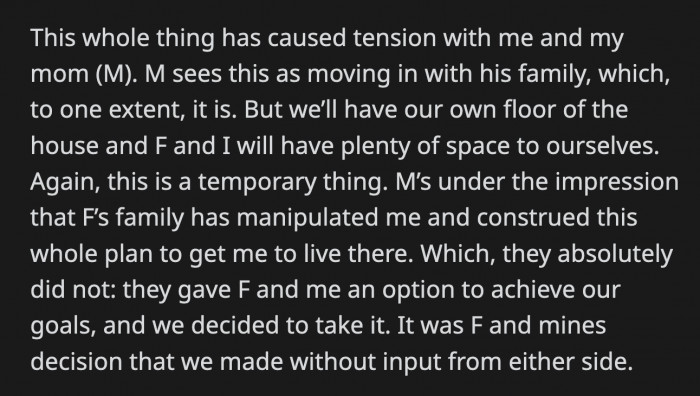
Moving out should be a fresh start, but for one Reddit user, it comes with a family fight over a dog. She and her fiancé finally found a way to live together, but the arrangement is temporary and a little unconventional.
His parents offered their basement as a place to stay while the couple saves for a place of their own, and OP says the setup works for them. Her mom, though, thinks the move is a mistake, and the real sticking point is whether OP gets to bring the family dog with her.
That one detail has turned a simple move into a much bigger argument, and OP is stuck in the middle of it.
She has since changed her tune after learning that OP will be living in her future in-laws' basement

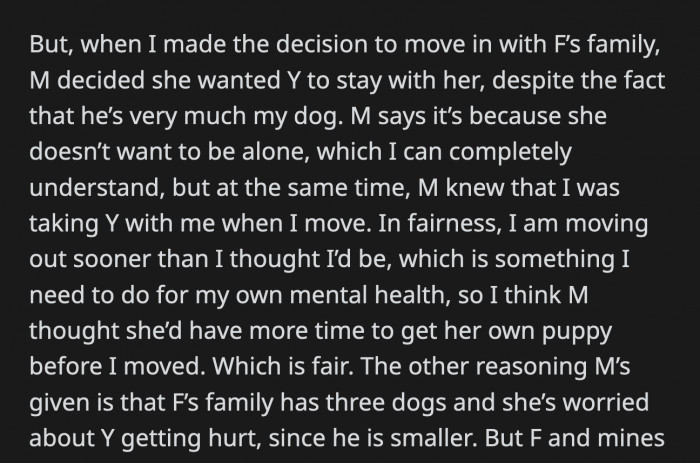
She told OP she doesn't want her to take the dog because she doesn't want to be alone

OP understands that, and she sympathizes with her mom, but the young dog truly belongs to her
The emotional landscape for children navigating a divorce is often fraught with anxiety and fear. In this particular story, the mother’s decision to prevent her daughter from taking the dog when moving out adds another layer of complexity to an already challenging situation. Pets often serve as a source of comfort for children during tumultuous times, offering a sense of stability amidst change.
By not allowing her daughter to bring the dog along, the mother may unintentionally exacerbate her child's feelings of abandonment. This decision highlights the delicate balance parents must strike between their own needs and those of their children, especially during significant transitions like a divorce. The impact of such choices can reverberate long after the initial move, underscoring the importance of considering the emotional well-being of children during these life changes.
The choice to leave a beloved pet behind during a move can be emotionally charged. The loss of a pet can evoke feelings of abandonment and grief, particularly for children who may not fully understand the reasons behind such decisions. This emotional turmoil can be exacerbated in a divorce situation, where stability is already disrupted.
Research shows that the emotional well-being of both children and adults can be significantly impacted by their relationships with pets, making it crucial to handle these situations delicately.
OP also believes that her mom is doing this to manipulate her into staying home or force her to find another place to rent
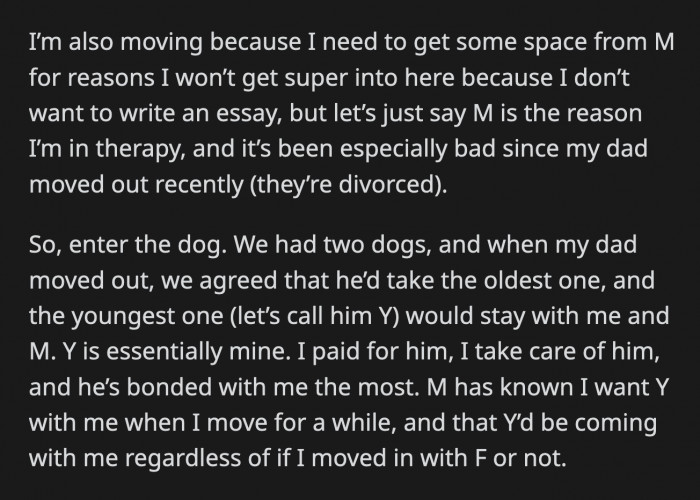
OP has offered other solutions to her mom, including getting her own puppy, but she won't compromise
Is OP a bad daughter if she takes her dog with her when she moves out of her mom's house?

Moreover, the mother's fear of loneliness after the divorce can create a conflict between her emotional needs and those of her child.
Studies in psychology suggest that unresolved emotional issues often lead to poor decision-making, particularly when it involves the welfare of a child and a pet.
This scenario also brings to light the concept of co-dependency, where one partner may rely heavily on the pet for emotional support. In cases of separation, this dependency can lead to heightened anxiety and feelings of isolation. Studies in psychology indicate that when individuals perceive their pets as sources of comfort, the thought of losing them can trigger intense emotional responses. Thus, the mother's reluctance to part with the dog might stem from a fear of being alone, highlighting the need for emotional resilience during transitions.
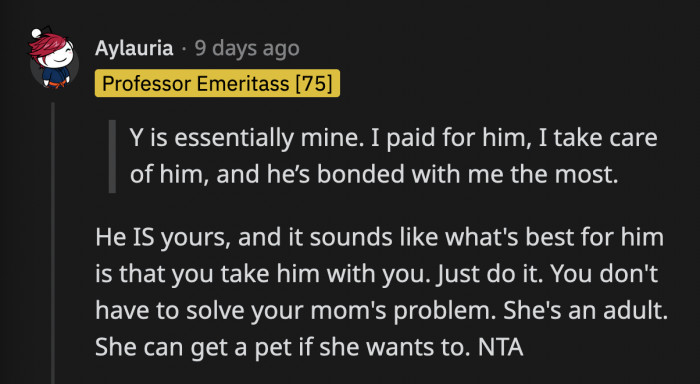
The dog belongs to OP through and through, and she shouldn't have to tiptoe around her mom to protect her feelings
It looks like OP has been walking on eggshells for a while. She is hesitant to make a decision because she knows her mom will lash out at her.

OP has to also make sure there is paperwork supporting her claim that she owns the dog in case her mom gets any funny ideas

Pets can provide stability and comfort, making their presence vital for emotional well-being during times of change.
It’s a lot like the daughter who wouldn’t allow her mom to bring a puppy into her house.
Addressing the situation with open communication between the mother and daughter is vital.
At least, OP has her dad's support in all of this

Her mom definitely has her own issues to deal with, but it's not okay to pass those down to OP

OP agrees that her mom probably feels abandoned, but she realizes she can't solve her problems for her
Practical recommendations for navigating such situations include creating a shared parenting plan that explicitly addresses pet custody.
Moreover, considering the child's perspective is essential. Engaging children in discussions about the impact of leaving a pet behind can empower them and reduce feelings of helplessness. Involving children in decision-making processes related to pets can help them develop a sense of agency and responsibility, ultimately leading to healthier emotional outcomes.
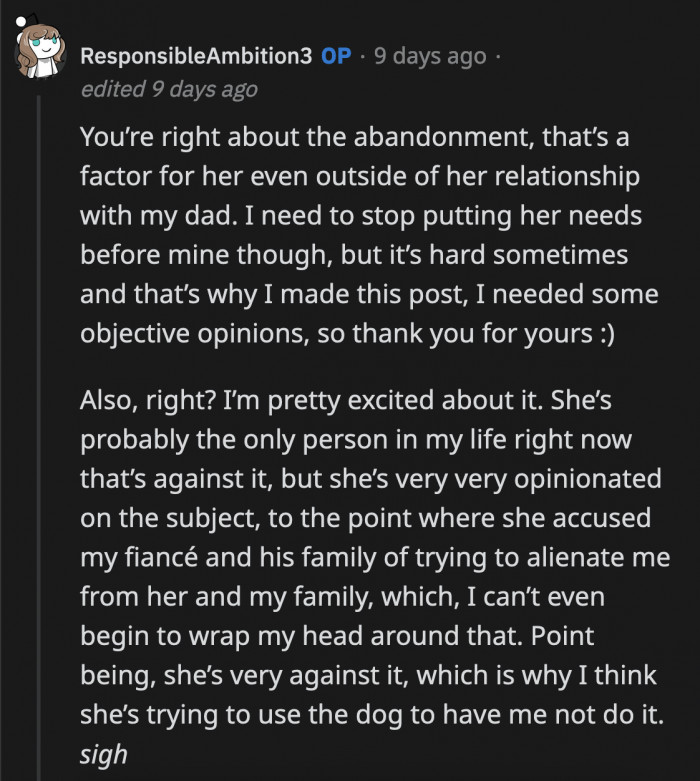
She also added why her mom is so against her moving in with her boyfriend at his parents' home
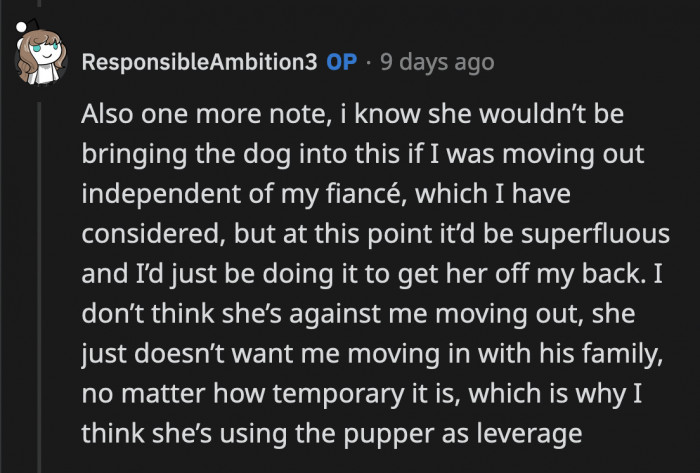
The dog wouldn't do well being separated from OP
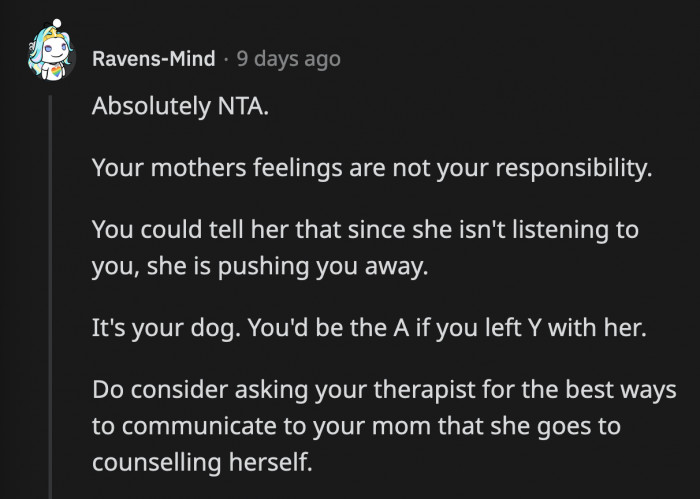
OP confirmed that her mom is actually in therapy, but it doesn't seem to be helping her get better

Attachment theory provides insight into how children respond to separation from their primary caregivers and pets.
When dealing with pet custody, establishing a co-parenting plan can mitigate conflict and provide clarity. This plan could outline responsibilities for care, visitation rights, and even shared expenses, enabling both the mother and daughter to maintain their connection to the pet.
Involving a neutral third party, such as a mediator, can also help facilitate these discussions and ensure that both parties feel heard and respected in the process.
It's sad that OP may have to think of contingency plans in case her mom thinks of hurting OP's dog while she's moving her stuff out

OP says her mom prefers to play mind games instead of interfering directly, but it still wouldn't hurt to think of backup plans just in case
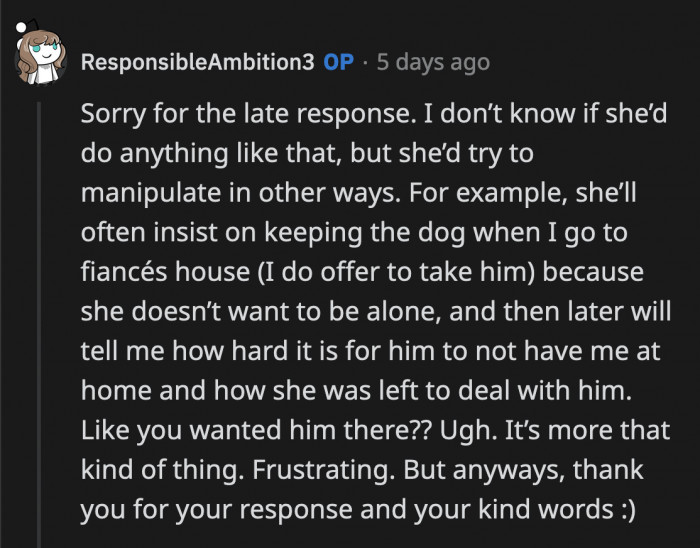
Well, this was a sad story. OP's feelings of guilt are normal after her mom basically dumped her abandonment issues on her for as long as she can remember. However, it is now time for OP to leave her mom's baggage at her house as she moves out with her dog.
Lastly, fostering a supportive environment during transitions is crucial for emotional healing.
The situation of pet custody in the context of divorce introduces a significant emotional layer that cannot be overlooked. The recent case of a mother informing her daughter that the family dog cannot accompany her to a new home highlights the need for thoughtful dialogue and cooperative planning. As families face these tough decisions, it is essential to prioritize the emotional needs of all involved, especially children who often see pets as family members.
Addressing attachment-related concerns can involve therapy or counseling for both the parent and child, helping them navigate their emotions effectively.
By being proactive, families can mitigate the emotional turmoil that often accompanies divorce.
This situation highlights the intricate emotional dynamics that unfold within families during a divorce, particularly when it comes to the bonds between children and their pets. The article reveals how the recently divorced mother must navigate her daughter's attachment to the dog while also facing her own challenges of moving out and starting anew. As housing markets make transitions increasingly difficult, the strain on family relationships can intensify.
Addressing these emotional complexities with care is crucial, as the article suggests. Ensuring that children feel secure and supported during such upheaval can lead to more positive outcomes for everyone involved.
For another dog-attachment battle, see why Dan was criticized for rehoming his aggressive pup linked to his late mother.
Share this article: