
This Woman Yells At Dog Owners For Walking Their Pets Near Her Apartment, But One Man Has Had Enough

Some dog walks start out peaceful and end with a neighbor feud nobody asked for. In this Reddit story, one woman keeps yelling at people for walking their dogs near her apartment, and she is especially fixated on the small easement by the building.
The original poster says the woman claims it is private property, insists she once got fleas from nearby dogs, and even tries to stop pets from walking anywhere close to the area. After getting fed up, OP stops engaging, but the woman’s next move turns the whole thing into a bigger mess.
Then the Reddit comments roll in, and they do not hold back. Read on.
When walking your dog becomes a crime

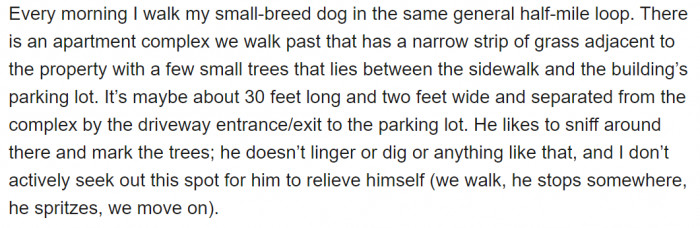
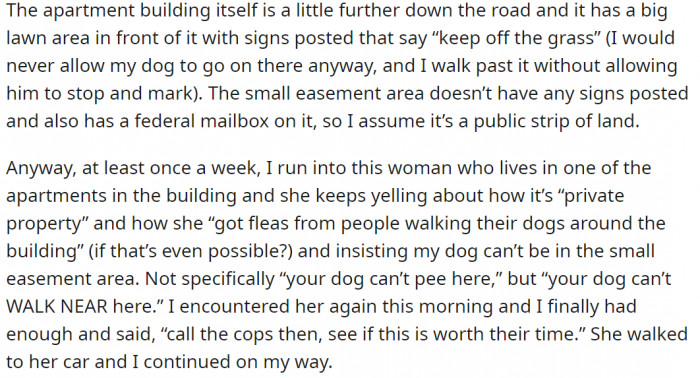
The conflict over walking dogs near an apartment complex highlights underlying issues of territoriality and perceived safety.
The situation unfolding in this article highlights how past experiences can significantly shape an individual's perception of safety and comfort in their environment. The woman's outburst against dog owners near her apartment seems to stem from a deep-seated anxiety, possibly linked to previous encounters that left her feeling threatened or uncomfortable. Her intense reaction, particularly regarding the fear of fleas, hints at a broader issue where personal history can amplify irrational fears. This dynamic illustrates how our past can create heightened sensitivities to perceived threats, leading to confrontations that may seem disproportionate to others. In a neighborhood where morning dog walks are meant to be tranquil, her behavior disrupts the peace, suggesting that unresolved anxieties can manifest in ways that affect the entire community.
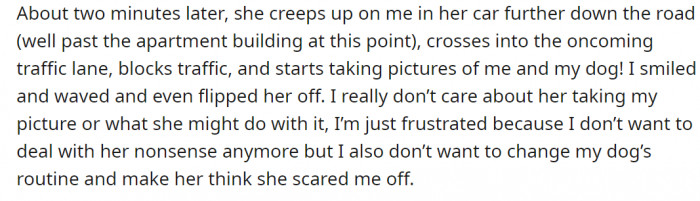
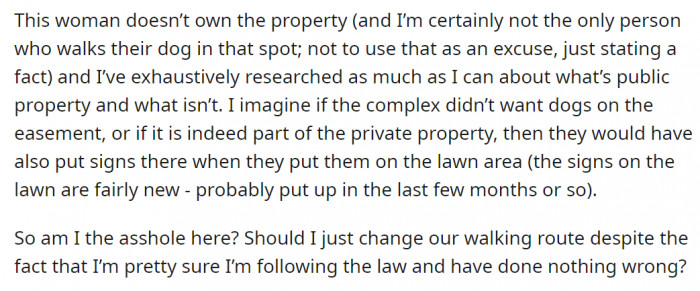
Here's how the Reddit community reacted to the story:
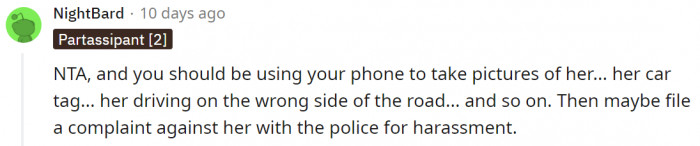
"NTA, and you should be using your phone to take pictures of her"
A possible case of harassment.
Moreover, her claim of receiving fleas from passing dogs reveals a deeper anxiety about her environment.
Studies in cognitive behavioral therapy suggest that irrational fears can be addressed through gradual exposure and cognitive restructuring.
By carefully confronting these fears in a safe environment, individuals can learn to manage their reactions more effectively.
This process can reduce anxiety and promote healthier coping mechanisms.
This is one angry Redditor
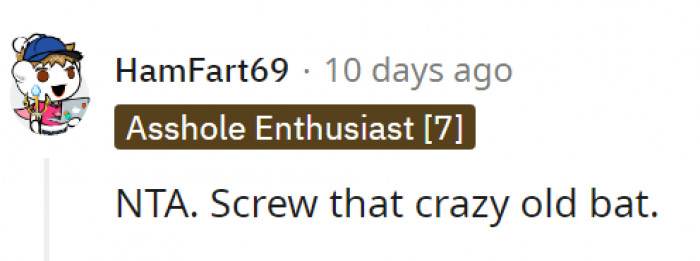
"Let her waste her breath and energy"
Maybe she should focus her energy on something more productive.

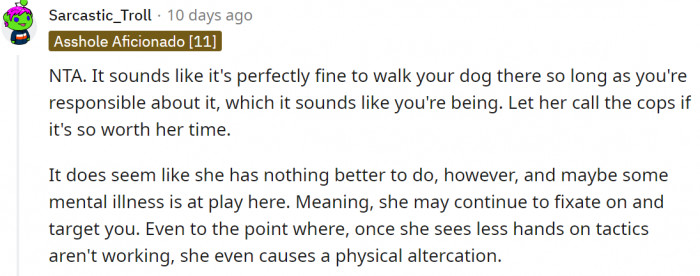
"NTA. It sounds like it's perfectly fine to walk your dog there so long as you're responsible about it"
As long as you're walking your dog responsibly, you won't have any problems with the police.
Empathy plays a crucial role in resolving conflicts, particularly in community settings.
This is similar to the neighbor who complained about a dog using his property like a bathroom.
Community dynamics play a significant role in how individuals react to perceived threats.
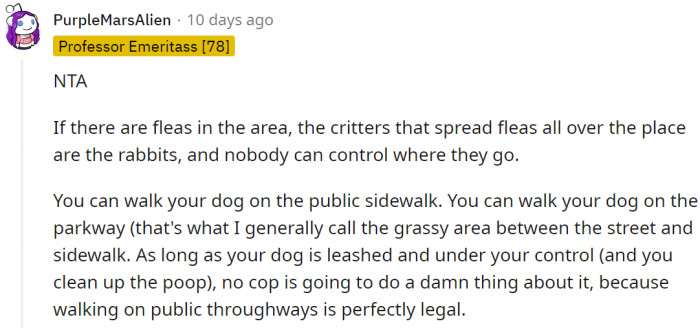
"As long as your dog is leashed and under your control (and you clean up the poop), no cop is going to do a damn thing about it"
As far as we know, walking your dog on public property is perfectly legal.
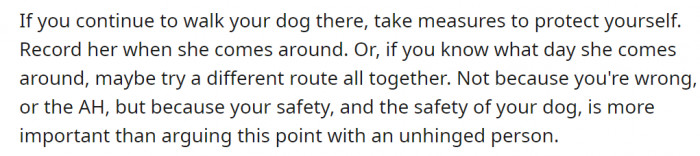
"I would change your walking route, because it sounds like this woman is a raving lunatic, and could escalate"
Maybe OP needs to change their walking route for safety reasons.

Creating community guidelines around pet ownership and public spaces can also help mitigate conflicts. Engaging residents in discussions about shared responsibilities and expectations can foster a sense of ownership and collaboration. Research shows that involving community members in decision-making promotes a sense of belonging and reduces feelings of alienation.
By working together, residents can create a more inclusive and supportive living environment.
Psychological studies also indicate that educating individuals about the realities of their fears can help in reducing anxiety.
Addressing misconceptions about pet ownership and hygiene can empower individuals to manage their fears more effectively.
Providing accurate information can help alleviate undue stress and promote healthier interactions.
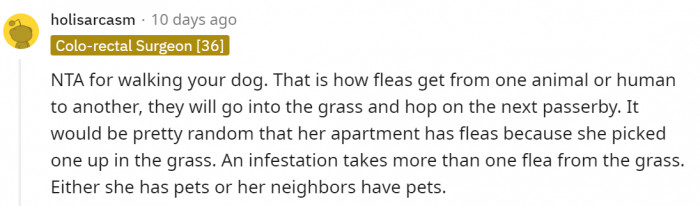
"NTA for walking your dog"
She might need to trace where the fleas really came from.
"This woman needs to get over herself. It’s not her property; therefore, she has no right to be the Captain of the Poop Police Squad"
The Captain of the Poop Police Squad is on patrol.

It's understandable why some people might get concerned when they see others walking their dogs near their property. After all, it can be difficult to keep your pet from doing their business on someone else's lawn.
However, trailing someone and taking pictures of them is a bit over the top. And it's definitely not an effective way to handle the situation.
Ultimately, it's important to be respectful of others and their property (and it seems OP wasn't breaking any rules). But it's also important to stand up for yourself or inform the police if you feel like you're being harassed.
We'd love for you to chip in with your thoughts on the matter. Have you ever been in a similar situation on either side? How did you handle it? Let us know in the comments!
To address irrational fears, individuals should consider engaging in exposure therapy, where they gradually confront their fears in a controlled setting.
Additionally, seeking support from mental health professionals can provide valuable tools for managing anxiety and improving coping strategies.
Community workshops focusing on pet ownership and hygiene can also serve as educational platforms to alleviate fears.
Behavioral research emphasizes the importance of fostering resilience in the face of fears.
Encouraging individuals to challenge their fears through education and community support can lead to more adaptive responses over time.
Developing a supportive network can significantly enhance emotional well-being.
This situation highlights how irrational fears can distort our perceptions of safety and community.
The conflict between the woman and dog owners highlights the complexities of community living, where individual needs often clash. Her frustration suggests a deeper psychological need for peace and personal space, which many residents can relate to. The article illustrates how this situation escalated, emphasizing the importance of empathy in resolving such disputes.
Encouraging open dialogue among neighbors could pave the way for better understanding and collaboration. By addressing the concerns of both the woman and the dog owners, a compromise could emerge that respects her need for tranquility while allowing others to enjoy their morning walks. This scenario serves as a reminder that shared spaces require a balance of personal freedoms and communal respect.
For more “my neighborhood” leash drama, see what happened when a woman tried to ban dog walking in “her” area.
Share this article:





