Rare Wildcat That Isn't Seen Often By Humans Due To Its Solitary Lifestyle Is Found And Filmed On Mount Everest

Mount Everest is already wild enough, but scientists just added a new mystery to the mix: a Pallas cat, also called a manul, caught on camera at the top of the world. This solitary little wildcat is not exactly the kind of animal you expect to stumble across, which is exactly why the footage hit like a surprise plot twist.
Here’s what makes it complicated, and kind of amazing, until 2019 no one had confirmed these cats were really out there in that region, even though people knew they lived on Everest. So when the evidence finally landed, it was a big deal for everyone watching the search unfold, especially after seeing how agile they are on such brutal terrain.
And once you see those big ears and that fluffy face against the snowy peaks, it’s hard not to wonder what else is hiding above the clouds.
Scientists have confirmed the existence of a Pallas Cat, which is a type of wildcat.
These Pallas cats are also known as manuls, and they remained undiscovered until 2019. It was known that they reside on Mount Everest.
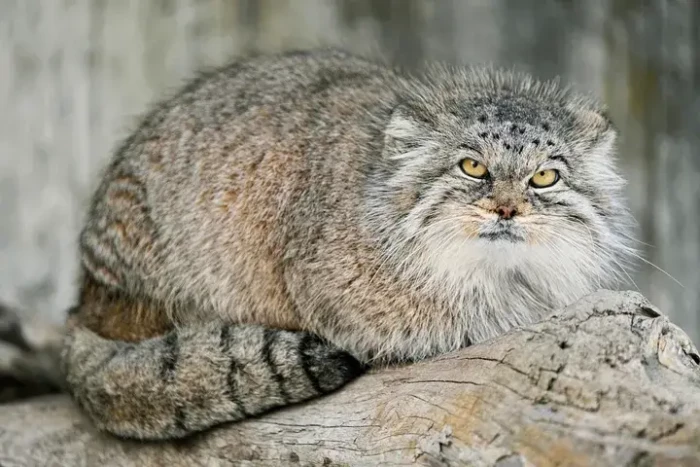
They are quite adorable to many, but they're actually pretty valuable to researchers as well.
Their size resembles that of a standard housecat, and they have fluffy tails, faces, and overall bodies. They are actually lighter and smaller, though; it's just their fur that gives them a fluffy and large appearance.
They possess great agility and climbing capabilities, which makes Mount Everest quite suitable for them. Scientists were excited to find proof of this rare wildcat.
“It is phenomenal to discover proof of this rare and remarkable species at the top of the world,” said Dr. Tracie Seimon of the Wildlife Conservation Society’s Zoological Health Program.
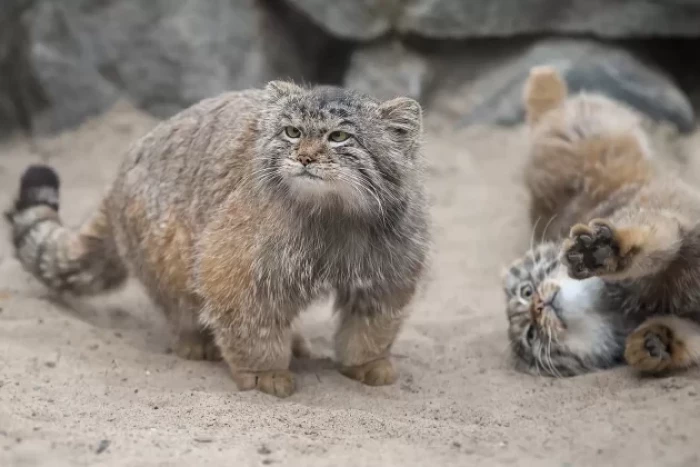
Here's a look into the wildcat itself and the footage that proves that these rare wildcats are really out there.
They have big ears and wide faces, and many people find them quite adorable. However, they can be quite territorial, and they are not exactly the type of pet that you'd want as a house pet, as they can become aggressive.
Now that scientists know where to find these rare wildcats, they are looking into further exploration to determine how many Pallas cats might exist and to aid in their preservation, as they are considered a rare breed.
It seemed like a lot of people were pretty happy about this discovery.
The whole story really kicks off when the Pallas cat proof shows up on Mount Everest, not in some easy-to-reach location.</p>
Similar to the challenge to spot a hidden puma in a startling wildlife image, this discovery is a rare catch.
Before that 2019 confirmation, the cats were basically a rumor, with researchers working off the idea that they lived there.</p>
That’s why the filming matters so much, because those climbing skills suddenly look less like speculation and more like a survival strategy.</p>
Now the team is pushing for more exploration to figure out how many manuls are out there, since they’re considered rare and territorial.</p>
We love hearing great stories like this, and we're excited to learn more about these adorable wildcats. Hopefully, scientists can figure out how to best preserve this species to ensure that they can save their already rare population.
What do you think about these wildcats?
The next question is whether the Everest manuls are just surviving, or if they’re waiting to be found.
Next, check out the elusive clouded leopard caught on camera deep in the Himalayan forest.
Share this article: