
Couple Adopts Stray Cat, Only To Find Out That The Owners Who Lived Near Them Want It Back

A stray cat, a surprise adoption, and a very awkward phone call turned one ordinary walk into a neighborhood mess. What started as a kind rescue quickly turned into a dispute over who actually had the right to keep the cat.
After OP found a sick-looking cat with no collar, they did what seemed responsible and took it to the humane society. Then they spent money getting the cat chipped, vaccinated, and neutered, only to hear from a nearby family that their kids had spotted the cat in OP's apartment and wanted it back.
Now OP is stuck between guilt, the shelter mix-up, and a family that says the cat belongs with them. Read on.
This is what OP did when they found a stray cat during a walk
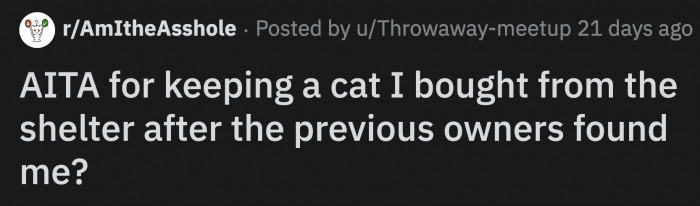
The cat they found looked sickly and wasn't wearing a collar. OP did the right thing and called the humane society to surrender the cat.
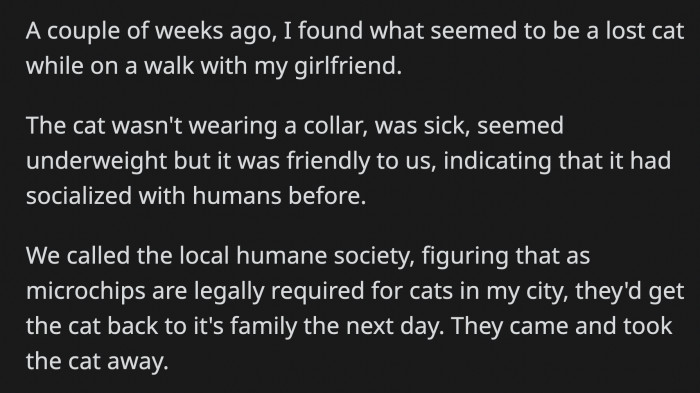
The shelter told OP that the cat wasn't microchipped or fixed — which was a requirement in their city.
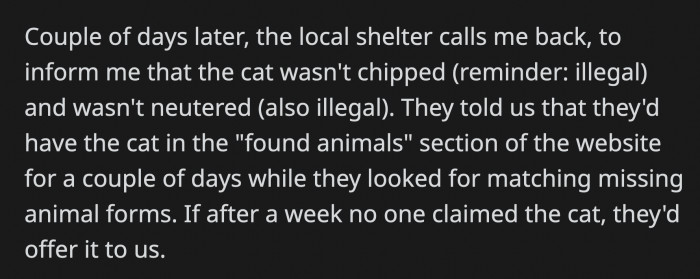
The shelter informed OP that they would hold the cat for a week and upload its image on the found animals section of their website. No one claimed ownership of the cat for a week, so the shelter offered it to OP for adoption.
The situation with the stray cat reflects a type of attachment disruption, where the children are experiencing a form of loss and longing for their pet.
This phenomenon is often seen in children who have to adapt to sudden changes, such as losing a pet, which can lead to feelings of abandonment.
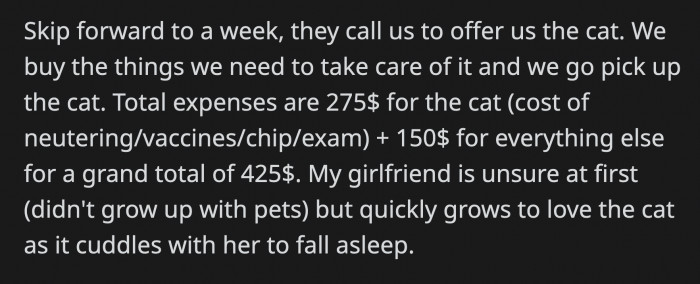
OP and their girlfriend bought everything they needed for the cat. They also had it chipped, vaccinated, and neutered; they spent $425 in total to adopt the cat.
OP's girlfriend took a liking to their new cuddly pet when they received a call from the previous owner, informing them that his kids saw their cat in OP's apartment.
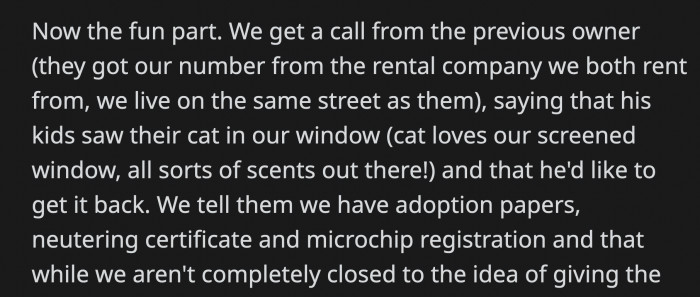
They apparently lived on the same street and told OP that the kids wanted their cat back.

The emotional turmoil experienced by the children and the couple who adopted the stray cat illustrates the intricate nature of pet ownership and the bonds that form with animals. The attachment developed within the family showcases how pets often fulfill a crucial role in providing comfort and emotional support, especially to children. In this case, the family's interaction with the cat not only highlights the joy of companionship but also underscores the potential distress when faced with the prospect of losing that bond. The situation reflects a broader understanding of how pets can nurture empathy and social skills in young ones, making the stakes even higher when the well-being of a beloved pet is threatened.
OP told the man that he could either pay him back for everything they spent on the cat, or OP could give them $150 to buy a new cat because OP felt bad for the kids.

The kids go to OP's window to say hi to their old kitty, which OP finds a little intrusive. Still, OP wonders if they are the a**hole for not giving the cat back to the previous owners when the mistake was caused by the shelter in the first place.

Most commenters took OP's side and agreed that they would provide a better life for the cat than the one it would have with its original family.

This scenario also raises legal and ethical questions regarding pet ownership and emotional bonds.
This gets even messier like the Redditor whose mom had a severe cat allergy, yet they still tried to rescue.
OP appreciated the support but said they couldn't help but feel guilty for causing the neighbor's children undue sadness.

However, OP also received a fair amount of backlash for keeping a cat they knew belonged to another family.

OP said that the commenter missed the point of what happened; OP was simply looking to find out if what they did was the best course of action for everyone involved.

This seemed like a reasonable option, but only if OP was willing to work with the family.

They doubled down and told OP they did not believe the cat was exhibiting any signs of abuse.

In another comment, OP said they contacted the shelter to get their version of events and to find out how the mix-up happened in the first place.

It does seem like the original cat's family does not have enough means to provide adequately for the cat, while OP is more than willing to go the extra mile for it.

We do agree that OP is toeing a very gray area when it comes to the humanity of what they did. On the other hand, they did save the cat from a family that couldn't afford to meet its medical needs.
It's just sad to think about the little kids losing their family pets through no fault of their own. Needless to say, we are glad that the cat is in a loving home where it will want for nothing.
The situation surrounding the couple who adopted the stray cat reveals a complex web of emotional attachments and legal ownership. It exemplifies how the bonds we form with animals can clash with established claims of ownership. The emotional stakes are high for both the couple and the original owners, underscoring the need for empathy in these situations. Open communication will be crucial in navigating this dilemma, as it may lead to a resolution that respects the feelings of all parties involved. This case serves as a reminder of the responsibility that comes with pet ownership and the importance of understanding the connections we build with animals.
For another cruelty-free twist, read about the cat lover who refused to return a neglected stray to owners.
Share this article:





