6th grader's cat science fair project tested whether cat buttholes touch surfaces

A sixth grader in Florida took on one of the funniest, most oddly useful questions in cat ownership: when a cat sits somewhere, does its butthole actually touch the surface? His answer came from a home science fair experiment involving non-toxic lipstick, two trained cats, and a very specific kind of curiosity cat people will recognize instantly.
It is the kind of question that sounds like a joke right up until you remember how often cats plant themselves exactly where people would prefer they did not. Kitchen counters. Beds. Pillows. Laundry. Laptop keyboards. If a cat wants a spot, a cat usually takes the spot, and plenty of owners have wondered, quietly or loudly, what exactly is making contact.
Kaeden Henry decided not to leave that question to guesswork. While he was a sixth grader and living in Florida, he turned it into a science fair project and asked it plainly: do cat buttholes touch every surface they sit on?
For cat people, that is not just a punchline. It is household policy research.
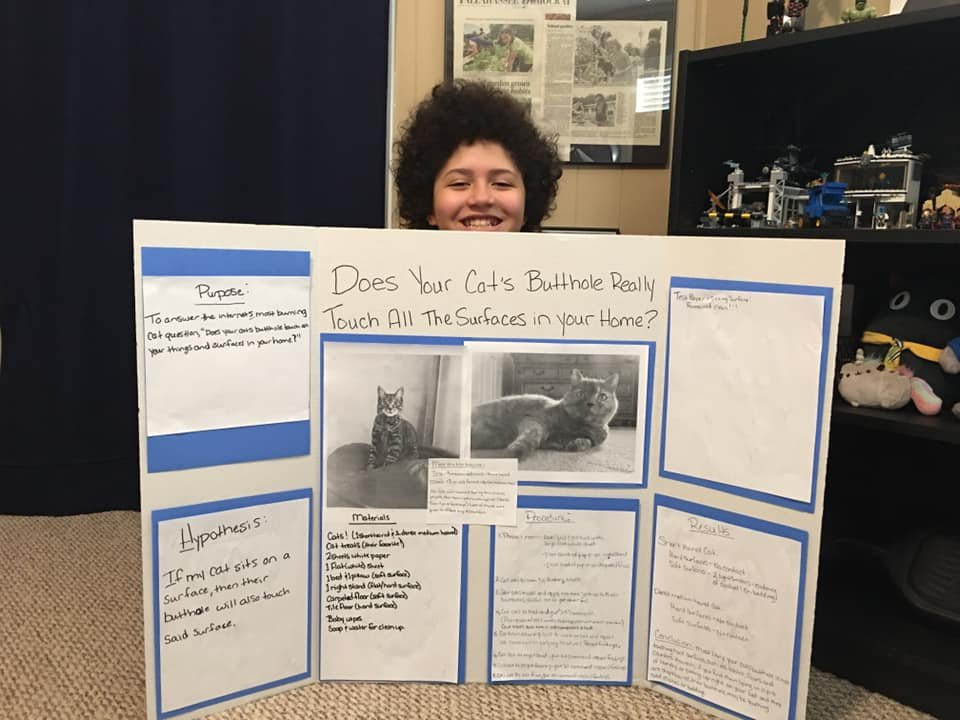
A science fair idea with unusually perfect helpers
The clip below accompanies this gloriously practical project, but the setup itself was simple.
Kaeden was homeschooled, and the experiment had an advantage many school projects never get. His mother, Kerry Hyde, has a PhD in animal behavior with a concentration in feline behavior. The family also had cats, which meant the question could be tested at home instead of debated forever on cat forums or in group chats between people who keep lint rollers in every room.
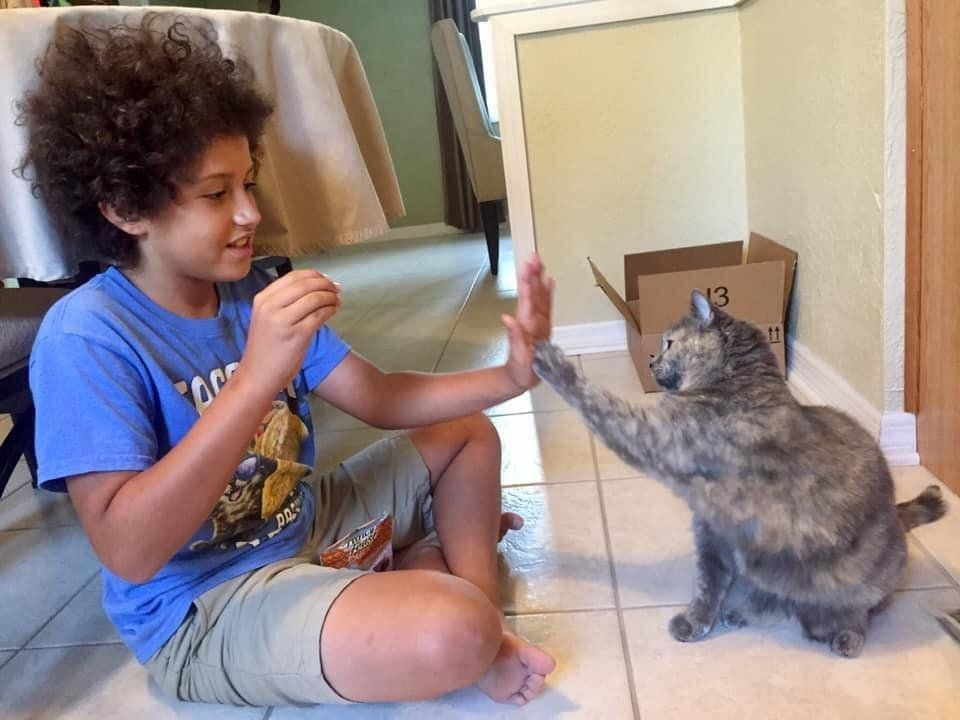
That background mattered because the cats were not random participants swept into a one-time scheme. Hyde said both cats had been trained since kittenhood with a variety of commands. They could do more than just the basics used in the experiment too. According to Hyde, they also knew how to high-five, spin around and speak.
That training turned a ridiculous-sounding idea into something structured enough to count as a real test. The project was still very small, just two cats in a home experiment, but it followed a method and aimed at an answer instead of a hunch.
How the lipstick test worked
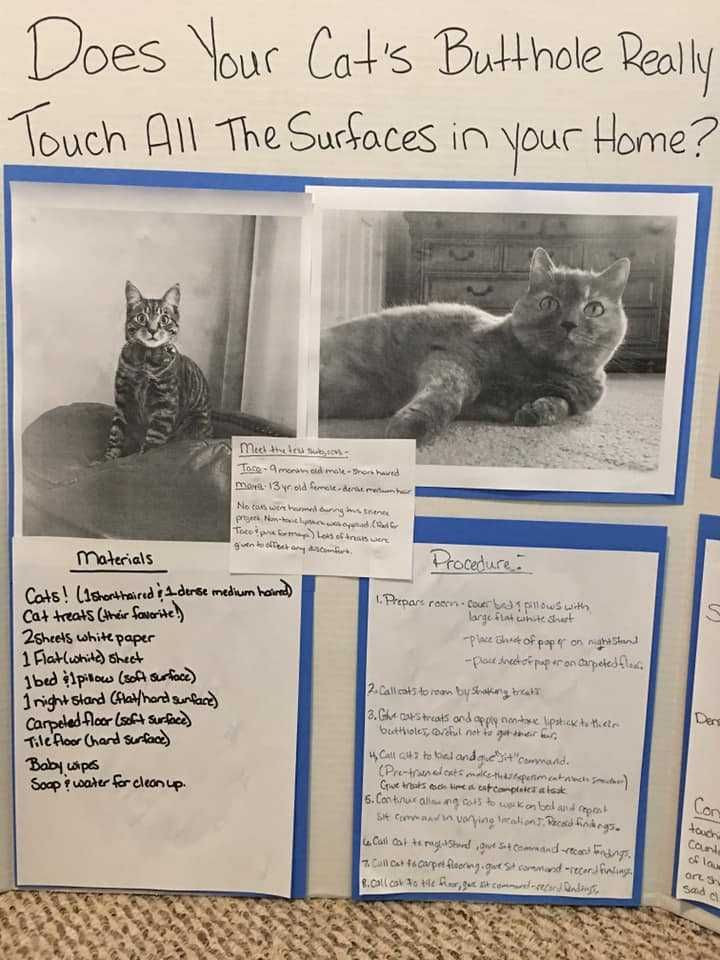
The central tool was non-toxic lipstick.
Hyde said the lipstick was applied to the cats' anuses, and then the cats were asked to perform a series of commands: sit, wait, lie down and jump up. Afterward, the family checked for any lipstick marks left behind on the surfaces involved. Once the data had been collected, the lipstick was removed with a baby wipe.
The whole process took just under 10 minutes. Hyde also said the cats were paid in the currency many cats accept most readily: praise, pets and favorite treats.
There is something especially charming about how matter-of-fact the procedure was. A question that many people might laugh off got a tidy little experimental design instead. Rather than arguing from instinct, Kaeden and Hyde created a way to look for evidence, even if that evidence came in the form of a lipstick trace.
And because these were trained cats, the commands were not just wishful thinking. The family could actually ask the cats to move through the positions needed for the project and gather usable observations.
What the results showed
The answer, in this tiny study, was reassuring for many cat owners.
Hyde shared that long-haired and medium-haired cats' buttholes made no contact with soft or hard surfaces at all. Short-haired cats also showed no contact on hard surfaces. The one place the family did find evidence was on a soft bedding surface, where they saw a slight smear from a short-haired cat.
That led to a conclusion with some carefully cat-specific nuance. If you have a short-haired cat and it is lying on a pile of laundry, an unmade bed or another soft, uneven surface, Hyde said the cat's butthole may touch those surfaces.
That is not the same thing as saying every place a cat sits is automatically in direct contact with the source of every owner's deepest upholstery concerns. In Kaeden's experiment, most surfaces did not show that contact. For a lot of people who share furniture, counters and every horizontal surface with a determined feline, that distinction is the whole point.
The project also covered cats across coat lengths rather than treating all cats as one category, which gave the results a little more texture than a simple yes or no. The answer turned out to depend, at least in this household test, on both fur length and the kind of surface involved.
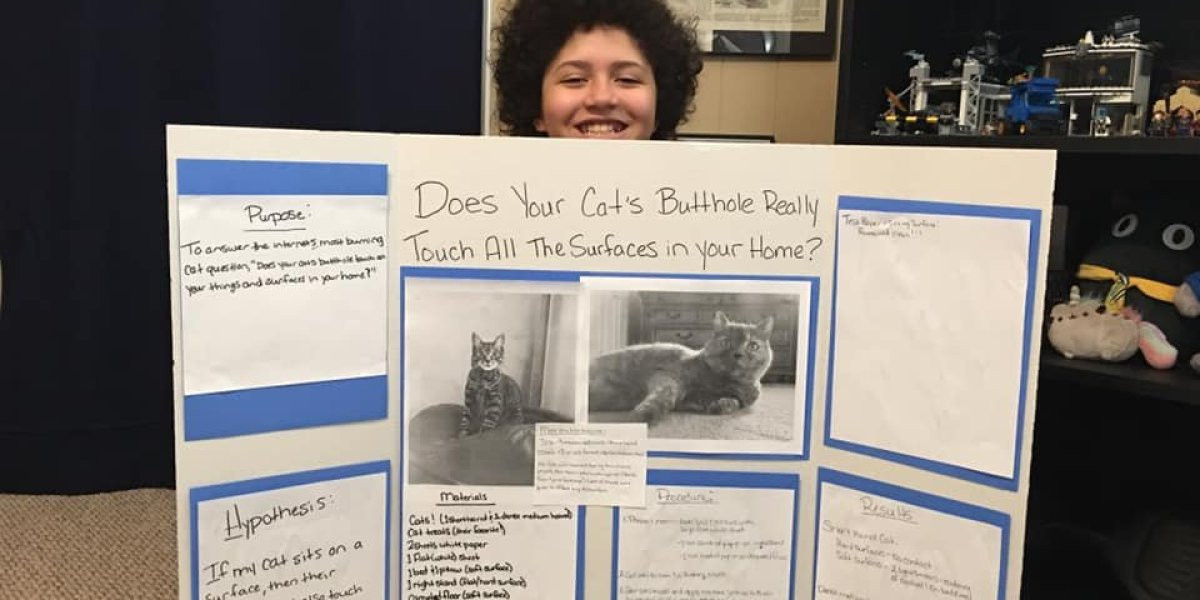
Once the results circulated online, people responded the way cat people often do when someone finally investigates an absurdly specific mystery: with relief, gratitude and a lot of laughter.
Some commenters said it was the most useful thing they had learned from a science fair project. Others joked that they could now approach a sandwich left on the counter with more confidence. Another person said the findings eased their worries after being grossed out by seeing a cat sitting on a laptop keyboard and then cleaning furiously.
The reactions made sense. Kaeden had taken a question many owners have wondered about and answered it with something better than folklore. He used a small sample, a home setting and two very well-trained cats, but he still turned a common feline anxiety into a testable problem.
There is also one final detail that makes the whole story even sweeter for cat nerds. Hyde, despite her expertise in animal behavior and feline behavior in particular, learned something new from the project too.
That may be the real charm of this science fair entry. It did not promise sweeping universal truth. It simply asked a wonderfully practical cat question, used the scientific method, and came back with evidence that let many people breathe a little easier the next time a cat settles onto the bed, the couch or that suspiciously clean patch of laundry.
Share this article: