Ragdoll vs Maine Coon: Size, Personality, Coat, and Key Differences

It started the way most cat debates start, with one very confident owner and one very stubborn cat photo. Pupperish’s shots of a Ragdoll at home make the pointed coat jump right out, and suddenly the whole “Ragdoll vs Maine Coon” question turns into, Which one actually looks like that in real life?
Then the complication hits: the internet keeps throwing size numbers that overlap, coat patterns that look similar until you zoom in, and eye colors that can overlap if you do not know the rules. One minute you are comparing Ragdoll blue eyes and softer, broader facial lines, the next you are staring at a Maine Coon palette that can include tabbies, smokes, torties, and a bunch of white combos.
Here’s the real story, the differences are obvious, but only if you know exactly what to look for.
Maine Coon vs Ragdoll at a glance
The quickest differences are:
- Eyes: Ragdolls have blue eyes as part of breed type; Maine Coons usually have gold-to-green tones, with blue allowed in specific white or particolor cats
- Coat pattern: Ragdolls are pointed; Maine Coons come in many traditional colors and patterns
- Head: Maine Coons have a square muzzle; Ragdolls have softer, broader contours
- Body: both are large, but Maine Coons are notably long and rectangular
- Voice: Maine Coons are famous for chirps and trills; Ragdolls are generally described as quiet
- Activity: Maine Coons often retain a playful, busy quality, while Ragdolls are commonly more laid-back
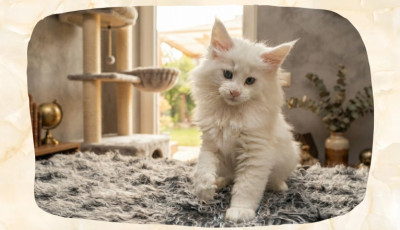
Pupperish’s photos of Ragdoll cats at home give a clear sense of how different the pointed coat looks beside the more varied Maine Coon palette.
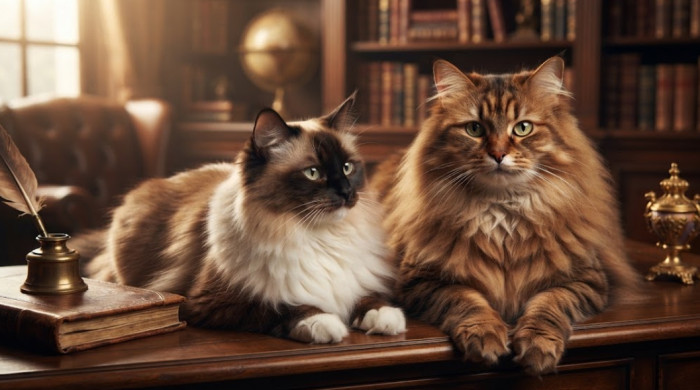
That Ragdoll photo from Pupperish is doing more work than you think, because it makes the pointed face and ears look totally different from the Maine Coon’s broader, square-ish muzzle.</p>
Which is bigger, a Ragdoll or Maine Coon?
The size ranges overlap heavily.
TICA lists fully developed Ragdoll males at roughly 15 to 20 pounds and females at 10 to 15 pounds. Its current Maine Coon at-a-glance ranges put males around 18 to 22 pounds and females around 12 to 15 pounds.
On those published figures, Maine Coon males trend somewhat heavier.
Body shape changes the visual comparison too.
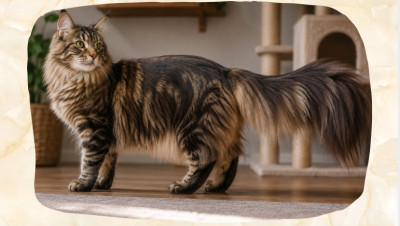
Maine Coons have long rectangular bodies and enormous tails. Ragdolls are substantial and muscular but have softer lines. A stretched Maine Coon can therefore look longer even when the scale weights are close.
Coat and color are easy separators
Ragdolls are pointed cats. Their face, ears, legs, and tail carry deeper color than much of the body, and their accepted patterns include colorpoint, mitted, and bicolor variations.
They also have blue eyes.
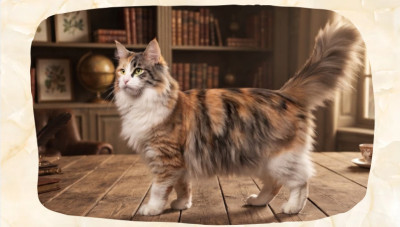
Maine Coons are different. They can be brown tabby, silver, red, black, blue, white, tortie, smoke, and many combinations with white. Pointed coloration is not part of the Maine Coon breed standard.
That makes a classic seal-point Ragdoll easy to separate from a classic brown-tabby Maine Coon before you consider anything else.
Pupperish’s Merlin the Ragdoll is a strong visual example of the breed’s recognizable face and coat distribution.
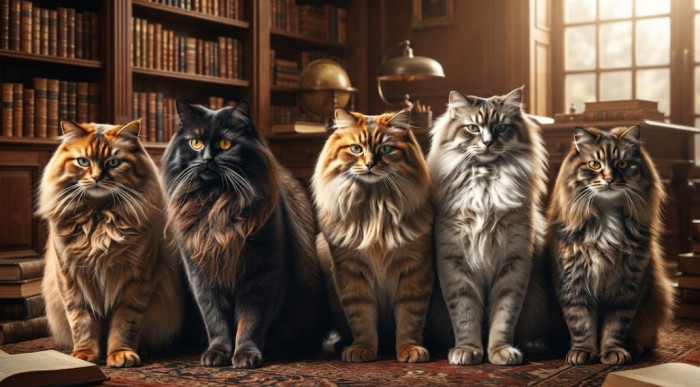
Right after you get past the coat shock, the body comparison gets messy, since Maine Coon males trend heavier on paper, but their long rectangular shape can trick your eye.</p>
Maine Coon vs Ragdoll personality
Both can be highly social.
The difference is often one of style rather than friendly versus unfriendly.
Ragdolls are known for a calm, tolerant, affectionate disposition. Many enjoy close physical contact, and the breed name comes from the tendency some cats have to relax heavily when held.
Maine Coons are also affectionate, but they are frequently described as companionable rather than permanently lap-bound. They may follow people from room to room, “help” with household activity, play fetch, or chirp at whatever has their attention.
A Maine Coon can be cuddly. A Ragdoll can be energetic.
Breed tendencies are probabilities, not scripts.
Both are forest giants, but Norwegian Forest Cat vs Maine Coon comes down to head, coat, and slow maturity.
Which breed is more vocal?
Maine Coons have the more distinctive reputation here.
TICA says they often chirp and trill rather than relying on ordinary meows. The tiny sound coming from a huge cat is part of the breed’s charm.
Ragdolls are generally described as quieter.
That does not mean silent. Individual Ragdolls can be very communicative, especially around food or attention.
If a quiet home is essential, meet the actual cat rather than trusting the label.
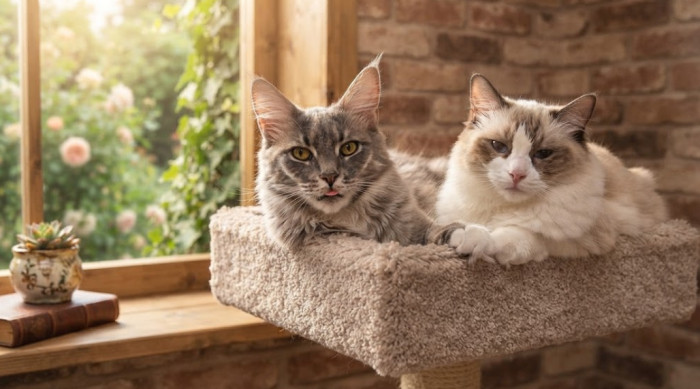
Then comes the colorpoint confusion, because Ragdolls carry that pointed pattern and blue eyes by breed-type, while Maine Coons can wear tons of traditional colors without being “pointed.”</p>
Which is more active?
Maine Coons often retain a playful, kittenish quality well into adulthood. They may chase toys, investigate rooms, learn simple tricks, and enjoy interactive play.
Ragdolls play too, especially when young, but the breed is commonly characterized as more relaxed.
That difference can matter in a small home.
A huge playful cat still needs room to move.
Pupperish’s broader gallery of distinct cat breeds is useful here because breed size tells you only part of what day-to-day ownership feels like.
Grooming differences
Both need routine combing.
Maine Coon coats are shaggy and uneven in length, with more fur around the ruff, belly, hindquarters, and tail. Ragdoll coats are semi-long and silky, with comparatively little undercoat described in some standards and breed resources.
Either can mat if neglected.
The problem areas may differ by individual coat texture, but armpits, belly, hind legs, and ruff deserve attention on longhaired cats generally.
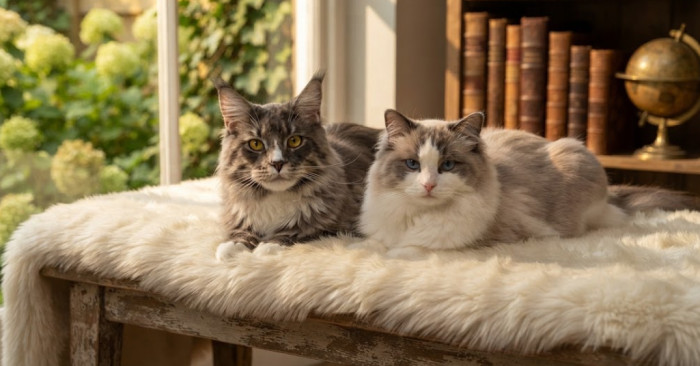
Finally, the vibe seals it, Maine Coons often stay busy and chirpy, while Ragdolls are usually quieter and more laid-back, like they are already ready for a cuddle session.</p>
Which breed is easier to identify?
A typical Ragdoll is easier because the combination of pointed coat and blue eyes is highly recognizable.
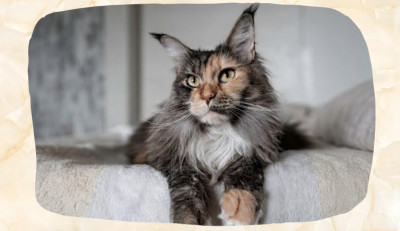
A Maine Coon’s color palette is far broader, so body structure matters more: square muzzle, long rectangular frame, tall ears, large tufted feet, and a long flowing tail.
If a cat seems to sit directly between the two, known ancestry becomes important. A fluffy blue-eyed cat is not automatically a Ragdoll-Maine Coon mix.
Ragdoll or Maine Coon: which should you choose?
Choose the household fit, not the winner of a breed comparison.
A person who wants a quieter, very laid-back companion may lean toward a Ragdoll. Someone who likes a playful, interactive cat with more varied coat choices and a slightly busier social style may prefer a Maine Coon.
Then meet real cats.
Pupperish has covered Maine Coon accounts with very different personalities, a useful counterweight to treating any breed as one personality copied thousands of times.
Both breeds can be large, affectionate, beautiful companions. The differences help you know what to ask for, not which cat is objectively better.
If you want the “blue-eyed pointed cat” look, the Ragdoll wins, but if you want the wild color variety, the Maine Coon is the main event.
Big mix potential, but this Maine Coon Ragdoll mix article shows how personalities vary.
Share this article: