
Maine Coon Mix: Appearance, Size, and Traits

A Maine Coon mix is one of those cats that looks like it came with a backstory, even when nobody can agree on the plot. One photo shows a long, fluffy body with ear tufts, the next looks like a totally different cat, and suddenly everyone is arguing about what “counts” as Maine Coon.
It gets messy fast when you’re trying to pin down appearance, size, and personality from a few blurry images and a vague “maybe the other parent was big.” People compare a fluffy cat to a breed photo, assume the ancestry is locked in, and then act surprised when the features show up in random combinations, or not at all. Even the timeline is tricky, because the Maine Coon side can keep filling out after the first birthday.
Here’s the full story of why the guesswork feels confident, right up until it isn’t.
What does a Maine Coon mix look like?
There is no single Maine Coon mix appearance.
Possible Maine Coon-like features include:
- a long rectangular body
- a broad chest and substantial bone
- large tufted paws
- tall ears with furnishings
- a long plumed tail
- a shaggy semi-long coat
- a relatively square muzzle
A mixed cat can show several, one, or none of those strongly.
This is where image searches create false confidence. People see a fluffy cat with ear tufts, compare it with a breed photo, and assume the ancestry is settled.
Pupperish’s roundup of distinctive cat breeds makes the problem obvious: multiple breeds can share long coats, large frames, dramatic ears, or unusual facial structure.
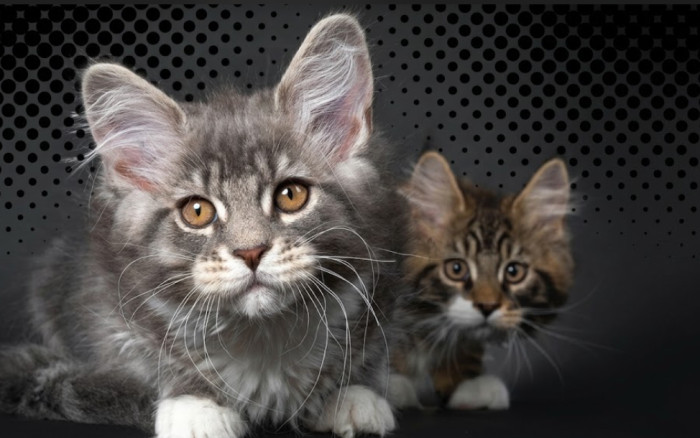
That’s when the “fluffy with ear furnishings” clue stops being a guarantee and starts being a maybe, like the kind you can’t verify from one image alone.
How big do Maine Coon mixes get?
It depends on the other parent and the individual genetic combination.
A Maine Coon mixed with another large breed could mature into a substantial cat. A Maine Coon crossed with a smaller domestic cat might finish closer to an average household size. Even littermates can differ noticeably.
The Maine Coon side also develops slowly, so a young cat may continue filling out after its first birthday.
Do not use an adult Maine Coon weight range as a promise for a mix.
That would turn a breed average into a prediction it cannot support.
Do Maine Coon mixes have the same personality?
Not necessarily.
Maine Coons are widely described by breed organizations as social, gentle, playful, and people-oriented. A mixed cat may inherit some tendencies associated with either parent, but temperament also reflects early socialization, environment, individual personality, and life experience.
A mix can be affectionate without being lap-oriented. It can be vocal or quiet. It may love water, ignore it, follow people from room to room, or prefer more independence.
Pupperish’s overview of popular cat breeds and their origins helps separate population-level breed tendencies from guaranteed behavior in one animal.
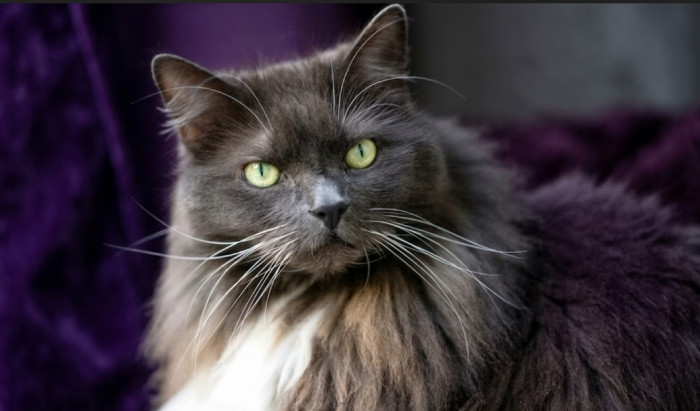
Then you run into the size problem, because a Maine Coon mix can land anywhere from average household size to properly substantial, depending on the other parent.
Maine Coon mix vs purebred Maine Coon
The strongest difference is documentation.
A registered purebred Maine Coon has recorded pedigree ancestry under a registry’s rules. A Maine Coon mix may have one known pedigreed parent, partial documentation, or simply a suspected background based on appearance.
That does not make one cat better than the other.
It changes what can be claimed with confidence.
A shelter cat described as a “Maine Coon mix” may be using the label as a visual shorthand rather than a verified pedigree statement. That is common in animal listings because adopters immediately understand the general look being described.
For SEO readers asking, “Is my cat a Maine Coon mix?” this distinction is the useful answer: resemblance can support a hypothesis. Records establish ancestry.
Even tall ears with lynx tips can mislead, just like the Maine Coon ear look that proves nothing about a cat’s breed.
Can DNA testing identify a Maine Coon mix?
Consumer cat DNA tests may estimate breed-related ancestry using their own reference databases, but the strength of those estimates depends on the test and the available population data.
Do not confuse that with parentage testing.
UC Davis’s genetic marker report is designed to compare an offspring with possible parents. It is useful when the question is whether a known cat could be the parent, not as a universal breed labeler for every rescue cat.
If a breeder says a kitten is a Maine Coon cross, documentation showing the parentage is more direct than trying to reconstruct ancestry later from looks.
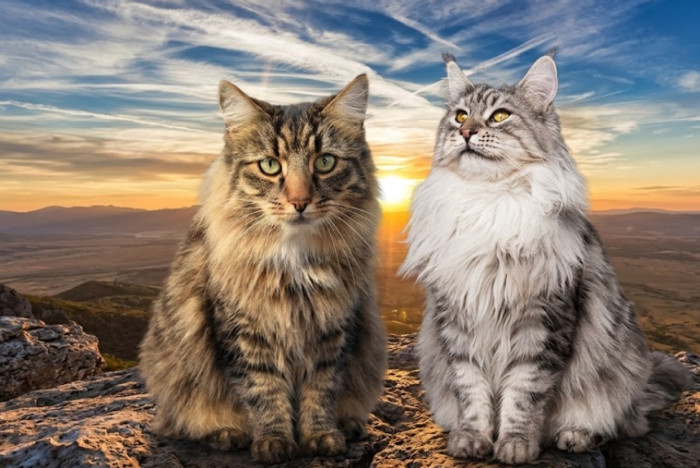
After that, the personality expectations get shaky too, since a mix can be social and gentle without being lap-oriented, or vocal without the drama people expect.
Why Maine Coon mixes can look so different
Coat genes alone can create huge variation.
Long hair is inherited genetically, but color, pattern, white spotting, dilution, and other coat traits combine separately. Add body size and head shape from two different lineages and the possible outcomes multiply quickly.
That is why a mixed litter may contain one kitten that looks strikingly Maine Coon-like and another that does not.
Selective breeding can also change appearance across generations. Pupperish has covered research on how human breeding choices shape the look of cats and dogs, which is relevant here: recognizable breed type comes from generations of selection, not one magic gene for “Maine Coon face.”
Are Maine Coon mixes healthier than purebred Maine Coons?
You cannot assume that from the word “mix.”
Mixed ancestry can increase genetic diversity in some contexts, but an individual cat can still inherit health risks from either side, develop common feline diseases, or have problems unrelated to ancestry.
Likewise, a responsibly bred purebred cat may come from lines screened for known inherited risks.
The useful question is not “mix or purebred, which is automatically healthier?” It is what is known about the individual cat, its parents, its veterinary history, and any relevant testing.
Pupperish’s gallery of mixed-breed dogs shows the same naming problem in another species: a cross can be visually memorable without behaving like a perfectly predictable blend of both parents.
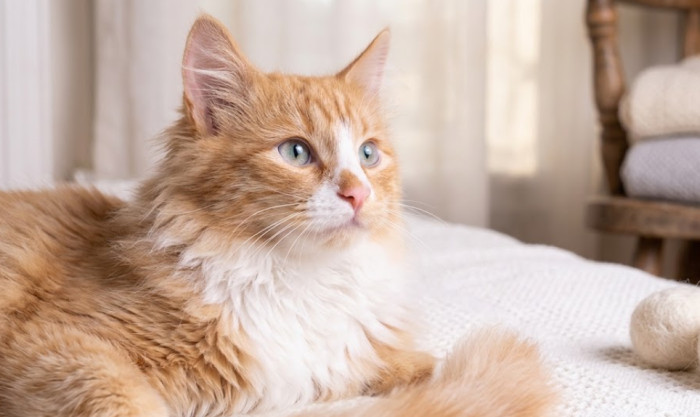
Finally, the Maine Coon mix vs purebred Maine Coon comparison hits the wall, because the strongest difference is what you can actually document, not what you assume.
Should you call a rescue cat a Maine Coon mix?
If ancestry is unknown, qualify the claim.
“Maine Coon-like,” “possible Maine Coon mix,” or “domestic longhair with Maine Coon-like features” is more accurate than presenting a guess as fact.
That may sound less exciting.
It is more useful.
A cat does not need proven Maine Coon ancestry to have an enormous tail, giant feet, a sweet personality, or an excellent home. The mix label is most valuable when it describes known ancestry, not when it tries to turn every fluffy rescue into a pedigree puzzle.
The family dinner did not end well, and neither does the “this is definitely a Maine Coon” story when the traits refuse to line up.
Before you guess Maine Coon heritage, compare its length to an average cat, dog, and human in this Maine Coon size showdown.
Share this article:





