
Maine Coon Ragdoll Mix: Size, Appearance, and Personality

A 28-year-old woman in Portland thought her next cat would be “pretty and predictable,” like the photos she kept saving of Ragdolls. Then a Maine Coon Ragdoll mix showed up in her life, all big paws, fluffy tail, and that half-soft, half-wild look that makes you question every “type” you thought you knew.
At first, it seemed simple: a Maine Coon side for the size and shaggy drama, a Ragdoll side for the plush coat and potential blue eyes. But the more she learned, the more it felt like genetics was playing a prank, not a template. One kitten could land in the middle, another could lean hard toward one parent, and suddenly “blue eyes” and “ragdoll face” turn into maybe, not a guarantee.
Here’s the part where the fluffy mystery gets real, because this mix can look familiar in one photo and totally different in the next.
What does a Maine Coon Ragdoll mix look like?
Expect possibilities, not a template. Potential traits include:
- a large or medium-large body
- semi-long fur
- a full tail
- broad or tufted paws
- larger ears
- blue eyes in some cats
- pointed, mitted, bicolor, tabby, solid-looking, or mixed coat effects depending on ancestry
A kitten does not have to land exactly between the two parent breeds. Genetics does not work like a face-morphing app.
Pupperish’s photos of Ragdoll cats living with a family show how recognizable the Ragdoll side can be when the breed is pure. A cross can blur several of those traits.
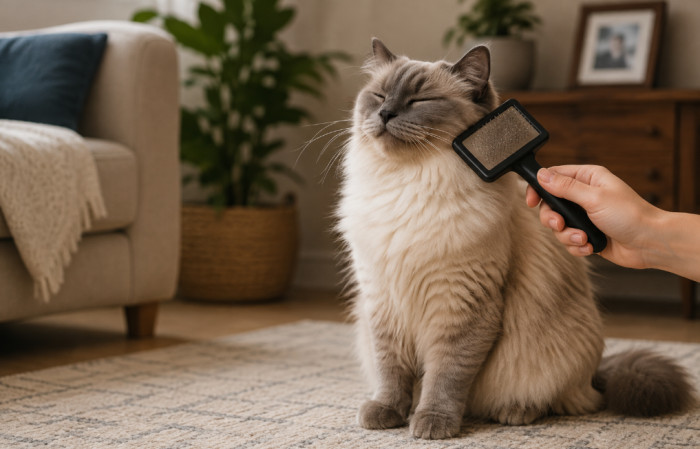
That first Maine Coon Ragdoll kitten in her living room had a full tail and tufted paws, and it instantly made her stop expecting a neat blend.
How big does a Maine Coon Ragdoll mix get?
Both parent breeds can be substantial. TICA’s current Maine Coon at-a-glance guide lists adult males around 18 to 22 pounds and females around 12 to 15 pounds. Its Ragdoll profile describes males around 15 to 20 pounds and females around 10 to 15 pounds once fully developed.
That does not create a guaranteed mix range. A cross can fall below, within, or above overlapping parent averages depending on the individual. Both breeds also mature slowly, so a young adult may continue filling out for several years.
If the parents are known, their actual adult size is more useful than a generic internet estimate.
Will a Maine Coon Ragdoll mix have blue eyes?
Maybe. Blue eyes are a defining feature of pointed Ragdolls, while Maine Coon standards permit blue eyes mainly in certain white or partly white cats. A mixed cat’s eye color depends on which pigmentation genes it inherits and how they are expressed.
Do not assume that every kitten from a Ragdoll parent will keep bright blue eyes. Very young kittens can also have bluish eyes before adult color develops.
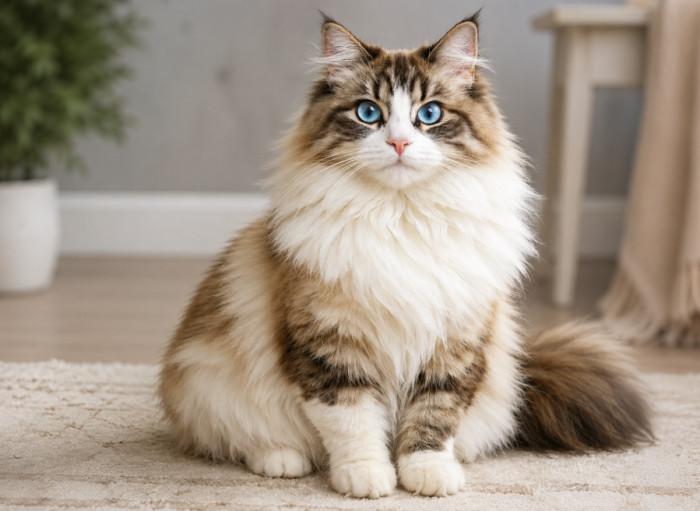
When she compared the parents’ known weights, the overlap ranges stopped feeling helpful, since any single cat could land below, within, or above those averages.
What coat does the mix have?
Both parent breeds are longhaired or semi-longhaired, so a fluffy coat is plausible, but texture and distribution can differ.
Maine Coons have a shaggy coat that varies in length across the body, with pronounced ruff, belly, and tail fur. Ragdolls have a soft semi-long coat with pointed color distribution in accepted breed patterns.
A mix may show a full ruff and tail without matching either standard precisely.
Pupperish’s Merlin the Ragdoll is a good visual baseline for the breed’s dense, plush appearance. Mixed ancestry can make that look rougher, shaggier, or more variable.
“Tabby” is just a coat pattern, so a Maine Coon tabby mix can look totally different, like the Maine Coon tabby mix traits explained here.
Maine Coon Ragdoll mix personality
Both breeds are generally described as people-oriented and friendly, but their styles differ. TICA calls Maine Coons social, gentle, playful, and likely to follow people around without always becoming lap cats. Ragdolls are described as loving, quiet, laid-back, and tolerant.
A cross might be highly affectionate. It might also be more independent than expected.
Temperament is influenced by genetics, early socialization, environment, and individual personality. Marketing a mix as guaranteed to be “the perfect cuddly gentle giant” skips that reality.
Pupperish’s broader look at hypoallergenic cat breeds illustrates another common breed-label problem: one trait is often advertised too broadly even when individual cats vary. Personality deserves the same caution.
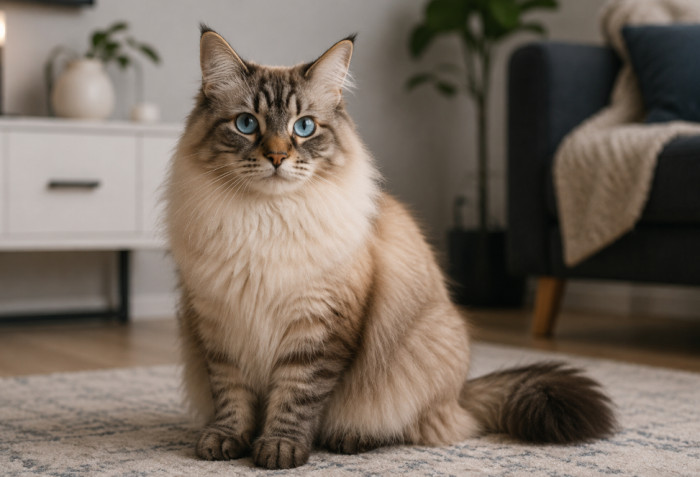
Then the eye-color talk hit, because her kitten’s “maybe blue” stare did not match the certainty she wanted from the internet photos.
Is a Maine Coon Ragdoll mix hypoallergenic?
No cross should be assumed hypoallergenic. Both Maine Coons and Ragdolls produce common cat allergens. Coat length is not the deciding factor.
An individual may trigger fewer symptoms for one person than another cat does, but that is not the same as a reliable low-allergen breed trait. If allergies matter, spend time with the individual cat before making a long-term commitment.
How do you know whether the mix is real?
Known parentage is the cleanest evidence. If someone is intentionally breeding Maine Coon and Ragdoll cats, they should be able to show records for the parents and explain the cross clearly. A rescue cat with blue eyes and a fluffy tail may resemble both breeds without having documented ancestry from either.
That is not a criticism of the cat. It is a criticism of overconfident labeling.
Pupperish’s article on expensive cat breeds is relevant because fashionable breed names can increase perceived value. Buyers should separate appearance and marketing from records.
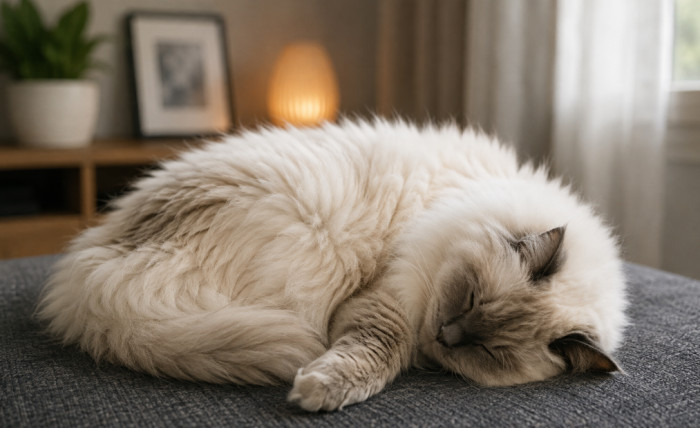
Finally, the coat details got messy too, since the Maine Coon ruff and belly fur can mix differently with the Ragdoll’s softer semi-long fluff.
Is this mix a good pet?
It can be, but the decision should be based on the individual.
A large longhaired cat needs regular grooming, enough room and enrichment, appropriate nutrition, and routine veterinary care. A highly social cat may also want more daily interaction than a household expects.
Meet the cat. Ask about its history. Look at behavior rather than assuming a personality from two breed names.
That gives a much more useful prediction than the mix label alone.
Her Maine Coon Ragdoll mix is adorable, but it refuses to be categorized, and that’s exactly why it’s so hard to predict.
Want more wild variation than a Maine Coon mix photo suggests? See this Maine Coon mix breakdown.
Share this article:





