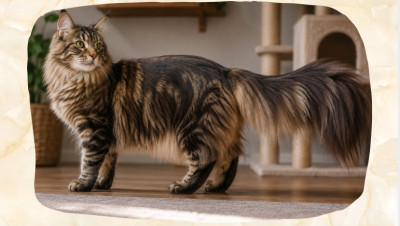
Maine Coon Personality and Temperament: What Are They Really Like?

Someone shows up thinking their Maine Coon is going to act like a fluffy teddy bear on demand, then the cat does the exact opposite. Not mean, not broken, just… selective. One minute it’s following you room to room, the next it’s posted on the couch like it’s watching a very important show.
Here’s where it gets complicated: you’ve got kids buzzing with excitement, maybe another cat in the mix, and a cat-friendly dog who wants to be included. The Maine Coon can be sociable and even “pupperish” about attention, but that friendly vibe doesn’t automatically mean fearless, lap-ready, or endlessly tolerant. Some cats warm up fast, others need quieter introductions and time to decide you’re not a threat.
That’s the real story with Maine Coons, their temperament is flexible, and the surprises are part of the charm.
Are Maine Coons friendly?
Generally, yes.
Breed organizations consistently describe a sociable temperament, and many Maine Coons adapt well to households with children, other cats, and cat-friendly dogs when introductions are handled properly.
Friendly does not mean fearless.
An individual cat can be cautious with strangers, sensitive to noise, or slower to warm up after a stressful history. Early socialization matters, as does the cat’s own personality.
Pupperish’s collection of Maine Coon facts is a useful starting point for the breed’s broader behavior, but real cats still vary more than a fact list can show.
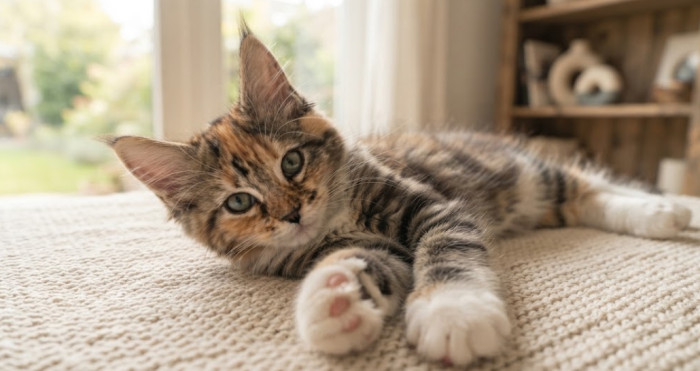
The “friendly” label starts to feel less like a promise when a Maine Coon keeps its distance from strangers and only softens after the noise dies down.
Are Maine Coons cuddly?
Some are extremely affectionate. Others prefer proximity over lap time.
TICA makes this distinction unusually well, noting that Maine Coons may follow their people from room to room and stay close while not always being lap cats. That is a better expectation than assuming every Maine Coon will want to be carried around.
A cat may sit beside you instead of on you.
Still affectionate.
Pupperish’s article on cat headbutting explains one of the quieter ways cats seek contact and leave scent. A Maine Coon that greets you with a head bump and then settles a foot away may be showing plenty of attachment without becoming a lap cat.
Why are Maine Coons called gentle giants?
The nickname combines body size with temperament.
Maine Coons can be physically imposing, especially mature males, yet breed descriptions emphasize a calm, good-natured social style. The contrast is memorable: huge paws, heavy coat, deep chest, tiny chirp.
The nickname should not become an excuse to ignore normal cat boundaries.
A gentle cat can still become overstimulated, frightened, or defensive. Children should learn respectful handling, and other pets need gradual introductions.
Large does not mean endlessly tolerant.
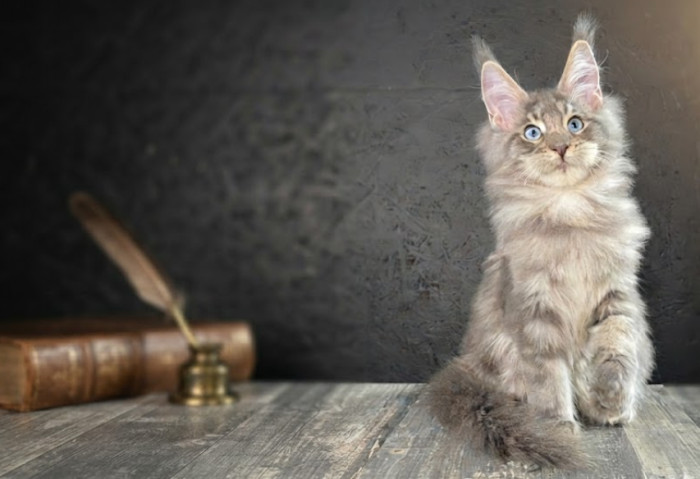
It gets even weirder when the cat chooses proximity over cuddling, following you from room to room, then settling a foot away instead of on your lap.
Are Maine Coons playful?
Often, and many retain that quality well into adulthood.
TICA notes that Maine Coons can remain playful through life and may learn fetch, leash walking, or simple commands. Ground-level chase games are especially common in breed descriptions.
That makes enrichment important.
A large cat needs sturdy climbing furniture, interactive toys, scratchers that fit its body, and enough space to move comfortably. The GCCF specifically recommends strong climbing equipment capable of supporting the breed’s weight.
Pupperish’s guide to cat communication and play signals can help distinguish an invitation to interact from a cat that has had enough.
This is similar to the clues Pupperish lists for telling if your cat is truly part Maine Coon, beyond just paws and ear tufts.
Are Maine Coons smart?
They are widely described as intelligent and trainable, but intelligence is difficult to rank cleanly across cat breeds.
What owners often notice is practical curiosity. Maine Coons may learn routines quickly, manipulate doors or cabinets, solve food puzzles, fetch toys, and track what people are doing around the house.
That can look very dog-like.
It can also look like a cat opening something you hoped would stay closed.
Calling them “the smartest cat breed” would go beyond what good evidence supports. Calling them observant, trainable, and curious fits both breed descriptions and common owner reports much better.
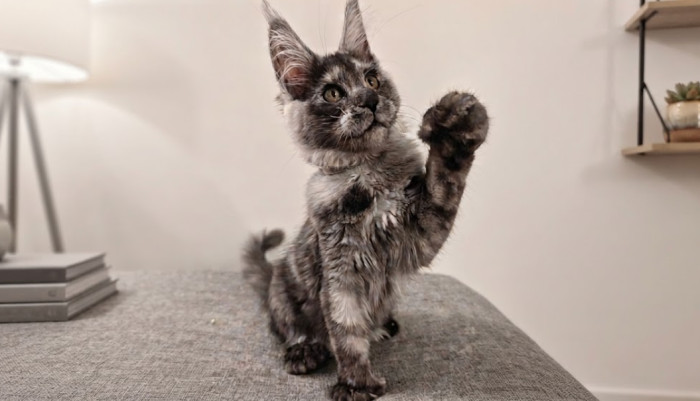
And “gentle giants” can still hit their limit, especially when big paws and tiny chirps meet kids who don’t respect boundaries during playtime.
Are Maine Coons vocal?
Usually not in the stereotypical loud-meowing sense.
The breed is famous for chirps and trills. TICA says many Maine Coons communicate with those sounds more often than ordinary meows, while GCCF describes a quiet chirping voice that can become a yowl when food is involved.
The contrast with their body size is part of the charm.
Pupperish’s roundup of different cat personalities shows how much feline social behavior happens through small sounds, posture, touch, and routine rather than constant vocalization.
Do Maine Coons act like dogs?
Sometimes in specific ways.
Following people, greeting family members, playing fetch, learning simple behaviors, and enjoying interactive household life can all feel dog-like. Some Maine Coons also get along very well with dogs.
But the comparison can become lazy.
Maine Coons still use feline body language, need feline territory, and often want control over physical contact. A dog comparison is useful for describing sociability, not for replacing an understanding of cat behavior.
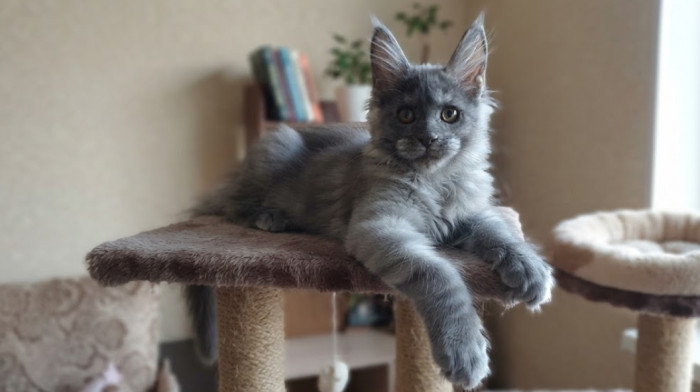
By the time the Maine Coon is head-bumping for scent and attention, the whole household has to realize affection can look like “nearby,” not “carried around.”
Does male vs female Maine Coon personality differ?
You will find plenty of anecdotal claims that males are more clownish or females more independent.
Those are not reliable rules.
Sex may influence some behavior, especially in unneutered animals, but individual temperament, socialization, environment, and life history create much larger variation than a simple male-versus-female personality split suggests.
Meet the cat in front of you.
What can change a Maine Coon’s temperament?
Breed gives a baseline. Life modifies it.
A well-socialized kitten raised around people may be more confident than a poorly handled one. Pain or illness can make a friendly cat withdraw. A frightening home environment can produce vigilance. Moving, new pets, and lack of enrichment can all change behavior too.
That is why a sudden personality change deserves attention rather than being dismissed as “just the breed.”
Maine Coons have a strong reputation for good reason. Their best-known temperament is social without being frantic, affectionate without always being clingy, and playful long after kittenhood.
That combination is more useful than the nickname alone.
Nobody’s failing the Maine Coon, they’re just learning that “gentle” still comes with rules.
Wondering if your cat’s “Maine Coon” look is real, check out what traits a Maine Coon mix can inherit, and why mixes vary.
Share this article: