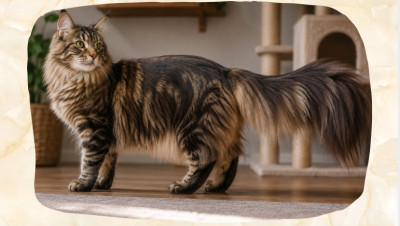
Are Maine Coons Friendly and Affectionate?

It starts the way a lot of Maine Coon stories do, with someone convinced they’re about to adopt a cuddly, lap-sized “gentle giant.” Then the cat does something way more Maine Coon than movie-trailer: it follows you room to room, parks itself nearby like a furry supervisor, and greets you with a trill, but somehow never commits to the full-on hold.
In this house, the complication is real. One day the cat headbutts and slow-blinks so hard it feels personal, and the next day it’s all about proximity, not being picked up. Add in kids who think “tolerant” means “free pass,” plus another cat in the mix, and suddenly affection is not a single thing you can check off. It’s a pattern, a choice, and sometimes a boundary.
Here’s the full story of how Maine Coon friendliness shows up, and what happens when people expect the wrong kind of cuddling.
How do Maine Coons show affection?
Often through proximity.
They may follow you from room to room, sit nearby while you work, sleep on the same sofa, greet you with a trill, rub their face against you, or supervise whatever task has your attention.
Some are much more physical.
Headbutts, slow blinks, purring, kneading, grooming, and leaning into touch are all ordinary feline ways of showing comfort and social attachment. Pupperish’s guide to signs cats show love covers many of those behaviors in more detail.
The useful question is not whether the cat behaves like a plush toy.
It is whether the cat repeatedly chooses your company.
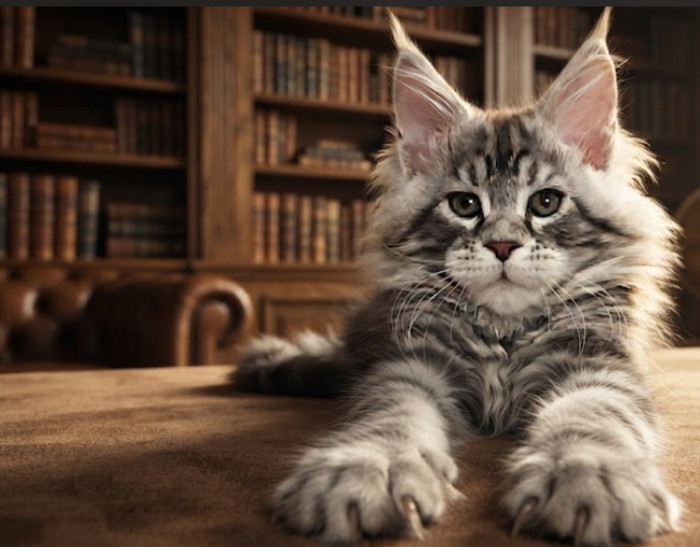
That first “lap cat” fantasy usually starts when the Maine Coon sits nearby on the same sofa and watches whatever you’re doing like it’s taking notes.</p>
Are Maine Coons cuddly?
They can be, but there is no guarantee.
This is where search results often oversell the breed. “Gentle giant” turns quickly into “giant lap cat,” even though TICA specifically notes that many Maine Coons prefer hanging out with people rather than living on their laps.
Individual cats also change with age.
A restless young cat may become more physically affectionate later. An older cat may seek warmth and contact more often. Others keep the same preference for sitting close without being held.
Pupperish’s feature on cats showing affection shows that cuddling is only one form of feline attachment.
Are Maine Coons good with children?
The breed is generally considered family-friendly, and both TICA and other major breed organizations describe Maine Coons as good companions in active households.
That does not mean every interaction should be unsupervised.
Children need to understand that a large cat still has boundaries. No tail pulling. No forced holding. No trapping the cat in a cuddle because the breed is supposed to be tolerant.
A confident Maine Coon with respectful children can be an excellent match.
A nervous cat with rough handling will not become comfortable because of a breed description.
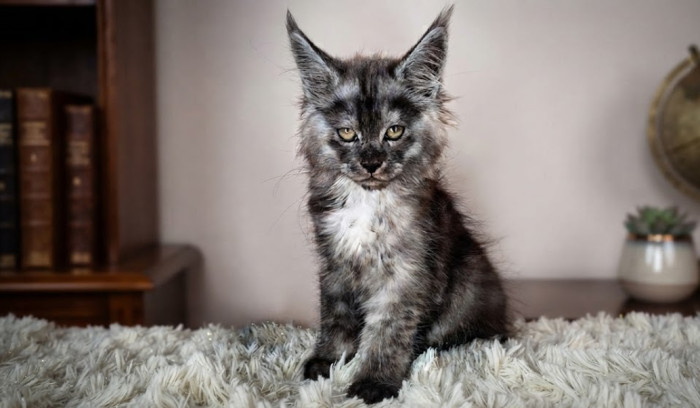
Then the same cat headbutts, purrs, and slow-blinks, but still prefers to lean in on its own terms, not yours.</p>
Are Maine Coons friendly with other cats?
Many are.
Maine Coons are commonly described as social with other animals, including cats and dogs. Successful multi-cat living still depends on introductions, territory, resources, and individual compatibility.
Slow introductions work better than assuming two friendly breeds will instantly become best friends.
Separate resources help too: litter boxes, feeding areas, resting spots, scratchers, and safe elevated spaces reduce competition.
Pupperish’s story about an overly affectionate cat who struggled to find the right home shows the other side of the label. A trait people say they want can still become difficult if the household and individual needs do not match.
Big paws and ear tufts can help, but how to tell if your cat is part Maine Coon looks at the whole body.
Are Maine Coons good with dogs?
Often, especially with cat-friendly dogs and careful introductions.
TICA specifically mentions the breed’s suitability for households that also have dogs and other animals. A confident Maine Coon may be less physically intimidated by a calm dog than a smaller nervous cat would be, but body size is not the deciding factor.
The dog’s prey drive and manners matter enormously.
So does the cat’s previous experience.
Give both animals escape routes and time.
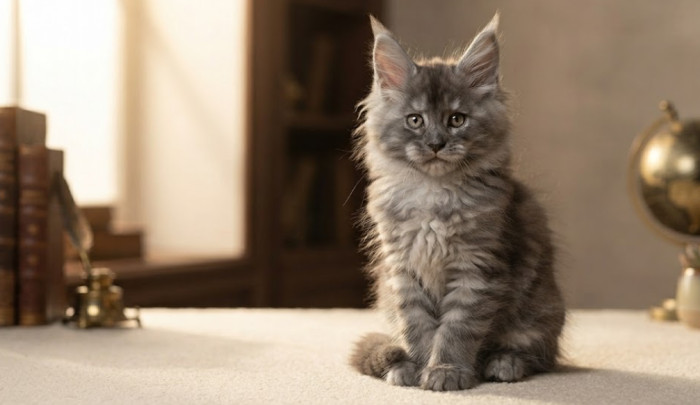
The mood gets even trickier when kids try tail pulling or forced holding, because a big, confident Maine Coon can still say no.</p>
Do Maine Coons choose one favorite person?
Some do, while others spread attention across the household.
A Maine Coon may form a particularly strong routine with the person who feeds it, plays with it, or spends the most time at home. That does not mean it will reject everyone else.
The breed’s reputation is more broadly social than one-person-only.
Look for patterns: who the cat follows, greets, sleeps near, and seeks when unsettled. Those choices often say more than lap time.
Are Maine Coons friendly with strangers?
Temperament varies more here.
A well-socialized adult may walk straight up to visitors. Another may watch from a distance and appear after the house becomes quiet. Both can be perfectly friendly cats.
Confidence is not the same as affection.
Do not force introductions. Let the cat control distance and approach.
Pupperish’s stories of cats proving they can be affectionate companions show just how many styles of social behavior fall under the broad word “friendly.”
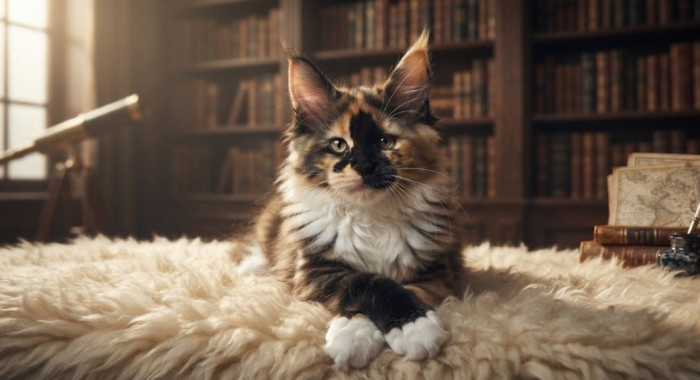
And once you add another cat, you find out whether your Maine Coon keeps choosing your company the easy way, or the “social but separate” way.</p>
What if a Maine Coon is not affectionate?
First, ask what “not affectionate” means.
If the cat simply dislikes being picked up but follows you everywhere, it may be showing attachment in its preferred way. If it has always been reserved, personality may explain much of the difference.
A sudden withdrawal is different.
Changes in sociability, hiding, irritability, or avoiding touch can accompany pain, stress, illness, or conflict in the home. A marked behavior change deserves investigation rather than a judgment that the cat has become unfriendly.
Should friendliness be the reason you choose a Maine Coon?
It can be one reason, not the only one.
Maine Coons are large, slow-maturing, longhaired cats that need grooming, sturdy equipment, space, play, and ongoing care. Their social nature can also mean they do poorly if consistently left without interaction.
Choose the breed because the full package fits.
Then choose the individual cat whose personality fits even better.
If your Maine Coon keeps picking proximity over being held, you’re not failing, the cat is just redefining “love.”
Want the full breakdown of gentle-giant behavior, see Maine Coon Personality and Temperament.
Share this article: