
How Shep the Ranch Dog Helped Pull the Black-Footed Ferret Back From the Edge

Shep changed the future of a species when he brought his owner a dead animal from a Wyoming ranch in 1981. That strange find led wildlife officials to black-footed ferrets that many researchers had already written off as extinct, and the result still reaches into the wildlands of Arizona today.
The dog who carried in a mystery
The moment that changed everything was surprisingly ordinary. A dog named Shep found a dead animal on a ranch and brought it to his owner. The man did not know what it was, so he took it to a local taxidermist.
That was the break the black-footed ferret needed. The taxidermist identified the animal as a black-footed ferret and contacted wildlife authorities. Officials came to the ranch and searched the area. What they found was a small population of black-footed ferrets living there in Wyoming.
That discovery mattered because black-footed ferrets were widely believed to be gone. Researchers and conservationists had considered the species extinct in 1979. There had been no sightings for several years, and prairie dog numbers were dropping as well, leaving little reason to think the ferrets had survived.
Shep's find did not instantly solve the problem. The animals on the ranch were still in trouble. Disease was moving through the population, including canine distemper and sylvatic plague. But the species had been found again, and that changed what was possible.
Today, the entire black-footed ferret population traces back to just 18 animals. Those survivors became the foundation of the effort to keep the species alive. For dog lovers, it is one of those rare stories in which a dog's simple action ends up echoing far beyond a ranch gate.
How a prairie hunter nearly vanished
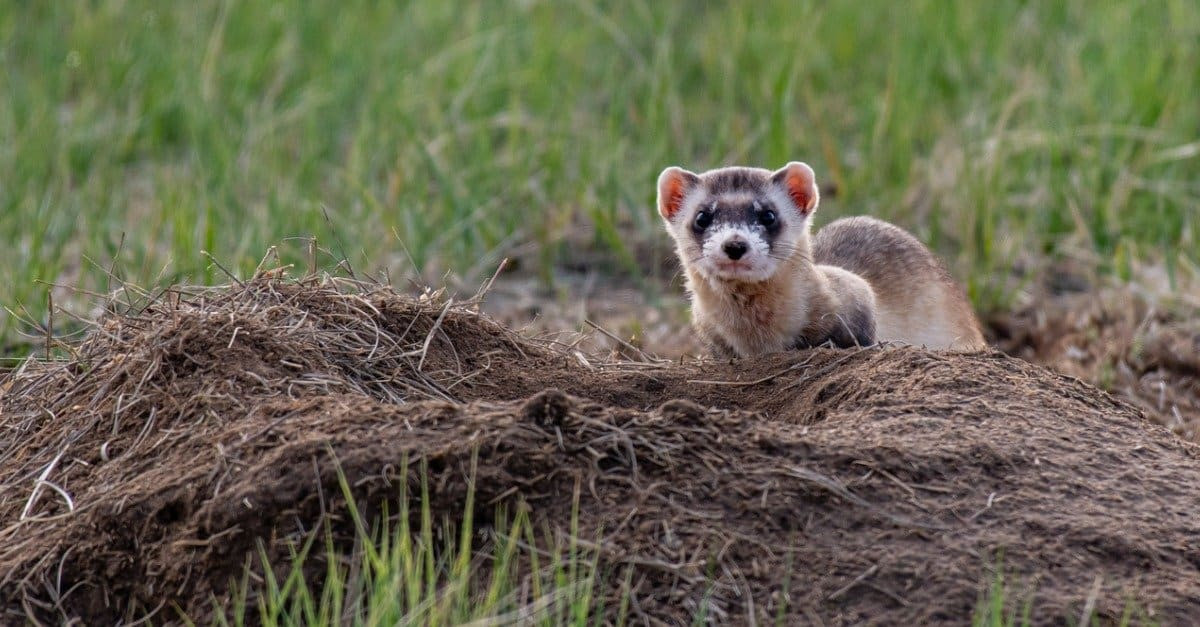
The black-footed ferret's decline was tied closely to another animal of the grasslands. Around 90 percent of its diet consists of prairie dogs, and the ferret also depends on prairie dog tunnels for shelter and for raising young. When prairie dogs disappeared from large parts of the landscape, ferrets lost both food and homes.
The species had once been far more common. It is believed that tens of thousands of black-footed ferrets lived across the Great Plains. But over time, prairie dog habitat was turned into farmland and urban areas. As the land changed, prairie dogs were often treated as pests, and poison was used against them. Their numbers dropped sharply.
That rippled directly into the ferret population. Without prairie dogs to hunt and without burrows to use, black-footed ferrets declined dramatically. The same land taken from prairie dogs was also lost to ferrets, leaving them with fewer places to hide from predators and from the elements.
Disease made a bad situation worse. According to the Institute for Environmental Research and Education, black-footed ferrets became vulnerable to illnesses including canine distemper and sylvatic plague. The report describes weakened immune systems tied to a lack of proper nutrition and shelter. Large numbers of ferrets were lost, speeding the fall of a species that had once been widespread.
By the time Shep's discovery put black-footed ferrets back on the map, the species was already down to a level that would have sounded impossible only a short time earlier.
From 18 survivors to a breeding lifeline
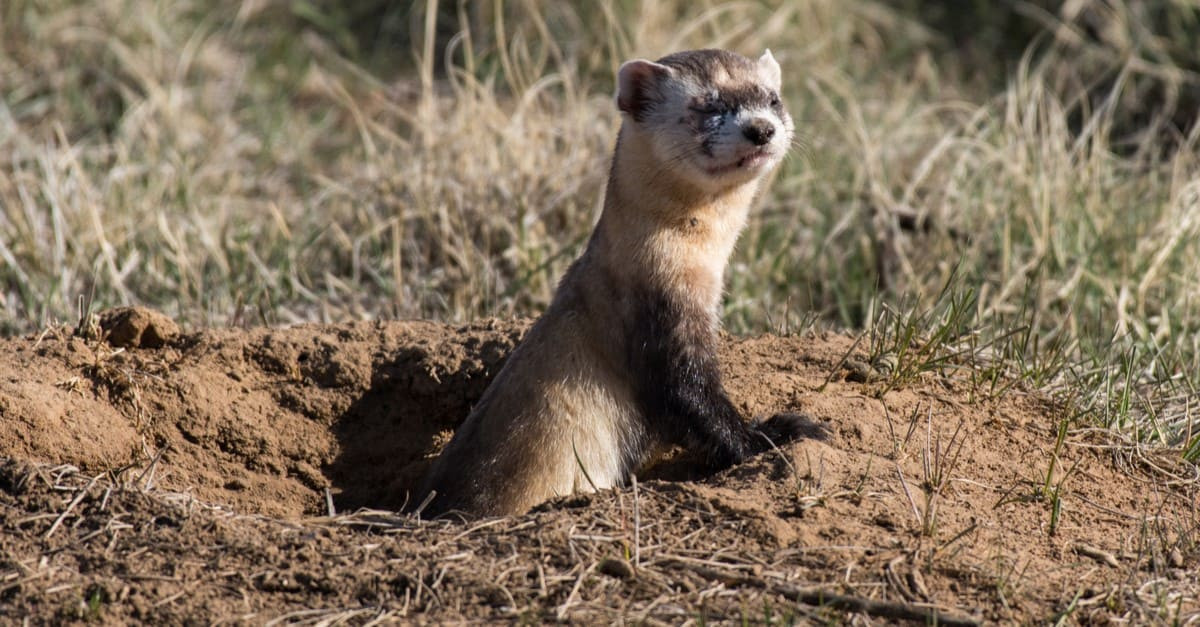
After the Wyoming population was found, biologists were faced with a difficult reality. The ferrets on the ranch were not secure in the wild. Because the remaining group was declining from disease, officials decided to bring the last 18 black-footed ferrets into a captive breeding program.
That choice is the reason the species still exists. Every black-footed ferret alive now descends from those 18 animals. What looked like a final emergency move became the starting point for a long recovery effort.
The work did not stop with breeding alone. Conservationists had to raise ferrets for release in ways that would give them a real chance outdoors. These are predators, not pets, and they cannot simply be set down in open country and expected to figure everything out.
That reality is clear in the preparation now used before releases. The goal is not only to increase numbers on paper, but to rebuild populations that can live on their own. That means choosing the right landscapes, reducing disease risk, and making sure captive-bred ferrets still know how to behave like wild animals.
The species remains endangered, but the line from Shep's discovery to today's recovery work is direct. Without those 18 survivors, there would be no current release program to talk about.
Why ferrets are going back, and why that matters
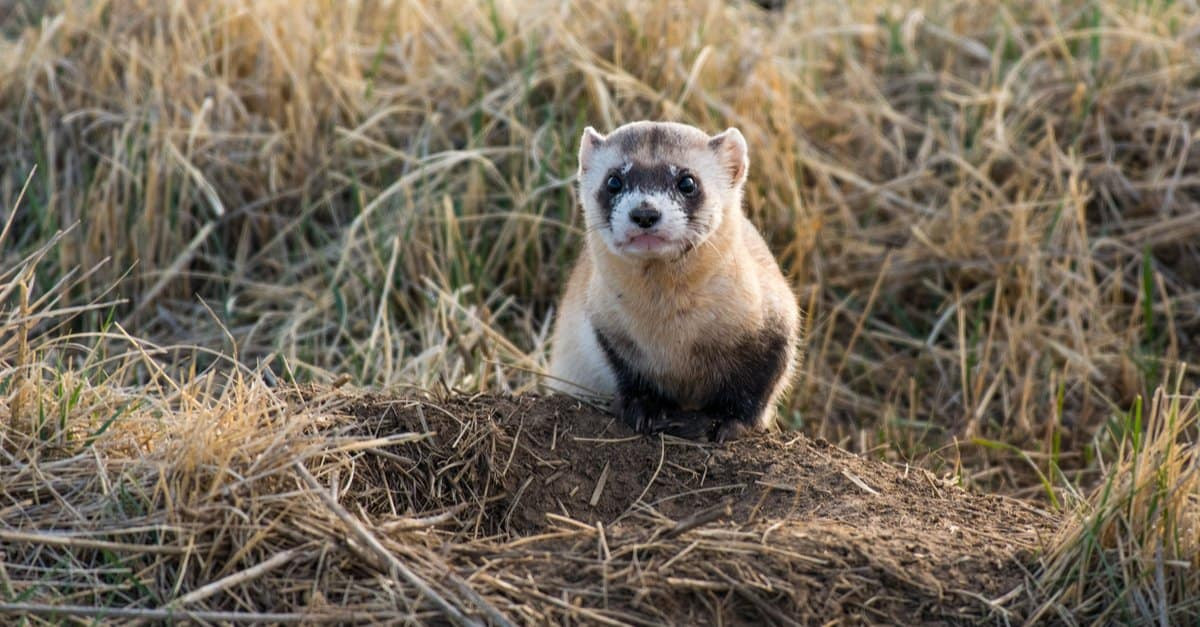
That long effort has now reached Northern Arizona. A group of endangered black-footed ferrets has been returned to the region's wildlands in hopes of growing the population to the point that the species is no longer threatened.
It was announced that 18 captive-bred black-footed ferrets were flown from the National Black-footed Ferret Conservation Center in Colorado to Arizona for release. On September 14, the animals were released in Grand Prairie and Aubrey Valley, in Yavapai and Coconino counties.
The release sites were not chosen at random. The areas are protected and already have established prairie dog populations, which black-footed ferrets need in order to survive. Before release, the ferrets spent 30 days in outdoor pens. During that period, they learned how to burrow and hunt prairie dogs. They also received vaccines meant to prevent and reduce the spread of canine distemper and plague.
Biologists and volunteers plan to survey the population in the fall, counting both individual ferrets and the number of offspring. The immediate aim is to build a self-sustaining population in the wild. But the larger reason for bringing ferrets back goes beyond the species itself.
Black-footed ferrets are considered a keystone predator. Their absence altered the ecosystem in ways that spread outward. When people removed black-footed ferrets from their habitats, the report says the ecosystem collapsed. As the ferrets disappeared in the late 1970s and 1980s, prairie dog populations that remained, despite habitat loss, became severely overpopulated, which degraded grasslands.
Other changes followed. Coyotes, foxes, and other predators turned to prairie dogs, adding more imbalance to the system. Scavengers also lost a food source because black-footed ferrets left carcasses behind for them. Without ferrets in the landscape, scavenging animals had a harder time finding their next meal.
So the story that began with a ranch dog and an unidentified animal is not only about one rare member of the weasel family. It is also about grasslands, prairie dogs, predators, scavengers, and the effort to put a missing piece back where it belongs. Shep did not know any of that when he made his discovery. But the species that was once thought gone is still here, and black-footed ferrets are back in the wild because people were able to act on what he brought home.
Share this article:





