Bruce the Rescue Cat Went From Shelter Gloom to Foot-Hugging House Cat in One Very Sweet Ride Home

The moment that sells Bruce's whole story is not the trip home. It is the nap at the end of it, when the newly adopted cat finally gives in, settles down, and falls asleep hugging his person's foot. For cat people, that tiny act says everything. A cat who arrived from a shelter introduced as its saddest resident was suddenly acting like he had already picked his person, his couch spot, and his safest place in the world.
From carrier door to couch companion
Bruce appears in an Instagram video shared by @mrwillisthecat, an account devoted to the antics of the self-described "Retired tomcat." The clip follows the simple, emotional arc cat lovers know well: a shelter pickup, a ride to a new place, and the first careful moments inside a home that is about to become his.
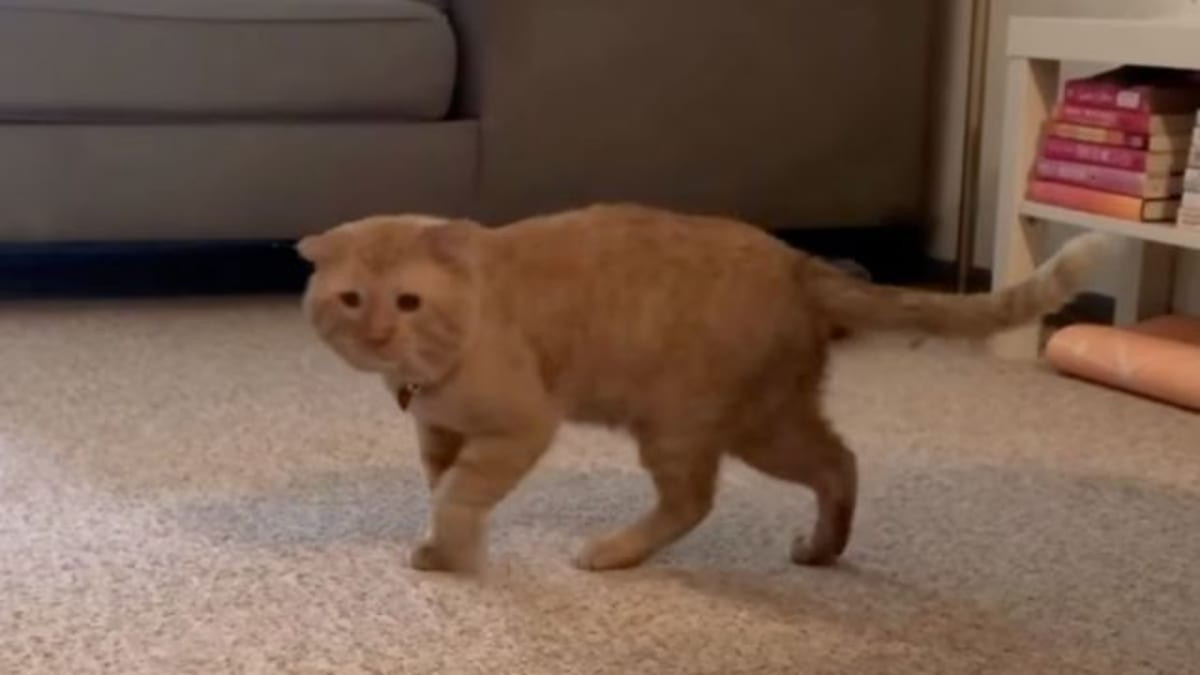
At the shelter, Bruce is shown in a carrier while his new owner talks to him and asks if he knows what home is. Once they arrive, she gets ready to open the door and welcomes him in by name. Bruce steps into the space and looks around as she tells him that this is home now.
What happens next is the part that turned the video into such a hit. His owner says they had only been home for half an hour, and Bruce was already refusing to be away from her. He ends up beside her on the couch, pressing himself toward her hand for affection, then dozing off on her feet.
A first night full of purrs, and millions watching
The post's caption looks back on that arrival day and sums it up in the way many adopters would understand instantly: Bruce seemed overjoyed. His owner wrote that she had never seen a happier cat, and said he spent the whole night purring before falling asleep while clutching her foot.
That combination of relief, closeness, and instant attachment clearly struck a nerve online. The video has drawn more than 41 million views and over 4 million likes. In the comments, viewers celebrated the change in Bruce, with one person writing that he did not look sad anymore, while another called him a big softie.
There is no grand twist here, which may be part of why the video lands so well. Bruce gets a home. He stays close. He leans into a hand. He purrs himself to sleep. For anyone who loves rescue cats, it is a small domestic scene that feels huge: one cat, one open carrier door, and a brand-new life that starts with a cuddle.
Why shelter cats can seem shut down
Many cats act unlike themselves in a shelter. Strange smells, noise, new routines, unfamiliar people, and limited hiding spots can push a cat into stress mode. Some become quiet and withdrawn. Others pace, freeze, overgroom, growl, or seem unusually clingy. None of that automatically reflects their long term personality.
Once a cat reaches a calmer home, behavior often changes quickly or gradually. A cat that looked gloomy may start exploring, seeking touch, or sleeping deeply for the first time in a while. The most useful approach is to treat the first days as a decompression period, not a personality test.
The ride home and the first room
The trip home matters. A sturdy carrier with a towel inside helps a cat feel enclosed and secure. Covering part of the carrier can reduce visual overload. Keep the car quiet, avoid opening the carrier, and go straight home if possible.
Set up one small room first. Include water, food, litter, a bed, and a hiding place that is safe and easy to monitor, such as a box or covered bed. Let the cat choose whether to come out. Sitting on the floor, speaking softly, and blinking slowly can be less intimidating than reaching in for contact. Keep children, guests, and other pets out at first. Routine helps, so feed, clean, and visit on a predictable schedule.
What affectionate foot behavior can mean
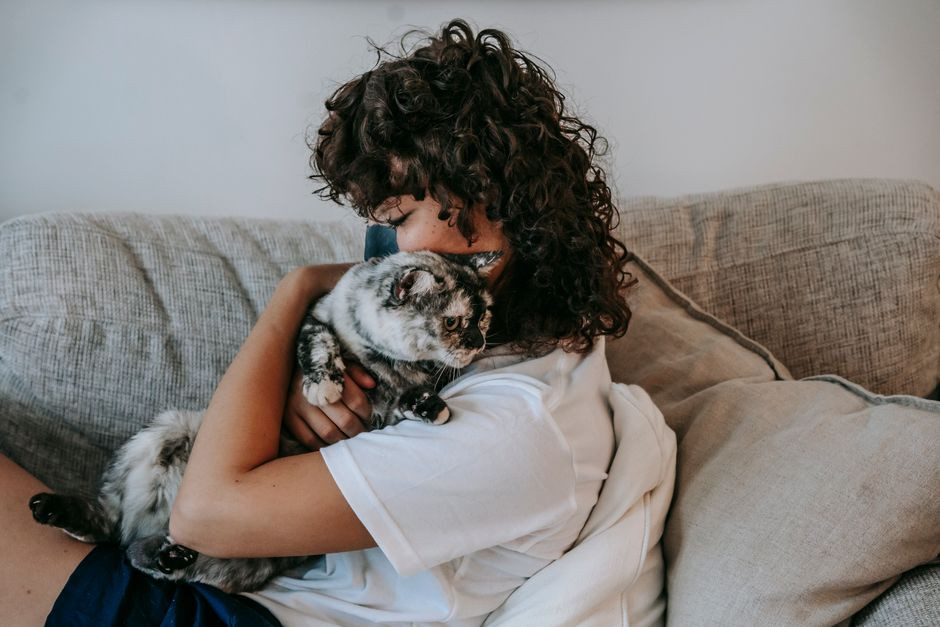
When a cat leans on feet, circles ankles, or wraps paws around a leg, it is often a social and scent sharing behavior. Cats have scent glands around the face and body, and rubbing helps mark familiar beings and spaces as safe. It can also be a bid for attention, play, or food, so context matters.
If a newly adopted cat is seeking contact, respond calmly. Offer a hand at nose level, pet the cheeks or shoulders if the cat seems relaxed, and stop before the cat gets overstimulated. Watch body language: loose posture, soft eyes, and an upright tail usually suggest comfort. Flattened ears, twitching skin, tail lashing, or sudden turning away mean give space. If the cat hides for longer than expected, stops eating, or seems unwell, contact a veterinarian for guidance.
Share this article: