Animal-Hoarding Redditor Wants To Rehome Dogs But Not Cats, Gets Threatened Physically By Sister To Let The Kittens Go

A 28-year-old Redditor is trying to claw their way out of animal overload, and it turns into a family nightmare fast. They’ve got nine animals in their care, and the dogs are the breaking point. So OP starts looking for a way to rehome the dogs, hoping it will finally make things manageable.
But their sister is not having it. She’s demanding that OP rehome the cats too, claiming the cats will make everyone in her house sick. Then the argument escalates, mom steps in to cool things down, and the sister still follows through with a physical threat, giving OP a deadline to surrender at least one cat.
Now OP is left trying to figure out how to save the dogs they can’t keep, while dodging threats over kittens they never planned to give up.
The story in detail...

OP has 9 animals in their care including cats and dogs. They're desperately looking for how to rehome the dogs, as it's too much to handle
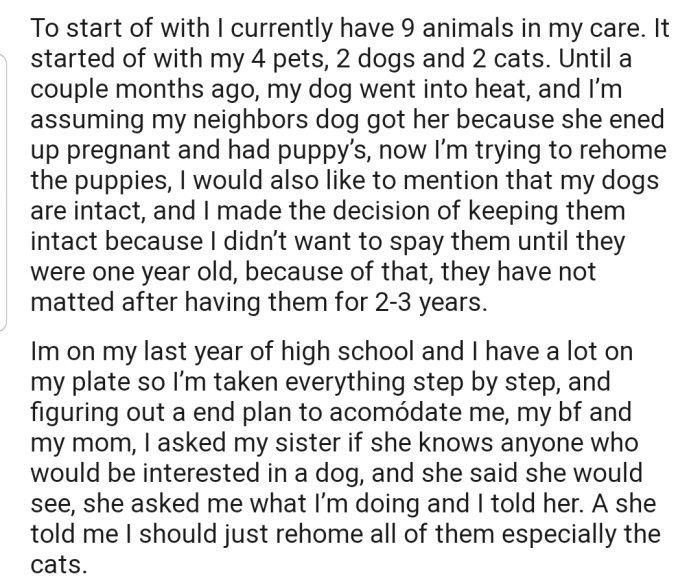
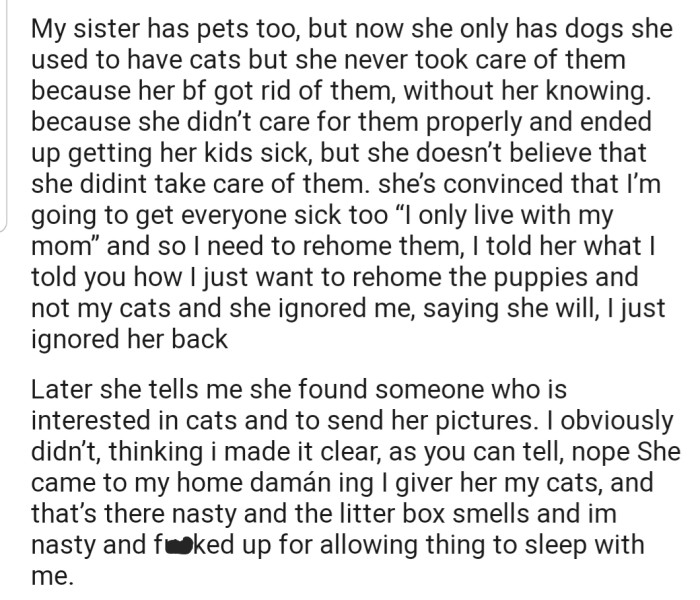
Despite OP making it clear that they want to rehome only the dogs, their sister is insisting that they rehome the cats as well. Her reason is that the cats would get everyone who stays in her house sick
Animal hoarding is a complex psychological issue often rooted in deep-seated emotional struggles. Individuals who hoard animals often experience feelings of isolation, low self-esteem, and a strong need for control. This behavior can lead to neglect and an inability to provide adequate care for the animals involved, creating a cycle of distress.
Understanding these underlying motivations is crucial for addressing the behavior effectively.
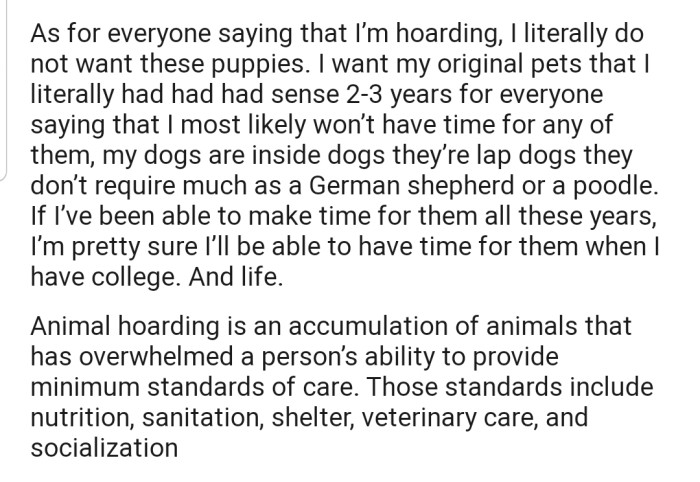
OP lays out that they’re drowning with nine animals total, and the dogs are the main problem they need to rehome first.
The Complex Psychology of Animal Hoarding
Animal hoarding often stems from deep-seated emotional issues, such as unresolved trauma or anxiety disorders.
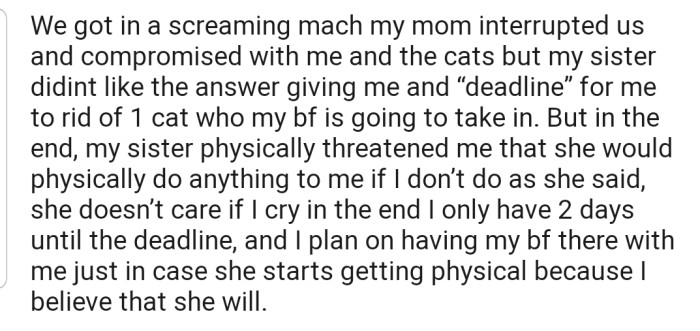
OP and their sister got into a heated argument, which was later quelled by their mom. However, OP's sister still went ahead to threaten them physically if they didn't rehome at least one cat before her "deadline"
A little more insight on the situation

It goes on...
A study published in the Journal of Clinical Psychology found that individuals who hoard animals often have difficulty recognizing the impact of their behaviors on their well-being and the welfare of the animals. This lack of insight can complicate interventions and support efforts, often requiring specialized therapeutic approaches.
Addressing the emotional needs of the individual is essential to breaking this cycle.
A study published in the Journal of Mental Health reveals that interventions focusing on emotional regulation and cognitive-behavioral strategies can significantly improve outcomes for individuals struggling with animal hoarding.
Such interventions encourage individuals to confront the underlying feelings of inadequacy and fear of loss that drive their behavior, allowing for healthier relationships with animals and people alike.
The sister jumps in with the “cats will get everyone sick” argument, even though OP keeps insisting it’s only the dogs.
Here's how the Reddit community reacted to the story:
This Redditor is accusing OP of hoarding and abusing animals
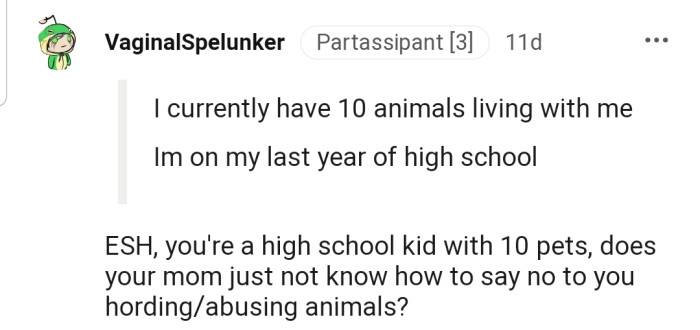
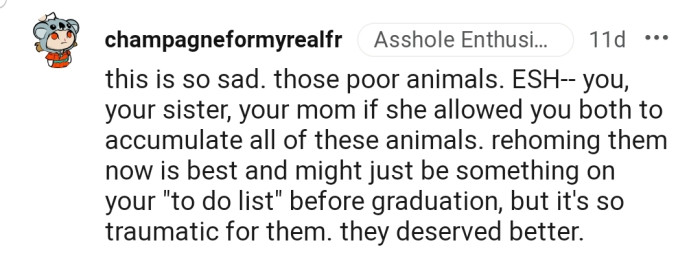
"ESH-- you, your sister, your mom if she allowed you both to accumulate all of these animals."
"You really need to reduce the number of animals you have. 10 is too many."

The situation unfolding with the Redditor reveals the complexities of animal hoarding and the emotional entanglements that can arise. The desire to rehome dogs while holding onto cats illustrates a selective attachment that often complicates interventions. A compassionate approach is essential to guide individuals like this Redditor toward a healthier perspective on pet ownership.
Collaboration with animal welfare organizations could prove vital here, as they can offer the necessary resources not just for the animals but for the individual grappling with their situation. Establishing trust is key in these delicate scenarios, allowing for open discussions about the emotional challenges at play and facilitating a pathway to change.
The tension between the Redditor and her sister illustrates common family dynamics in hoarding situations, where differing perspectives on responsibility and care often lead to conflict.
It’s crucial for family members to develop a shared understanding of the hoarding behavior to foster constructive communication and collaborative problem-solving.
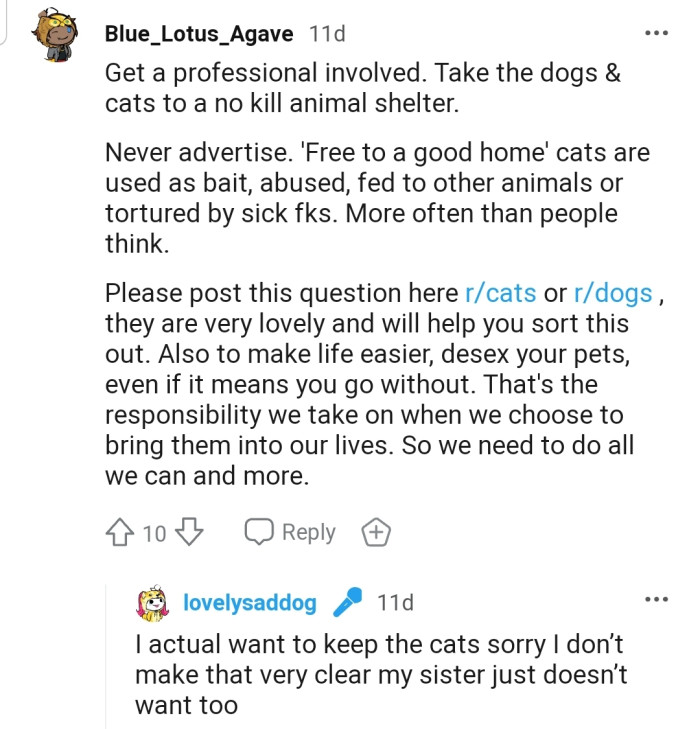
"Get a professional involved. Take the dogs & cats to a no-kill animal shelter."
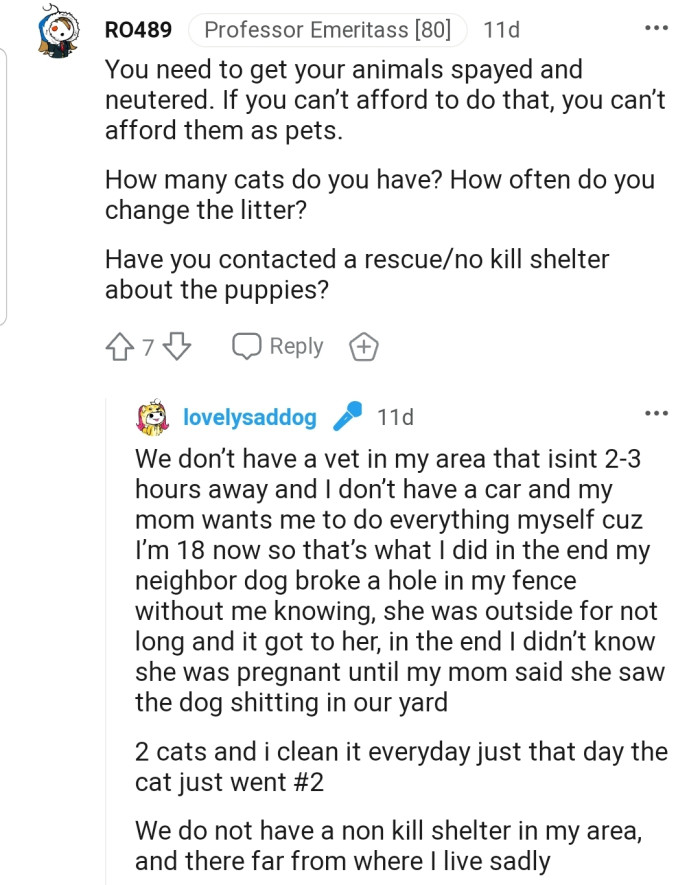
"You need to get your animals spayed and neutered. If you can’t afford to do that, you can’t afford them as pets."
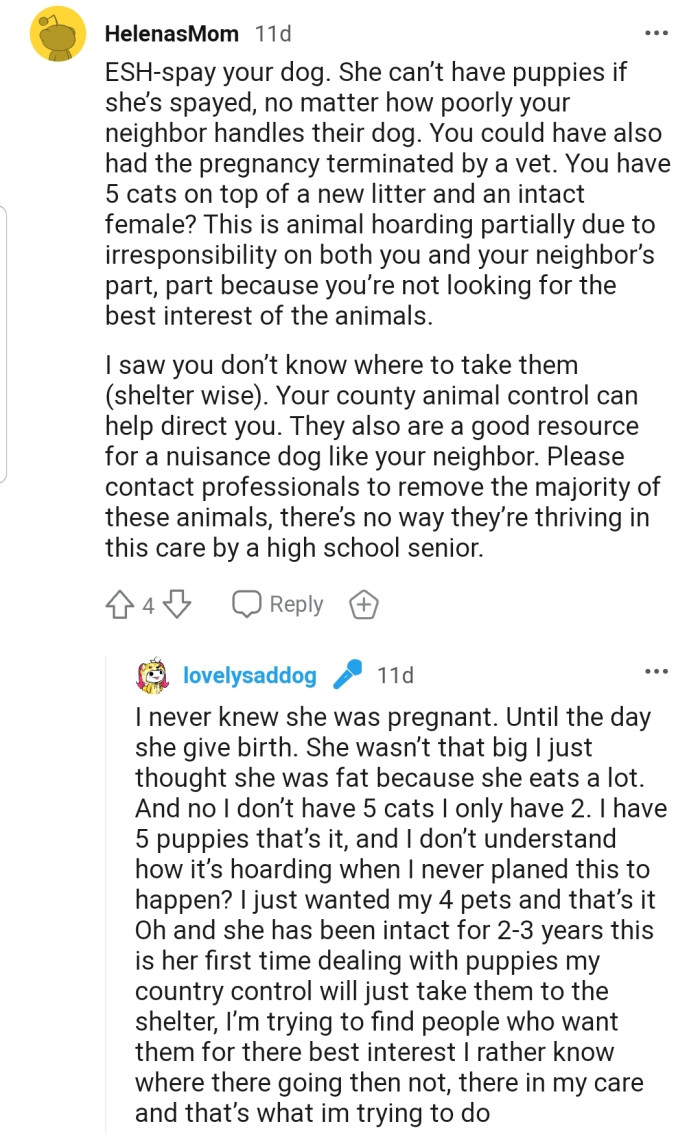
"This is animal hoarding, partially due to irresponsibility on both you and your neighbor’s part."
After mom shuts the fight down, the sister still comes back with a physical threat and a deadline to get at least one cat out of OP’s care.
Moreover, therapy can play a significant role in addressing the underlying psychological issues associated with animal hoarding. Cognitive-behavioral therapy (CBT) has been shown to be effective in helping individuals explore their thoughts and behaviors, leading to healthier coping strategies.
Involving family members in the therapeutic process can also provide additional support and understanding.
Practical solutions include initiating family meetings with the guidance of a trained therapist who specializes in hoarding behaviors.
Establishing a safe space for open dialogue can help address underlying fears and responsibilities without escalating into threats or confrontations.
Moreover, involving animal welfare organizations can provide additional resources and support, easing the burden on the individual while ensuring the animals are cared for appropriately.
"YTA for being irresponsible and having an intact female dog you didn't supervise."

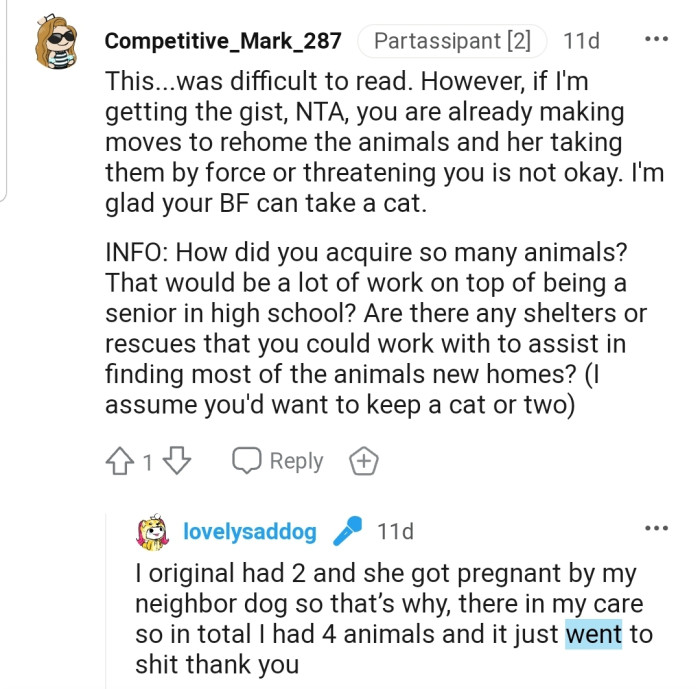
"NTA, you are already making moves to rehome the animals, and her taking them by force or threatening you is not okay."
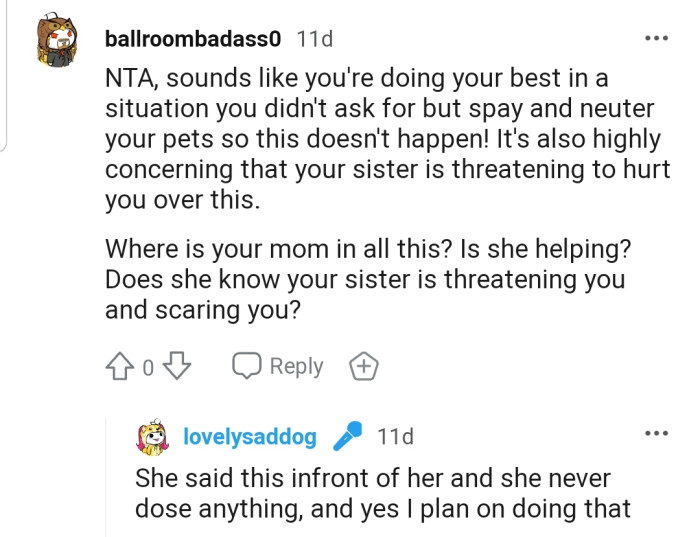
"NTA, sounds like you're doing your best in a situation you didn't ask for, but spay and neuter your pets so this doesn't happen!"
The whole situation turns into a desperate scramble where OP’s rehoming plan gets hijacked by the sister’s demands and intimidation.
The complex family dynamics at play in this situation reveal how crucial support systems can be in addressing animal hoarding. The Redditor's sister's physical threats highlight a more troubling aspect of family relationships where confrontation replaces communication. Instead of fostering an open dialogue about the challenges of rehoming pets, the sister's aggressive stance may exacerbate the hoarding behavior, pushing the Redditor further into a corner. Establishing a nurturing environment where feelings can be expressed without fear is essential. A healthier approach could lead to a more constructive resolution for the pets involved and the family as a whole.
"It seems that your sister wants to take your cats because those are the same animals she lost."
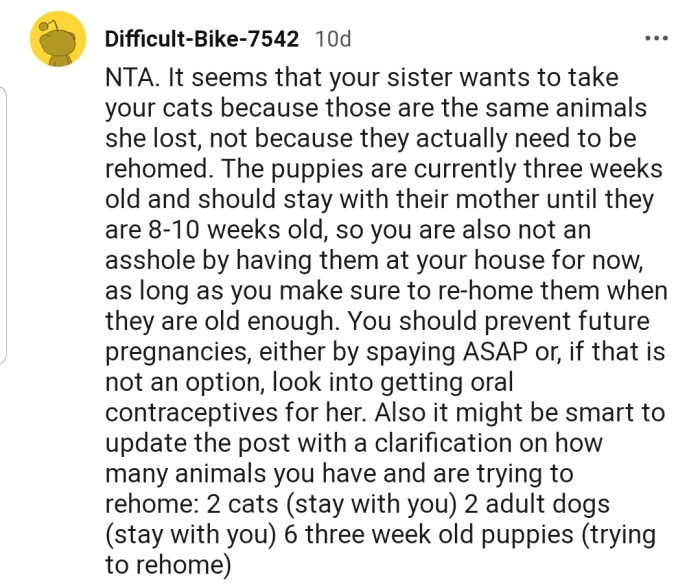
The commenters gave their verdict, and it’s ESH. We bet that’s not the verdict OP was hoping for. However, they don’t agree with OP’s sister’s methods.
Do you agree with the verdict? Let us know in the comments below!
The case of the Redditor struggling with the decision to rehome dogs while refusing to let go of cats sheds light on the intricate psychological dynamics of animal hoarding. This situation illustrates that simply wanting to relinquish animals is not a straightforward task. The emotional attachment to pets, particularly in this case, demonstrates a deep-seated connection that complicates the process of rehoming. The physical threat from the sister to let go of the kittens underscores the familial tensions often surrounding such situations, revealing how emotions can escalate when animal welfare is at stake.
A nuanced approach is essential when addressing these complex issues. It is crucial to provide support and education to help individuals navigate their feelings and responsibilities toward their pets. Tailoring interventions to the unique circumstances of the individual can foster meaningful change, allowing for healthier relationships with animals and family members alike. The Redditor's predicament serves as a reminder of the challenges faced by those who hoard animals and the importance of understanding these psychological roots in finding effective solutions.
The situation unfolding with the Redditor seeking to rehome dogs while clinging to cats underscores the complexities of animal hoarding. This case reveals a deep emotional attachment that complicates the decision-making process regarding pet ownership. The tension escalates when a sister resorts to physical threats to encourage the rehoming of the kittens, illustrating the strain that such dynamics can place on family relationships. It is crucial to recognize that these scenarios often stem from underlying psychological factors that necessitate understanding and compassion. By fostering open dialogue and collaboration, families can better navigate the intricate challenges that arise in cases of animal hoarding, ultimately leading to healthier outcomes for both pets and their owners.
That family dinner went bad, and now OP’s rehoming choices are shaped by threats, not compassion.
For another “I didn’t want the cat” fight, read what happened after the family dumped responsibilities on a child.
Share this article: