Scientists Find That Bee Royalty Depends on Architecture as Much as Nutrition

Bees have always sounded like tiny workers with big responsibilities, but this new research turns that idea inside out. Royal “status” in a hive is not just a food issue, it is also an architecture issue, and the building itself rewires who gets to become queen.
Here’s the twist: the workers who build the royal chambers are not some pre-programmed royal class. They are ordinary young workers who temporarily crank their body heat above 39 degrees Celsius, basically running a sustained fever to produce royal wax with the right properties. Then their gene expression shifts to match the job, and the larva inside gets the cue to change its destiny.
And once you see how the wax and temperature act like a biological switch, the “who becomes queen” question gets a whole lot weirder.
Worker Bees as Royal Wax Builders
The bees tasked with building these royal chambers are themselves extraordinary—not because they belong to a specialized caste, but precisely because they do not. These are ordinary young worker bees who temporarily rewire their own biology to meet the demands of the job.
To shape the high-melting-point royal wax, they elevate their thoracic temperature to above 39 degrees Celsius, effectively running a sustained fever in service of the hive's future. Their gene expression shifts accordingly, then returns to baseline once the work is done. They are, in the most literal sense, the hive's emergency architects.
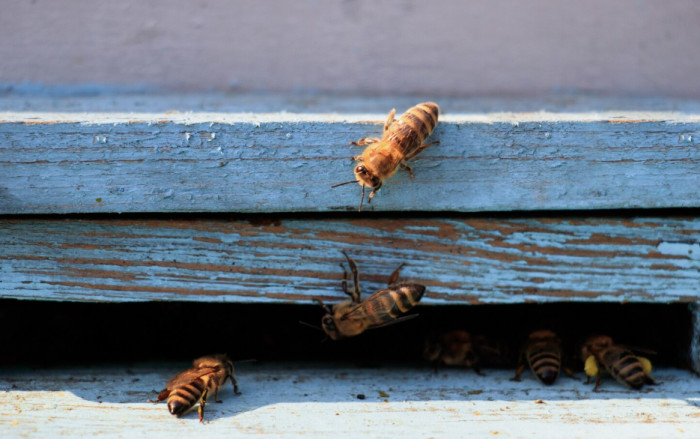
The whole thing kicks off when those young worker bees step in as “emergency architects,” heating themselves up and reshaping their gene expression just to build royal chambers.
What this research dismantles is a concept scientists call nutritional determinism—the assumption that food alone shapes biological destiny in the hive. That assumption, researchers now concede, was built on an incomplete picture.
The next challenge is identifying which precise element of the royal wax—a specific molecule, a particular physical texture—sends the signal that flips a larva's developmental trajectory from worker to queen. Knowing which chemical whispers "you are the chosen one" to a larva's DNA would be a discovery with consequences far beyond apiculture.
It gets complicated fast because the usual story that nutrition alone decides everything, nutritional determinism, suddenly looks incomplete.
The Unexpected Role of Temperature
This new study flips the script on how we think about bee society.
This bee “royal wax” fever is just as wild as the 99-million-year-old amber creature scientists unearthed.
What Hive Structure Reveals About Social Insects
The implications reach into the broader world of social insects. If a honeybee colony functions as what researchers describe as a "superorganism"—a collective organism where individual bees act as cells in a larger body—then termite mounds, wasp nests, and ant colonies may operate on similar principles. The structure itself may be doing biological work that science has not yet measured.
For beekeepers, the practical stakes are immediate. Queen health determines colony strength, and colony strength underpins the pollination of more than 80 major agricultural crops globally. Understanding how nature engineers a high-quality queen from scratch offers a blueprint for doing it better.
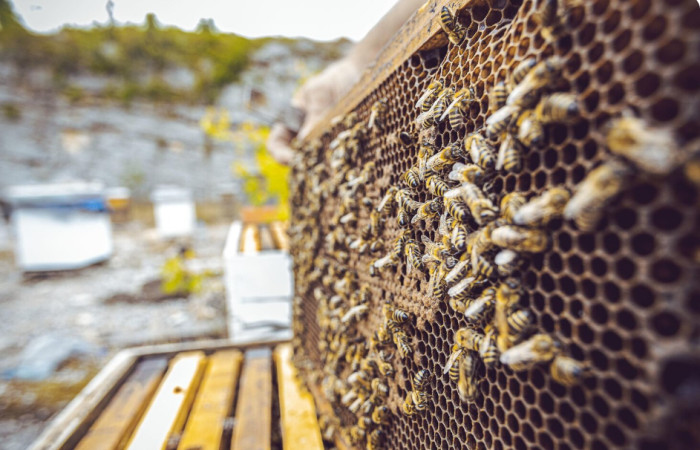
Then the researchers zero in on what the hive structure is doing, because the next mystery is which molecule or wax texture sends the larva the “you’re queen” signal.
This discovery reframes our understanding of the relationship between environment and biology in one of nature's most studied communities. The honeybee colony has always been held up as a marvel of collective intelligence, but science is only now grasping how deeply that intelligence is embedded in the colony's physical fabric—in its wax, its warmth, its chemistry.
A larva does not simply eat her way to greatness. She is shaped by the room built around her, by bees who burn with purpose to give her one. Destiny, it seems, has always had an address.
For beekeepers, this isn’t just trivia, queen health means colony strength, and colony strength is what keeps pollination rolling for dozens of major crops.
Rethinking Royal Jelly's Role
The article challenges the long-held belief that royal jelly alone is the key to bee royalty. While this substance has been revered for its nutritional properties, the findings suggest it’s only part of a much larger narrative. This raises questions about how we’ve understood the roles of different factors in biological hierarchies. If architecture and temperature are just as important, what does that say about our assumptions in other areas of science and nature?
This could lead to a shift in beekeeping practices and how we approach the study of entomology. The implications of these findings could resonate beyond bees, prompting a reevaluation of how we understand growth and development across species, including humans. It’s a reminder that sometimes, the environment shapes destiny as much as the resources we provide.
This study on the intricate dynamics of bee society underscores how multifaceted the concept of leadership can be, whether in hives or human communities. The interplay between nutrition, architecture, and even temperature invites us to rethink our assumptions about what makes a leader. As science continues to uncover the layers of complexity in nature, what other long-standing beliefs might we need to reevaluate? How do you think these findings might influence our understanding of leadership in our own lives?
The hive doesn’t just feed queens, it builds them.
Next, see how a rare ant colony on King Charles' Balmoral estate sparked Cairngorm conservation hopes.
Share this article: