
Blind Terrier Glenn Needs His Best Friend Buzz by His Side for a Forever Home

Glenn cannot see at all, but he is not facing life alone. The 10-year-old Jack Russell terrier depends on Buzz, a 9-year-old Staffordshire Bull Terrier, and the rescue looking after them says their next home needs to welcome both dogs together.
The bond between Glenn and Buzz became impossible to miss after the two dogs were rescued together from a sea tunnel in Hartlepool, England. What began as a rescue soon turned into a story about deep dependence, with staff at Stray Aid Rescue realizing that Glenn and Buzz are far more than kennel mates.
According to Sue Bielby of Stray Aid Rescue, Buzz functions as Glenn’s eyes. Glenn is completely blind, and Buzz stays close in a way that helps him manage the world around him. Bielby said Glenn draws his confidence from Buzz, a detail that helps explain why the pair have made such an impression on the people caring for them.
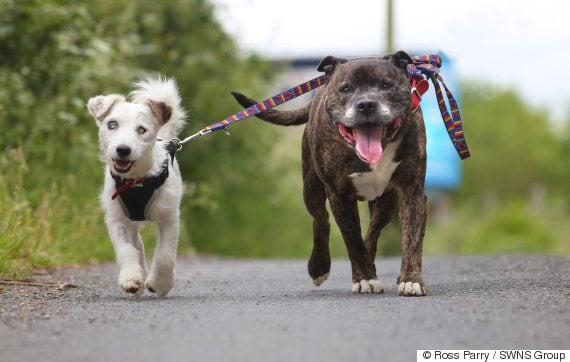
Why they must stay together
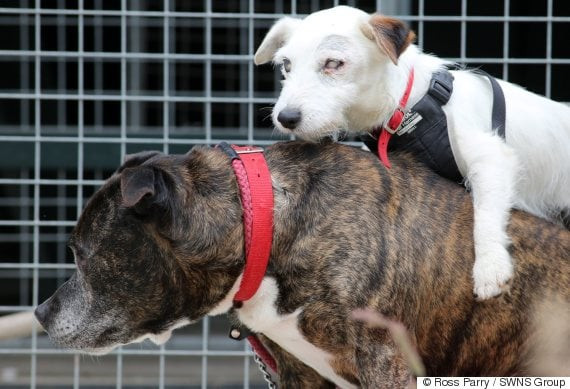
For dog lovers, the most moving part of Glenn and Buzz’s story may be how clear their attachment becomes the moment they are apart. Bielby said that if the dogs are separated even for a few minutes, both of them become inconsolable.
That is why the rescue is determined to find one forever home for the pair instead of placing them separately. Glenn may be the dog without sight, but his story is really about partnership. Buzz has taken on the role of guide, and Glenn leans on him for reassurance as much as direction.
Their photos have already been winning people over, but the real hope is simple: that someone sees not just two rescue dogs, but a ready-made duo whose lives work best side by side. For Glenn, home means safety. For Buzz, home means staying with the friend who needs him. For the rescue trying to place them, those two things are one and the same.
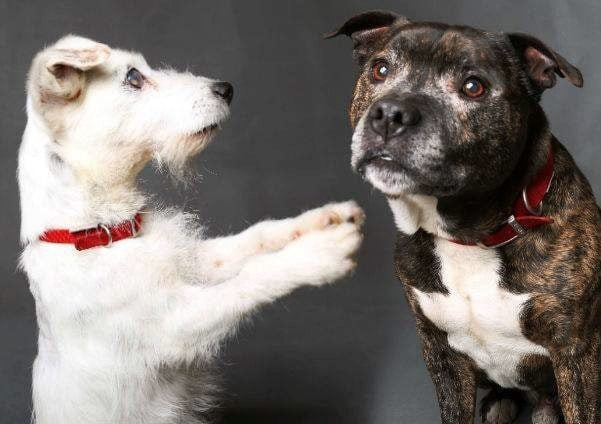
What a bonded pair means
Some dogs form unusually strong attachments to one another. In rescue settings, these are often called bonded pairs. The relationship can look like shared sleeping, grooming, following, play rituals, and visible stress when separated. Sometimes one dog is the confident navigator and the other takes social cues from them.
Keeping bonded dogs together can make settling into a new home easier, especially if one is elderly, anxious, disabled, or recovering from upheaval. If you are considering a pair, ask how they behave when apart, whether they eat and walk separately, and whether both are comfortable with people. A true bond is not the same as two dogs who simply tolerate each other, so it helps to get a clear picture of what each dog needs.
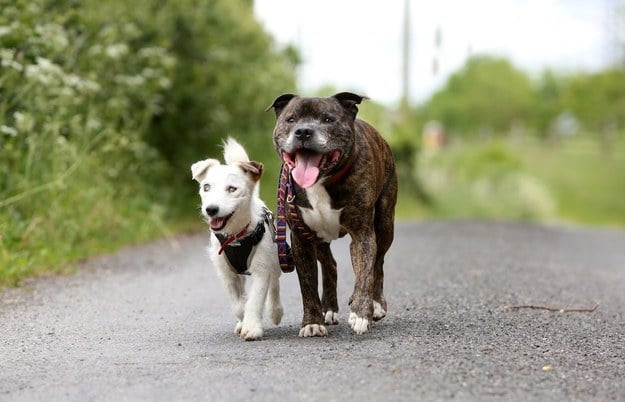
How blind dogs adapt
Blind dogs can live full, happy lives because they rely heavily on smell, hearing, memory, and routine. Most map their home quickly if the layout stays consistent. Furniture should stay in place, hazards should be blocked off, and stairs, pools, and sharp corners deserve special attention. Textured mats, scent markers, and verbal cues such as stop, step, left, and easy can help a dog move confidently.
A sighted companion can also act as a guide by providing reassurance and a predictable presence. That does not replace training. Leash walks should be calm and structured, and introductions to new spaces should happen slowly. Toys that make noise, food puzzles, and scent games are often especially useful for enrichment.
Questions to ask before bringing one home
Adopting a special-needs dog or a bonded pair is often less about perfection and more about planning. Ask about daily routines, medications, house training, sleep habits, and how the dogs cope with strangers, children, and other animals. Find out whether both dogs can be left alone together, whether they need separate feeding, and what signs of stress to watch for.
At home, start with a quiet area, short decompression periods, and predictable schedules for meals, walks, and rest. Use gates and clear pathways instead of constant handling. If you already have pets, do gradual introductions on neutral ground when possible. A good rescue or foster contact should be able to describe each dog’s triggers, comforts, and ideal environment in practical terms.
Share this article:





