Boyfriend Advocates For His Elderly Cat By Telling His Girlfriend She Can't Adopt A Puppy Until His Pet Crosses The Rainbow Bridge

One cat, one puppy, and one very stubborn household rule are at the center of this Reddit drama. OP says his elderly cat, Sparky, hates dogs, and that alone has turned a simple pet adoption into a relationship test.
His girlfriend has wanted a dog for years, and now that they have moved to the countryside, she thinks the timing is finally right. OP does not object to a dog in general, but he wants her to wait until Sparky, who is 14, has lived out his final years in peace.
That is where the argument starts, and it only gets messier from there. Read on to see why this couple cannot agree on what comes next.
OP says he does love his girlfriend
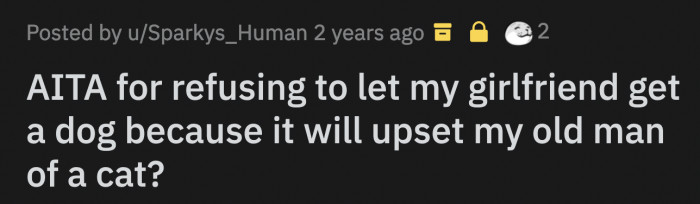
He also has no problem with her getting a dog
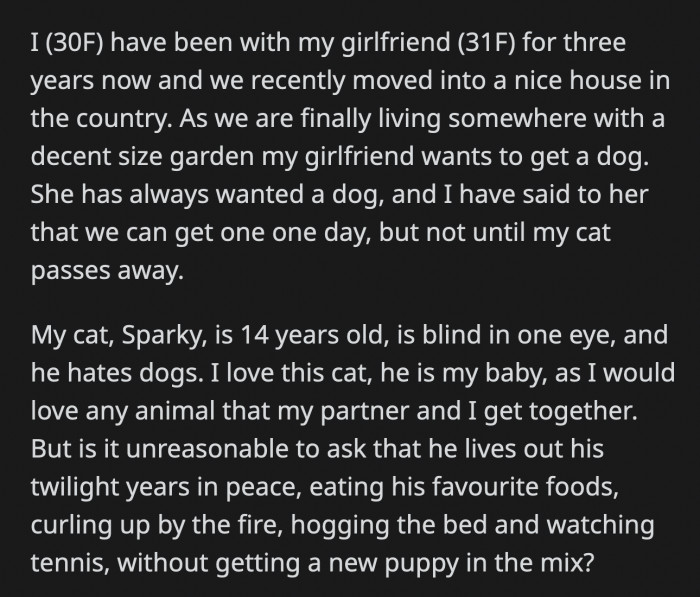
His only ask is for her to wait until old man Sparky passes away
The boyfriend's stance on prioritizing his elderly cat over adopting a puppy underscores the intricate dynamics of pet relationships and human emotions. The decision reflects a deep emotional attachment and a protective instinct towards a pet that has been a long-standing member of the household. This scenario illustrates the challenges pet owners face when contemplating changes to their furry family structure.
As highlighted in the article, the bond between humans and their pets can lead to strong feelings of loyalty, particularly when it comes to older animals that may require special care and consideration. The boyfriend’s position not only advocates for his cat's well-being but also emphasizes the importance of a stable environment for pets, which can significantly impact their health and happiness.
This scenario reflects the emotional complexities surrounding pet ownership, especially when one partner's attachment to a pet conflicts with the other's desires. Research in the field of human-animal interactions indicates that pets often become integral to our family structures, and decisions surrounding them can evoke strong emotions. The boyfriend’s insistence on prioritizing his elderly cat underscores the depth of attachment he feels, which is rooted in both love and a desire for stability.
Recognizing these emotional layers is crucial for both partners to find common ground.
If you were in OP's shoes, would you put your relationship on the line for a cat like Sparky?

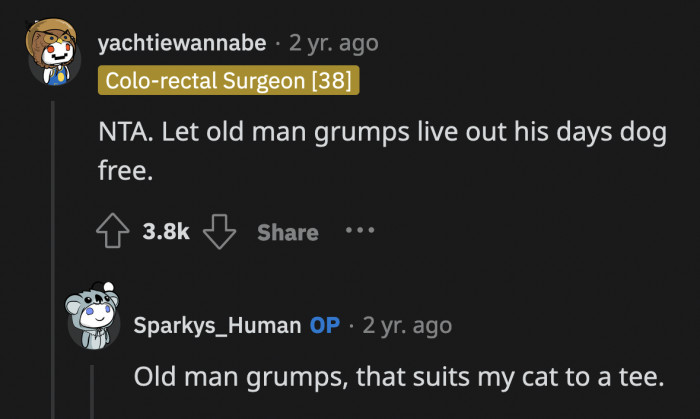
Old man grumps deserves all the peaceful and dog-free afternoons he can have
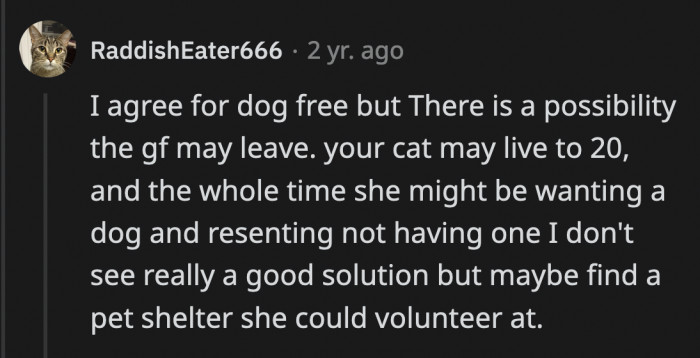
OP is a wonderful cat owner, but his girlfriend may resent him for it, especially if she can't get a dog soon
This situation also reflects the broader psychological themes of attachment and boundary-setting.
From a psychological perspective, this situation may highlight differing attachment styles between partners. The boyfriend’s protective stance regarding his cat might stem from a fear of loss, while the girlfriend’s desire to adopt a puppy could represent a longing for new experiences. Understanding these differing motivations can facilitate more empathetic discussions about shared responsibilities.
OP's girlfriend knew from the start that any additional pets she may want to adopt will have to wait until Sparky passes away
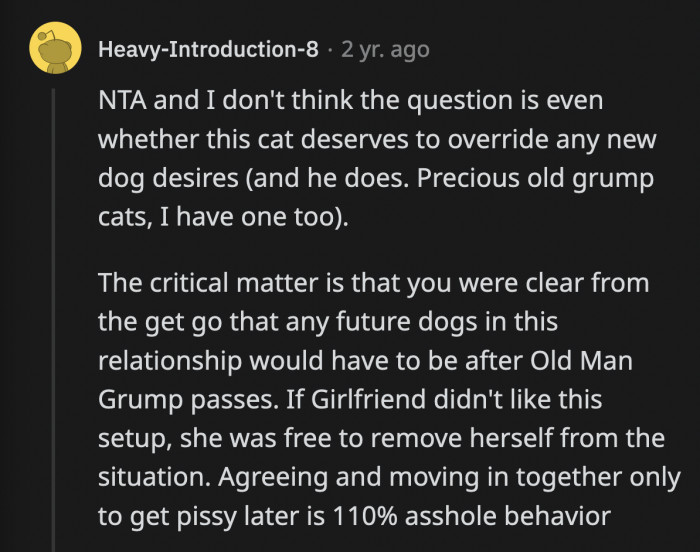
They share a home, and adopting an animal is a decision they have to make together
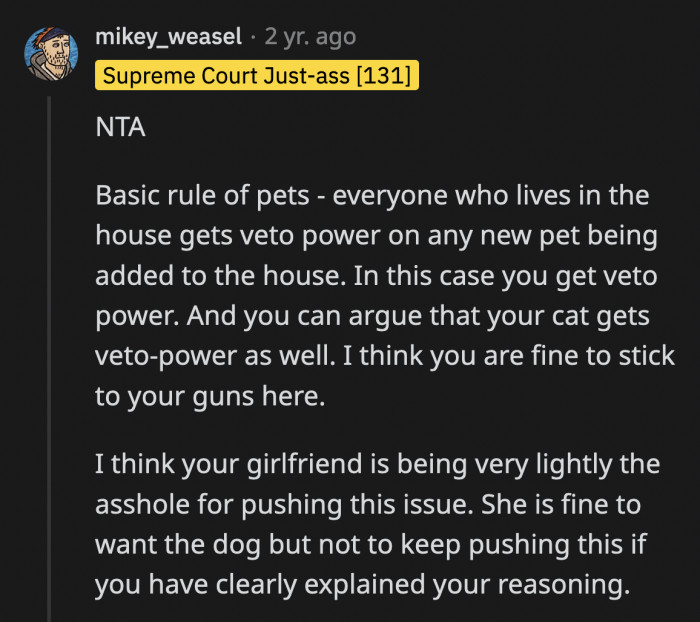
OP and his girlfriend have to prioritize the needs and safety of their existing pet as well as the new one they are planning to adopt

Effective communication strategies for pet decisions can make a big difference when a couple is split on what to do next.
For example, discussing each pet's needs and how they might coexist can help partners find a solution that respects both animals' welfare.
This is similar to the girlfriend refusing to let go of her dying cat, while her boyfriend begged to end its suffering.
Compromise is essential in navigating relationship dynamics, especially when it comes to decisions that affect both partners. In this case, both partners could benefit from discussing their feelings openly and exploring solutions that honor the boyfriend's attachment to his cat while addressing the girlfriend's desire for a puppy. This approach fosters collaboration and mutual respect, ultimately strengthening their relationship.
By focusing on shared solutions, couples can enhance their emotional connection.
Dogs and cats can learn how to get along, but there are cases where that is not possible
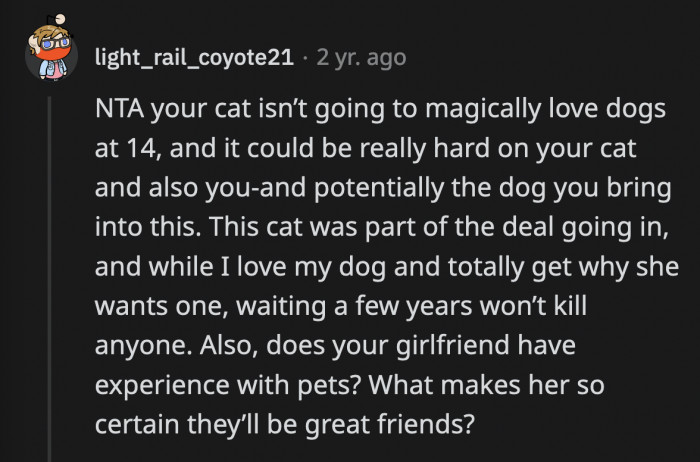
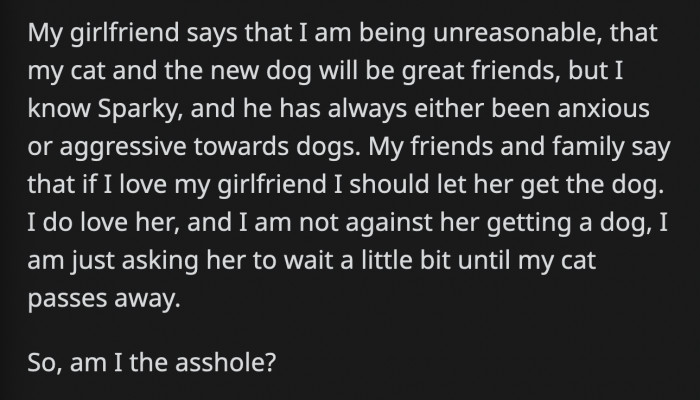
His girlfriend is convinced Sparky and the new dog will get along after watching YouTube videos where they become the best of friends, which again, will not always be the case
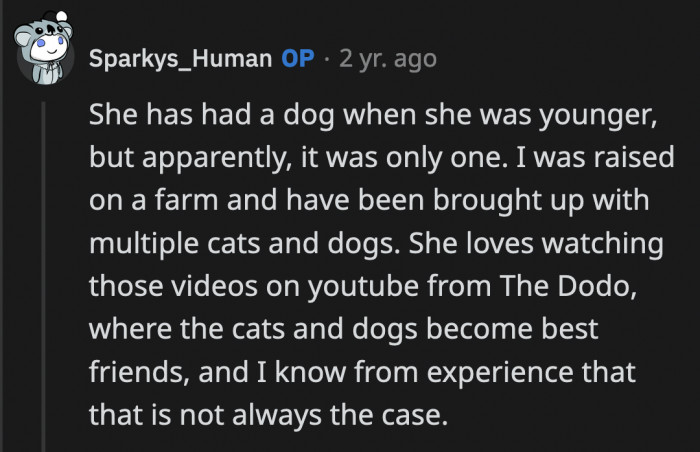
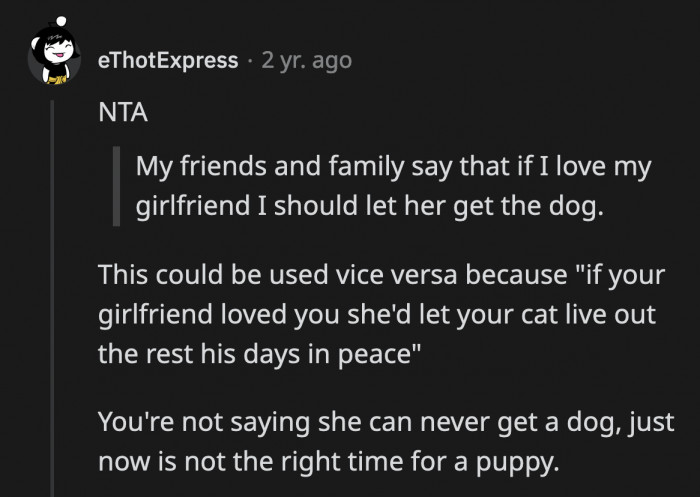
If OP's girlfriend loves him, and by extension Sparky, she will understand why OP is protecting him during the sunset of his life
Additionally, developing a shared understanding of pet care responsibilities can enhance relationship dynamics. Regular discussions about the needs of each animal can foster a sense of partnership and mutual respect.
By working together to create a plan that accommodates all pets' needs, couples can strengthen their bond while ensuring the well-being of their furry family members.
Additionally, it's important to consider the emotional needs of both partners in this scenario. Instead of issuing ultimatums, partners should create a safe space for discussing their feelings and concerns. Engaging in regular check-ins can help both partners express their emotional needs and expectations, reducing the likelihood of conflict arising from unmet desires.
OP posted an update less than a month later
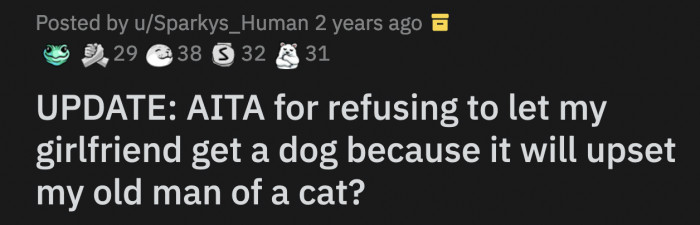
They had a massive argument about the pets, so they came up with an ingenious solution
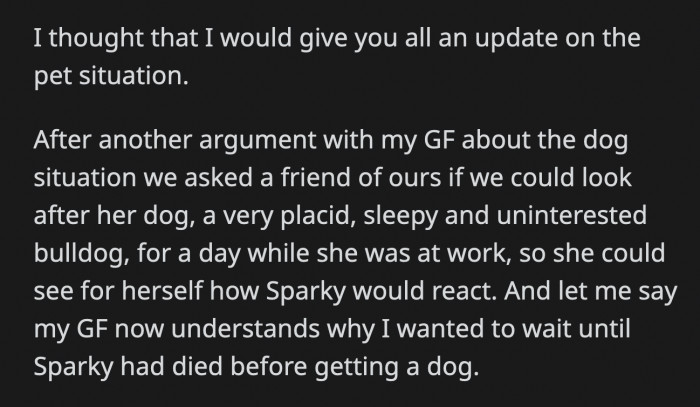
They asked one of their friends if they could look after her gentle dog while she was at work. OP's girlfriend saw how Sparky reacted to the dog, and she now understands why they have to wait before getting a puppy of their own.
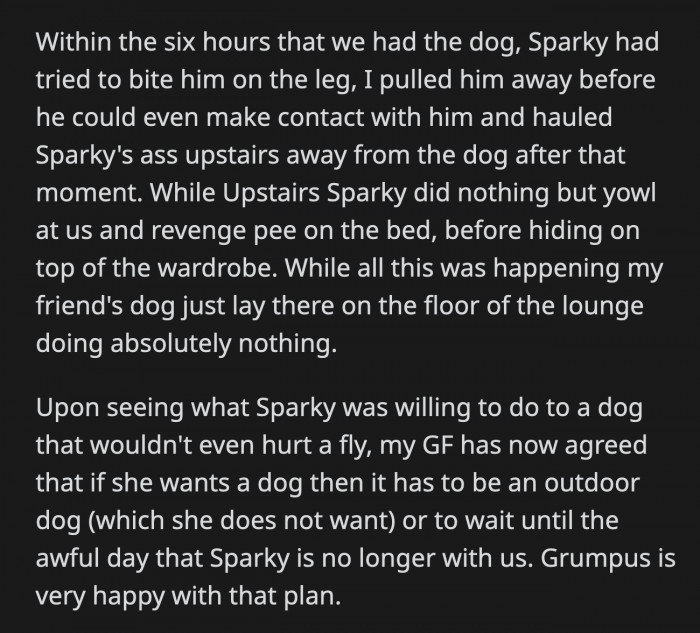
His girlfriend saw how aggressive Sparky was to the dog — he tried to bite the dog's leg and acted out by peeing on OP's bed while he was locked away for attacking the sleepy bulldog.
Structured discussions can lead to more productive outcomes.
Their friend's dog was unharmed, and Sparky is at peace with their decision not to get a puppy. In the meantime, he will happily lounge about all day and growl at any dogs who dare enter his field of vision.
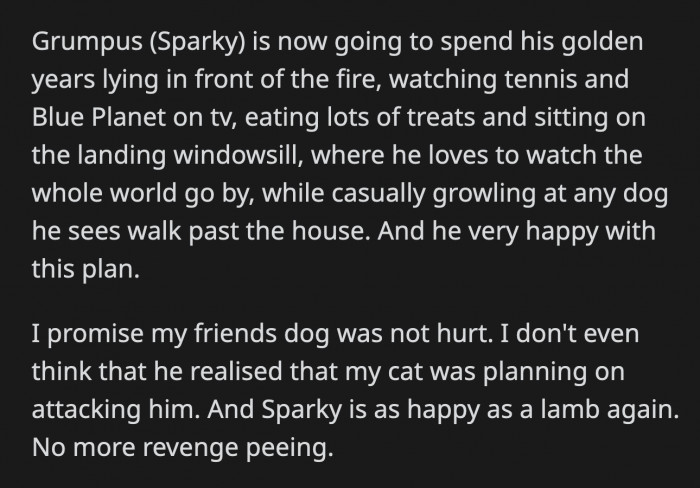
We only have a few years with our beloved pets. Our responsibility, while they are in our care, is to provide them with a warm home, healthy food, and advocate for their safety.
OP did exactly that, and Sparky will continue tolerating his presence from his sunlit windowsill because of it. They will eventually get a dog, but for now, Sparky is the only pet they have to worry about.
The situation presented in the article highlights the delicate balance of emotions involved in pet ownership.
The situation involving the boyfriend's stance on adopting a puppy while advocating for his elderly cat highlights the delicate balance required when blending different pet dynamics in a relationship. The emotional weight of caring for an older pet, particularly one nearing the end of its life, cannot be understated. The boyfriend's insistence on delaying any adoption until his cat has passed is a reflection of his deep commitment to ensuring a smooth transition for his feline companion, who is accustomed to a certain routine and environment.
This scenario serves as a reminder that effective communication is essential in relationships, especially when pets are involved. Couples must engage in open discussions to navigate their differing priorities and desires, ensuring that both partners feel heard and understood. By fostering empathy and collaboration, they can create a harmonious space that honors the needs of all family members, both human and animal, while preparing for any changes that may come in the future.
Want more “I can’t be near that dog” tension, see the girlfriend who surprised her partner with a dog despite his fear.
Share this article: