Husband Refuses to Let His Son Take Over the Cat’s Bedroom (That’s Right), and Then Barricades Himself Inside

Some family arguments are about money, chores, or boundaries, but this one is about a cat having its own bedroom. A Reddit user shared a bizarre situation where her husband turned the spare room into a pet space, then refused to give it up when their child needed it.
What makes it even messier is that the couple already has a 10-month-old baby, and the husband apparently reacted by barricading himself inside the cat’s room after the topic came up. That left OP trying to figure out whether she was overreacting, or whether her husband had taken this whole thing way too far.
The internet had plenty to say about that one. Read on.
Well, the start of the story is pretty normal, but it gets weird pretty quickly:
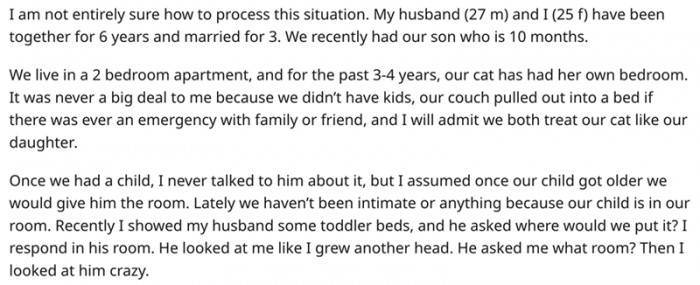
And it goes borderline insane:

Redditors couldn't believe the husband's actions. Childish or completely insane?
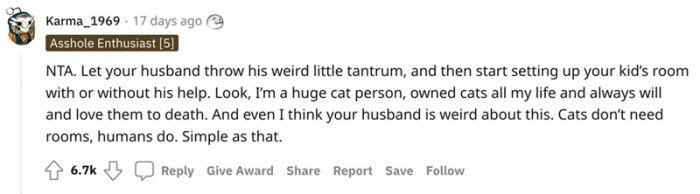
The situation surrounding the husband’s reluctance to allow his son to take over the cat's bedroom may reflect deeper attachment styles within the family unit. If the husband has a more anxious attachment style, he may perceive any changes in family dynamics, like a child taking over a pet's space, as a threat to his established role and security within the family.
Individuals with anxious attachment often exhibit behaviors that are overly protective or controlling, particularly in situations where they feel their emotional stability is compromised. This could explain the husband's barricading actions, representing a need to maintain control in a situation that feels unpredictable.
The husband's behavior could also be a manifestation of stress, particularly if there are underlying issues within the family dynamic. Stress can lead individuals to act irrationally or defensively, as they may feel overwhelmed by their circumstances (Lazarus & Folkman, 1984). This is particularly relevant if the husband is experiencing stressors outside the home, such as work pressure or financial concerns, which can spill over into family interactions.
In such cases, it can be helpful for families to engage in stress-reduction techniques together, such as mindfulness practices or family therapy sessions. These approaches have been shown to enhance emotional regulation and improve interpersonal relationships. By addressing stress collectively, the family can create a supportive environment that allows for healthier expressions of individual needs.
It seems that a lot of people need to see a professional

5. Generally, cats are pretty perceptive.

This could easily become awkward
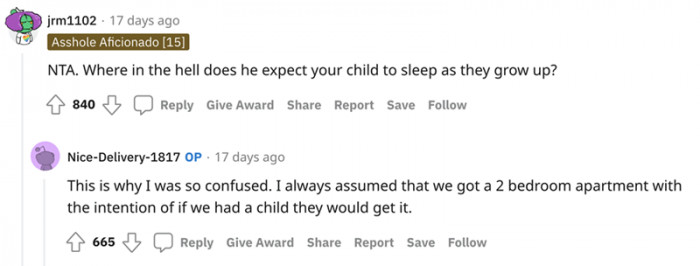
This hilarious yet perplexing scenario can also be understood through the lens of family systems theory, which emphasizes that families operate as interconnected systems where each member influences one another. When one member adopts a peculiar behavior, like refusing to relinquish a room, it can significantly affect the overall family dynamics. By encouraging each family member to express their feelings about the cat's bedroom, the family could foster a more collaborative environment. Families who engage in constructive dialogue tend to resolve conflicts more effectively, leading to strengthened relationships overall.
It also echoes the woman with 20-plus cats, who snapped when her adult son wouldn’t sleep there with a baby.
Maybe there is more to the story...

The exact thought we had
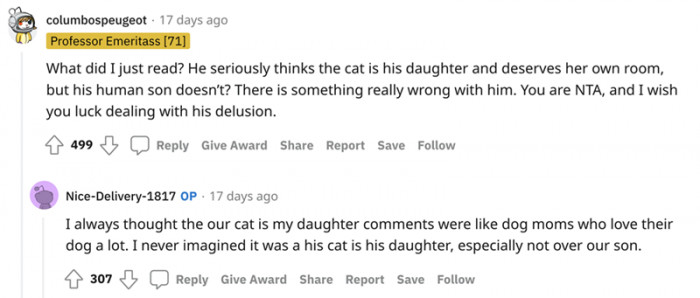
The whole situation is so weird that we also feel strange commenting on it. Some things simply go without saying. Can you imagine yourself in a situation where you have to explain to your partner that cats don't need separate rooms, but kids do?

Humor can serve as a powerful tool in diffusing tension and fostering emotional connection during disputes. In this case, the absurdity of the husband's barricading action could provide a unique opportunity for the family to use humor to navigate their differences. Laughter can lower stress levels and promote bonding, allowing family members to approach conflicts with a lighter heart.
Implementing humor in family discussions about pets or shared spaces might help transform the current tension into an opportunity for laughter and understanding. Encouraging family members to share funny stories about their pets or create light-hearted rules around pet ownership could make the conversation less confrontational and more engaging.
We are always reluctant to share comments like these since Redditors often suggest breakups and divorces over even the smallest relationship problems. But this time, the problem seems to require therapy. Maybe even a restraining order.
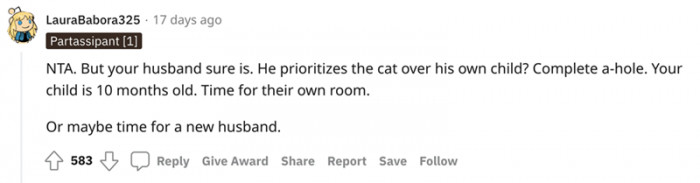
Well, this has been a fun ride. The problem is so ludicrous that many of us found it hard to believe.
Is this some joke? Are we really discussing it?
Do we really need to explain some things that are simply implied? Like the fact that your child needs a room, while your cat doesn't?
We kind of wonder how this woman lives. Can she even raise her voice at the cat or try to discipline it?
If her husband prefers the cat over his child, then how much does he appreciate his wife? Or is his wife just the person who helps him take care of his cat and nothing more?
This humorous yet revealing incident highlights the intricate dynamics of family relationships. The father’s insistence on maintaining control over the cat’s bedroom reflects deeper issues of authority and attachment within the household. The situation escalates to a comical standoff, illustrating how even trivial matters can lead to unexpected conflicts. By interjecting humor into the conversation, families can alleviate tension and foster better communication. Navigating these quirky disputes not only brings laughter but also encourages families to engage in open dialogues, ultimately paving the way for a more cohesive and supportive environment.
Redditors were even more shocked by a Redditor who refused his wife’s cat adoption after childhood trauma.
Share this article: