158 Cats Need Homes After Three Seizures Fill Columbia-Greene Humane Society

At the Columbia-Greene Humane Society/SPCA, the number that tells the whole story is 158. That is how many cats are now in the shelter’s care after three seizures in a single week, a sudden surge that has turned the building into a place of nonstop treatment, careful handling and a big push to find homes.
For cat people, 158 felines under one roof might sound extraordinary. Here, it is also a sign of how much work arrived all at once.
The Columbia-Greene Humane Society/SPCA says the three seizures in one week have put a major strain on the organization as staff members try to help the animals recover and move toward permanent homes. Ron Perez, the shelter’s CEO, said the load has hit every part of the operation. Staffing is stretched, overtime is piling up, and each cat needs the basics of shelter intake plus more involved care, including medical treatment, spay or neuter surgery and health testing.
Perez said the spike effectively tripled what the facility would normally take in around this time of year. For an organization of its size, he said, that is a huge burden.
Most of the cats came from a single home. The Catskill Police Department seized the majority of them last Thursday, and Perez said he assisted during that seizure. He described what responders found in stark terms. The home, he said, was unlivable, has been condemned, and was not fit for either people or animals. He called it a horrible situation for the cats.
That one property accounts for the biggest share of the current crisis, but it was not the only case. By the end of the week, the total in care had climbed to 158 cats across all three seizures, leaving the shelter and its partners balancing urgency with the slower, careful pace that stressed animals often require.
Why some of the cats are not ready to go home just yet
Even with adoptions at the center of the shelter’s appeal to the public, not every cat can head straight into a new living room.
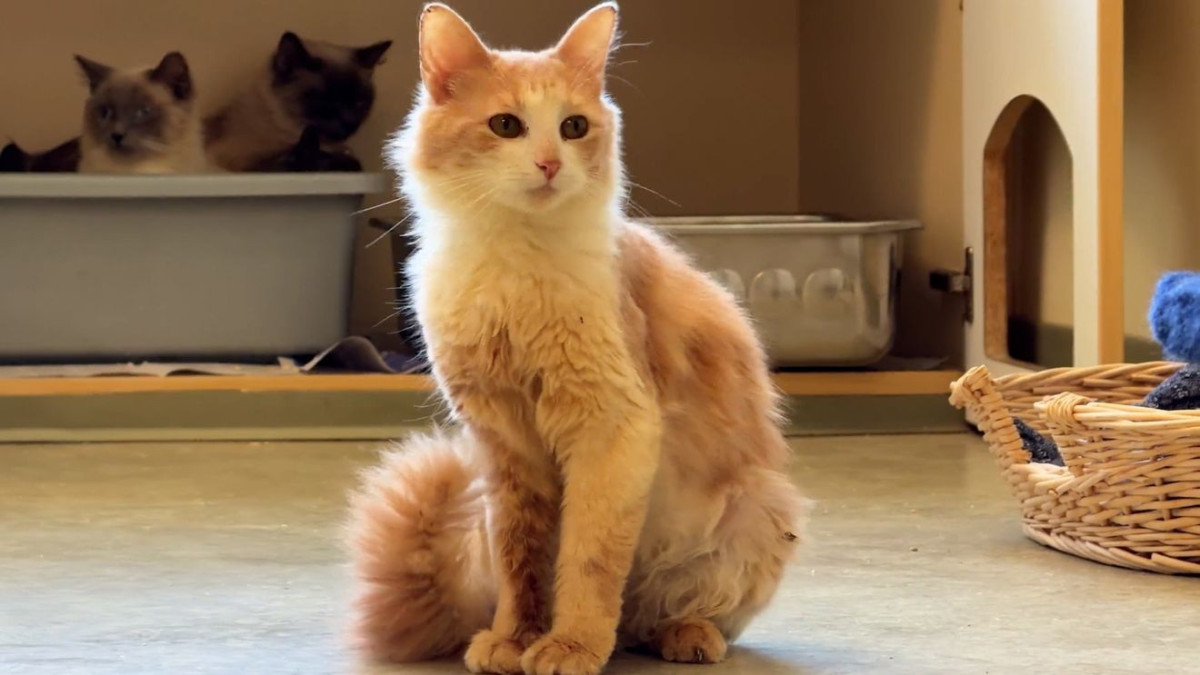
The humane society is offering free adoptions for all animals through Saturday. That includes the cats now available at the Columbia-Greene Humane Society. But the 40 cats being treated following Thursday’s seizure need more time before they are ready for new homes, according to Nicki Armsby, acting director of Animal Kind.
Her explanation is one many cat owners will understand immediately. Moving cats over and over is not just inconvenient. It can make them sick. Armsby said that if a cat is moved more than twice in a two week period, stress leads to upper respiratory infections in every case. Because of that, she said, staff have been careful about how those cats are moved.
That detail helps explain why a shelter can be urgently asking for adopters while also slowing the process for part of the population in its care. The goal is not simply to empty kennels. It is to get these cats healthy enough for the next stop to be the right one.
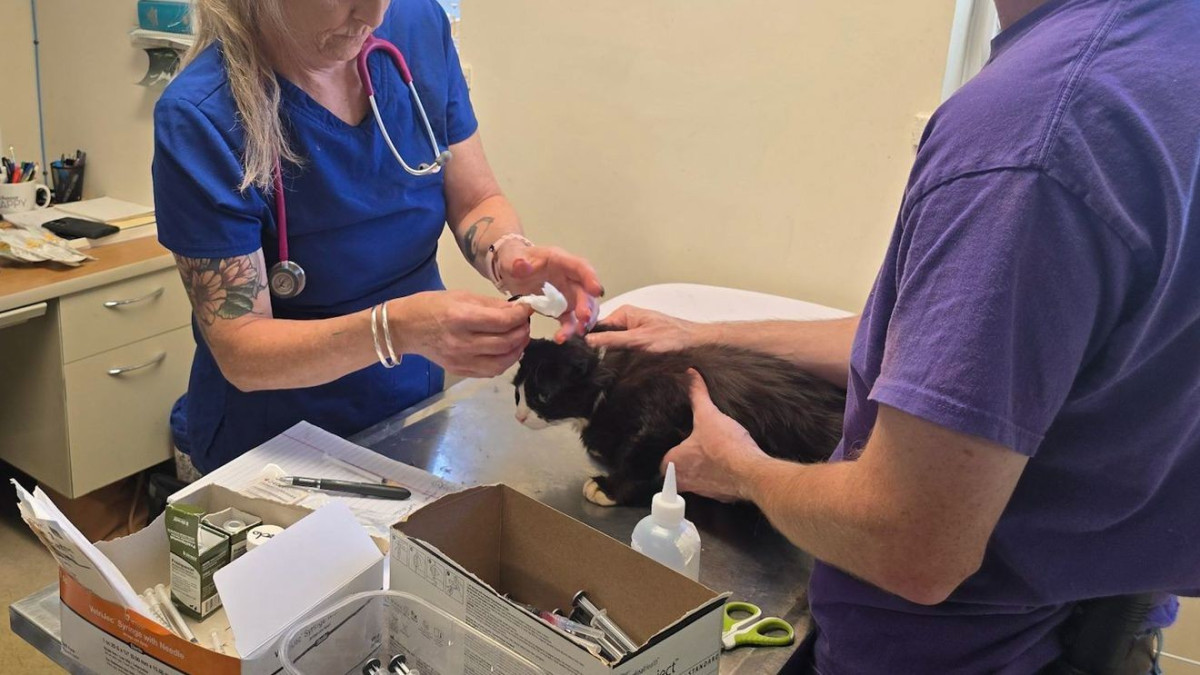
The cats are described as sick and traumatized, so the work happening now is less a simple handoff and more a reset. Before any adoption can happen, the animals need stabilization, treatment and routine procedures. For many of them, that means veterinary attention first and a permanent home second.
A call for homes, and for change
The immediate ask from the shelter is straightforward. People interested in adopting are encouraged to submit applications in advance, because same day approvals are not guaranteed.
That practical note matters in a moment like this. A free adoption event can bring in interest quickly, but the shelter is still managing intake, treatment and screening while caring for an unusually large number of cats. Getting applications in ahead of time may help move the process along as animals become available.
Perez has also used the moment to talk about something bigger than this week’s adoptions. As staff members care for the cats, he has criticized New York’s animal cruelty laws and argued for stronger animal abuse registries. Referring to Greene County and Columbia County, he said a case involving an animal’s health can be treated as a misdemeanor and that offenders never end up on the registry. He said Columbia County needs to take a look at its registry.
For now, though, the shelter’s days are centered on a much more immediate reality. There are 158 cats in need of care, and many of them arrived from severe conditions. Staff members are doing overtime. Medical work is underway. Some cats can be adopted now, and others will need a little more time before they are ready.
The scale of the week is easy to measure in numbers. The more meaningful measure may be what happens next: applications submitted, treatments completed, and one by one, cats leaving the shelter for permanent homes.
Why a sudden influx is hard on shelters
When many cats arrive at once, shelters have to switch into triage mode. Each cat may need a health exam, parasite treatment, vaccines, a microchip scan, and time apart from unfamiliar animals. Crowding can raise stress fast, which makes hiding, appetite loss, stomach upset, and common respiratory illness more likely. Kittens, seniors, and nursing mothers usually need the most hands on care.
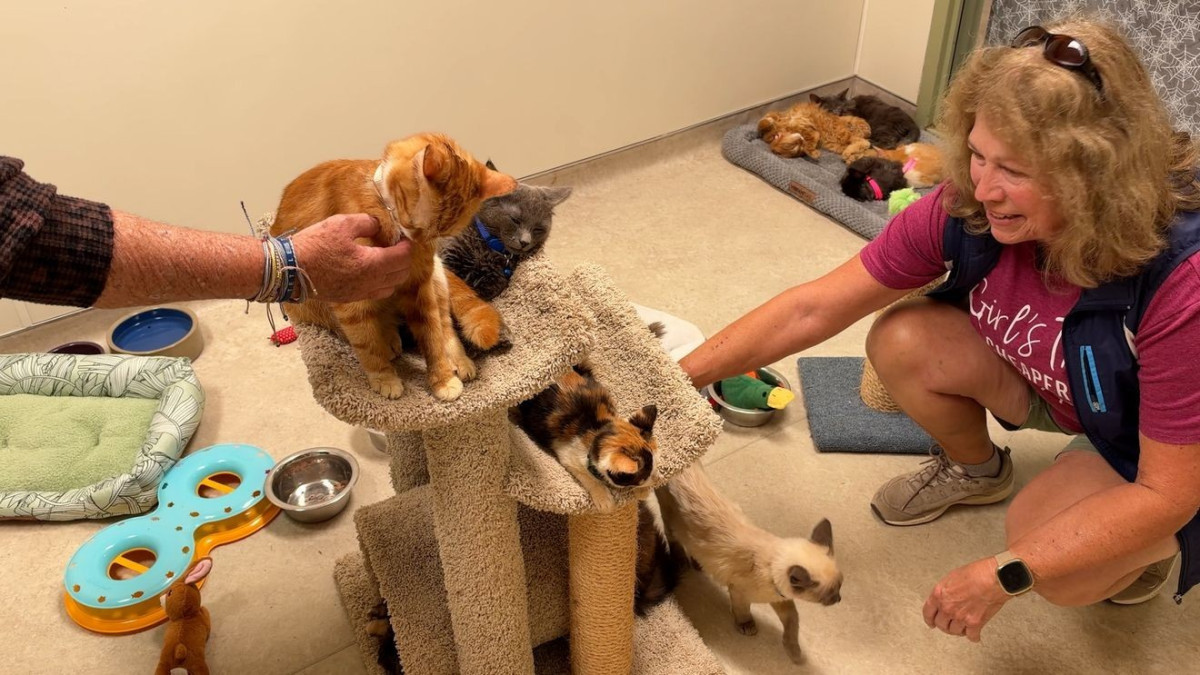
What new adopters and fosters should expect
Cats coming from crowded or chaotic homes can act very differently at first. Some are frightened and shut down. Others are clingy, noisy, or easily overstimulated. A quiet starter room, predictable feeding, clean litter boxes, and slow introductions to people and pets give most cats the best chance to settle. Ask whether the cat has known medical needs, whether it has lived with other cats, and what food and litter it already knows.
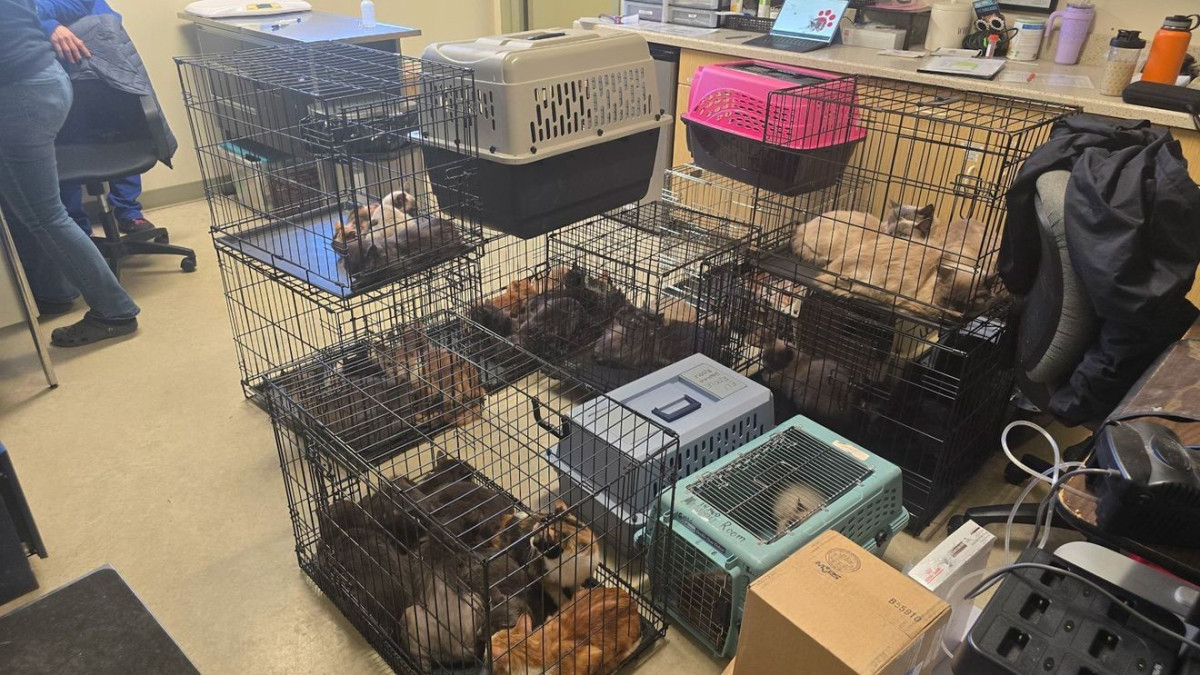
Ways to help that matter most
Adoption helps, but fostering often creates space even faster. If you cannot take in a cat, shelters usually need unopened food, unscented litter, carriers, towels, laundry supplies, and volunteer help with cleaning, transport, or socializing. If you do bring a cat home, set up a separate room first and plan a follow up vet visit.
Share this article: