Redditor Wants To Know How To Find A Balance When Love For A Dog Meets Household Challenges

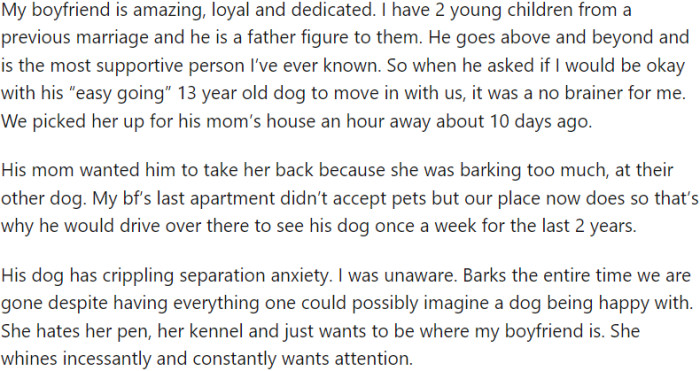
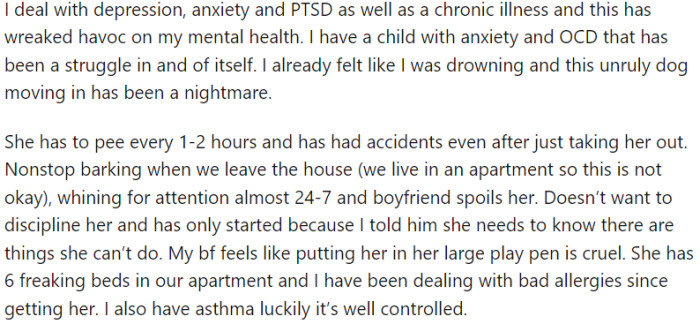
A 28-year-old woman is trying to keep it together while her partner’s dog’s separation anxiety turns every normal day into a mini crisis. The dog isn’t just “a little clingy,” it’s the kind of anxious that changes the whole household rhythm, from mornings to whatever counts as a quick errand.
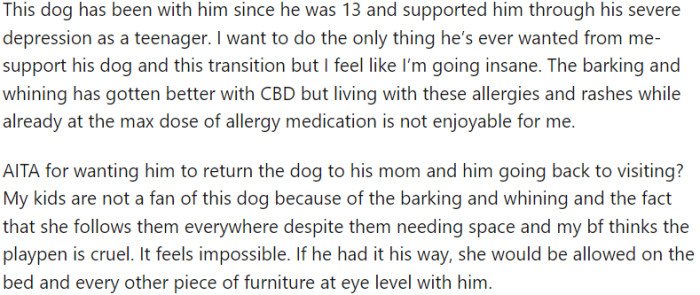
Here’s the complicated part, she’s deeply attached to the dog too, but the stress starts spilling everywhere. Their home gets tense, the guilt shows up fast, and suddenly she’s juggling her partner’s emotional need to support their pet with the very real impact it’s having on everyone’s well-being.
And the worst part is, nobody here is trying to be the bad guy, they’re just running out of balance.
The Challenges of Living with a Partner's Dog with Separation Anxiety and the Impact It Has on the Household's Well-Being
Additional Stress and Health Problems
Conflict Between Supporting a Partner's Attachment to Their Pet and the Well-Being of the Household
Pets often play a crucial role in our emotional lives, serving as sources of comfort and companionship. Attachment styles significantly influence how individuals respond to their pets' needs, particularly in stressful situations. In this case, the individual's struggle with their dog's separation anxiety may reflect their own attachment patterns and emotional responses to stress.
Research in attachment theory shows that individuals with insecure attachment may experience heightened anxiety in relationships, including those with pets. Understanding these patterns can help individuals develop healthier coping strategies for managing both their emotions and their pets' needs.
That’s when OP starts feeling guilty for how hard it is to manage the dog’s anxiety, even though she knows her partner is hurting too.
The bond between humans and pets can be incredibly profound, often providing emotional support and companionship.
OP Still Finds the Situation Difficult to Manage and Feels Guilty.

There Are No Bad Guys Here
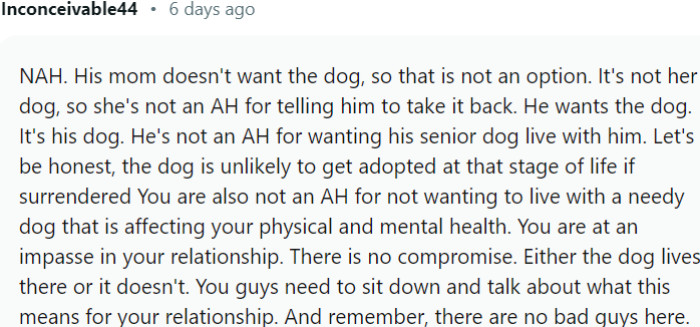
Take the Dog to the Vet

The household tension ramps up fast, especially when the dog’s panic makes everyday life feel impossible to control.
Studies suggest that animal-assisted therapy can be beneficial for individuals dealing with anxiety and emotional distress. Exploring ways to create a supportive environment for both the individual and the dog can lead to improved mental health outcomes.
However, when pet-related challenges arise, such as separation anxiety, it can create tension within households.
That sounds like the man who insisted his girlfriend’s dog had behavioral issues, even though only he disliked it.
Dog Needs Professional Help

"The Dog Needs to Go"

Find a Behaviorist
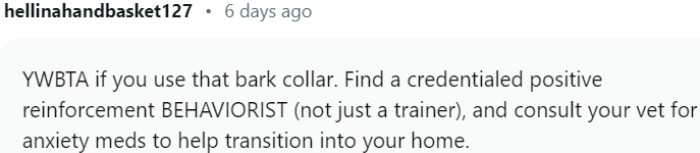
Then the “no bad guys here” mindset runs straight into practical problems, like needing the dog to get checked and reassessed so everyone can breathe again.
Strategies for Managing Pet Anxiety
To address pet anxiety effectively, it’s essential to implement strategies that promote a sense of security for both the owner and the pet. Techniques such as gradual desensitization can help dogs adjust to separation, reducing anxiety levels over time. Incorporating positive reinforcement to encourage calm behavior during times of separation is helpful.
Additionally, establishing a consistent routine can help create a predictable environment for the pet, further alleviating anxiety. Seeking the guidance of a professional trainer can also provide tailored strategies for managing the dog's specific needs.
Strategies for Managing Pet Challenges
To address issues like separation anxiety in pets, caregivers can implement gradual desensitization techniques.
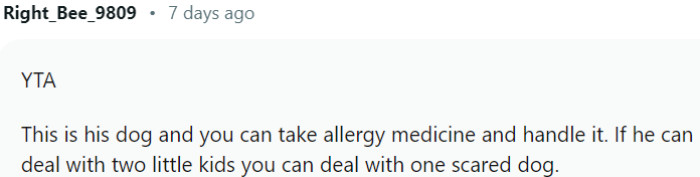
"If He Can Deal with Two Little Kids..."
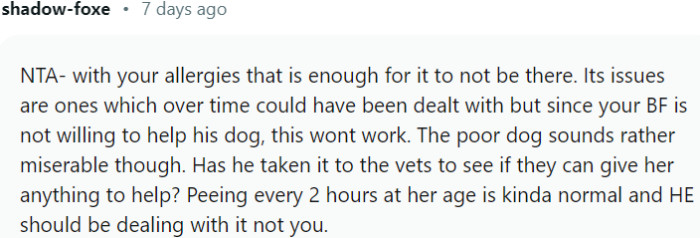
"The Poor Dog Sounds Rather Miserable Though"
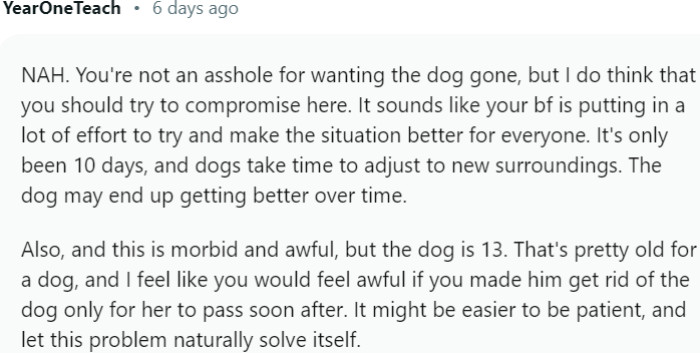
BF Is Putting in a Lot of Effort to Try and Make the Situation Better
Next thing you know, the plan shifts toward helping the dog settle during separations, because the calm has to come from somewhere.
Engaging with a professional animal behaviorist can provide valuable insights into managing specific challenges, ensuring that both pets and owners can thrive. Additionally, exploring resources on positive reinforcement training can help caregivers foster a more harmonious relationship with their pets.
Support groups for pet owners can also offer a community of shared experiences and strategies for managing pet-related stress.
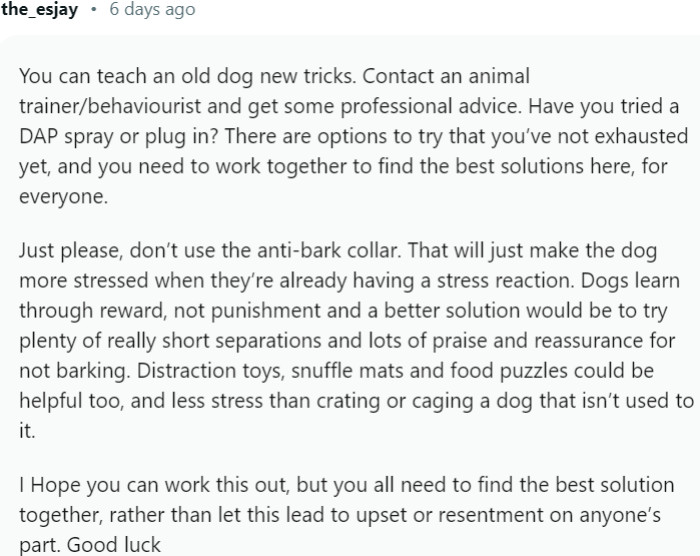
You Need to Work Together to Find the Best Solutions
"Increased Anxiety in Dogs Is One Sign of Dementia"

Unexpected stress and health problems in the household can occur when a pet's behavior poses challenges.
The article highlights a crucial dynamic in pet ownership: the balance between affection for a pet and the inevitable challenges that arise within a household. By seeking knowledge and applying effective strategies, individuals can improve not only their pets' well-being but also their own emotional health.
This dual focus on the emotional needs of both pets and their owners is vital in creating a harmonious living environment. The situation presented illustrates that when love for a dog intersects with household stress, it is the proactive engagement with these needs that can help restore balance and peace.
The dilemma faced by the Redditor underscores the intricate emotional dynamics of pet ownership and how these dynamics can affect household harmony. As the article illustrates, while pets are often cherished family members, their behavior can sometimes introduce stress and conflict. Recognizing that both the pet's and the owner's needs must be addressed is crucial. Finding a balance not only fosters a healthier relationship with the pet but also contributes positively to the mental health of everyone in the household. Implementing thoughtful strategies can transform challenges into opportunities for growth, ensuring that love for a dog does not come at the expense of domestic tranquility.
Nobody wins when love for the dog collides with a home that can’t keep absorbing the stress.
For a tougher standoff, see how a woman pushed her boyfriend to rehome his aggressive dog.
Share this article: