
Dog Found in a Cardboard Box Ran Straight to Her New Mom After Weeks Learning to Trust

When Christina drove from Queens to meet a small shelter dog named Joon, she expected a cautious introduction. Instead, the little Maltese mix who had been terrified of unfamiliar people ran right up to her, a moment that made sense only after everything both of them had already been through.
Joon's story turns on one startling instant. Christina had made the trip to the ASPCA Recovery & Rehabilitation Center in Pawling, New York, hoping to meet a dog she had seen online, a 3 year old Maltese mix with a difficult recent past. Staff members knew Joon as a dog who had needed time, space, and very careful handling. Christina knew only that she felt drawn to her before they had even met.
Then the dog closed the distance herself.
According to Christina, Joon rushed toward her as soon as they met. The staff told her that was not how Joon usually greeted strangers. For a dog who had arrived fearful and shut down, the response stood out. It felt like the clearest possible answer to the question Christina had been carrying with her from Queens: whether she was really ready to open her heart to another dog after losing Benji, the companion who had shared her life for years.
That meeting became the payoff. But the reasons it mattered ran deeper than a lucky first impression. Christina came in with grief she had not tried to hurry. Joon came in with her own damage, not broken bones or visible wounds, but neglect, fear, and the kind of uncertainty that made even ordinary contact feel like too much. The path that brought them together started on a curb in Queens, inside a cardboard box.
A small dog on a curb in Queens
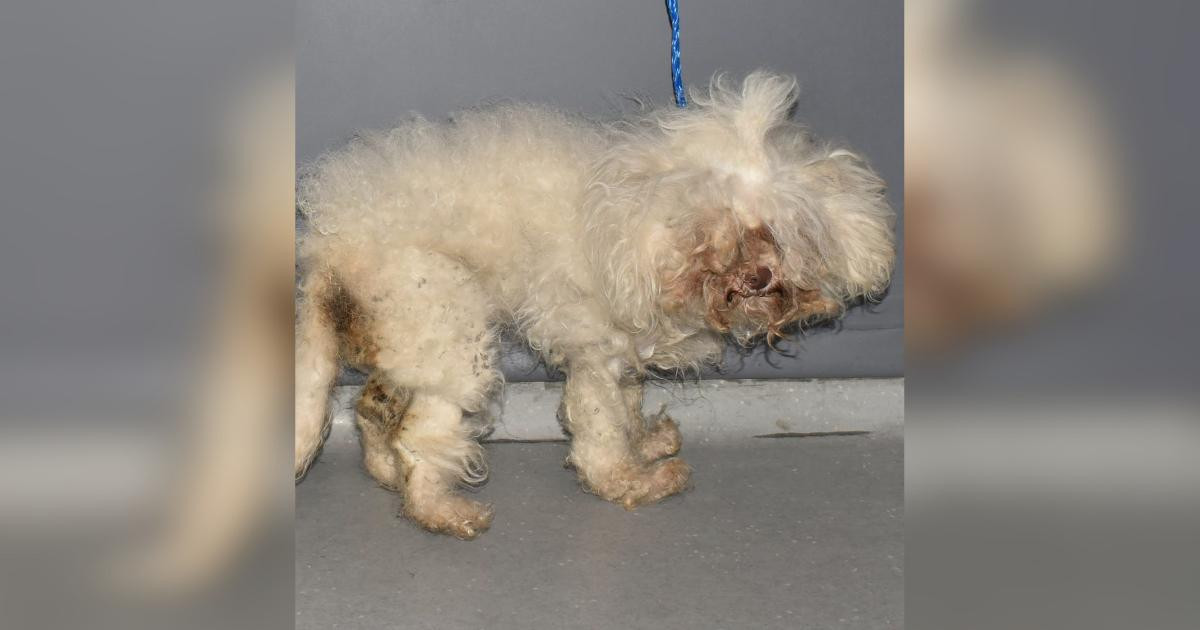
On April 11, Joon was found in a cardboard box left on a street curb in Queens. The New York Police Department looked into the circumstances of her abandonment, but the case was later closed without an arrest.
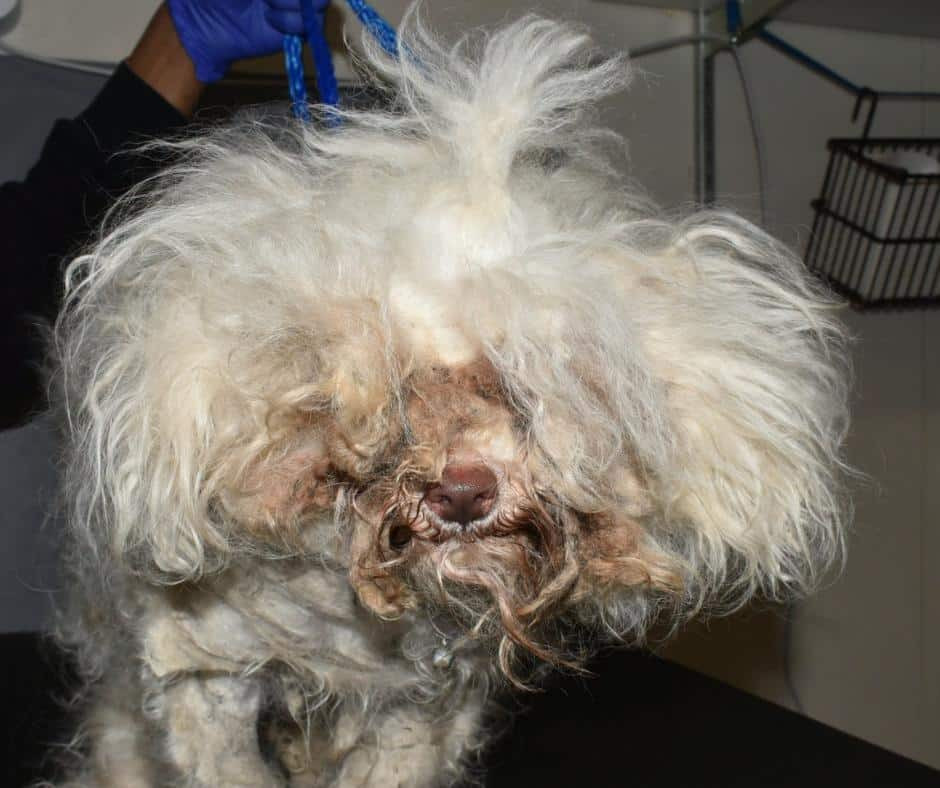
She was taken to the ASPCA Animal Hospital, where forensic veterinarian Dr. Alison Liu examined her. Joon did not have physical injuries, but the condition she was in made clear that she needed immediate care. Her coat was heavily matted and dirty. The skin around her hind end was inflamed after extended contact with urine and feces. She was underweight, and she was visibly frightened.
To help her safely, staff sedated her so they could remove the painful mats, bathe her, and treat the irritated skin. Because she had been underfed, they did not simply start feeding her large meals. Instead, she was placed on a gradual refeeding plan so her digestive system could adjust safely to proper amounts of food.
The work did not end with grooming and nutrition. Joon also needed a place where she could recover emotionally, not just physically. She was transferred to the ASPCA's Recovery & Rehabilitation Center, where the setup was quieter and tailored to dogs working through behavioral and emotional challenges. That was where her next stage began, and where the smallest signs of trust started to matter.
Learning how to be a dog again
At the rehabilitation center, Joon was given a larger living area with a crate inside it, so she would have a protected spot to retreat to when the world felt overwhelming. Kelly Lewis, a care and enrichment technician, described her as shut down and traumatized. In the beginning, Joon did not move through daily life like a confident pet ready for walks and cuddles. Kelly had to carry her outside.
Even so, the first changes came quickly enough to be noticed. Within a few days, Joon discovered the grass. She started sniffing around. She even broke into bursts of speed, the kind of joyful zoomies that revealed a more relaxed dog underneath the fear.
The staff did not force the process. They used treats, patience, and gentle, consistent contact. Kelly let Joon move at her own pace. Practical routines were adjusted to spare her unnecessary stress. Staff members kept her collar and harness on during the day so they would not have to keep putting them back on and handling her repeatedly, and they removed them at night.
Over the following weeks, Joon's world widened. She spent her days in Kelly's office suite and slowly became comfortable with a small group of staff members. Kelly became an especially important person to her. Joon would spin excitedly near Kelly's door when she appeared. The dog who had once withdrawn from people began to accept affection, put on weight, and settle into Kelly's lap.
Kelly's way of describing that change was simple. Joon, she said, needed to learn how to be a dog. It was not a dramatic overnight transformation. It was built from ordinary moments: sniffing grass, relaxing in a room, letting a trusted person get close. By the time Christina arrived, five weeks of rehabilitation had given Joon the tools to trust more than she once could.
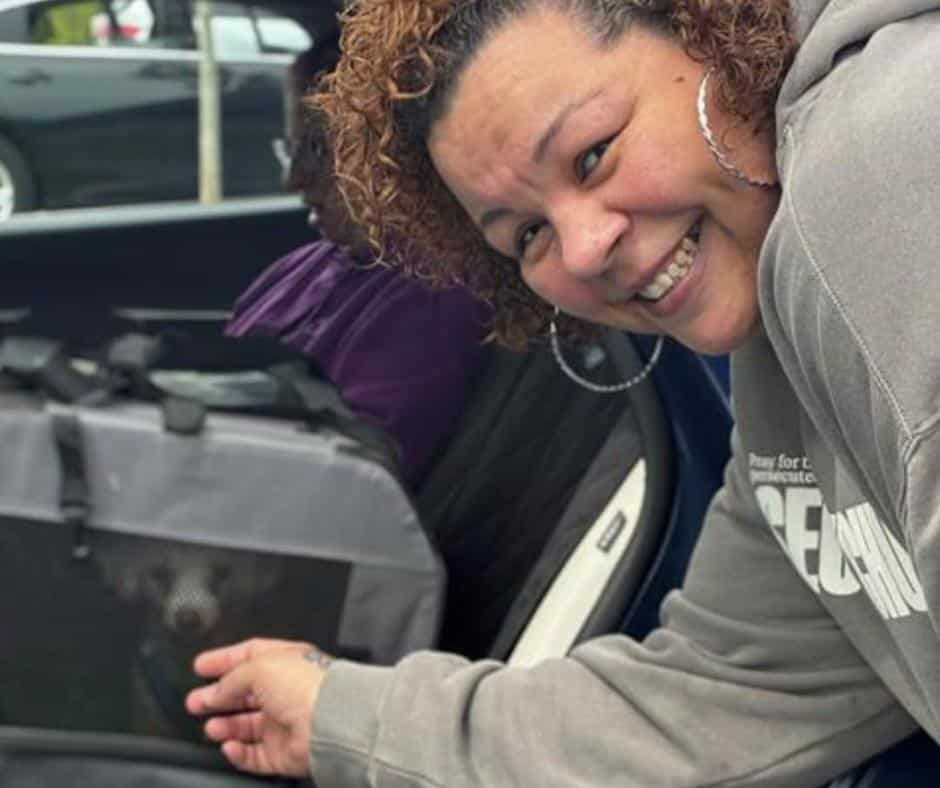
Christina knew she wanted a shelter dog
Christina's side of the story had its own ache. Her dog Benji, a Bichon and Poodle mix, had died unexpectedly in May. He had been 10 years old, and his loss left her heartbroken. People around her told her another dog would come along, but she did not believe that kind of grief could be rushed.
When she finally felt ready to consider a new dog, she already knew one thing. She did not want to buy a puppy. She wanted to adopt a dog that needed a home.
While looking through the ASPCA website, she found Joon's profile. Christina's first thought was that a little dog like that would probably have no shortage of interest. Even so, she submitted her information. Her interest only deepened. She later recalled feeling as if something was pulling her toward Joon even before they met, almost as though the dog was asking to help mend her heart.
That feeling was strong enough to get her in the car for the drive from Queens to Pawling. Christina also believed that if she met Joon, she would not want to leave without her. It was an emotional instinct, but it met a very real dog whose progress had been hard won. Joon was no longer the same dog found in that box, yet she was still carrying the memory of it in the caution she showed around unfamiliar people.

The moment both of them were ready
That is what made Joon's greeting so memorable. After weeks of careful rehabilitation, she had become more open with the people she knew. But when Christina walked in, Joon acted with the same ease and comfort staff had seen develop around her trusted circle. Christina saw a dog come right toward her. Kelly saw behaviors Joon had previously reserved for familiar people appear naturally with someone new.
The connection mattered because it bridged two different kinds of healing. Christina had been living with the absence Benji left behind. Joon had been working through abandonment and fear. In that meeting, both seemed ready for something new.
Back home in Queens, Joon kept settling in. The dog who had once hidden in a crate for security started seeking out closeness instead. Christina said Joon had become very comfortable finding a place on her lap, in her arms, and in her bed. At one point, Christina described her as tucked into the blankets on the bed while she wrote.
Joon also joined a fuller household than the one she left behind. She now lives with two other dogs, Sugar and Rocky. When Christina is at work, Joon spends time with Christina's mother. She also gets to play in the family backyard.
It is a life made up of everyday comforts, but for Joon those details carry real weight. There is grass to explore, room to play, other dogs nearby, blankets to burrow into, and people whose arms and laps have become safe places. For Christina, there is a new dog in the house, not as a replacement for Benji, but as her own small companion with her own hard story and her own startling way of choosing home.
In the end, the unforgettable image is still that first greeting. A dog once left behind in a cardboard box saw a woman she had never met and ran straight to her.
Share this article:





