Dog Owner Turns To Reddit After Being Told To Keep Her Dog On A Leash In Her Garden

One dog, one garden, and one very unhappy neighbor, that was enough to turn a quiet routine into a Reddit debate. Limo, an older dog with a predictable morning habit, liked to relax outside while his owner went about the day.
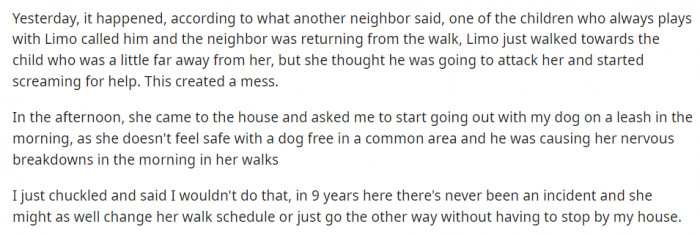
That routine changed when a new neighbor moved in and said she was terrified of dogs. Things came to a head after Limo wandered toward her during one of her morning walks, and she demanded that he be kept on a leash in the garden, even though there was no fence.
Now OP is wondering whether she is being unreasonable, or whether the neighbor is asking too much. Read on.
Limo is a simple dog with a simple routine. He just wants to relax in his garden and go for a couple of walks.
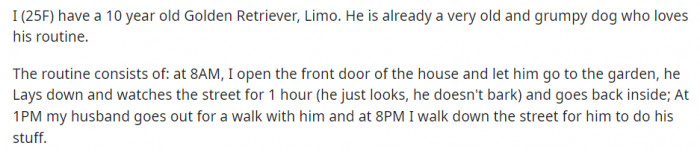
Limo has a history of being the nicest dog in the neighborhood, which is another reason why OP decided to post here.
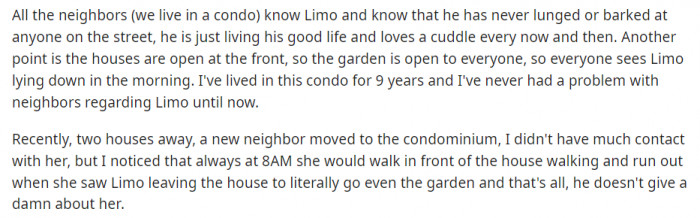
After a little misunderstanding regarding Limo's intentions, the neighbor decided that she was fed up and demanded a solution.
The recent incident involving a dog owner seeking advice on Reddit highlights the complex dynamics of pet ownership and the sense of autonomy tied to it. The woman felt frustrated when told to keep her dog on a leash even in her own garden, a space she presumably views as a sanctuary for both herself and her pet. This situation unveils the underlying tension between individual freedom and societal expectations regarding pet behavior.
For many pet owners, their animals symbolize a part of their identity and personal freedom. When external factors, such as neighborhood norms or fears from others, impose restrictions, it can feel like an invasion of personal space. The emotional response of the dog owner in this case is emblematic of a broader struggle faced by many who grapple with balancing their pet's freedom with the comfort of those around them.
Recognizing these emotional undercurrents is crucial in addressing conflicts about pet freedom. Open dialogues can lead to solutions that respect both the needs of the pet owner and the comfort of the community. Ultimately, fostering understanding can pave the way for coexistence, allowing for a more harmonious environment for both pets and people.
The issue of keeping pets leashed in private spaces, such as gardens, raises important questions about boundaries and respect for community norms. When pet owners understand and respect these boundaries, it can lead to more positive interactions and reduce conflicts.
This reflects broader social psychology principles, where the perception of fairness and respect plays a critical role in community dynamics.
The neighbor was quite aggressive with her demands, according to OP, who felt at peace regardless of the neighbor's threats.
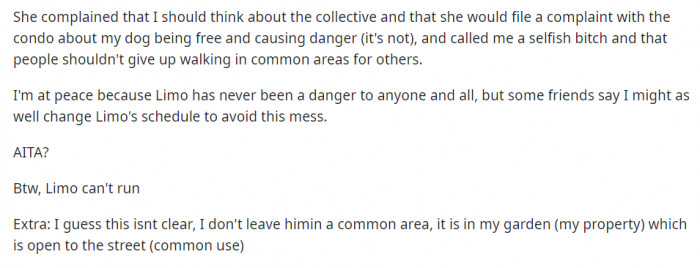
The majority of comments on this thread did not agree with OP, with most stating that since the garden is not fenced off, it counts as a common area.

People suggested that she at least put up a small fence since it's not unreasonable to ask for that.

Research suggests that allowing pets the freedom to roam can enhance their psychological well-being.
Pets that feel restricted may exhibit stress-related behaviors, highlighting the importance of balancing safety with freedom.
Recognizing the benefits of autonomy for pets can inform discussions around pet ownership and restrictions.
Moreover, the emotional response of the new neighbor highlights the importance of communication in resolving conflicts.
It's hard to guarantee a dog's behavior; they can be so unpredictable sometimes.

Humans overreact all the time, so there's no reason to expect more from dogs.
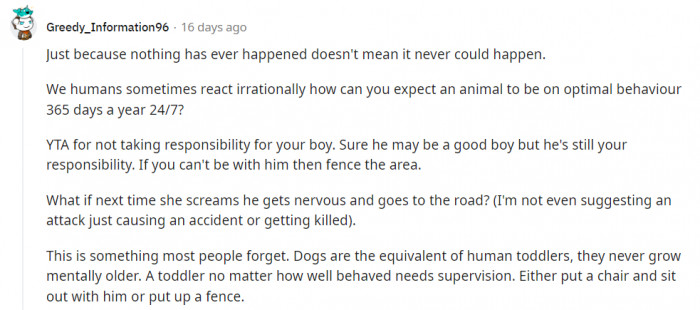
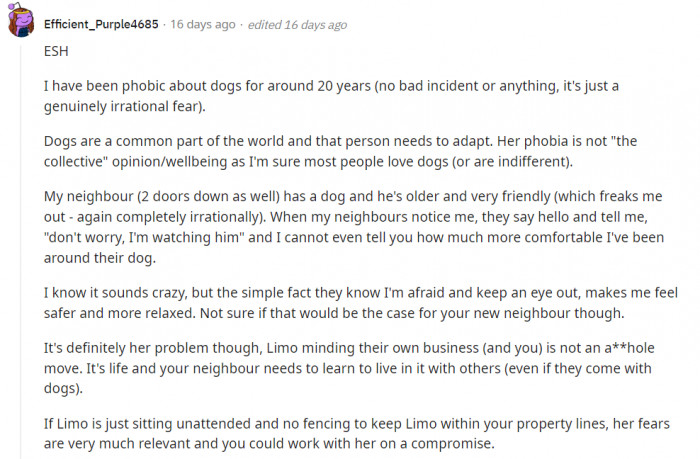
This person shared her experiences with the same phobia that the neighbor has. Apparently, everyone is at fault here.
Effective communication is crucial for resolving disputes over pet restrictions, as it allows both parties to express their concerns and needs.
Active listening and empathy are key to productive conversations.
This approach fosters a collaborative atmosphere where both parties feel heard and understood.
Empathy plays a significant role in community living, particularly when it comes to shared spaces.
Some people had other things in mind...

It seems like most people agree that OP should take some steps to make this new neighbor feel safer while walking through the neighborhood. It looks like Limo is going to have to change his morning routine a little bit, but we hope he can handle it.
Do you think that the neighbor overreacted, or is it a justified demand?
To address concerns about pet behavior in shared spaces, pet owners can engage in proactive communication with neighbors. Establishing a dialogue about pet behavior and potential compromises can help alleviate tensions. Collaborative problem-solving approaches can lead to more effective resolutions, benefiting all parties involved.
Additionally, involving community resources, such as local pet training classes, can provide support and guidance for pet owners, helping them navigate these challenges.
Ultimately, creating a culture of respect among pet owners is essential for fostering positive community relationships. Promoting awareness about the responsibilities of pet ownership can help individuals recognize the impact of their actions on others.
By encouraging respectful behavior and open communication, neighborhoods can thrive, creating an environment where both pets and people feel valued and safe.
In the case of the dog owner seeking advice on Reddit, it is evident that the dynamics of pet ownership extend beyond mere companionship. The article highlights the tension between personal freedom and communal responsibility. By choosing to let her dog roam freely in her garden, the owner may not fully recognize the discomfort it causes for neighbors who may have had negative experiences with dogs. This incident serves as a reminder that fostering open communication and mutual respect is crucial in shared living spaces. When pet owners engage in dialogue with their neighbors about boundaries, it not only mitigates potential conflicts but also strengthens community ties. Ultimately, a culture of understanding around pet ownership can lead to a more harmonious environment for everyone involved.
Creating a safe space for discussion can help mitigate tensions and foster understanding.
Research shows that regular family meetings can help address concerns and enhance collaboration.
Encouraging open dialogue can strengthen family bonds and lead to more harmonious solutions.
Additionally, involving a neutral third party, such as a mediator or therapist, can provide valuable support in addressing complex emotional dynamics.
Therapists can facilitate discussions and help families explore each other's perspectives, leading to more constructive conversations.
This approach can assist families in finding common ground and rebuilding trust.
Establishing a supportive environment for both pets and owners is essential for healthy relationships.
In summary, understanding the emotional dynamics surrounding pet restrictions can enhance family relationships.
By prioritizing communication and empathy, families can navigate conflicts more effectively, leading to stronger bonds and greater harmony.
The emotional dynamics of pet ownership play a crucial role in family relationships, as highlighted by the recent case of a dog owner seeking advice on Reddit after being told to keep her dog on a leash even in her own garden. This situation underscores the necessity for open communication among family members and neighbors regarding pet ownership responsibilities. By addressing concerns about safety and comfort, families can effectively navigate disputes over pet restrictions, fostering a more harmonious living environment that respects both the joys of pet ownership and the needs of those who may be wary of dogs.
Don’t trust “good recall,” read how one Redditor got accused after fearing to let her dog off-leash.
Share this article: