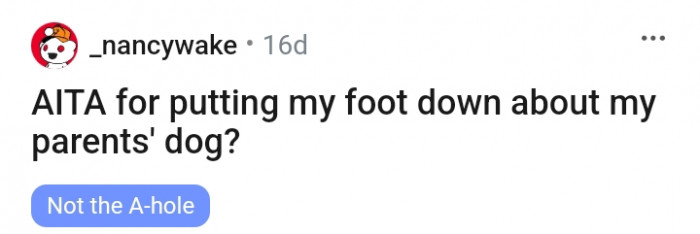
Woman Who Is Sure Her Parents' Dog Will Cause Issues At Her Party, Refuses To Let Them Bring It Over

A 28-year-old woman refused to let her parents bring their dog to her party, and it immediately turned into a family debate that sounded small on paper but got messy fast.
Her sisters and their kids are coming, there’s catering on the way, and everyone is supposed to have a good time. But the parents’ dog is the wildcard, the kind of pet that is basically treated like a family member, plus the OP has a very specific reason for not wanting it around all those guests.
It starts with a boundary, and ends with everyone calculating whether they’ll “respect the wish” or show up anyway with the dog.
And the story begins...
If there was a fire, and my sisters and I were inside their house, they'd save the dog
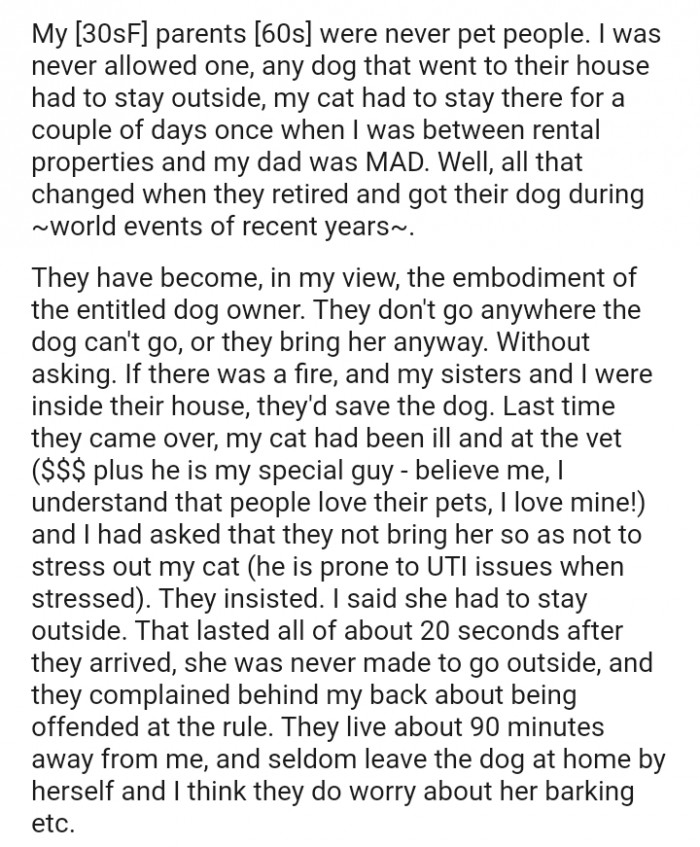
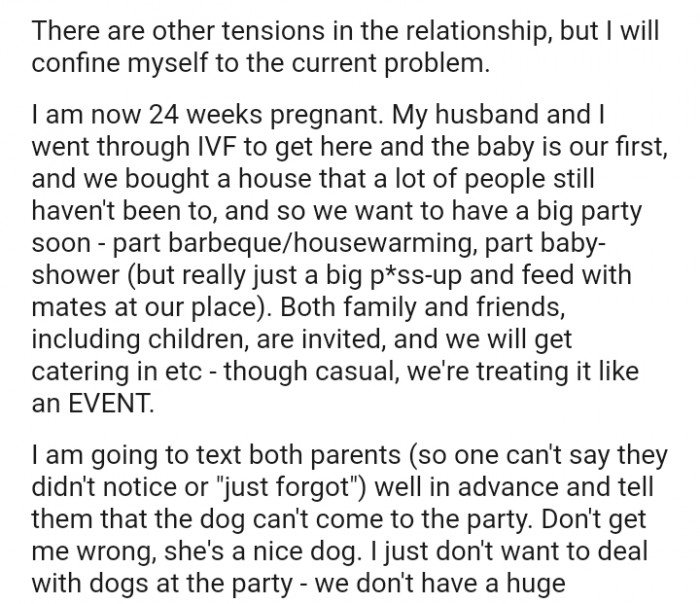
Both family and friends, including children, are invited, and they will get catering in
The emotional bond between pet owners and their animals is well-documented and tends to be particularly strong among those who have shared significant life experiences with their pets. Research published in the Journal of Social Psychology indicates that pets can provide emotional support, especially during periods of loneliness or stress. Pets often serve as a source of comfort and companionship, filling emotional voids that might otherwise lead to feelings of isolation.
This bond can complicate social dynamics, especially when it comes to shared spaces or events like parties. For the pet owner, their dog is not merely an animal; it's an integral part of their emotional landscape, and the thought of potential conflict over its presence can be distressing.
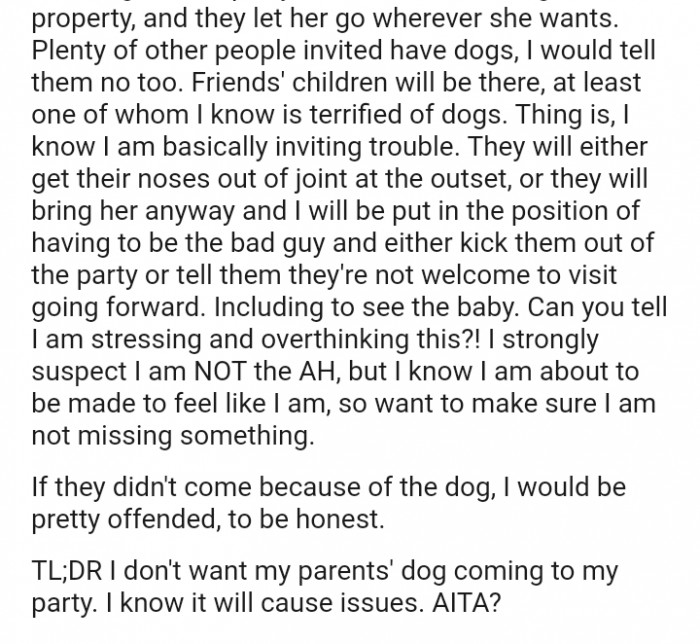
They will either get their noses out of joint at the outset, or they will bring her anyway
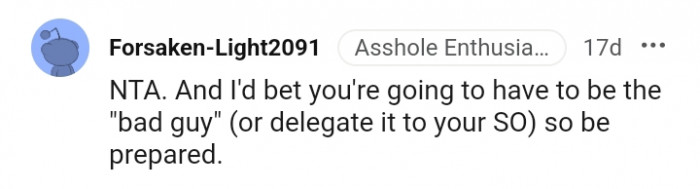
Check out some of what other Redditors had to chirp in
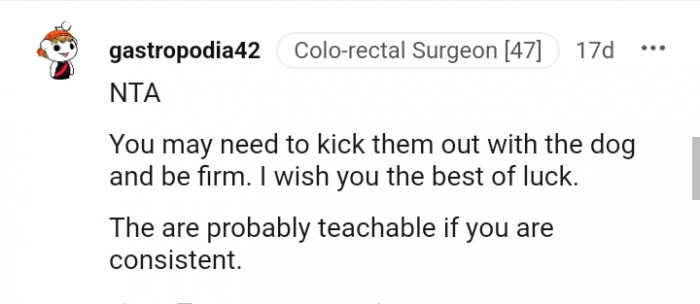
This Redditor wishes the OP the best of luck
At the start, OP even frames it like a “if there’s a fire, the dog gets saved” kind of deal, which makes the refusal feel even more personal.
The Social Dynamics of Party Planning
When planning gatherings, individuals often navigate a complex web of social expectations.
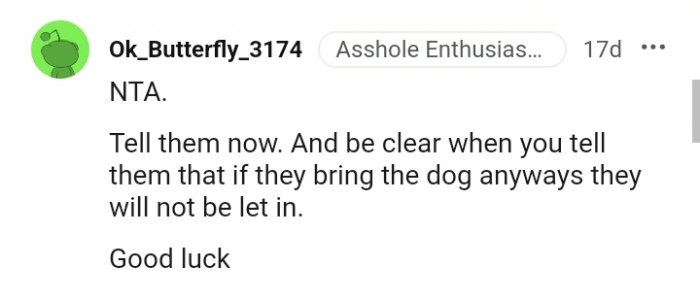
It is better to know now

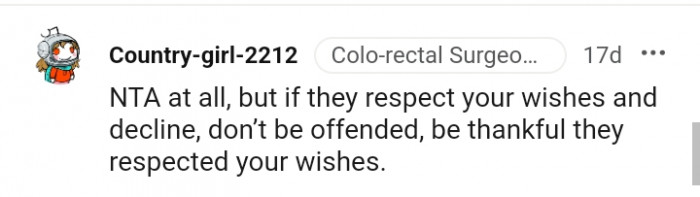
Just be thankful they respected your wishes
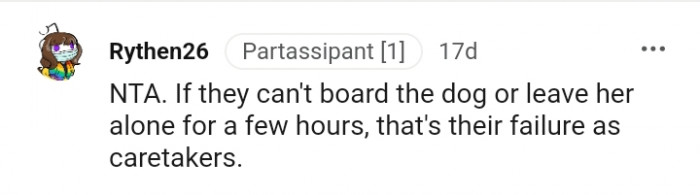
They can't board the dog or leave her alone
Research suggests that individuals with secure attachments are better equipped to set healthy boundaries, including those involving pets and social gatherings. Conversely, those with insecure attachments may struggle with asserting their needs, fearing that doing so will result in conflict or disapproval.
This insight sheds light on the psychological mechanisms at play when someone feels compelled to accommodate a pet's presence despite potential issues. Understanding one’s attachment style can empower individuals to communicate their boundaries more effectively, ultimately leading to healthier relationships with both family and pets.
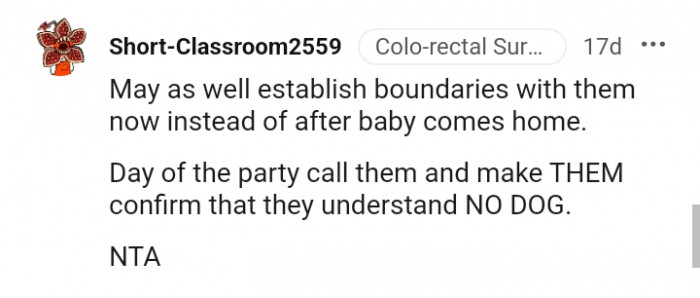
Call them and make them confirm things
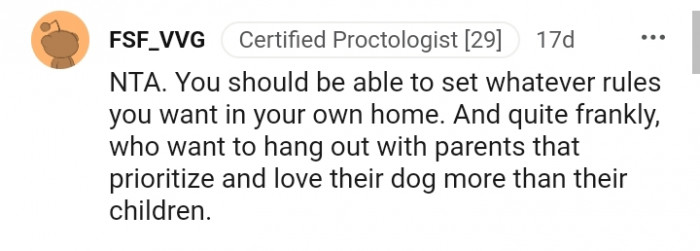
Setting whatever rules you want in your own home
You let them in and let them stay
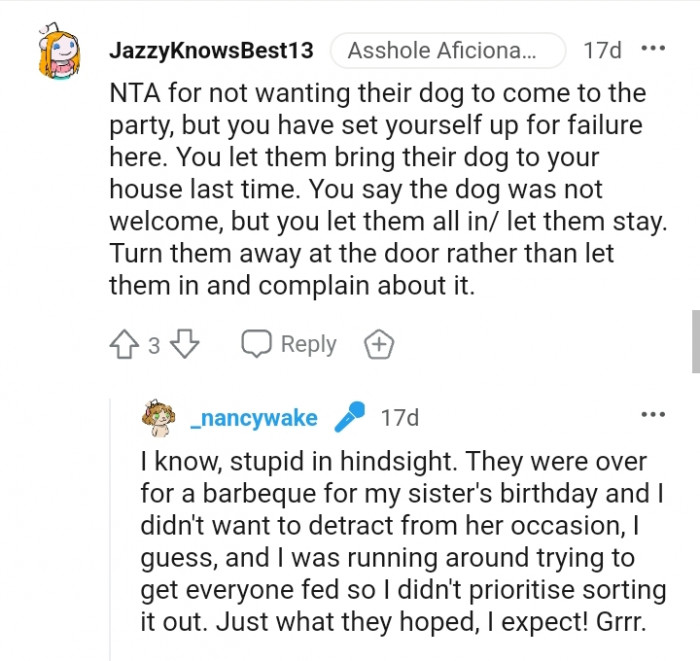
Then the reality hits, parents and friends are invited with children included, and OP is basically bracing for the moment the dog’s name gets brought up again.
This feels like the standoff between a woman and her SIL over an untrained “therapy dog” at a family barbecue, in “Therapy Dog” banned.
Empathy and Emotional Regulation
Emotional regulation is a critical skill that allows individuals to manage their feelings effectively in social situations.
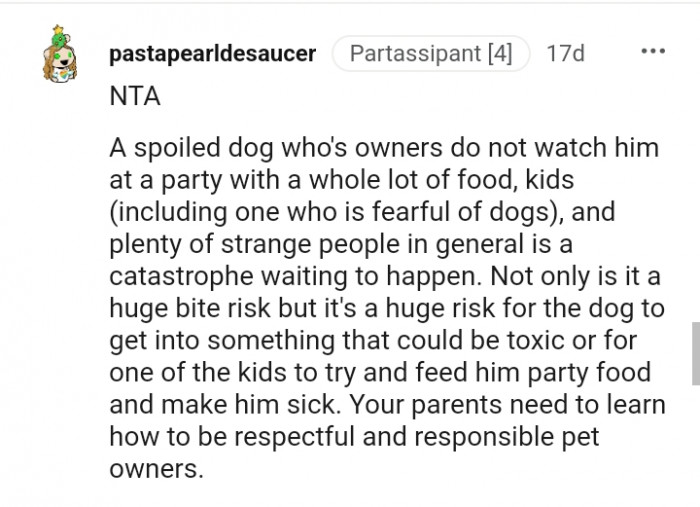
It's a huge risk for the dog to get into something
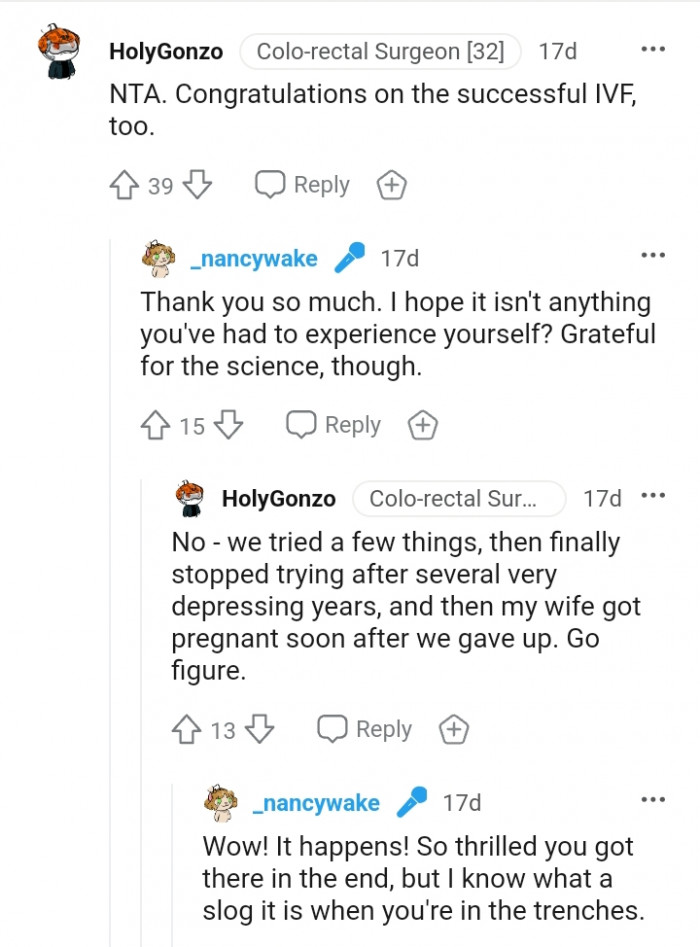
This Redditor is congratulating the OP first
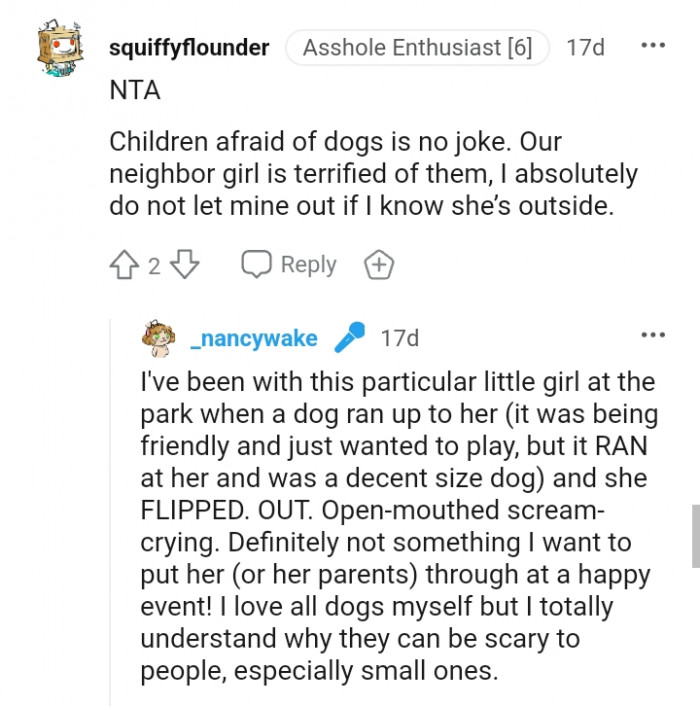
Definitely not something the OP wants to put her through
That’s when the comments get blunt, because people point out the two possible outcomes, they either get their noses out of joint right away or they bring her anyway.
Another layer of this dynamic involves understanding how personal history influences current behavior.
Pick one you like and join us
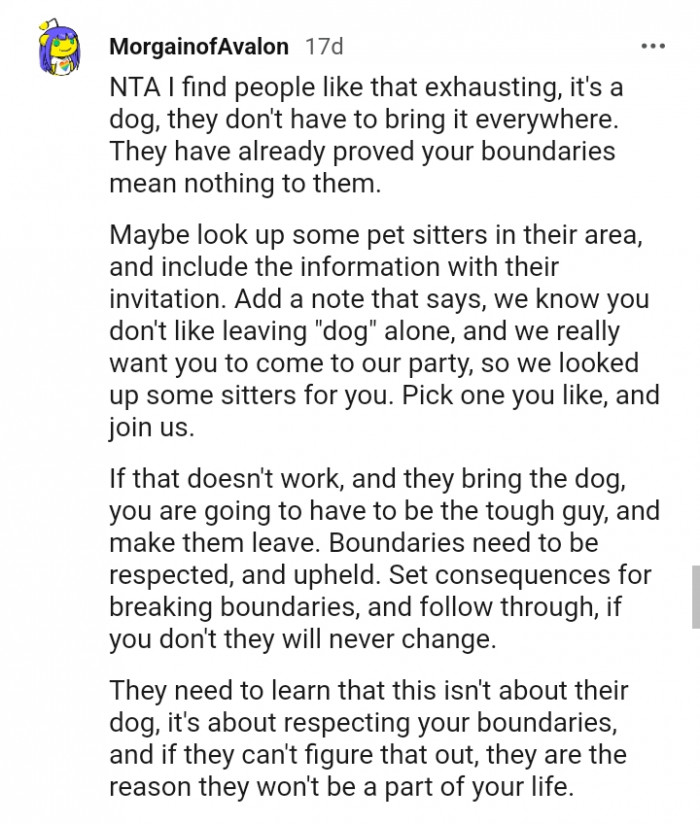
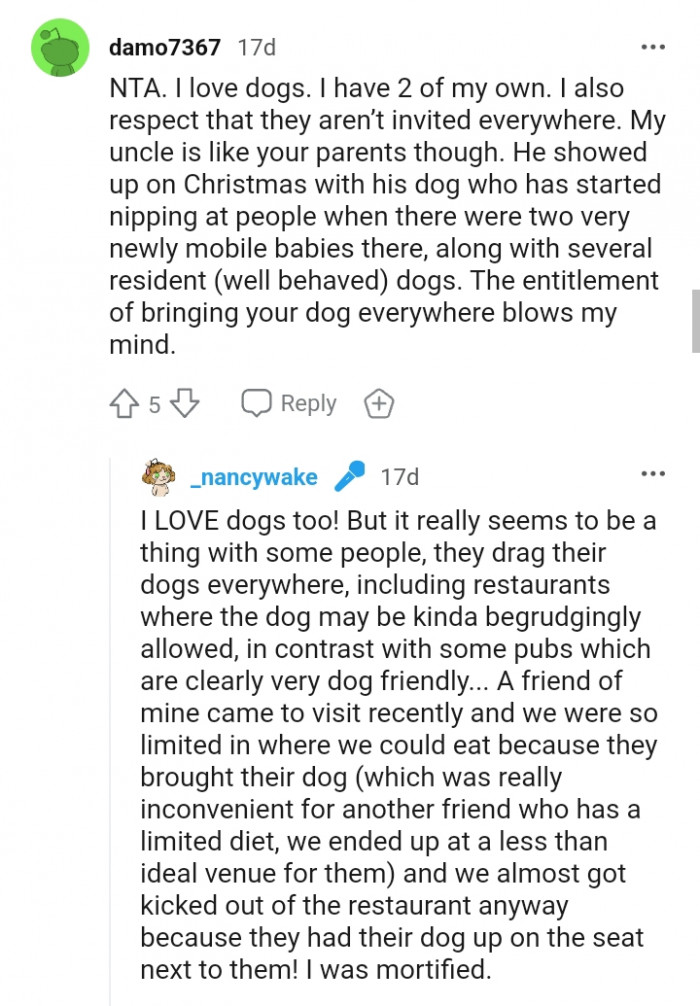
The entitlement of bringing your dog everywhere
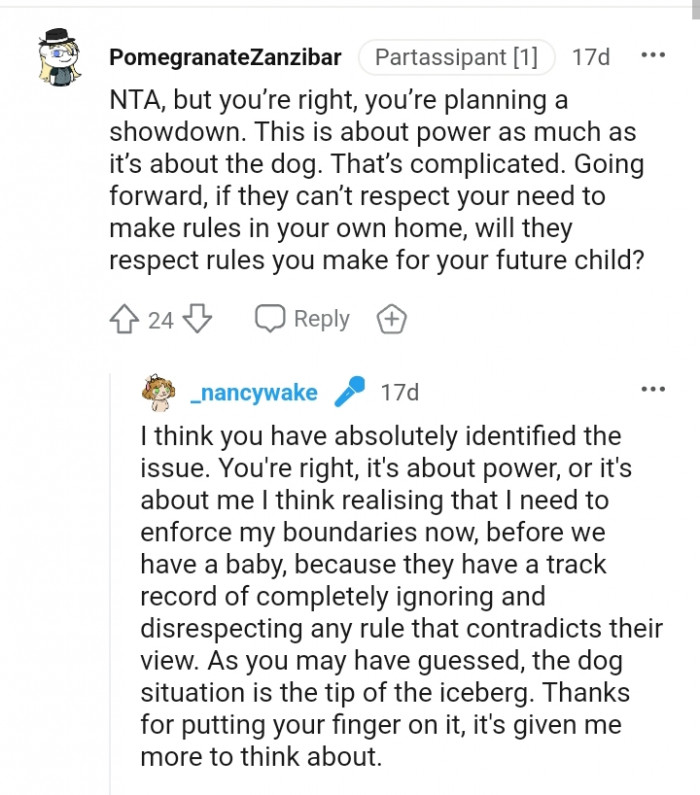
This Redditor has absolutely identified the issue
Practical Strategies for Communication
Research suggests utilizing 'I' statements, which focus on personal feelings rather than accusations, can lead to more productive dialogue. For instance, saying 'I feel uncomfortable when dogs are around during parties due to my allergies' is likely to elicit a more understanding response than a blanket statement like 'Your dog shouldn't come.'
Additionally, establishing a compromise—such as designating a specific area for the pet during the party—can help accommodate both the pet owner's feelings and the host's concerns. This approach not only fosters goodwill but also models healthy conflict resolution strategies.
Setting reasonable boundaries that they need to start respecting

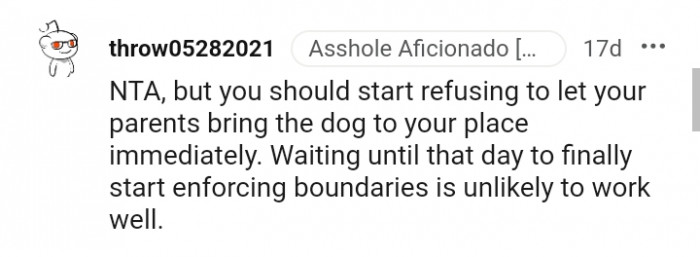
You need to set your boundaries now

The OP says that the little dog is lovely

By the time the thread shifts to logistics, it turns into a tense countdown of whether the parents can board the dog or if they’ll insist it has to come over for the party.</p>
Understanding the role of social norms can also enhance our ability to navigate these situations. Research in social psychology reveals that individuals often conform to group expectations, which can lead to uncomfortable compromises. In the context of the article, the host might feel pressure to accommodate the pet due to perceived social obligations or expectations.
Being mindful of these pressures allows individuals to make conscious choices rather than succumbing to automatic responses.
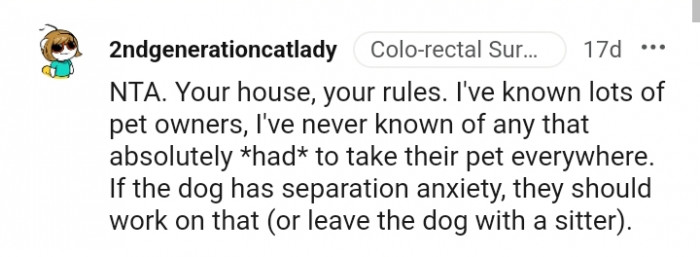
This Redditor has known lots of pet owners
What this Redditor believes the OP should start doing
Be clear on what you want from them
Family dynamics often complicate the issue of pet inclusion at gatherings. A study from the University of Michigan explored how differing values within families can lead to conflict, especially when individual preferences clash with collective expectations. Tension can arise when one family member's desire for a pet-free environment conflicts with another’s emotional attachment to the pet.
In such cases, establishing family rituals around gatherings—such as open discussions about preferences and boundaries—can help mitigate these conflicts. By creating a family culture that encourages open dialogue, members can voice their concerns and preferences without fear of retribution or misunderstanding, which can lead to a more harmonious environment for everyone involved.
The family pet has served as a source of solace at the foot of the bed, a constant supply of love and devotion, as well as inspiration and company while exercising and aiding in the improvement of mental health. So it isn't surprising that the OP's parents were so easy to convert.
Do share this post to get other people's opinions as well.
The situation surrounding the woman who is hesitant to allow her parents' dog at her party reveals the intricate psychological dynamics at play when pets are involved in social gatherings. The deep emotional bonds that owners form with their pets can complicate interactions, particularly when the well-being of both guests and animals must be considered. As highlighted in the article, the woman's concern suggests an awareness of the potential disruptions that pets can bring to social events, reflecting a need for boundaries in these scenarios.
In light of these complexities, it is essential to foster open communication around such topics. The woman’s decision to set limits can be seen as a necessary step in asserting her needs while also acknowledging the emotional significance her parents’ dog holds for them. By embracing self-awareness and expressing boundaries respectfully, families can navigate the emotional landscape that pets create, ultimately leading to a more harmonious and understanding environment for all parties involved.
The party wasn’t the problem, the dog was, and nobody wanted to blink first.
After refusing her sister's dog at her wedding, see what the bride said next in “No Dogs At My Wedding”.
Share this article: