One Woman's Decision To Prioritize Her Pet In A Romantic Relationship Leads To An Online Debate

A 28-year-old woman basically told her boyfriend, “My dog sleeps here,” and the internet lost its mind. OP has had her pup since he was a tiny six-month-old, so this is not a casual pet situation, it is a long-term routine and a whole lifestyle.
Now she’s dating a “nice boyfriend,” and the two of them cannot agree on one very specific detail: where the dog sleeps. Because apparently, when you’re sharing a bed or an apartment, a dog’s bedtime becomes a relationship debate, not a background fact.
And the worst part is, the arguments spilled into an even bigger fear, that her boyfriend might feel pushed aside, while OP feels like she’s being asked to betray something that matters to her.
OP asks:

OP owns a dog whom she has had since he was six months old.
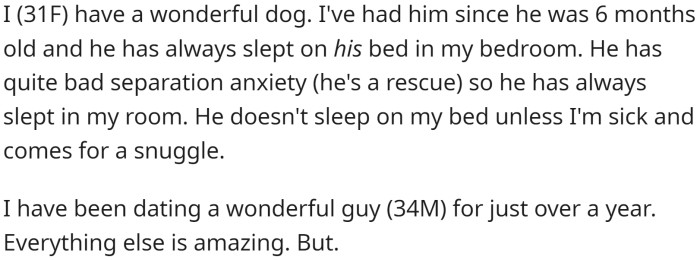
She also has a nice boyfriend

Pet ownership undeniably reshapes the landscape of romantic relationships, illuminating the intricate interplay of values and priorities among partners. The emotional bond that many pet owners share with their animals often mirrors the deep connections found in human relationships. This was evident in the story of a woman who chose to prioritize her pet over her romantic partner, sparking a heated online debate. This decision not only highlights the love and care pet owners feel for their animals but also underscores the potential for conflict when partners have differing views on pet care. The situation raises essential questions about the balance between nurturing a pet and maintaining a healthy relationship. Understanding and respecting these differing priorities is crucial for achieving harmony, as unresolved tensions can lead to significant rifts in the relationship.
Prioritizing Pets in Relationships: A Psychological Perspective
Prioritizing pets over partners can evoke strong emotional reactions and highlight the complexities of relational dynamics.
That’s when the sleeping arrangement stopped being a preference and started feeling like a loyalty test for OP and her boyfriend.
The Psychological Impact of Pet Prioritization
Research from the Human-Animal Bond Research Institute suggests that pets often serve as emotional anchors for their owners, providing comfort and companionship.
This relationship can be particularly significant during challenging times, such as in romantic partnerships.
However, prioritizing pets over partners can lead to feelings of neglect or jealousy, which can strain the relationship.
And two of them don't mix well when it comes to sleeping
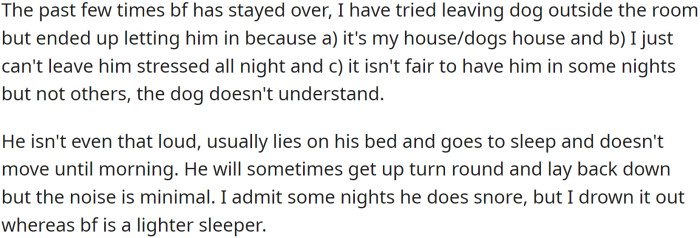
This issue has caused some arguments, and OP is unsure if their relationship can work long-term if they cannot agree on where the dog sleeps.
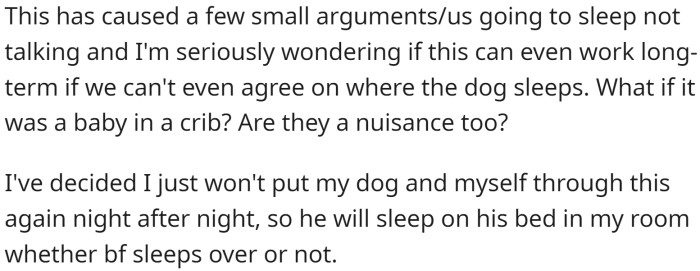
OP posted additional info and a question:
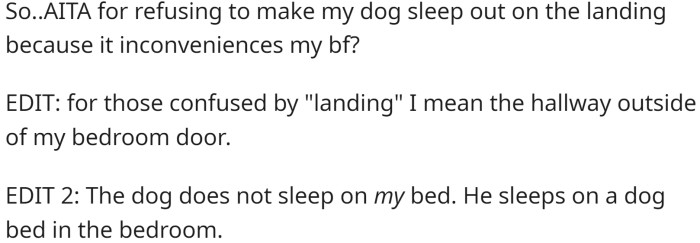
Moreover, the emotional attachment to pets can evoke strong feelings, sometimes creating a sense of competition for attention between partners. Research in social psychology indicates that when emotional investments collide, it can lead to feelings of neglect or insecurity in the relationship.
This dynamic can complicate discussions about boundaries and needs.
This situation reflects the challenges that arise when individuals have differing values regarding pets. A licensed psychologist notes that these conflicts often stem from underlying attachment styles and personal histories. For instance, some individuals may have grown up in homes where pets were seen as family, while others may not share the same viewpoint.
Understanding these backgrounds can facilitate healthier conversations about priorities in relationships.
In this case, finding a compromise that respects the needs of both the partner and the pet can be a constructive approach.
OP has offered the following explanation for why they think they might be the a-hole:
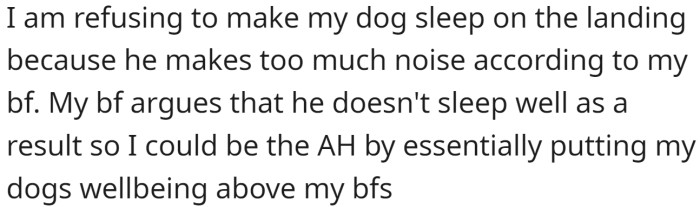
Dog is family

As usual, Redditors immediately suggest a breakup
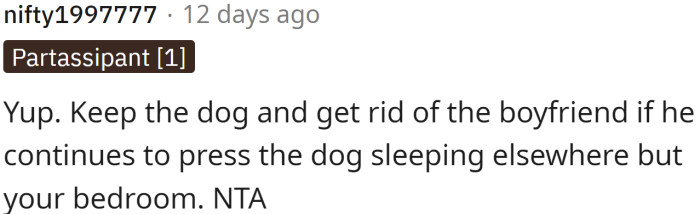
Every time they fought about the dog’s spot, it sounded less like “bedtime logistics” and more like jealousy wearing a blanket.
Communication Strategies for Couples with Pets
To navigate these challenges, effective communication is essential. Couples should engage in open discussions about their expectations regarding pet care and how it fits within their relationship. Utilizing active listening techniques can help both partners feel heard and understood, reducing the potential for conflict.
Research indicates that couples who communicate effectively are better equipped to handle disagreements.
Communicating Differences in Values Effectively
Effective communication is essential when addressing conflicting values in relationships.
To create harmony in pet-inclusive relationships, couples should engage in open discussions about their priorities regarding pet care.
Finally, some common sense

There are solutions

OP gave some additional info:
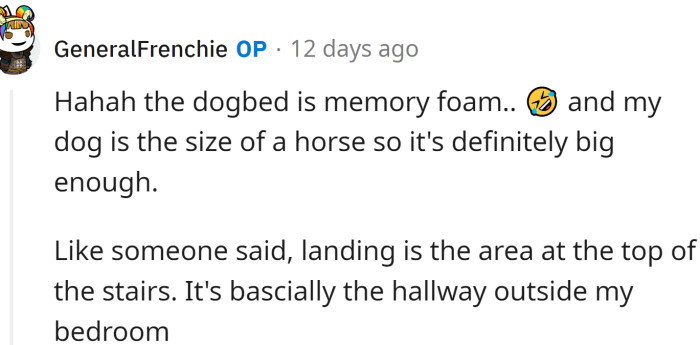
OP’s extra details made it clear the dog is not just “a pet,” he’s been part of her life since he was basically a baby.
Additionally, setting boundaries around pet care can help create a sense of balance in the relationship. Couples can negotiate responsibilities and establish guidelines that respect both partners' needs, leading to greater harmony.
Given the emotional stakes involved in pet ownership, partners should explore their feelings and expectations about pets together. By participating in joint activities related to pet care, couples can find common ground and reinforce their connection.
Additionally, practicing empathy and understanding each other's emotional connections to pets can foster a supportive environment.
Couples might even consider scheduling joint activities with the pet to enhance bonding and create shared experiences.
Ultimately, it’s about finding a balance that honors both the pet's needs and the partner's feelings.
Both sides are right
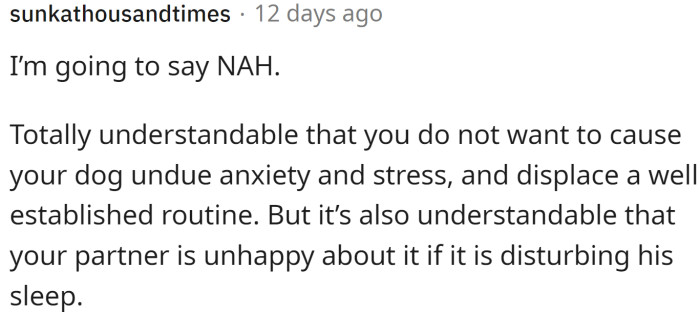
This Redditor shared their experiences:

The bottom line is:
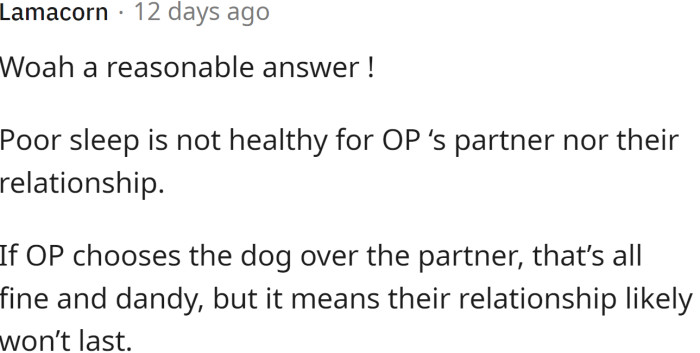
So when OP asked if the relationship can work long-term without agreement on where the dog sleeps, Reddit had plenty of opinions ready to bark back.
The Emotional Significance of Pets in Our Lives
Pets often represent unconditional love and companionship, which can heighten emotional responses when conflicts arise.
This understanding can foster empathy and reduce feelings of resentment.
Compromise is a critical skill in successfully navigating relationship conflicts. Research has shown that couples who practice effective compromise report higher satisfaction in their relationships. This may involve finding middle ground on pet care arrangements, ensuring that both partners feel heard and valued.
Implementing strategies such as 'win-win' solutions can enhance collaboration and lead to a more harmonious living situation.
In this scenario, the conflict between OP and her boyfriend highlights the difficulty that can arise when pets and relationships intersect. While some people may not understand the strong bond between pet owners and their animals, the emotional connection can be powerful and significant.
The issue of where the dog sleeps at night may seem small, but it has caused significant tension between the couple. Ultimately, OP has chosen to prioritize the well-being of her dog and her own emotional state by letting the dog sleep in her room, even if it means potential conflicts with her boyfriend.
This highlights the importance of understanding and respecting the relationship between pets and their owners and finding ways to balance the needs of both parties in relationships.
The intersection of pet ownership and romantic relationships can be a delicate balancing act.
Additionally, recognizing that differing opinions about pets can stem from personal experiences can promote empathy.
In an age where pets are often viewed as family members, it is vital for partners to navigate their differing views on pet ownership with empathy. This situation reveals how emotional bonds with pets can significantly impact relationship dynamics. By addressing these feelings openly, couples can develop a deeper respect for each other's priorities, paving the way for a more harmonious and fulfilling partnership.
Ultimately, nurturing a relationship alongside pet ownership requires compromise and understanding. Couples must work together to ensure that both the relationship and the pet's needs are met, promoting a sense of unity and shared responsibility.
Research supports that couples who collaborate in pet care often report higher relationship satisfaction.
The dynamics of pet ownership intertwined with romantic relationships reveal a nuanced landscape that is both challenging and fulfilling. The article highlights how prioritizing a pet can spark significant discussions about emotional connections and responsibilities within a partnership. Open communication emerges as a crucial element in resolving potential conflicts, ensuring that both partners feel valued alongside their furry companions.
As couples navigate these complexities, the journey becomes one of commitment and mutual understanding. By embracing their shared love for their pets, they can cultivate a nurturing environment that respects both their romantic bond and their responsibilities as pet owners.
If they cannot agree on the dog’s bedtime, this relationship might be headed straight for the couch.
Think her priorities sparked debate? See how a girlfriend’s “dog smell” broke this couple.
Share this article: