AirTag Helps Rescuers Find LouLou Alive After Alaska Avalanche Left Her Missing for More Than 50 Hours

Lauren Padawer was more than 5,000 miles from Alaska, celebrating her father’s 80th birthday, when her dog LouLou vanished after an avalanche in Chugach State Park near Anchorage. One of the few reasons for hope was LouLou’s AirTag, though its first location estimate was nearly half a mile off.
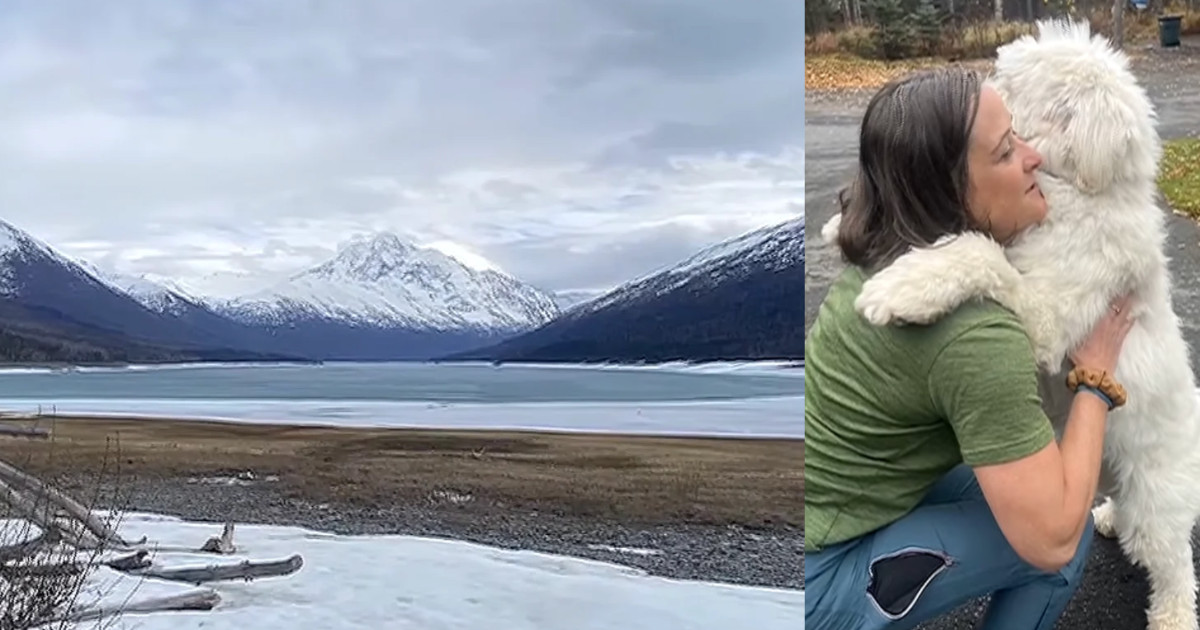
LouLou disappeared in the kind of place where even a small mistake can send searchers toward the wrong slope. The 4-year-old poodle-husky mix was in Chugach State Park near Anchorage, Alaska, when an October avalanche swept two mountaineers who were accompanying her roughly 500 feet from a ridge. Both people survived with serious injuries. LouLou was missing.
Her owner, Lauren Padawer, was overseas for her father’s 80th birthday when it happened. From more than 5,000 miles away, she began reaching out to anyone who might be able to help. She said she wanted to exhaust every resource she had and only stop if she knew she had done everything she could.
In the clip below, the rescue story looks remarkable. At the time, though, it was simply a missing dog in cold mountains, a worried owner far away, and a search that had to keep going.
[Embed YouTube video here]
A tiny tracker gave hope, but not a simple answer
More than 20 people joined the search for LouLou. Her AirTag became an important part of the effort, but it did not provide a neat solution. The first location estimate was nearly half a mile off, which in that mountain terrain could put rescuers on an entirely different mountainside.
That meant every bit of information had to be tested, not just trusted. The AirTag was useful because it suggested LouLou might still be located, but it also forced searchers to work carefully in a landscape where distance on a screen does not always translate cleanly on the ground.
People in the air and on the ground kept narrowing the search
Two pilots, Amanda Barker and Dave Beckett, got close enough to pick up another signal. That helped, but the effort was interrupted by weather.
Padawer was still contributing from afar. While people searched in Alaska, she compared satellite imagery with another mapping application and helped narrow the possible location. The search became a mix of persistence, technology, and people trying to make the best decisions they could with limited clues.
That is part of what makes LouLou’s story so gripping for dog lovers. This was not a case of a tracker instantly leading someone to a lost pet. It was a long effort involving more than 20 people, repeated attempts to get better information, and an owner who kept working from another part of the world while others moved through the mountains.
Then came the photo everyone wanted
After more than 50 hours, the message Padawer had been hoping for finally arrived. It was a photograph, and LouLou was alive.
"I was shocked," Padawer said. "I couldn’t believe what I was seeing. It was too good to be true. I cried."
LouLou appeared to have a broken toe and a damaged canine tooth, but she was soon resting comfortably. Padawer later said she was back to enjoying the couch and naps, and otherwise back to normal.
For anyone who treats a dog like family, the ending lands hard for a reason. LouLou vanished after an avalanche. Her owner was thousands of miles away. The first digital clue pointed searchers nearly half a mile from where they needed to be. Even so, the search did not stop. People kept showing up, the signals got better, and LouLou made it home.
What an AirTag is, and how it finds things
An AirTag is a small tracker made for locating everyday items such as keys, bags, or luggage. Many people also attach one to a dog’s collar or harness, but it helps to understand its limits before relying on it for safety.
It does not work like a traditional satellite GPS pet tracker. Instead, it mainly uses short range wireless signals. When the tag is near a compatible phone or tablet, that device can help update the tag’s location for the owner. In busy places, that can be very useful. In remote areas, deep snow, heavy woods, or places with few people carrying compatible devices, updates may be delayed or unavailable.
At close range, the owner can usually make the tag play a sound. Some phones can also guide the owner toward it more precisely when they are already nearby.
What it can do for pets, and what it cannot
For many dog owners, an AirTag is best seen as a backup layer, not a complete pet recovery plan. It may help if a dog slips away in a neighborhood, at a trailhead, or during travel. It is less dependable for long distance tracking in the backcountry, during storms, or anywhere there are few nearby devices to detect it.
If your dog spends time off leash, hikes, or travels in rough conditions, think about using several forms of identification at once: a collar tag with current contact details, a registered microchip, and a dedicated pet tracker if you need live location updates over wider areas. Bright gear can also help people spot a dog quickly in snow, brush, or low light.

Practical setup tips for owners
If you use an AirTag on a dog, attach it with a holder that closes securely and does not dangle so loosely that it can snag. Check the battery and test the sound feature before trips. Practice finding it at home so you know what the app looks and sounds like under stress.
Keep your dog’s collar fit correct, and consider putting the tracker on a harness during outdoor adventures so it is less likely to come off. Carry recent photos of your dog on your phone, and make sure your contact information is current everywhere it appears.
Most important, treat tracking as one part of preparedness. Reliable recall, a strong leash system, weather awareness, and visible gear often matter just as much as any device.
Share this article: