
Buddy the Fearful Rescue Dog Finally Lets Lee Hold Him After Two Months of Trying

Buddy had every reason to keep his distance. Abandoned in a place where unwanted pets are often left behind, the fearful dog spent two months resisting rescue before one quiet meeting with Lee from The Asher House changed the direction of his life.
A hard-won first touch
By the time Buddy was brought to meet Lee, a dedicated rescuer had already spent two long months trying to get hold of him. The stakes were simple and enormous at once. If Buddy could settle enough to accept help, he would have a chance to leave that dumping ground behind and begin again at The Asher House.
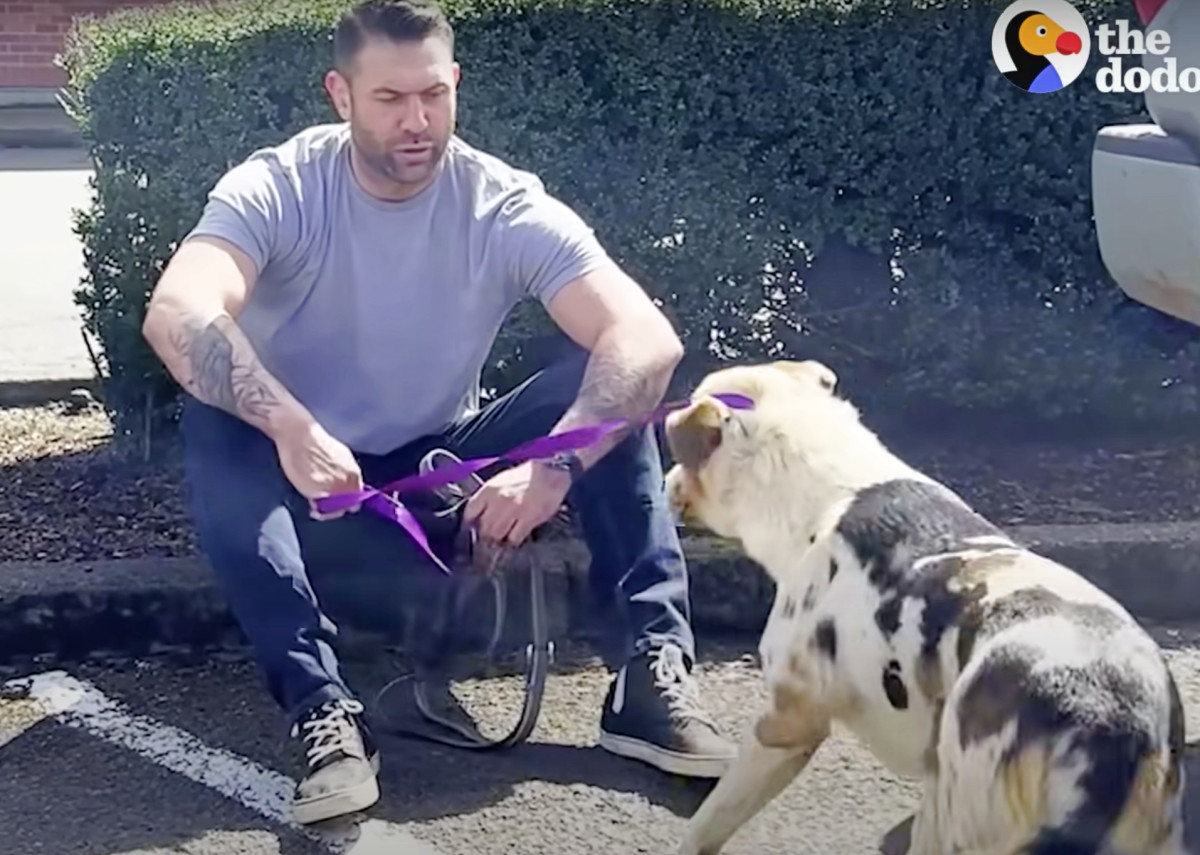
Their first moments together did not look easy. Buddy barked loudly and pulled away, making it clear he wanted nothing to do with the man holding out the possibility of a new home. Lee took Buddy’s leash and gently shushed him, meeting all that resistance with calm instead of force.
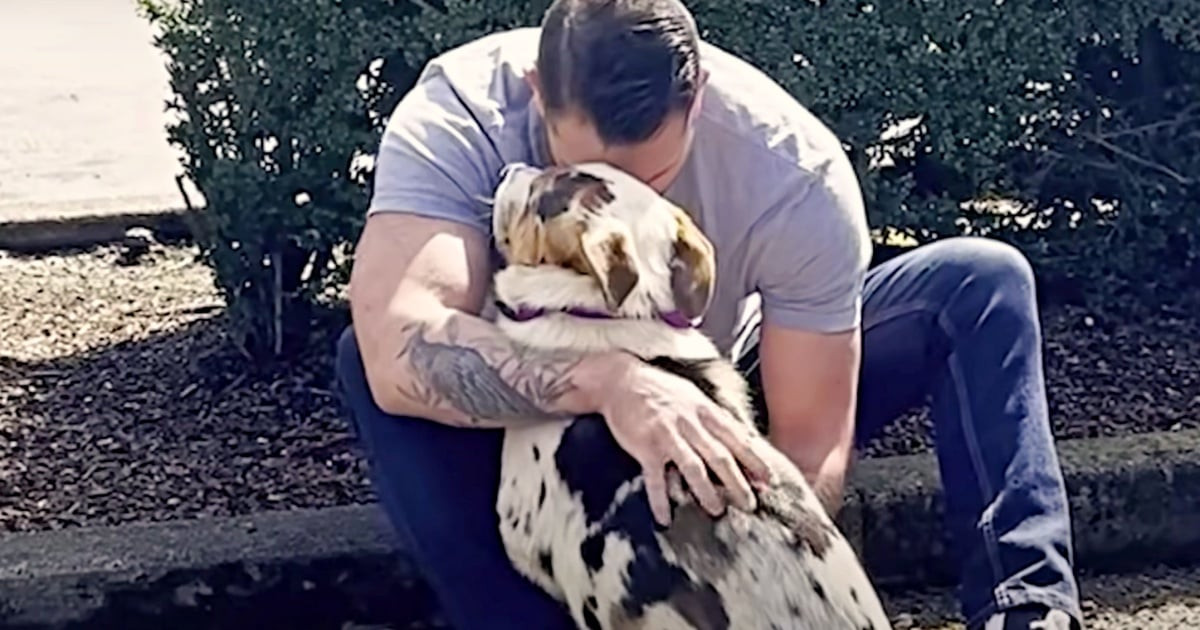
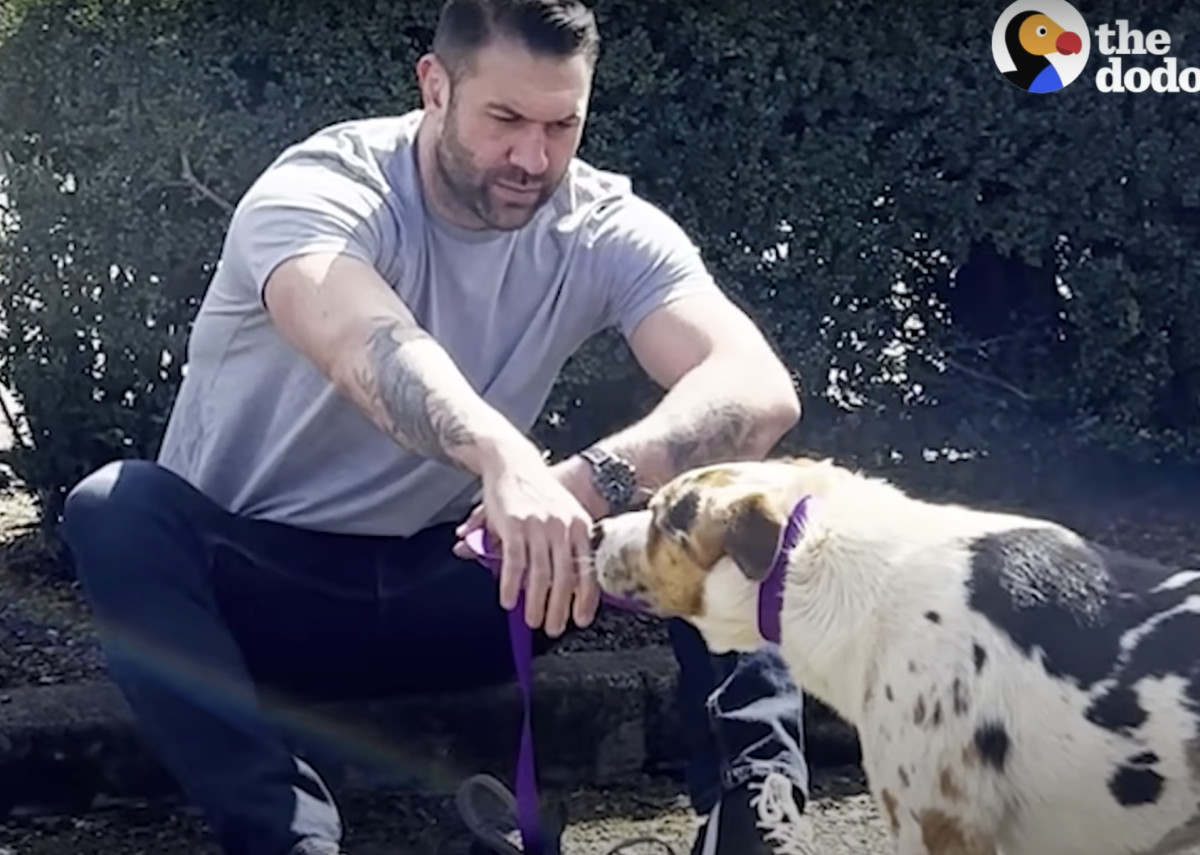
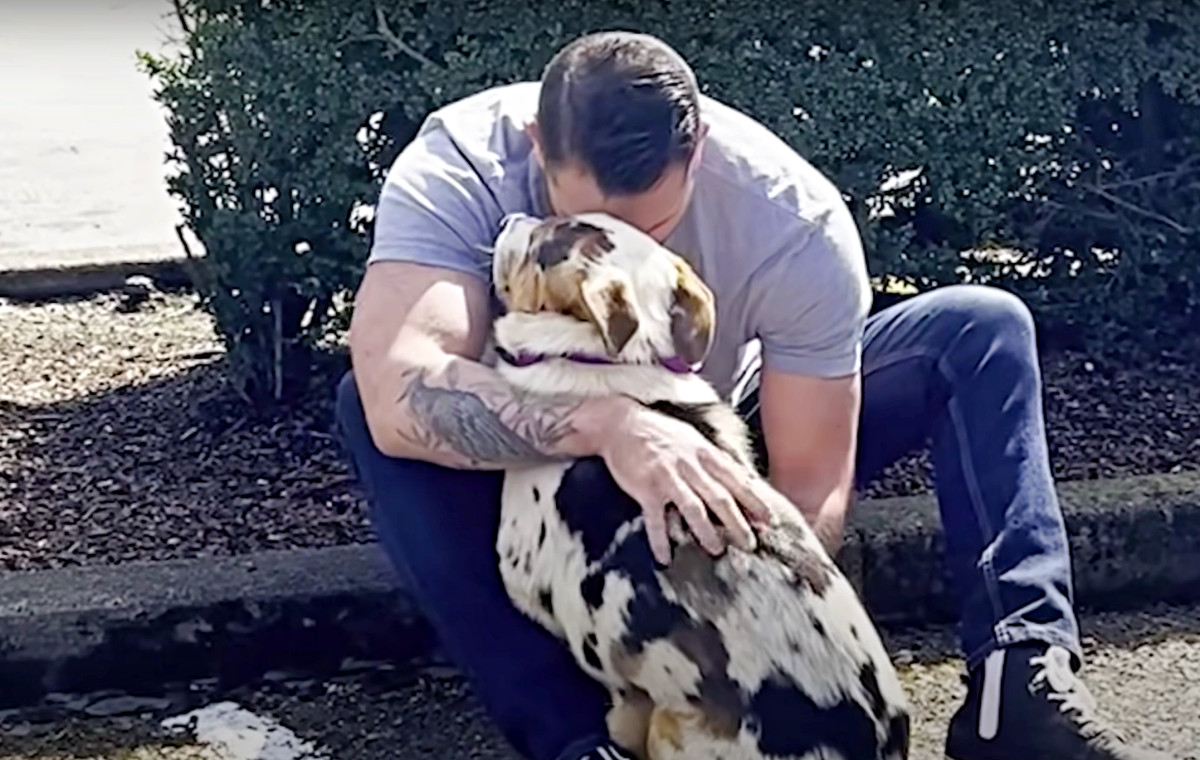
In the clip below, that quiet patience becomes the turning point. Buddy watched Lee, who stayed relaxed and let his own guard down. The dog seemed to read that energy. What happened next was small in motion but big in meaning. Buddy finally allowed Lee to wrap him in an embrace, and the person filming the interaction was left amazed by what they had just witnessed.
A new place, and a lot to process
That breakthrough did not mean everything became easy the moment Buddy reached the sanctuary. When he arrived at The Asher House, he was still nervous and unsure in unfamiliar surroundings. Meeting the resident pack brought out more of the same anxiety. Buddy barked and showed clear signs that he was struggling with the change.
Lee did not treat that behavior as a failure. He understood that Buddy was stepping into a completely new environment and would need time to adjust. Rather than judging the dog for reacting, he trusted the process of letting Buddy find his footing.
Lee put that trust into words in a way that captured the whole approach: “I can feel it, I know it, I trust it. I trust him. He’s my Buddy.” For a dog who had already learned to be wary, that kind of patience mattered as much as the rescue itself.
Learning the rules of the pack
Part of Buddy’s next chapter involved something many rescued dogs have to navigate, figuring out how to live among other dogs. Lee explained that Buddy needed room to establish boundaries with the pack. The other dogs, he said, had to understand that Buddy could speak for himself and was willing to set those boundaries.
Lee was ready to step in if necessary, but he also believed the dogs needed the space to communicate and sort things out together. It was not about forcing instant harmony. It was about allowing Buddy to be heard in a safe setting while he learned that this new home came with structure, companionship and support.
From abandoned to accepted
As Buddy settled in, the change became clearer. He grew more comfortable and more secure in his new surroundings. With Lee’s support and the company of the other dogs, he began moving past that first wave of anxiety.
Buddy’s story lands with the kind of payoff dog lovers never stop rooting for. A dog left in a place associated with abandonment was given the time he needed instead of being written off for being difficult. The barking, the pulling away and the uncertainty were not the end of his story. They were the conditions he arrived with.
What carried him forward was a rescue that did not stop at getting a leash on him. It continued through the harder part, earning trust, respecting his signals and believing he could adapt. By the end, Buddy was not just out of danger. He was on his way to learning how to trust again, surrounded by a new dad and a pack that could become his own.
Why fearful rescue dogs may take time to trust
Many rescue dogs arrive with an incomplete history. Some have had little socialization. Others may have learned that hands, confinement, noise, or sudden movement predict something unpleasant. Fear can look dramatic, such as cowering or trembling, but it can also look quiet: freezing, turning away, refusing food, hiding, or avoiding eye contact.
Trust usually grows through predictability, not persuasion. A dog that can choose when to approach often relaxes faster than a dog that is repeatedly coaxed, cornered, or picked up. Routine helps. So do calm voices, slow movement, and a setup that lets the dog watch from a safe distance. Progress is rarely linear. A dog may accept contact one day and retreat the next, especially after a startling event.
Why being held can feel hard for some dogs
Being lifted or held removes a dog's control over its body. Even friendly dogs may dislike it. For a fearful dog, restraint can feel especially intense because escape is no longer possible. That is why many behavior professionals focus first on consent based handling: let the dog come close, offer a hand low and to the side, touch briefly, then pause to see whether the dog leans in, stays, or moves away.
Useful signs of comfort include soft eyes, a loose body, normal breathing, and voluntarily staying nearby. Signs to stop include stiffness, lip licking, yawning when not tired, whale eye, paw lifting, tucked tail, backing away, or freezing. If a dog freezes, that is not the same as enjoying the contact.
What helps a shy dog settle in
Set up a quiet resting area and keep early life simple. Short, predictable outings are often better than overwhelming adventures. Toss treats rather than reaching over the head. Sit sideways instead of looming face to face. Use walks, sniffing, play, and food puzzles to build positive routines without demanding touch.
Avoid forcing greetings with strangers or other dogs. Use a harness and secure leash for safety, since frightened dogs may bolt. If fear leads to snapping, shutdown, or inability to eat or rest, get help from a qualified veterinarian or reward based trainer. Slow, steady confidence building is usually more effective than pushing for quick milestones.
Share this article:





