Redditor Refuses To Dog-Sit Her Dad's "High Maintenance" Dog While He Goes On Vacation As She Also Has Plans Of Her Own

Some family favors sound small until they collide with real plans, and that is exactly what happened here. A Redditor expected her dad’s dog to be boarded while he went on vacation, but instead she was asked to stay behind and watch a very demanding pet.
The dog is described as high maintenance, unable to be left alone for more than two hours, and constantly needing attention. The problem is that the Redditor already planned to stay at her partner’s home the whole time, so she was never counting on being available for dog duty.
Now her dad wants her to change her plans, and the family is stuck in the middle. Read on.
The OP writes:

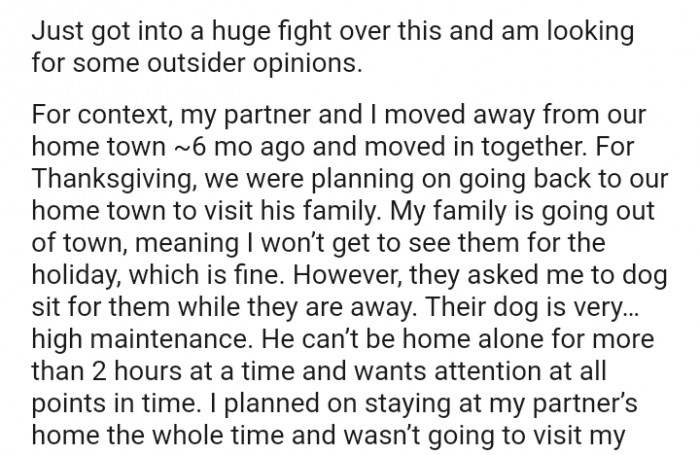
They asked the OP to dog-sit for them while they are away
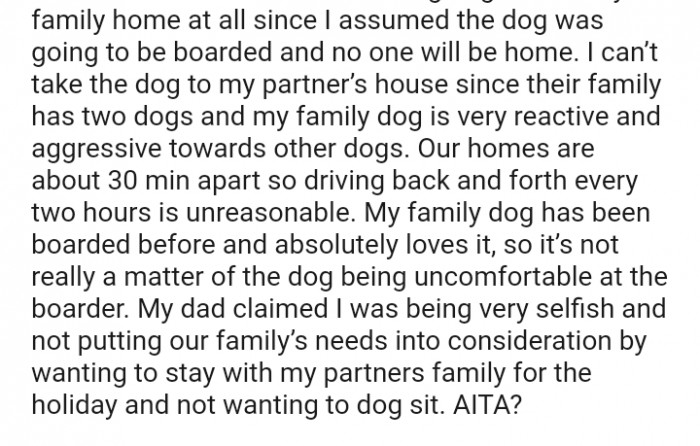
It’s not really a matter of the dog being uncomfortable at the boarder
This situation highlights the crucial nature of shared responsibility in pet ownership. The Redditor's refusal to dog-sit her father's "high maintenance" dog while he vacations reveals the potential for strain when one family member feels overburdened by pet care duties. The article suggests that the father's expectation for his daughter to take on this responsibility without consideration for her own plans may lead to resentment and conflict. Such dynamics are not uncommon, as the stress of pet care can easily spill over into personal relationships. Finding a balance in responsibilities is essential to maintain harmony within families, especially when it comes to the care of demanding pets.
The Challenge of Balancing Responsibilities
The decision to decline dog-sitting responsibilities reveals a complex interplay of personal priorities and obligations. Research indicates that setting boundaries is crucial for maintaining mental well-being and preventing burnout, especially in family dynamics. The Redditor's choice reflects an understanding of her own needs and the importance of self-care in managing relationships.
In situations like this, it's essential to recognize that saying 'no' can be a healthy expression of self-advocacy.
Below are some of the topmost comments from Redditors in response to the story.
Anything else seems impossible

Maybe they were trying to save money

Tell him to board the dog and quit projecting

When expectations are not explicitly discussed, it can lead to misunderstandings and emotional distress.
Establishing a shared understanding of responsibilities can significantly improve the dynamics of pet ownership within families.
This scenario also highlights the importance of effective communication between family members.
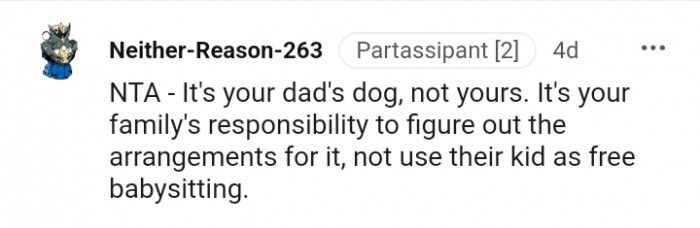
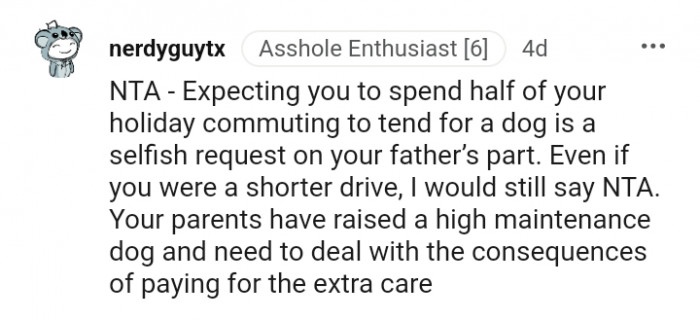
They should not use their kid as a free babysitter
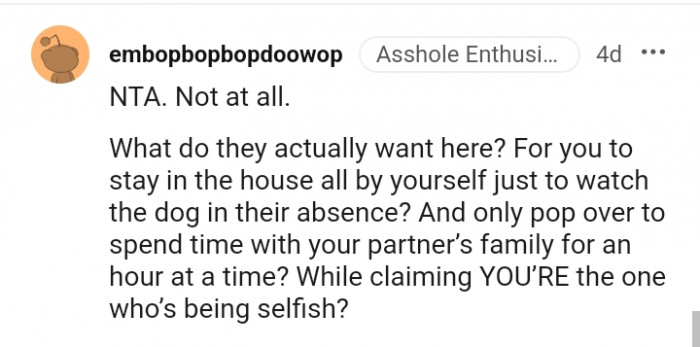
They want you to stay in the house all by yourself
Your parents have raised a high-maintenance dog
The Impact of Personal Plans on Pet Care
This situation underscores the complexity of balancing personal plans with pet care commitments.
Managing Family Dynamics
Research indicates that families that engage in boundary-setting experience healthier interactions and greater respect for individual needs. The Redditor can benefit from discussing her own priorities while recognizing her father's intentions, which can lead to a more collaborative approach.
Utilizing empathetic communication strategies can help bridge gaps and enhance understanding.
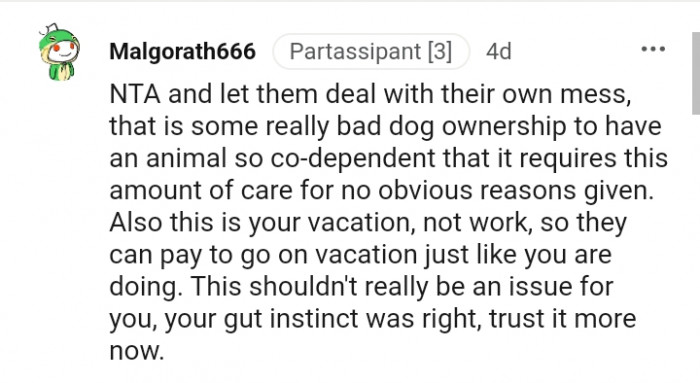
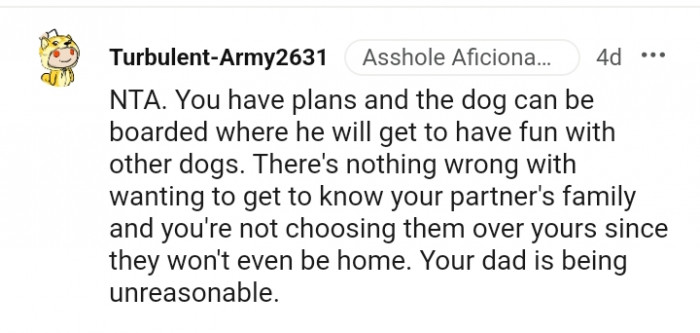
It's unreasonable that they expect you to ditch your plans

They can pay to go on a vacation
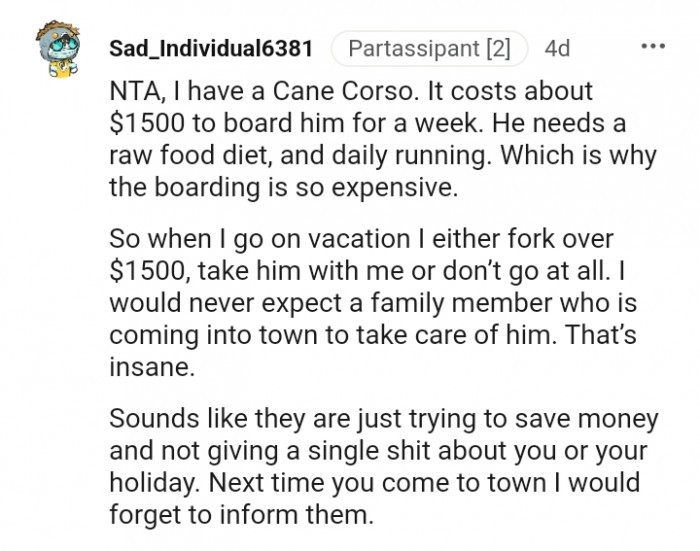
Sounds like they're trying to save money
To navigate these competing demands, individuals should prioritize open communication about their plans and responsibilities.
Encouraging family discussions about scheduling and responsibilities can help prevent conflicts and ensure that all needs are met.
It’s the same kind of tension as the Redditor who refused to drive two hours daily to check their parent’s cat.
Additionally, considering alternative solutions, such as finding a pet sitter or exploring dog boarding options, can alleviate the pressure on both parties. Involving the father in the decision-making process can help foster a sense of shared responsibility while also respecting the Redditor's needs. This approach can lead to a more balanced and cooperative family dynamic.
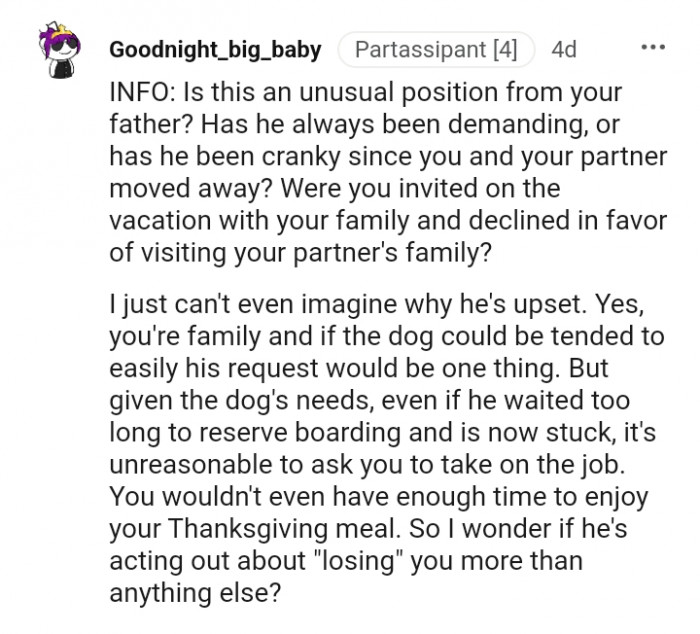
This Redditor can't imagine why he's upset
You're also responsible for your pet's care
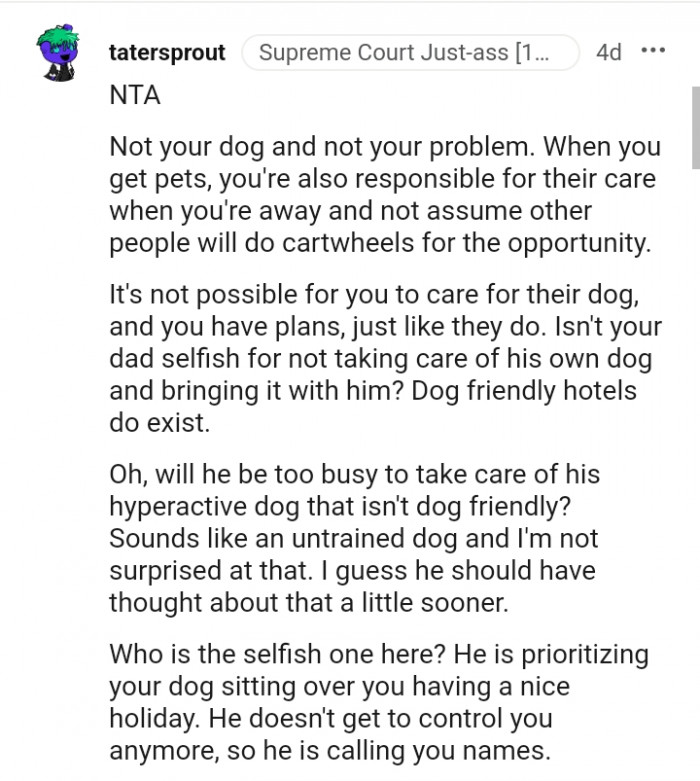
Your dad is being unreasonable
The Role of Emotional Well-Being
Emotional well-being is deeply intertwined with the responsibilities of pet ownership.
Your dad wants to sabotage your time with your partner's family

It seems the dog is poorly trained

The holiday has likely been booked

Implementing self-care practices can help individuals manage stress associated with pet ownership.
Board the dog like they would have done

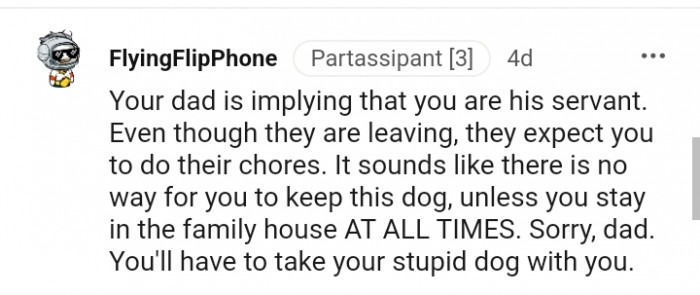
Sounds like there's no way you can keep the dog
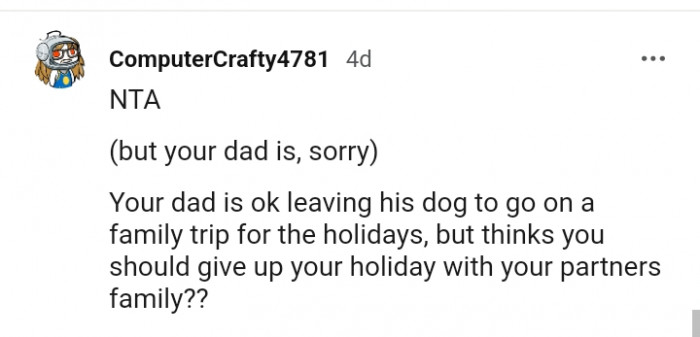
Your dad is okay with leaving the dog
Creating Collaborative Solutions
Collaborative problem-solving can be a valuable tool in navigating pet care responsibilities.
This is not your problem
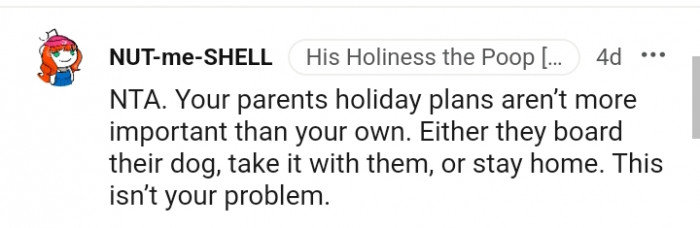
Dad needs to understand this and board the dog
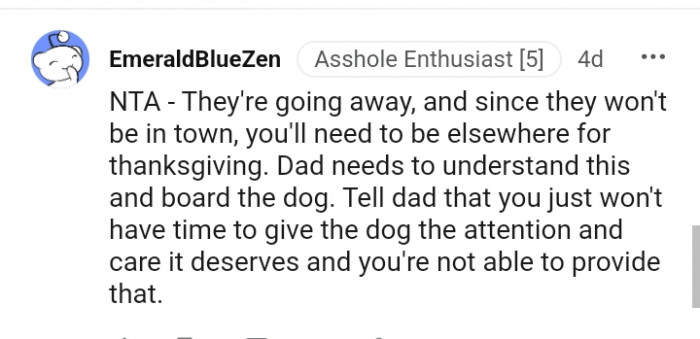
As a pet owner who wants to go on a vacation without your pet, you should have a plan mapped out. As a Redditor suggested, it's either the OP's dad boards the dog, takes the dog along with them, or simply stays back home.
What will you do if you were in the OP's shoes? Leave your thoughts in the comments below and share this post as well.
Navigating the complexities of personal commitments alongside familial duties is a delicate balancing act, as illustrated by the Redditor's refusal to dog-sit her father's demanding pet. This situation underscores the importance of setting boundaries, particularly when personal plans are already in place. By fostering open discussions about expectations and responsibilities, families can better manage their dynamics and avoid misunderstandings that can lead to resentment.
Encouraging family members to express their concerns and needs can lead to more effective collaboration.
Implementing shared calendars or schedules for pet care can help ensure everyone is on the same page.
By prioritizing teamwork, families can create a supportive environment for both pets and each other.
The Importance of Flexibility
Flexibility is crucial in managing pet care responsibilities, particularly in the face of changing personal plans.
Recognizing the need for flexibility can lead to healthier dynamics and reduce conflicts surrounding pet care.
Encouraging families to approach pet care with an adaptable mindset can foster resilience.
The situation presented in this article highlights the intricate dynamics of family obligations when it comes to pet care.
By addressing these responsibilities openly, families can not only enhance their relationships but also better navigate the emotional challenges that arise from caring for pets. This case serves as a reminder of the psychological toll such duties can impose, emphasizing the need for empathy and flexibility in balancing personal commitments with family expectations.
Not the only time someone refused extra pet duties, see the 31-weeks-pregnant woman who declined to dogsit her friend’s dog.
Share this article: