A Neighbor’s Cat Kept Choosing the Same Garden. Now the Family There Wants to Adopt Him

Lucky was supposed to be the cat across the street. Instead, he became the big, affectionate regular in someone else’s garden, someone else’s house, and eventually someone else’s grief story. What started with one wounded, howling cat on a holiday eve turned into a yearlong saga of missing posters, backyard visits, leftover meals, and a very cat-like decision to keep showing up where he seemed happiest.
Lucky made the first move
The moment that set everything in motion was hard to ignore. A neighbor spotted a friendly cat outside, howling in the street with a wound on his neck and looking rough enough to seem lost. The cat was unknown to them at the time. They had only moved into the neighborhood a few months earlier, there were not many strays around, and this cat was much too social to seem feral.
So they did what many cat people would do. They brought him inside.
It was the day before a national holiday, with fireworks expected, which made leaving him outdoors feel even worse. Their own cat was not exactly delighted by the surprise guest, but sympathy won out. The newcomer was taken to a vet to be checked for a microchip, and he had one.
The address attached to the chip was not far away, though it still seemed a bit much to imagine this cat had simply wandered there casually. No one answered the phone, so the finder brought him back home and waited for the call that never came.
The answer arrived in a more analog way. A missing poster with the cat’s picture went up right across the street.
That was how the mystery cat became Lucky, the neighbors’ cat. He was returned immediately, and the woman who picked him up came across as frazzled but pleasant enough. At that point, it looked like a brief detour in Lucky’s life, the kind of neighborhood mix-up that begins and ends with a poster and a relieved reunion.
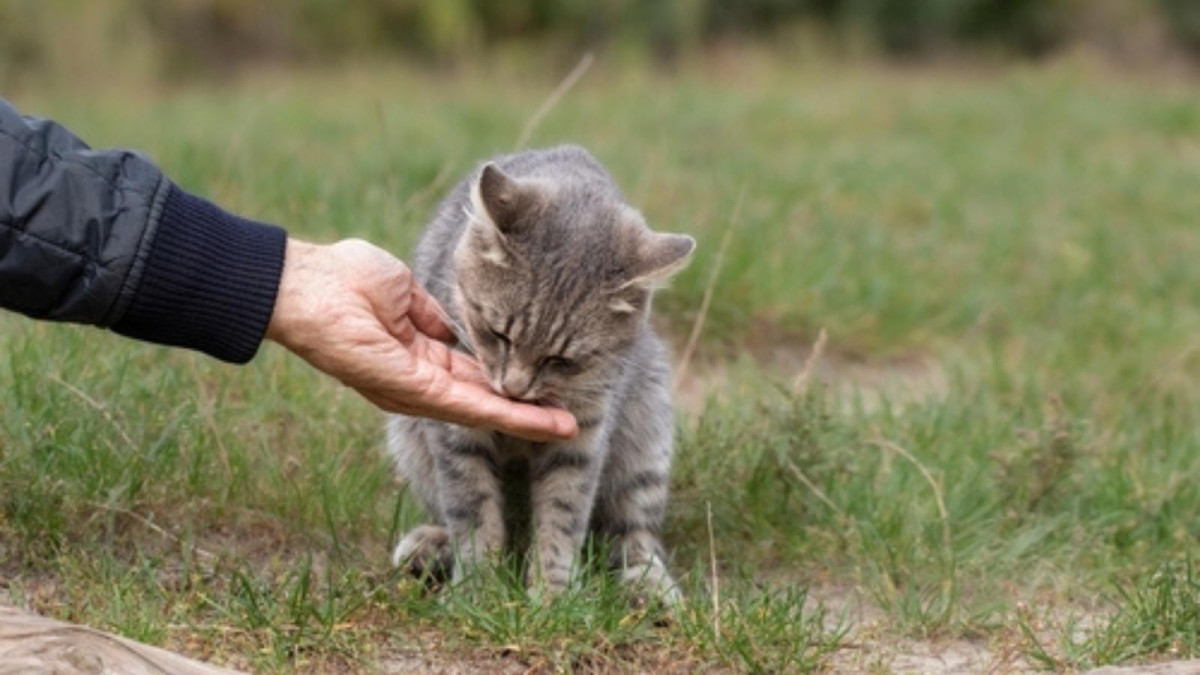
A cat with a hard route home
Then came the detail that changed the whole story.
Lucky, it turned out, had a disability. He could not climb or jump well, which helped explain his odd gait and why he had initially seemed older than he was. He was 8, not an elderly drifter after all.
His home setup also sounded tricky for a cat with limited mobility. He could get out, but he could not make his way back inside on his own because he was unable to climb the ladder to the apartment. To get back in, someone had to let him in through the front door.
That became especially important when his owners went on vacation for a month and a neighbor was feeding their two cats. Feeding them was not the issue by itself. The problem was Lucky still could not access the apartment on his own. The result, as it was understood by the neighbor telling the story, was that he spent much of that month outside.
Even after that, Lucky did not vanish from view. He was still seen around the sidewalk from time to time. The family who had taken him in once even kept their distance for a while after his visit had left them dealing with fleas in the apartment. It was an unpleasant souvenir from a good deed, but not enough to end Lucky’s connection to the household.
The garden became his chosen hangout
A year later, Lucky expanded his territory and discovered a place that suited him especially well. He found the backyard area connected to several apartment-complex gardens, a green patch his own owners did not have.
That summer, the household across the street was spending a great deal of time outdoors with their own cat, who was 18, very ill, and nearing the end of his life. They had been accompanying him into the garden for years because he did not go out by himself, and it had become part of his routine.
Lucky started joining them there.
By all accounts, he was easy to adore. He was described as a big boy with a charming personality, extremely friendly and affectionate, even a little dog-like in how he related to people. He also had a very healthy appetite. He ate leftovers from the older cat’s meals. He ate food put out for hedgehogs. The neighbor was fairly sure he was probably collecting snacks elsewhere too.
He was not living on handouts alone, either. Lucky was also a hunter, bringing large rats into the garden as gifts and eating them there. It was not exactly delicate behavior, but it was very cat behavior.
Around this point, another missing poster appeared, suggesting Lucky had stopped going home regularly. It stayed up for only a day, which made it seem as if the matter had been settled. But the cat kept turning up in the same garden, again and again, as if he had quietly filed a change-of-address form that only he could see.

Humans tried to collect him. Lucky had other ideas
People from Lucky’s household did come looking for him. One time, the owner’s son came into the garden with what was described as a rude attitude. The neighbors tried to explain the obvious factors at play: leftover food, summer weather, and a cat who liked being outside.
The visits continued, but not in a way that reassured the people Lucky kept visiting. After the older resident cat died two months before the story was told, Lucky’s presence took on new meaning. The grieving neighbor said his continued company helped tremendously.
At the same time, they tried to cut back on feeding him. It had felt different when he was sharing leftovers already meant for another cat. Without their own cat there anymore, deliberately feeding Lucky felt harder to justify. He reportedly lost a little weight, but he kept returning to the garden anyway.
That persistence mattered. In the telling, Lucky did not seem like a cat making occasional social calls. He seemed like a cat who simply did not want to go home.
His owners did try to retrieve him at times, sometimes successfully and sometimes not, but only about once a week at most, according to the account. The mother appeared more and more irritated, not only that Lucky was not coming home willingly, but that she had to come look for him at all.
That attitude became the real sticking point for the neighbor who had grown attached to him. Their frustration was not just about a cat wandering. It was about watching a cat with limited mobility depend on humans for access to his own home, while also seeing him treated as a hassle when he failed to cooperate on cue.
One episode especially stuck with them. The daughters from Lucky’s household came to get him and stomped down the fence to the garden rather than wait briefly for him to walk over after being called once. That was the last time those daughters were seen there, and it had been more than a month.

When a neighborhood cat starts to feel like your cat
By the end of it, the emotional math had shifted.
Lucky was still officially someone else’s cat. But he was also the cat who had shown up wounded and been taken in. The cat who needed humans to open doors for him. The cat who kept choosing the same garden, the same familiar people, the same place to linger after meals and during visits outside. He was the cat who stayed after another cat died, filling a silence he had not created but somehow softened.
That left the neighbor with a question a lot of cat people will recognize, even if the circumstances are unusually complicated. At what point does a visitor become family?
They were left wondering whether they should try to adopt Lucky, while also doubting that his owners would willingly give up their rights to him. The problem was not that Lucky was unloved by everyone. It was that love, access, responsibility, and the cat’s own apparent preferences did not line up neatly.
And that is what makes the whole story so distinctly feline. Lucky did not deliver a tidy answer. He just kept showing up, accepting affection, sampling whatever food was available, and acting very much like a cat who had decided where he wanted to spend his time.
For the people in the garden, that choice was both comforting and painful. They had not set out to claim anyone else’s pet. They had simply opened the door to a vulnerable, friendly cat one night, returned him when they realized where he belonged, and later found him weaving himself back into their daily life.
Whether Lucky ever officially changes homes remains uncertain. What is certain is that he already changed the atmosphere of one home across the street. Sometimes the cat distribution system does not deliver a package with clean paperwork. Sometimes it sends a big, charming neighborhood cat named Lucky, and then waits to see what the humans do next.
Share this article: