Rescue Dog Scout Helped Find a Missing Cat and Earned a National Medal

Scout had one clear assignment when she was handed a missing cat's bedding: follow Ripley's scent wherever it led. The Staffordshire Bull Terrier traced that trail over a wall, through a garden, across a railway line and over a canal, helping direct the search to the alleyway where the cat was later found and brought home safely.
The search that turned a dog into a hero
Ripley had been missing for more than a fortnight when Scout was asked to help. The cat belonged to a friend of Marilyn Gilchrist, and cat searches were not the kind of job Gilchrist and Scout usually took on. Even so, the request made sense. Gilchrist trains dogs to track scents, and Scout had reached an expert level in following a scent trail.
The starting point was simple. Scout was given the cat's bedding to smell. From there, she set off and led the humans with her on a route that was anything but straightforward. She went over a wall, through a garden, over a railway line and over a canal before ending up at an alleyway.
That trail did not mean Ripley was lifted from the spot on the end of Scout's lead. What it did was something just as important in a missing pet search. It narrowed the focus. Gilchrist told the cat's owner to concentrate the search in that area, and Ripley was later found there.
The ending was the kind pet lovers hope for every time a poster goes up or a search begins. Ripley came home safely. Gilchrist said the cat was a little bedraggled, but was very healthy. For Scout, the job ended with the kind of thank you most dogs can appreciate: extra treats and a new toy.
Before the medal, there was a tiny dog in bad shape
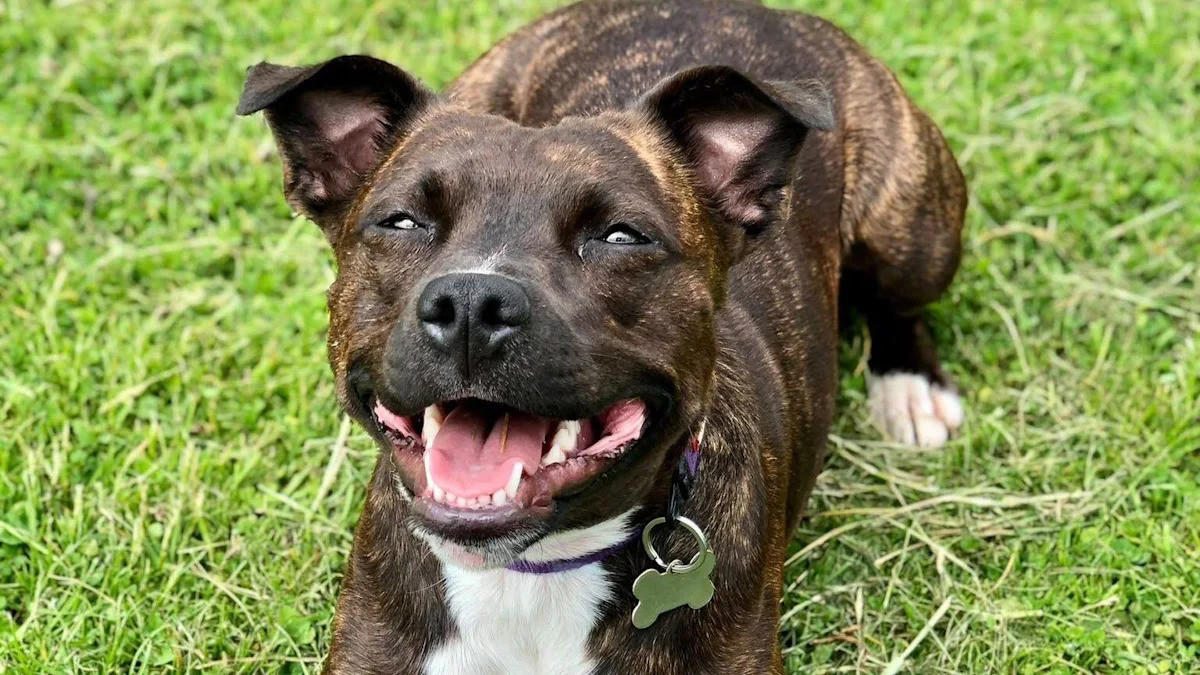
Scout's story did not begin with an award or a successful track. She was found abandoned in Leek, Staffordshire, during the first Covid-19 lockdown. When she was discovered, the Staffordshire Bull Terrier was desperately underweight and suffering from severe skin problems.
Gilchrist first took Scout in as a temporary foster. She has recalled arriving at the kennels and seeing a very small dog who did not look as young as she really was, because she was so dirty and in such poor condition. Even so, Gilchrist said there was something about Scout that immediately made her feel the dog belonged with them.
The temporary arrangement did not stay temporary for long. Gilchrist took Scout home, and within 24 hours her husband had decided they were keeping her. What began as a foster placement quickly became a permanent home.
That detail matters because it changes the shape of Scout's later achievement. The dog who would one day be recognized for scent work was not carefully selected as a finished working prospect. She was a rescue dog, taken in when she needed help, and then given a place to stay for good.
How Scout's nose found its purpose
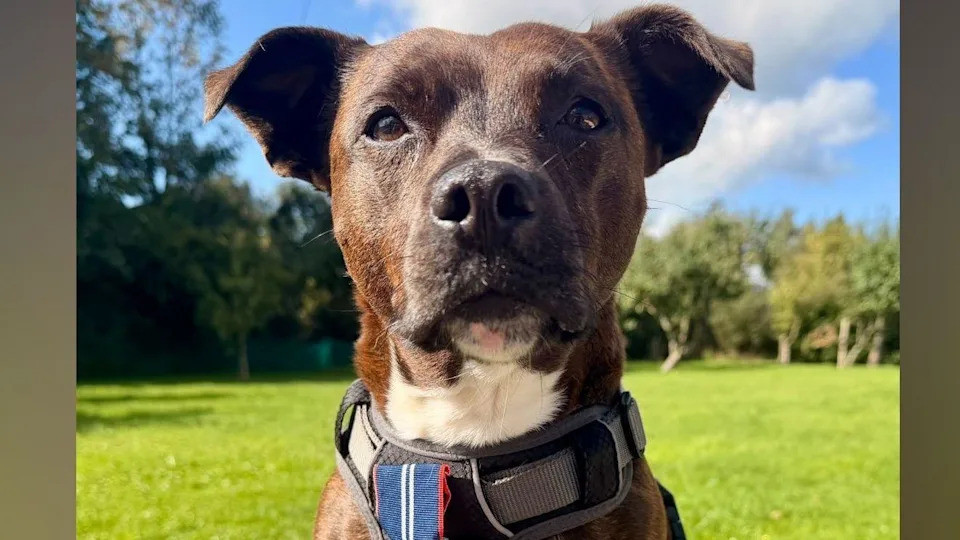
Gilchrist runs a business that trains dogs to use their noses to follow scent trails, so Scout arrived in a home where that skill was valued and developed. It was not long before the pair were putting training to practical use, and within a few years Scout was helping with the search for Ripley.
What stands out in Scout's story is not only that she was able to follow a scent, but how confidently she did it on a complicated route. The trail she took crossed obstacles and boundaries that could easily have sent a human search party in the wrong direction or caused them to give up on one area too soon. Instead, Scout stayed with the scent and carried on until she reached the alleyway that became the key location.
Gilchrist has said that helping look for a missing cat is not generally what they do. That makes Scout's role feel even more special. She was not simply repeating a routine exercise. She was applying her training to a real search, for a specific animal, with a family waiting for news.
For dog lovers, it is the kind of story that lands twice. There is the pleasure of seeing a dog do something remarkable, and there is the deeper satisfaction of knowing this was the same dog once seen as a tiny, dirty, neglected animal at a kennel. Scout was given a chance, and she turned that chance into work that helped bring another pet home.
The honor that came after Ripley was found
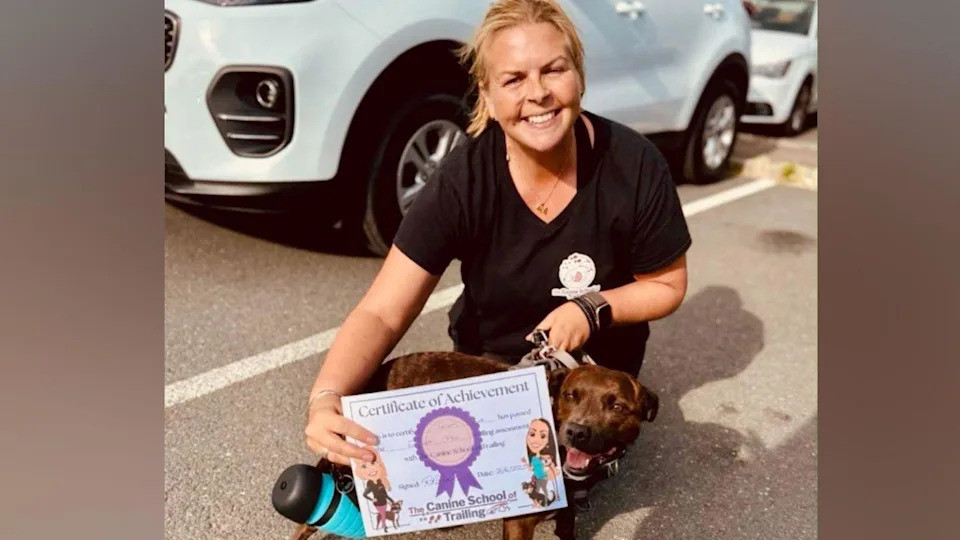
Scout's tracking ability has now brought her national recognition. In acknowledgment of her trailing work, she was awarded the Service Dogs UK and National Foundation for Retired Service Animals dog medal of honour.
It is an especially fitting detail for a story built on small but meaningful transformations. A dog found abandoned became a permanent family member. A foster arrangement became an adoption. Training became useful in a real search. A route that began with a sniff of cat bedding ended with a healthy cat back home. And the dog at the center of it all received a formal honor for what her nose helped make possible.
There is also something charmingly perfect about the shape of the whole tale. Dogs chasing cats is one of the oldest images in the book, but Scout's version of it had a very different ending. She was not sent after Ripley to cause trouble. She was sent to help. Her work gave the search direction, and that direction led to a safe reunion.
Scout's reward at home was much more down to earth than a medal. She got extra treats and a new toy. For many dogs, that would be more than enough. Still, the official recognition gives the story one last lovely note. A rescue Staffy who once arrived in terrible condition is now celebrated not for what happened to her, but for what she was able to do.
Share this article: