Labradoodle Malcolm Survived Three Surgeries After Vets Found Up to 100 Hair Bands in His Stomach

Malcolm, a 7-year-old Labradoodle, went from his usual playful self to a dog with vomiting, no appetite and unusual tiredness, and his family quickly learned this was far more than an upset stomach. At a veterinary clinic in France, an X-ray showed a tangle of strange shapes inside him, starting a rescue story his family says they will never forget.
The scan that made no sense
Joel Harper knew something was badly wrong when Malcolm stopped acting like himself. The normally lively dog had begun vomiting, stopped eating and seemed unusually low on energy, so Harper took him to Clinique Vétérinaire du Saint-Quentin.
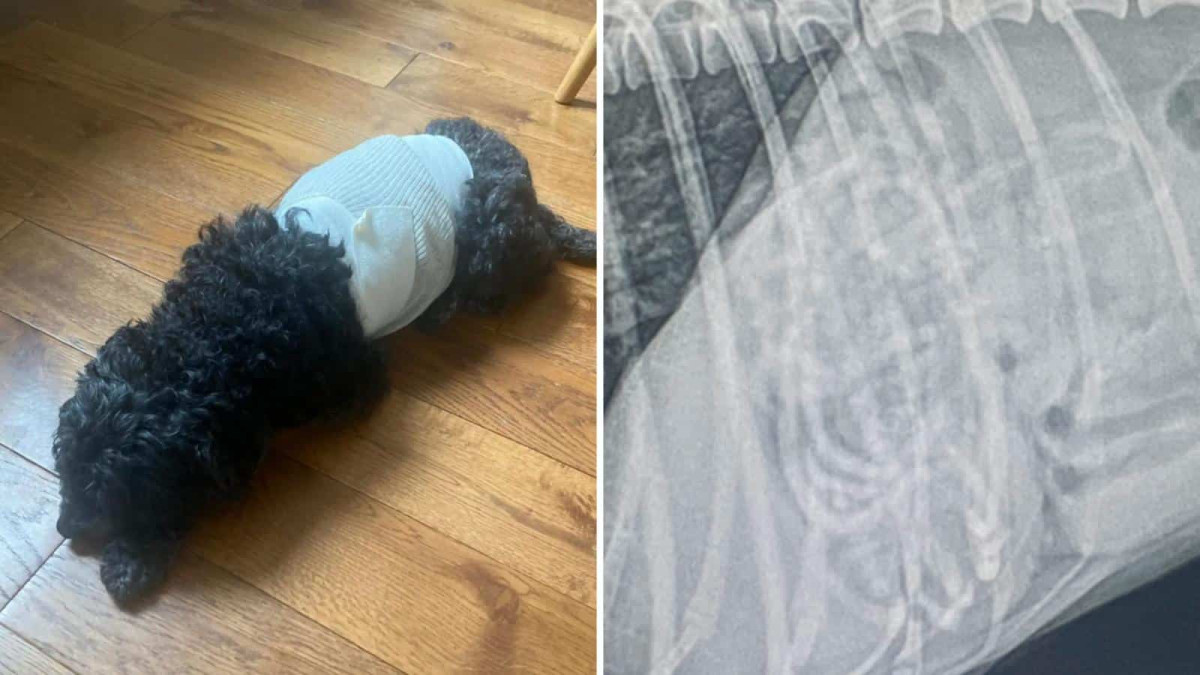
There, veterinarians found Malcolm had a dangerously high fever. The next clue came from an X-ray, but it did not offer the kind of instant answer anyone hopes for in a crisis. The image showed twisting forms inside Malcolm’s stomach, shapes that were clear enough to be alarming but not clear enough to identify.
Even the veterinary team could not immediately say what they were looking at. Harper later said the first guess was that the objects might be headphones. He had his own theories as he tried to make sense of the picture, including a jump rope or a piece of fishing equipment. Whatever the mystery was, it was not something that could stay where it was. Malcolm needed surgery.
A secret habit no one had seen
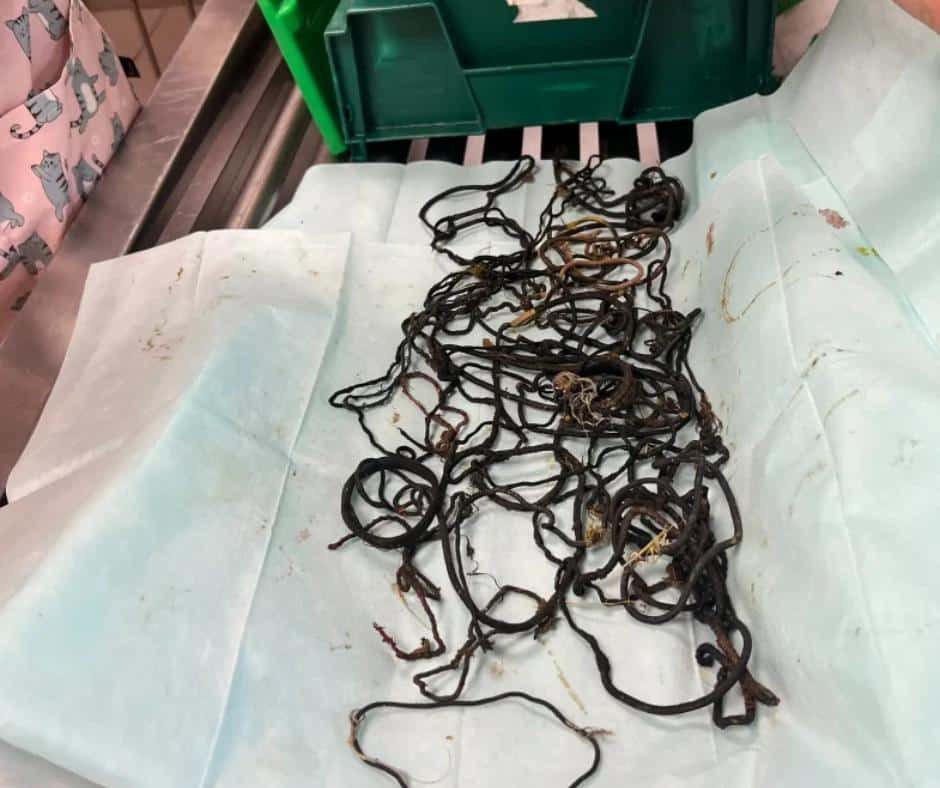
The answer only came after the operation, and it stunned Malcolm’s family. Inside their Labradoodle’s stomach was a huge collection of hair bands. Harper estimated the total at somewhere between 75 and 100.
That number was difficult to understand, not only because of its scale but because no one in the household had noticed Malcolm doing it. Harper lives in France with his wife, Marielle Enzo, their three children and their pets, and none of them had ever caught Malcolm chewing on a hair band.
Harper also said he regularly cleaned up after Malcolm in the yard and had never spotted a hair band in the dog’s waste. That left the family trying to work backward through a mystery that may have been building for a very long time. Harper began to suspect Malcolm had been swallowing the accessories over a period of years, one by one, without ever giving them an obvious sign of what was happening.
It is the kind of detail dog lovers can recognize immediately: the everyday object sitting around the house that seems too ordinary to become a medical emergency, until it does. In Malcolm’s case, those small accessories had been collecting out of sight until they turned into a life-threatening problem.
The danger did not end with the first surgery
Finding the hair bands was only the beginning of Malcolm’s fight. One of them had made its way into his intestines, where it shredded and contributed to a severe infection that led to sepsis.
That complication changed everything. What might have looked like a single dramatic surgery became a much longer and more uncertain battle. Malcolm needed another operation, and then more treatment as the veterinary team worked through complication after complication.
In total, Malcolm underwent three surgeries. He remained under veterinary care for three and a half weeks. During that stretch, his family faced repeated warnings that he might not survive.
Harper and Enzo later described the ordeal on a GoFundMe page created to help with Malcolm’s veterinary bills. The page laid out just how serious his condition had become and how many times the family had been told to prepare for the worst. For dog owners, it is the nightmare version of a hidden habit: a beloved pet who seems fine until the damage has already been done, followed by days and weeks in which every update matters.
What the veterinarian noticed in intensive care
One detail kept standing out to the people caring for Malcolm. Before the dog’s third surgery, Harper asked the veterinarian for an honest view of how much Malcolm was suffering.
The answer gave the family a reason to hold on. According to Harper, the veterinarian said Malcolm had continued wagging his tail throughout treatment and even while in intensive care. The vet reportedly told the family he had never seen another dog quite like Malcolm in 30 years of practice.
That image, a dog still wagging through fever, infection, surgery and recovery, became the detail that defined Malcolm for the people around him. His case was serious. His chances were questioned more than once. Yet the family and the veterinary team saw a dog who kept showing signs of himself in the middle of all that care.
It did not erase the medical risk, and it did not make the procedures any less necessary. But it changed the emotional center of the story from shock alone to perseverance. Malcolm was not just the dog with the baffling X-ray. He was also the patient who kept offering a small, unmistakable signal that he was still there.
Malcolm’s return home
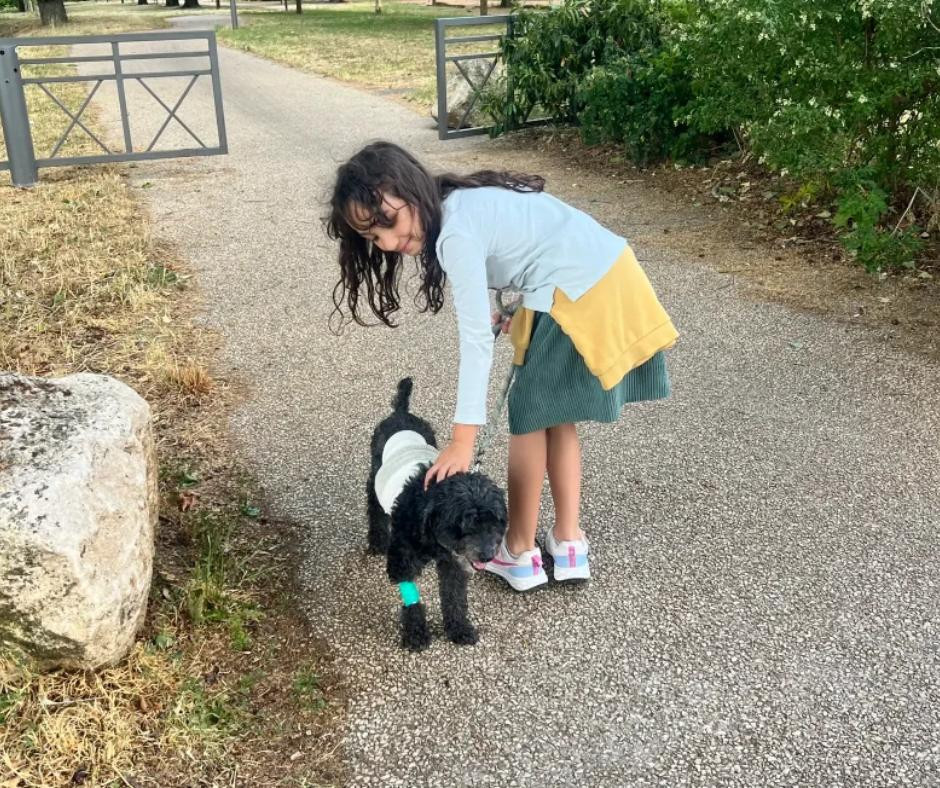
After weeks of uncertainty, Malcolm was finally well enough to leave the clinic and go back to his family. For Harper, Enzo and their children, that homecoming was the moment everything had been moving toward.
Back in familiar surroundings, Malcolm started looking like himself again. Enzo said he was running around the backyard and acting like an energetic puppy. After so much time spent waiting through surgeries, intensive care and difficult conversations, those ordinary bursts of movement carried a lot of meaning.
The family now calls him their “miracle boy,” a nickname shaped by everything he survived. Harper believes Malcolm’s determination helped him get through it.
For anyone who has ever watched a dog turn a routine household object into an obsession, Malcolm’s story lands as both warning and wonder. The warning is obvious: something as small as a hair band can become dangerous in ways a family may never see coming. The wonder is Malcolm himself, the playful Labradoodle whose secret stash was discovered only when he became gravely ill, and who made it all the way back to the yard, the family and the life waiting for him there.
Share this article: