
Man Collapses From 60-Hour Work Weeks To Support His Stay-At-Home Partner, Yet She Insists On Splitting Household Chores Equally

A man just tried to do the “right” thing, working 60-hour weeks so his stay-at-home girlfriend could relax, save money, and not worry about the bills. He thought he was carrying his share, and then some. But when he collapses from exhaustion and can’t keep up with cleaning, his girlfriend hits him with a simple demand: split the household chores equally.
So now you’ve got two people living the same apartment life, but in totally different realities. He’s grinding nonstop to support both of them, while she’s home most of the day, expecting the same chore list anyway. The conflict is messy because it is not just about dishes and laundry, it is about who is “doing enough,” and whether either of them feels seen or respected in the deal.
And the worst part is, this argument started over chores, but it is really about burnout, resentment, and what “fair” even means when one person is constantly running on fumes.
The Story in Detail

Here's an Overview of the Story.
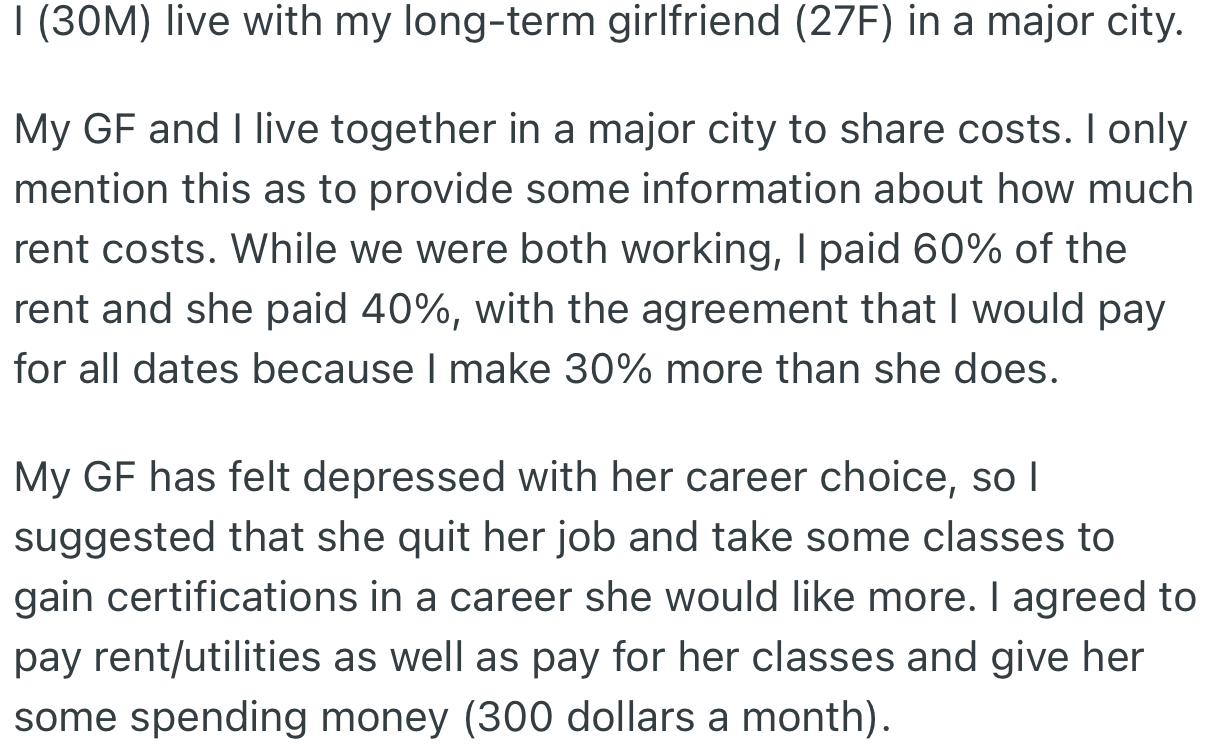
The situation presented in the article illustrates a classic struggle in modern partnerships, particularly against the backdrop of soaring living costs. The man's 60-hour work weeks to support his stay-at-home partner reflect the immense pressure placed on him to fulfill traditional gender roles as the primary breadwinner. This overwhelming responsibility can lead to feelings of inadequacy and burnout, especially when his partner maintains an expectation of equal participation in household chores. This tension is palpable in their dynamic, where the imbalance of labor and effort creates a breeding ground for resentment. The insistence on splitting chores equally, despite the man's exhausting work schedule, underscores a disconnect in their expectations. Such disparities can strain relationships significantly, revealing the critical need for open and honest communication to navigate the complexities of modern cohabitation. The emotional toll of these unbalanced roles serves as a reminder of the importance of mutual understanding and support in maintaining a healthy partnership.
OP Works Long Hours to Pay Bills for Himself and His Girlfriend. As a Result, He Feels Too Exhausted to Clean
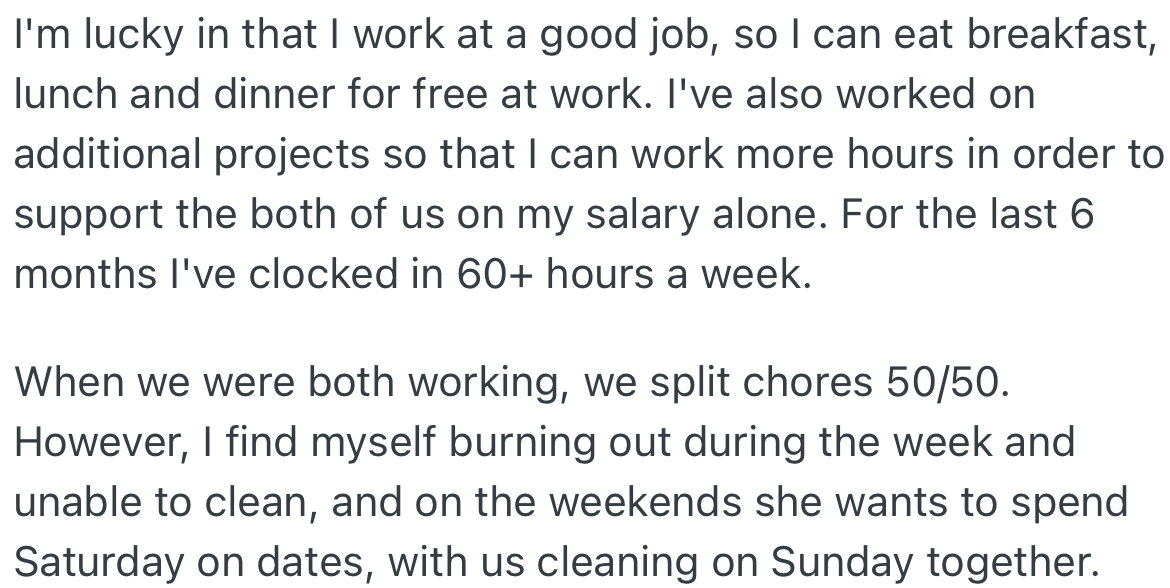
While OP’s Girlfriend Thinks He Should Do His Fair Share of the Chores, He Believes She Should Take Up More Responsibility Since She’s Home More Often
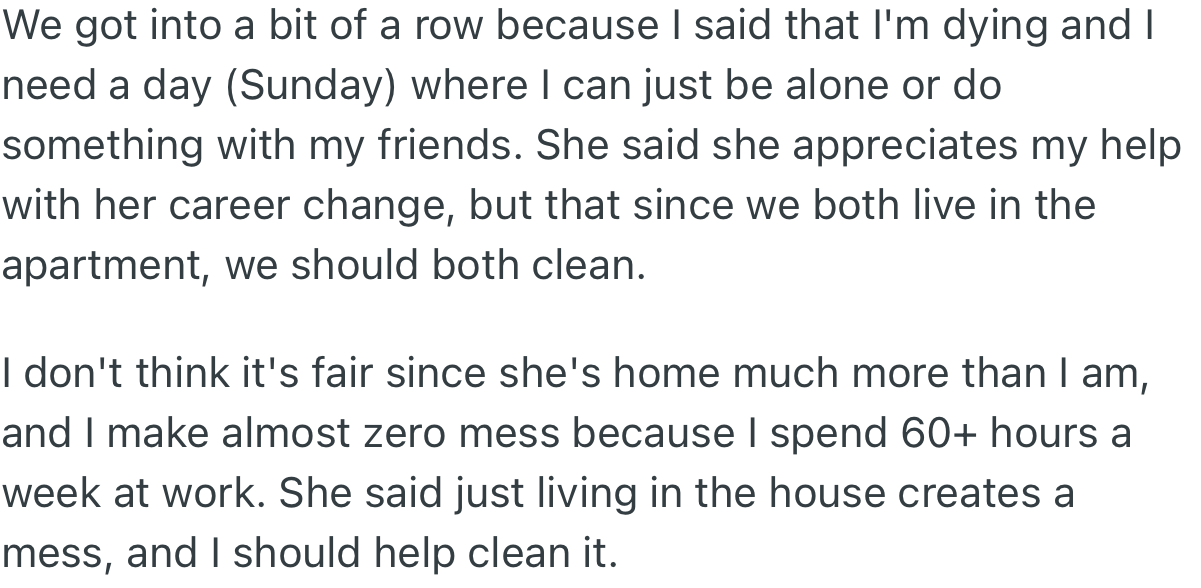
When OP comes home wrecked after 60-hour work weeks, his girlfriend still expects him to jump into cleaning like nothing happened.
From a psychological standpoint, the concept of emotional labor is crucial here. Emotional labor refers to the process of managing feelings and expressions to fulfill the emotional requirements of a job or relationship. In this case, the man is engaging in emotional labor by sacrificing his well-being to meet financial expectations, while the woman may not fully recognize the toll this takes.
Research from the University of California, Berkeley suggests that both partners should engage in open discussions about workload and emotional needs to prevent resentment from building up.
Check Out Some Interesting Reactions We Gathered from the Reddit Community:
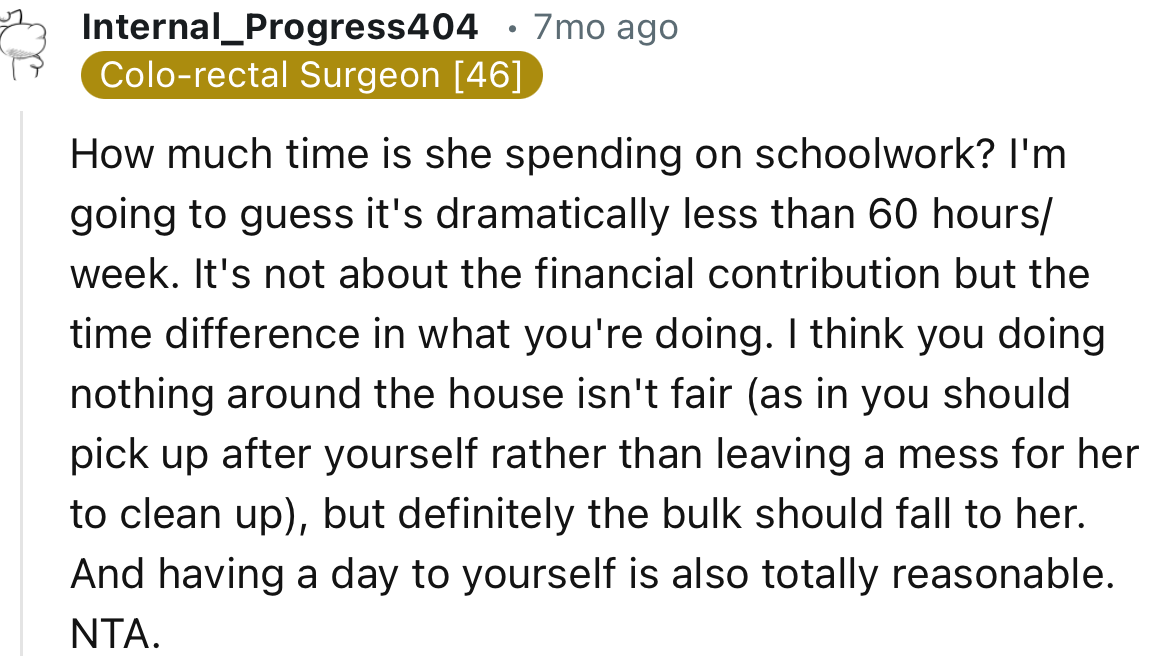
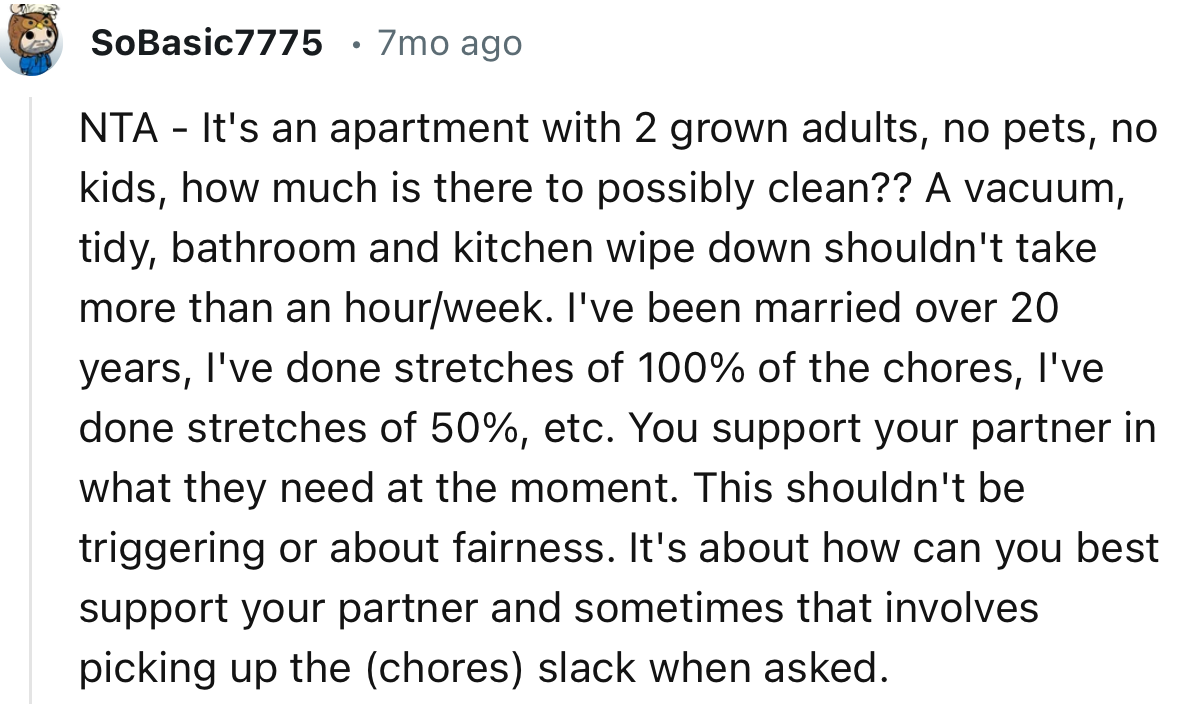
“NTA - It's an Apartment with 2 Grown Adults, No Pets, No Kids, How Much Is There to Possibly Clean??”
That’s when she insists they split household chores equally, even though she is the one home all day.
This also echoes the woman who kicked her boyfriend out after bringing home her 23rd rescue animal.
Finding Balance in Household Responsibilities
Practical solutions include setting regular check-ins to discuss each partner's workload and feelings about household chores. Collaborative strategies, such as creating a chore chart, can help ensure that both partners feel their contributions are valued and recognized.
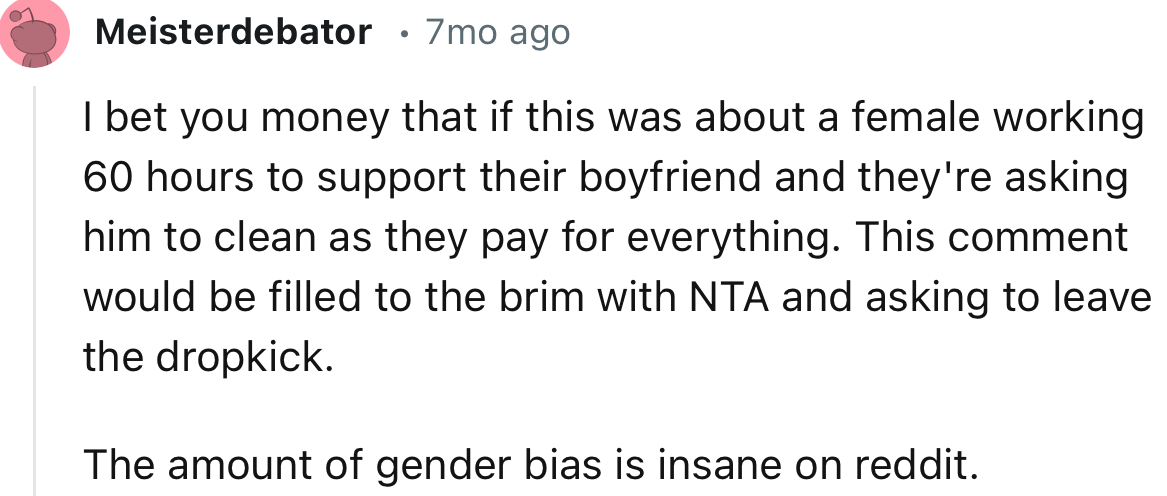
This Redditor Was Quick to Point Out the Gender Bias Involved in All This
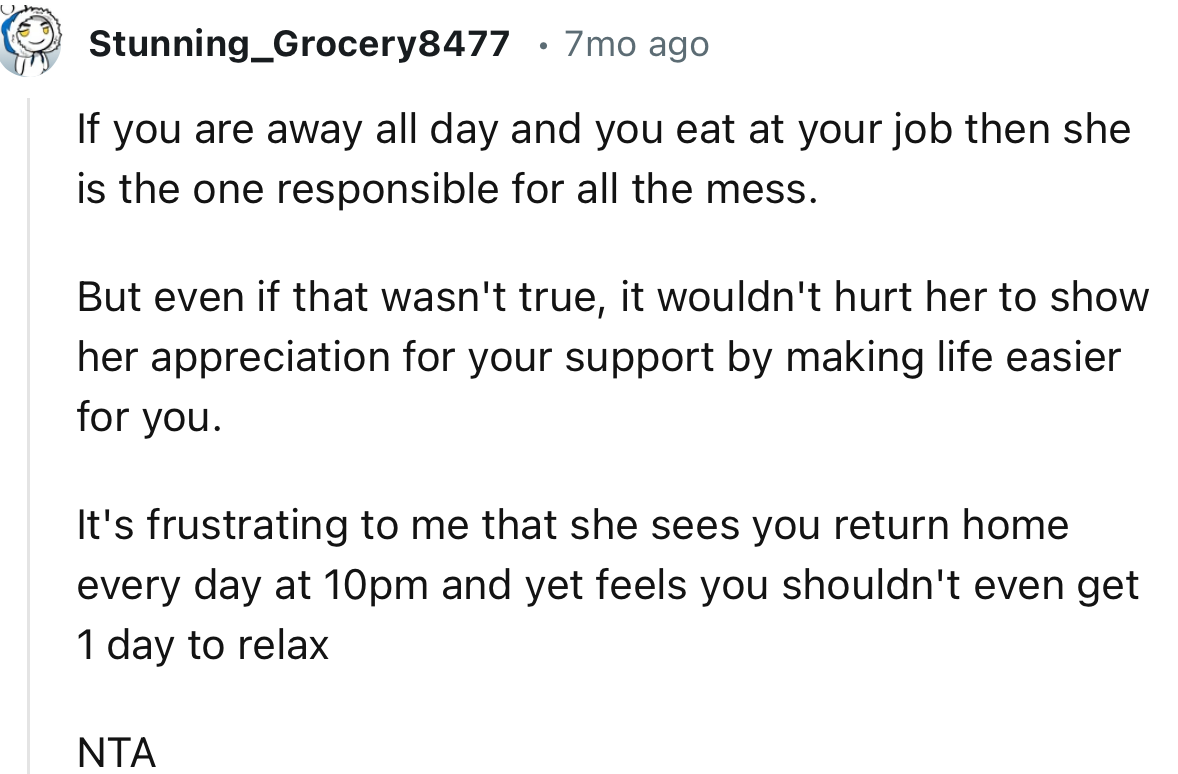
“If You Are Away All Day and You Eat at Your Job, Then She Is the One Responsible for All the Mess.”
OP fires back that since she is around more, she should take on more, and the whole “fair share” debate turns into a full-on fight.
Moreover, recognizing the signs of burnout—such as fatigue, irritability, and withdrawal—is essential for both partners.
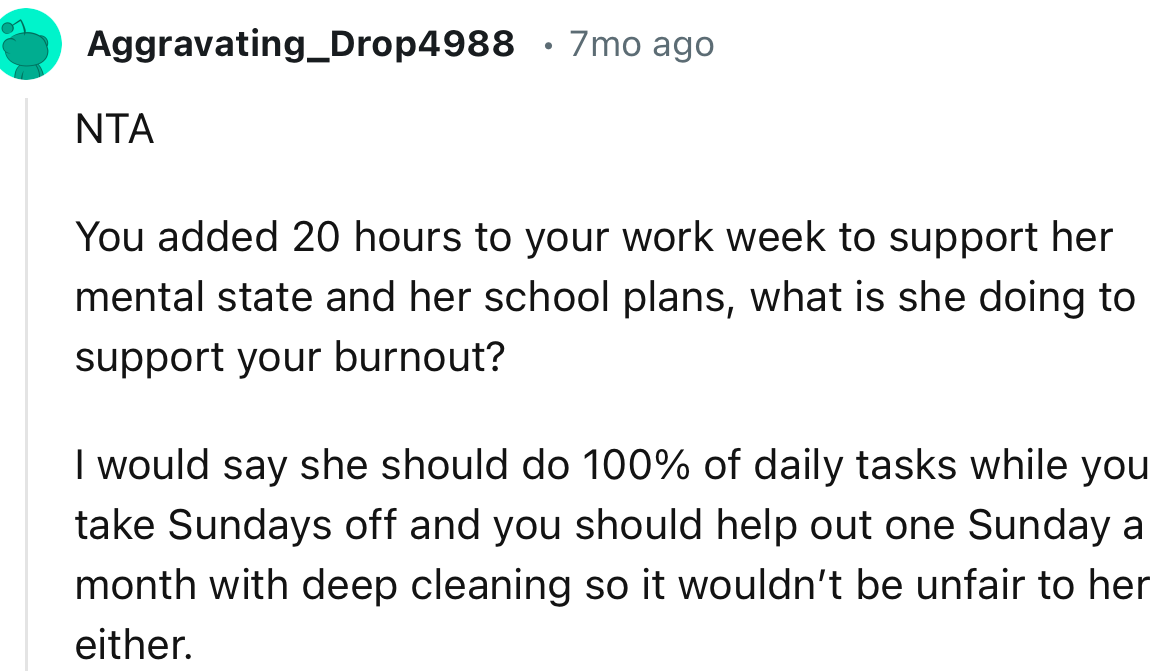
“You Added 20 Hours to Your Work Week to Support Her Mental State and Her School Plans, What Is She Doing to Support Your Burnout?”
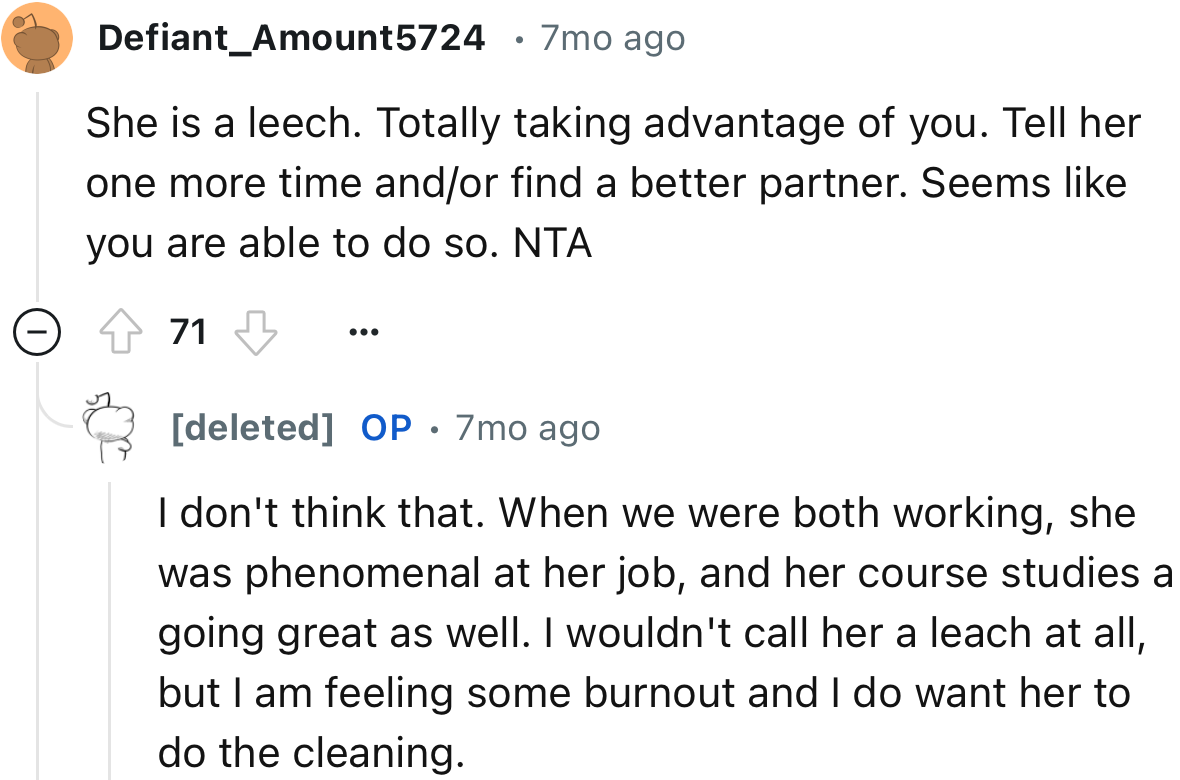
“She Is a Leech. Totally Taking Advantage of You.”
By the time the chores conversation keeps circling back to effort and exhaustion, their relationship starts feeling like a scoreboard, not a partnership.
Most Redditors seemed to think OP’s pattern of cohabitation wasn’t sustainable in the long run. They shook their heads at the fact that his girlfriend couldn’t empathize with his burnout despite how much he was shouldering. OP’s girlfriend should love him enough to meet him halfway willingly.
Do you agree with the commenters? Share your thoughts with us.
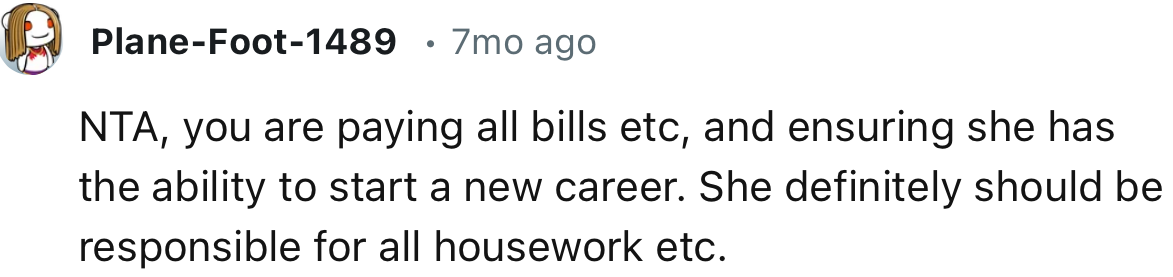
“NTA, You Are Paying All Bills Etc., and Ensuring She Has the Ability to Start a New Career.”
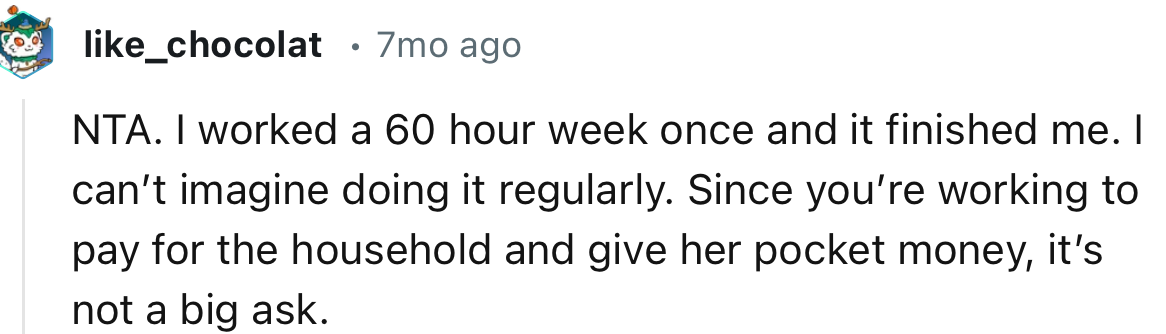
“Since You’re Working to Pay for the Household and Give Her Pocket Money, It’s Not a Big Ask.”
Ultimately, both partners should prioritize self-care to maintain their mental health and relationship quality.
The narrative highlights the intricate psychological dynamics that often emerge in relationships, particularly when balancing work and household responsibilities. The protagonist's grueling 60-hour work weeks to support his stay-at-home partner brings to light the strain that traditional gender roles can impose on both individuals. The insistence on splitting household chores equally, despite the disparity in financial contribution, raises questions about fairness and emotional labor within the partnership.
This situation underscores the necessity for open communication between partners to navigate their expectations and responsibilities.
He may be doing everything to keep the lights on, but nobody wants to feel like they are working for free.
After this 60-hour workweek burnout, wait until you see the 3 weekday cleanings vs one weekend fight in the cat pee litter box feud.
Share this article:





